Large Scale 3D Printing: Everything You Need to Know
Using vat photopolymerization processes to create high-precision, large-format parts with excellent surface quality, large-scale resin 3D printer technology marks a revolutionary development in industrial manufacturing. This detailed guide covers all the important parts of large-scale resin 3D printing, from basic technologies to buying strategies. It helps manufacturers and decision-makers understand how these powerful systems can change the way they make things while also being more accurate and efficient than older ways of making things.
Introduction to Large-Scale Resin 3D Printing
Large-scale resin 3D printing represents the cutting edge of new production technology. It provides unmatched accuracy and surface quality for tough industrial uses. This high-tech stuff uses vat photopolymerization methods like Stereolithography (SLA), Digital Light Processing (DLP), and Masked Stereolithography (mSLA) to make complicated shapes with build volumes that are much larger than standard desktop units. The axes on these machines are usually bigger than 300mm, and some industrial ones can hold up to a cubic meter of material. Large resin 3D printers are very useful because they can cure photosensitive liquid resin using controlled UV light exposure sources, layer by layer. This makes parts with uniform mechanical properties and surface finishes that are with surface quality approaching injection-molded parts.

Unlike Fused Deposition Modeling (FDM) technology, these systems don't leave behind obvious layer lines and provide accurate measurements across very large build areas. Key uses are used in many important fields. Automakers use these systems to make quick prototypes of full-size interior panels, air intake pipes, and special parts. This lets them test the fit and function of the whole system without the structural problems that come with putting together parts from different sources. Engineers in the aerospace industry use the technology to make small batches of complicated joints and parts with odd shapes that need to be very accurate. Large-format skills are very helpful for the medical and dental fields because they allow for the creation of life-size anatomical models, surgery guides, and custom tooth tools made from biocompatible resins.
Companies that make consumer electronics use these systems to make prototypes of complicated gadget shells and internal structures. This helps them meet the short development processes for new products. The full process includes optimizing CAD designs, getting ready to print with advanced slicing software, carefully moving materials, and following thorough post-processing steps. This unified method makes sure uniform outcomes while increasing production efficiency and lowering costs for both testing and small-batch manufacturing.
Understanding Essential Technologies and Materials
Large-scale resin printing depends on high-tech optical devices, a large-scale resin 3D printer, and modern material science to work at an industrial level. Modern systems use high-resolution LCD screens (up to 12K resolution) or precise laser galvanometer systems to keep the XY resolution between 25 and 85 microns across large build areas wider than 600 mm. Optical uniformity is very important for operations to go smoothly. This is achieved with improved collimation lenses that keep the high optical uniformity across the build area from center to edge. This level of accuracy keeps the dimensions of the whole build platform accurate and stops big flat shapes from warping.
German Scanlab galvanometers and AOC lasers are the best parts on the market because they are very reliable and consistently work well. Material suitability includes a wide range of resin formulas made for specific industry uses. Standard resins are great for testing because they can reproduce details very well. On the other hand, engineering-grade versions have better mechanical qualities, such as the ability to certain high-performance resins can withstand elevated temperatures (in specific testing conditions), chemicals, and impacts. Flexible resins make it possible to make flexible parts that range in stiffness from soft rubber to hard plastics. Castable resins make it easier to cast jewelry and other precise items, and they burn out cleanly during investment casting. Biocompatible materials are approved by the FDA for use in dentistry and the prototyping of medical devices.

To get the best mechanical qualities, each material needs its own set of curing conditions and post-processing steps. Variable spot-size laser technology is a big step forward in making printing more efficient. Systems that use big laser spots (0.5–0.6 mm) for filling in the inside and fine spots (0.18–0.2 mm) for outlines achieve 30–50% speed gains while keeping accuracy. Deep learning techniques improve scanning lines even more, making them 20% more efficient. Maintenance schedules make sure that equipment works well and lasts longer. Common problems can be avoided by cleaning optical parts, filtering glue, and calibrating the build platform on a regular basis. Temperature control systems make sure that the viscosity of the glue stays at the right level. This is especially important for industrial materials with a high viscosity that need to be heated in order to flow properly.
Comparing Large-Scale Resin 3D Printers: Making an Informed Choice
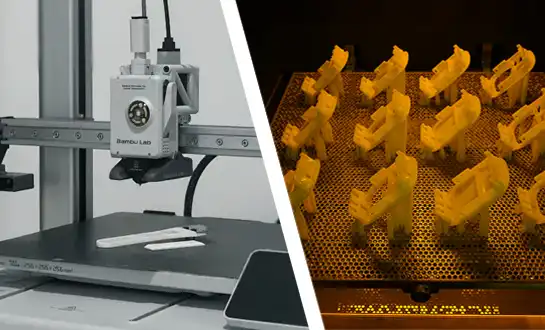
To choose the best large-format resin printing system, you need to carefully consider the technology it can use, the name of the maker, and the long-term support infrastructure. When you look at the differences between resin-based and filament technologies, you can see that resin technologies are significantly better for applications requiring smooth surfaces and fine detail and precise measurements. Resin systems can make layers as thin as 25 microns and don't need much post-processing, but large-format FDM printers usually make layer lines that can be seen and need a lot of finishing work. Resin parts have isotropic strength, which means that their mechanical qualities are the same along all axes. This means that they can be used for useful prototypes and final products that need to be structurally sound.
Leading makers have their own unique technological methods and areas where they specialize. Using German engineering parts in systems, like Scanlab galvanometers and Panasonic AC servo motors, makes them very reliable and accurate. Premium models with marble bases can print parts with an accuracy of ±0.1mm for sizes 100mm or less, giving them steadiness close to that of industrial machines. Open-source material compatibility is an important thing to think about when buying something. Systems that support third-party resin get rid of vendor lock-in and allow for flexible cost management. This is in contrast to systems that only use private materials, which make operations less flexible. Because of this similarity, makers can keep quality standards high while lowering the cost of materials. When thinking about investments, the range usually goes from the mid-five figures for professional systems to the high six figures for large-scale commercial tools.

Financing choices, such as rental agreements and bulk buy programs, let people with a wide range of budgets get access to the latest technology. Case studies from real life show that investments have strong returns in many fields. Automotive prototyping companies say that getting rid of the need to put together multiple parts cuts development times by 60%. When medical device companies use custom surgery guide production instead of standard machining, they save 40% on costs. It turns out that evaluating the system for after-sales help is very important for keeping operations going. Manufacturers who give expert support 24 hours a day, seven days a week with guaranteed response times of one hour and resolutions within four hours show that large-scale resin 3D printer they care about their customers' success. Full training programs and ongoing technical help make sure that the system is used to its fullest potential and that downtime risks are kept to a minimum.
Procurement and After-Sales Guidance for B2B Clients
When you buy large-scale resin 3D printer systems strategically, you need to look at the credentials of the suppliers, their service infrastructure, and the possibility of forming a long-term relationship. Authorized dealers offer important technical knowledge and local support, while direct links with manufacturers give you more customization choices and faster access to service. When thinking about global operations, you need to think about things like transporting equipment, installation services, and ongoing repair support. When buying things from other countries, you often need to make sure that you follow the rules for taxes and technical compliance.
Reliable manufacturers keep up global service networks that make sure the level of help is the same no matter where you are in the world. Different makers offer very different warranty coverage. The best warranties cover everything, including replacing all parts, updating software, and professional training programs. Options for longer warranties offer extra safety in high-use areas where equipment breakdowns directly affect work schedules. Different buying strategies and spending limits can be met by financing options. Leasing agreements protect cash and give people access to the newest technology, which is especially useful in fields that change quickly. Credit facilities and equipment loans are other ways to get money that come with good terms for suitable buyers. The total cost of ownership includes more than just the initial investment in tools. It also includes the prices of materials, repairs, and running the business. When compared to private material systems, open-source material compatibility has much lower long-term running costs.
Designs that use less energy lower power costs and support efforts to be more environmentally friendly. When judging a supplier's trustworthiness, patent portfolios, market exposure, and customer reviews are all taken into account. Manufacturers with large intellectual property portfolios show that they are dedicated to new ideas and technological progress. Companies that serve a wide range of foreign markets and have a history of success give partners more faith in the long-term viability of the relationship. Technical training programs make sure that equipment is used correctly and that production levels stay high. Operators can get the most out of the system while requiring the least amount of help by getting a full education on how to operate it, move materials, and fix problems.
Conclusion

The large-scale resin 3D printer technology is a revolutionary way to make things that solve important problems in the industry while also being very precise, quick, and flexible. The new vat photopolymerization systems make it possible to make big, complicated parts with surfaces that are like injection molds and mechanical properties that are the same everywhere. This gets rid of the usual size limits and assembly needs. To get the best long-term value from a large-scale resin 3D printer and operational success across a wide range of industrial uses, strategic buying factors include technological skills, material suitability, and a full support infrastructure.
FAQ
1. What build volumes are available for large-scale resin 3D printers?
It is common for industrial large-scale resin 3D printer systems to be able to print amounts ranging from 300x300x300mm to cubic meters. Premium systems have built areas that are wider than 600 mm and keep the level of accuracy at the micron level throughout the whole platform. The exact sizes rely on the purpose and the amount of production that is needed.
2. How do maintenance requirements compare to desktop systems?
Large-format systems need more thorough repair plans. Cleaning the optics, filtering the resin, and calibrating them on a regular basis ensures uniform performance. But because they are built to last and use high-quality parts, they tend to have lower failure rates and last longer than PC options.
3. What resolution capabilities can be expected?
These days' systems can get an XY precision of 25 to 85 microns and keep the optical uniformity very high across big build areas. Layer heights can be changed depending on the job, and the best choices produce a surface quality that is close to that of injection molding. From the middle to the edges of the build platform, the details will look the same thanks to advanced visual systems.
4. Are eco-friendly resin options available?
The business is offering more environmentally friendly resins, such as those made from plants and materials that can be recycled. Bio-based resins have similar tensile qualities and are better for the earth. Recycling programs and following the right steps for managing trash can help with environmental efforts without lowering standards for quality or performance.
Partner with Magforms for Advanced Large-Scale 3D Printing Solutions
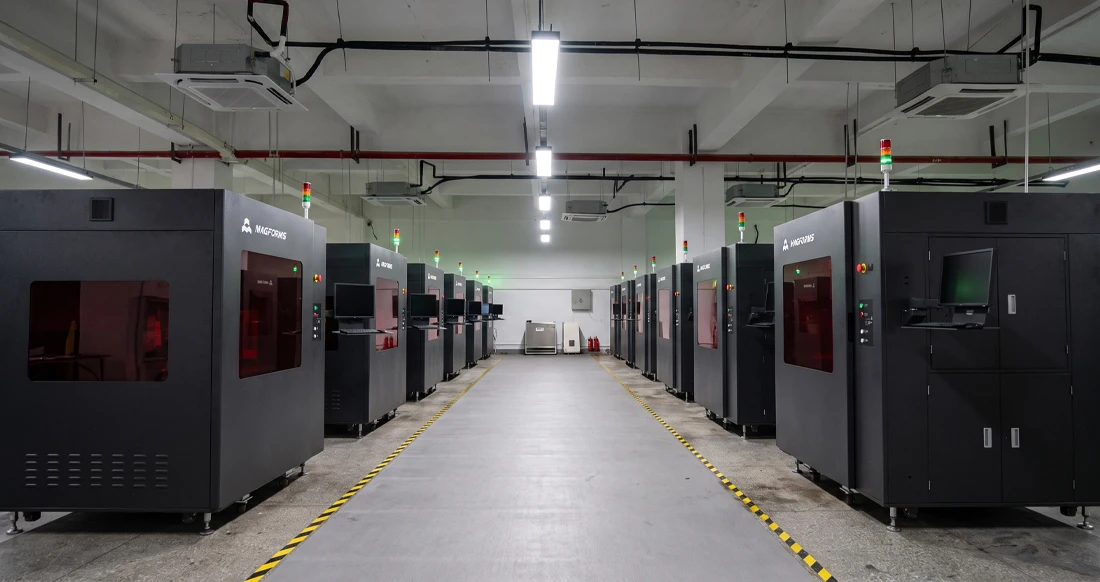
Magforms' collection of industry-leading large-scale resin 3D printers can completely change the way you make things. These printers are designed to provide unmatched accuracy and dependability for tough industrial uses. Premium German parts, like Scanlab galvanometers and Panasonic servo motors, are used in our systems to make sure they work well and last a long time. Magforms is a trusted maker with 22 patents and a global market footprint that serves over 300 businesses. They offer cutting-edge technology and full support services. For individual advice, technical demos, and reasonable prices that are tailored to your particular production needs, please contact our expert team at info@magforms.com.
References
1. Gibson, Ian, David Rosen, and Brent Stucker. "Additive Manufacturing Technologies: 3D Printing, Rapid Prototyping, and Direct Digital Manufacturing." Springer Books, 2021.
2. Chua, Kah Fai Leong, and Chee Kai. As of 2020, World Scientific Publishing will publish "3D Printing and Additive Manufacturing: Principles and Applications."
3. Ngo, Tuan D., et al. "Additive Manufacturing Technologies for Industrial Applications: A Review." The 2022 issue of the International Journal of Production Technology and Management.
4. Report by Thompson, Mary K., et al., in the CIRP Annals - Manufacturing Technology in 2021, called "Design for Additive Manufacturing: Trends, Opportunities, Considerations, and Constraints."
5. They wrote an article called "Materials for Additive Manufacturing: A Critical Assessment of Current State-of-the-Art." Bourell, David L., et al. The 2020 MRS Bulletin.
6. "Additive Manufacturing and Its Societal Impact: A Literature Review." Huang, Samuel H., et al. The 2022 issue of the International Journal of Advanced Manufacturing Technology.

Magforms makes design and manufacture easier.
Popular Blogs
-
 Industry InsightsManufacturing Industry
FDM vs. SLA Printer: Which Technology Is Right for Your Project?
-
 Industry InsightsManufacturing Industry
Top 5 Applications of Industrial 3D Printers in Manufacturing Today
-
 Industry InsightsManufacturing Industry
Why Stereolithography 3D Printers Are Unmatched for Microfluidic Device Prototyping?