Low-Cost 3D Printers: Benefits, Drawbacks, and Alternatives
A revolutionary chance for small businesses looking for cheap ways to make things is the low-cost 3D printers. These entry-level systems usually cost between $200 and $3,000. They let businesses make prototypes, customize goods, 3D printer for small businesses, and make small runs without having to spend a lot of money. A 3D printer for small businesses makes additive manufacturing more accessible than ever before. However, procurement managers need to know both the pros and cons of this technology in order to make smart choices that meet operational needs and growth goals.
Understanding Low-Cost 3D Printers in Small Business Settings
Low-cost 3D printers have changed how companies and small-to-medium-sized businesses in many fields can make things. These systems are usually considered prosumer, which means they're somewhere between hobbyist desktop computers and industrial-grade equipment. They're also still affordable for businesses that are watching their budgets.
Defining Low-Cost 3D Printing Solutions
Systems that cost less than $3,000 are usually considered budget-friendly 3D printers, but this meaning can change depending on the needs of the business and the uses in the industry. Most of the time, these machines have easier-to-use interfaces, smaller build areas (150x150x150mm to 300x300x400mm), and more efficient methods for moving materials. Fused Deposition Modeling (FDM) and entry-level Stereolithography (SLA) tools are popular technologies that can make samples and production parts that work. These days, low-cost systems have changed a lot and now have functions that were only available on more expensive systems. Affordable models now come with automatic bed leveling, warm build rooms, and the ability to work with multiple materials. This lets small businesses get professional results without spending a lot of money. These features have made additive manufacturing more accessible, letting businesses test product development possibilities that were out of reach before because of high costs.

Key Benefits for Small Business Operations
The best thing about cheap 3D printing is that it gets rid of many of the problems that come with standard manufacturing. Small businesses can quickly make changes to designs without having to buy expensive tools or keep a lot of stock on hand. This feature is especially useful during the creation of a product, when the design may need to be changed several times before the final specs are agreed upon. Cost reduction includes both the initial buy of tools and the savings made during use. Companies don't have to buy jigs, tools, and new parts from outside sources because they can make them on demand. This method cuts wait times from weeks to hours while still giving the designer full control over the final product. Small batch production also becomes economically possible, which lets businesses serve niche markets or offer custom goods without having to meet a minimum order number.
Recognized Drawbacks and Limitations
Even though they have benefits, low-cost 3D printers pose some practical issues that companies need to think about. Material limits are a big problem because budget systems don't always have as many polymer choices as industrial-grade systems. This limitation can affect how well the part works, especially in situations where specific mechanical qualities or chemical protection are needed. Another problem is the quality uniformity. When making a lot of the same part, entry-level systems may have differences in the sizes of the parts that are printed. Changes in temperature, mechanical wear, and calibration drift can all lower the quality of the product, so it needs to be maintained regularly, and operators need to be involved. These things can change the schedule for production and the general performance of a business. Build volume constraints limit the number and sizes of parts that can be made at the same time. As operations grow, these limits may become too much for small businesses that need bigger parts or higher output. Also, budget systems tend to print documents more slowly than professional ones, which can cause problems with time-sensitive tasks or meeting customer 3D printer for small businesses shipping obligations.

How to Choose the Right 3D Printer for Your Small Business
To choose the right 3D printing equipment, you need to carefully consider your business's needs, output goals, and funds. As part of the decision-making process, present needs are looked at along with the possibility of future growth and the ability to expand operations.
Evaluating Production Requirements and Material Needs
The first step in the selection process is to carefully look at the planned uses and expected output volumes. Companies that make visual prototypes and idea models might value the beauty of the surface finish more than its mechanical strength. This means that SLA technology can be used, even though the materials are more expensive. However, FDM systems that support engineering-grade polymers are usually better for businesses that need working samples or parts that will be used in the end. Material compatibility has a direct effect on the prices and uses of operations in the long run. Open-material methods let you get fibers from more than one source, which could lower costs and give you more material choices. Closed systems, on the other hand, usually give more reliable results by using better material patterns, but they may make it harder to control costs. Businesses can better choose equipment that fits their needs when they understand this trade-off. Expected production volumes have a big effect on the choice of tools. Companies that plan to produce a lot of documents or run their machines all the time may want to buy stronger systems that are more reliable and print faster. On the other hand, businesses that only need to print occasionally might put beginning cost savings ahead of maximum output.
Comparing Technology Options and Total Cost of Ownership
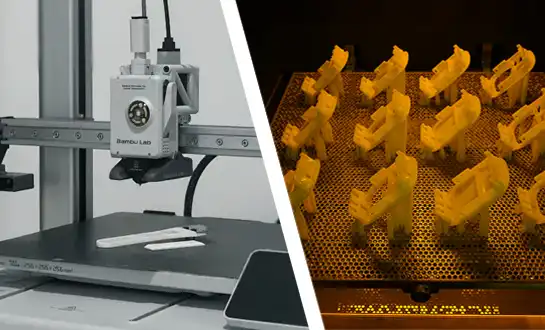
FDM technology rules the low-cost market because it uses cheap materials and is easy to use. These methods are great at making parts that work and have good mechanical qualities, which means they can be used for jigs, fixtures, and production parts. The price of the material is usually between $20 and $50 per kilogram, and the technology works with a lot of different plastics, such as PLA, ABS, PETG, and custom composites.SLA systems are great for making high-precision samples, dental tools, and jewelry because they have a better surface finish and can see finer details. However, resin costs more ($50 to $150 per liter), and the need for post-processing makes operations more difficult. The total cost of putting the technology into use goes up because it needs UV curing tools, washing areas, and good airflow. The total cost of ownership includes more than just buying the tools. It also includes things like supplies, repairs, training, and help with running the business. Businesses should figure out how much material they will need based on how they think it will be used and take into account the cost of new parts, software licensing fees, and possible service contracts. Knowing about these ongoing costs helps keep the budget in line throughout the span of the tools.
Strategic Financing and Supplier Evaluation
Options for buying equipment can have a big effect on cash flow and the ability to change how things are run. Leasing may give you access to newer technology while keeping your cash on hand for other investments in your business. Some providers let businesses change their powers as needed by giving them flexible payment terms or plans to buy new equipment. A supplier's level of expertise, availability of spare parts, and training tools should all be taken into account when evaluating them. Companies that haven't used 3D printers before can benefit from providers that offer full startup support, such as help with installation, user training, and ongoing technical support. Service level agreements and response time guarantees are very important when machine breakdowns directly affect work plans.
Alternatives and Complementary Technologies to Low-Cost 3D Printers
Small businesses can improve their production skills beyond basic 3D printing by learning about the bigger picture of manufacturing. There are several ways to improve operating efficiency and get around the problems that come with cheap additive manufacturing systems.
Complementary Manufacturing Methods
CNC cutting is a useful addition to 3D printing, especially when a smooth surface finish, close limits, or materials that can't be used with additive processes are needed. Combining the two technologies is often best for small businesses. For example, they can use 3D printing for complicated shapes and fast testing, and CNC machining for precise metal parts and components. In hybrid production methods, both adding and taking away parts are used together in a single task. Businesses can use this approach to get the physical freedom of 3D printing with the accuracy and smoothness of traditional machining. Some current systems combine both functions into a single machine, but these are usually too expensive for most people. When more than 1,000 units are made, based on how complicated the part is, injection casting becomes a cost-effective method. Even though the beginning costs of making the tools are high, the costs per part go down a lot as more are made. Before switching to injection casting for mass production, small businesses can use 3D printing to test ideas and make the first few items.
Mid-Range and Specialized 3D Printing Solutions
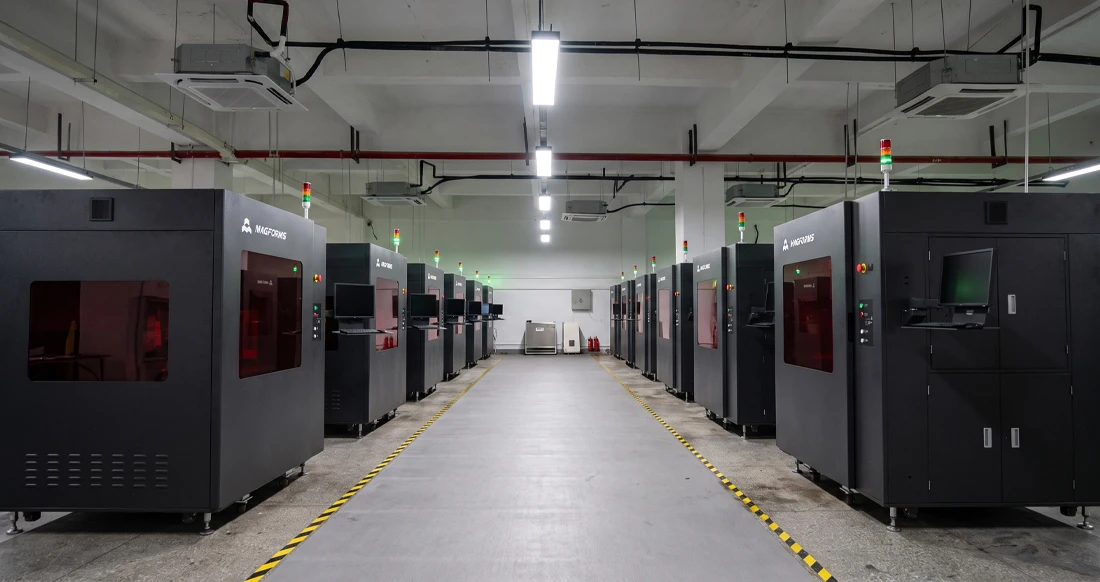
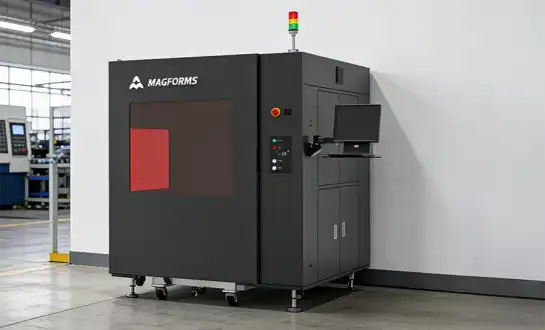
Mid-range 3D printers, which usually cost between $5,000 and $25,000, have more features than cheaper ones, which makes up for many of their flaws. These platforms usually have faster print speeds, bigger build sizes, and more materials that can be used with them. Often, the investment pays for itself through higher output and fewer problems with running the business. Industrial-grade SLA systems can work with safe resins, high-temperature polymers, and filled composites, among other advanced materials, and offer very high levels of accuracy and surface quality. Professional SLA machines with German Scanlab galvanometers and AOC lasers are sold by companies like Magforms. These machines can print accurately within ±0.1mm error levels. With changeable spot-size laser technology, these systems can work 30–50% faster than traditional methods while still being accurate. This is possible because they use big laser spots for filling in gaps and small spots for making precise shapes.

Leveraging Refurbished Equipment and Essential Accessories
Certified secondhand technology can help people who are on a tight budget get access to higher-capability 3D printers for small business systems. Reliable sellers offer warranties and service support that are on par with buying new tools, but at a much lower cost. With this method, companies can get industrial-level features without having to buy whole new systems. Important add-ons can greatly improve the skills of a cheap printer. Heated containers make temperatures more stable and make more materials compatible. Modern bed leveling devices cut down on setup time and make prints more consistent. Multi-material update kits let you print in color and use dissolvable support materials, which means you can use them in more situations. Post-processing tools like washing stations, UV curing rooms, and surface finishing tools can improve the quality of the work that cheap methods make. When you need to meet certain quality standards, strategically investing in these tools can often give you a better return on your money than switching to high-end printers.
Maintenance and Sustainability Considerations for Low-Cost 3D Printers
For cheap 3D printing systems to work well in the long term, they need to be dependable and care for the environment. Using proper maintenance procedures and environmentally friendly methods can help tools last longer and support business responsibility goals.
Practical Maintenance Strategies and Operational Reliability
Preventive repair makes tools last a lot longer and cuts down on surprise downtime. Bed leveling checks, printer temperature checks, and dimensional accuracy checks using standard test prints should all be part of regular calibration routines. These steps help find problems before they affect the quality of the work. When systems are used in work settings, cleaning procedures become even more important. To keep the extruder running smoothly, the nozzles need to be cleaned, and the temperature needs to be adjusted on a frequent basis. Cleaning and preparing the build platform has a direct effect on how well the first layer sticks and how well the print goes generally. Scheduling when to change parts helps keep production from stopping unexpectedly during key times. Nozzles, drive belts, and hot-end systems are all things that wear out over time. Keeping extra parts in stock based on how often they are used will help keep downtime to a minimum when repairs are needed. Keeping records of repair tasks is a good way to find the best service times and estimate how long a part will last.
Environmental Sustainability and Material Choices
As companies put more emphasis on being environmentally responsible, choosing sustainable materials has a bigger impact on their buying choices. Biodegradable PLA filaments made from natural resources are better for the earth than options made from oil. But companies need to find a mix between environmental concerns and efficiency needs, because biodegradable materials might not work in all situations. Some ways to cut down on waste are to improve support structures so that they use the least amount of material and start recycling programs for failed prints and support material. Some businesses buy recycling equipment for filament that turns used plastic into printing material. This creates closed-loop material cycles. Energy saving concerns go beyond choosing the right tools and include how they are used. Scheduling prints for times when energy use is lower, putting machines to sleep between jobs, and using smart power management can all help lower costs and meet sustainability goals.
Supplier Support and Service Considerations
When 3D printing is added to production processes, it's important to have full expert help. Magforms has the best customer service in its field. Their professional expert team is available 24 hours a day, seven days a week for remote consultations, and they promise a response time of one hour and problem resolution within four hours. Their many years of experience in the field give them a deep understanding of how customers use technology and how new technology is changing things. Service level agreements should spell out reaction times, how to report problems, and promises of how they will be fixed. Companies that need to meet tight production deadlines need sources that can quickly fix problems, whether that means helping remotely or sending a service technician to the company's location. Training programs help employees learn how to fix problems on their own, so they don't have to rely on outside help for everyday problems. The total cost of ownership is directly affected by the warranty coverage and the supply of parts. Options with longer warranties may be worth the extra money if they lower repair costs and make sure that the equipment is always available. Suppliers who keep a large collection of parts make sure that parts can be replaced quickly when they are needed.
Emerging 3D Printing Trends Impacting Small Business Growth
The world of additive manufacturing is changing quickly, giving small businesses new chances to get ahead of the competition by using advanced production tools and new ways to run their businesses.
Technological Advances in Speed and Material Science
Recent improvements in printing technology have made it much faster and able to handle a wider range of materials. When used in advanced SLA systems, variable laser spot technology changes the beam's properties to fit different print areas. Large spots speed up infill printing, while fine spots keep the surface's fine details. This strikes the best mix between speed and quality. More and more, deep learning algorithms improve print routes and process parameters in real time. These systems look at the shape of the print and change the settings automatically to cut down on print time while keeping quality standards high. Some advanced systems can go 20% faster by using AI-optimized scanning patterns that shorten the lengths that the laser has to travel and make the exposure cycles work better. New developments in material science keep opening up new uses. New polymer formulations offer better mechanical qualities, chemical resistance, and temperature stability than were offered in cheap systems before. Composite materials that contain carbon fiber, glass fiber, and metal bits make it possible to make parts that are similar in quality to parts that are normally made.

Industry 4.0 Integration and Automation
Connectivity to the Internet of Things (IoT) makes it possible to watch and control fleets remotely, which used to be only possible for industrial equipment. Small businesses can use mobile devices to check on the progress of prints, get alerts when they're done, and access diagnostic data. This makes operations more efficient and cuts down on the need for human control. Businesses can spread work across various printers and get the most out of their resources with cloud-based print queue management. These systems pick the right tools for the job based on the part's needs, the availability of materials, and the state of the line. This increases output while reducing the need for human input. Automated methods for moving materials cut down on the need for workers, 3D printers for small businesses, and make things more consistent. Some newer systems can load materials, adjust settings, and start printing based on digital job specs. This is getting closer to lights-out manufacturing, which used to require a lot of money to set up.
Market Trends and Strategic Opportunities
The need for customization is still creating small business possibilities in many areas. With a 3D printer for small businesses, companies can offer customized goods, parts that fit perfectly, and on-demand manufacturing services that their bigger rivals can't afford to give. In niche markets where tailoring gets higher prices, this ability gives you an edge over your competitors. Local manufacturing trends favor small businesses that can make parts close to where they are used. Problems with the supply chain have shown how valuable it is to have spread manufacturing capabilities. This has opened up business possibilities for companies in regional markets that offer fast prototyping, replacement parts, and special manufacturing services. Digital inventory ideas change the way businesses work by using digital files instead of real stock. Businesses can have huge catalogs of products without having to pay for storage space because they only print things when people buy them. This method lowers the amount of operating capital needed while allowing an infinite number of products.
Conclusion
Low-cost 3D printers give small businesses access to advanced manufacturing tools that they have never had before. They can do things like fast development, customization, and small-batch production without having to spend a lot of money. Even though these systems have some problems, like limited materials, inconsistent quality, and limited build volumes, they can give you big advantages in the market if you choose them wisely and use them correctly. Businesses can improve their manufacturing capabilities while staying within their budgets by learning about alternatives like mid-range equipment, manufacturing methods that work well together, and used systems that have been fixed up. For a business to be successful, it needs to choose the right technology for the job, follow the right repair procedures, and take advantage of new trends to help the business grow.
FAQ
1. What defines a low-cost 3D printer suitable for small business use?
Business 3D printers are usually between $1,000 and $5,000, and they are more reliable, work with more materials, and have better build quality than amateur models. These systems allow for ongoing operation cycles, a wider range of materials (including engineering polymers), and the ability to connect to other systems in production settings. Business-oriented systems, on the other hand, have features like heated build chambers, advanced bed leveling, and professional software packages that make sure consistent results in commercial applications.
2. How do I determine the return on investment for a small business 3D printer?
When figuring out ROI, you should compare the cost of equipment to the costs of outsourcing now, taking into account both direct and indirect savings. Some direct ways to save money are to get rid of service center fees, lower the cost of prototypes, and make iteration rounds faster. Some indirect perks are lower shipping costs, shorter wait times, and more design freedom. When small companies make their own unique tools instead of outsourcing prototyping, they usually break even within 6 to 12 months. Write down the current costs of outsourcing and the expected trends of use to get a good idea of how long it will take to pay for itself.
3. What maintenance requirements should I expect with affordable 3D printing equipment?
Regular maintenance includes weekly calibration checks, monthly cleaning of drive systems and hot-ends, and quarterly replacement of wear components such as nozzles and drive belts. Set aside about two to four hours a month for regular upkeep tasks. Set up preventive repair plans based on usage hours instead of calendar dates, since heavy use speeds up the wear and tear on parts. Maintain spare parts inventory, including nozzles, thermistors, and drive components, to minimize downtime during component replacement.
4. Can low-cost 3D printers handle production volumes for commercial applications?
Most entry-level systems can handle small batches (10–100 parts per month) of production well, but each model has a wide range of skills. How much is made depends on how complicated, big, and high-quality the parts are. Simple parts can print in 30 minutes to two hours, but complicated systems can take anywhere from eight to twenty-four hours per build. If you need to print a lot of things, you might want to think about setting up more than one printer. For small businesses, parallel production is often a better deal than buying new industrial equipment.
5. What alternative technologies should I consider alongside 3D printing?
CNC machining complements 3D printing by providing superior surface finish and material options, including metals and high-performance polymers. Depending on how complicated the part is, injection molding starts to make economic sense when the number of units made goes over 1,000. Laser cutting and making are good ways to work with sheet-based parts. When looking at different technology mixes, you should think about what the application needs. This is because hybrid methods often make the best use of both skills and prices for a wide range of products.
Partner with Magforms for Professional 3D Printing Solutions
Magforms provides industrial-grade 3D printers for small businesses that get around the drawbacks of low-cost tools. Our SLA systems have German Scanlab galvanometers, AOC lasers, and changeable spot-size technology that makes printing 30–50% faster than with traditional methods. Magforms' equipment lets small companies get professional results without having to use only certain materials because it can print with an accuracy of ±0.1mm and work with a wide range of materials. Our full support includes expert help 24 hours a day, seven days a week, with guaranteed answer times of one hour and promises to solve problems within four hours. Our expert team can help you get the most out of your manufacturing skills, whether you need desktop tools for prototyping or industrial-grade equipment for production. Get in touch with our 3D printer for small business supplier team at info@magforms.com to talk about unique solutions that will help you stand out from the competition by using advanced additive manufacturing.
References
1. Gibson, Ian, David Rosen, and Brent Stucker. "Additive Manufacturing Technologies: 3D Printing, Rapid Prototyping, and Direct Digital Manufacturing." New York: Springer, 2021.
2. Redwood, Ben, Filemon Schöffer, and Brian Garret. "The 3D Printing Handbook: Technologies, Design and Applications." Amsterdam: 3D Hubs, 2022.
3. Sculpteo. "The State of 3D Printing Report 2023: Industry Insights and Market Analysis." Paris: Sculpteo Research Division, 2023.
4. Wohlers, Terry, Ian Campbell, Olaf Diegel, Ray Huff, and Joseph Kowen. "Wohlers Report 2023: 3D Printing and Additive Manufacturing Global State of the Industry." Fort Collins: Wohlers Associates, 2023.
5. Ernst & Young Global Limited. "How Will 3D Printing Make Your Company the Strongest Link in the Value Chain? EY's Global 3D Printing Report 2019." London: EY Publications, 2019.
6. McKinsey & Company. "Additive Manufacturing: A Long-term Game Changer for Manufacturers." New York: McKinsey Global Institute, 2023.

Magforms makes design and manufacture easier.
Popular Blogs
-
 Industry InsightsManufacturing Industry
FDM vs. SLA Printer: Which Technology Is Right for Your Project?
-
 Industry InsightsManufacturing Industry
Top 5 Applications of Industrial 3D Printers in Manufacturing Today
-
 Industry InsightsManufacturing Industry
Why Stereolithography 3D Printers Are Unmatched for Microfluidic Device Prototyping?