Resin 3D Printing Explained: SLA, P3 & PolyJet Compared
Resin 3D printing technologies have completely changed how precision production is carried out across many industries, with fast resin 3D printer systems playing a key role in this transformation. Stereolithography (SLA), Photopolymer 3D printing (P3), and PolyJet technology are the three main methods that lead the market. Each method uses photopolymer resins but has a different way of curing them to get different amounts of accuracy, speed, and interaction with other materials. Fast resin 3D printer systems have changed the game in this field by drastically cutting production times while maintaining high levels of accuracy. This makes them essential for rapid iteration cycles in industries like medical device manufacturing, aerospace component development, and automotive prototyping.

Understanding Resin 3D Printing Technologies: SLA, P3 & PolyJet
The landscape of resin-based additive manufacturing encompasses three primary technologies that have revolutionized precision prototyping and small-batch production across multiple industries.
Stereolithography (SLA) Technology Fundamentals
Using a laser-based photopolymerization process to selectively cure liquid resin into solid parts, stereolithography is the basic technique behind photopolymer printing. Modern SLA systems use very accurate galvanometer scanners that focus laser beams across the resin surface within a controlled vat environment. This makes it possible to achieve dimensional accuracy typically within ±0.1 mm or ±0.1% (whichever is greater), depending on part geometry and system calibration. The technology is great at making parts with smooth surfaces and fine geometric features, which makes it especially useful for tasks that don't need a lot of post-processing. Stereolithography printers work very well with a wide range of resin formulas, such as engineering-grade materials, clear resins, and special biocompatible substances used in medical settings. Some of the main benefits are better surface quality, stable dimensions, and a history of reliability in settings with ongoing production. Traditional Stereolithography methods, on the other hand, often have slow build speeds, especially when working with large parts or large batches.
Photopolymer P3 Printing Characteristics
P3 (Programmable Photopolymerization) is an advanced resin printing technology that utilizes a continuous photopolymerization process enabled by a controlled liquid interface, allowing parts to be formed without discrete layer separation steps. It uses a digitally controlled light projection system combined with a continuous liquid interface, which greatly speeds up the printing process by enabling rapid curing through continuous exposure and controlled interface dynamics. Modern P3 systems optimize light transmission efficiency and exposure uniformity through advanced optical engine design, which makes curing more even across the build platform. This technology works especially well for small to medium-sized projects that need specific features and quick response times.P3 printers are very cost-effective for small companies and service offices because they produce professional-quality prints at prices that most people can afford. The technology works with a wide range of material options and has easy-to-understand instructions for people of all skill levels.
PolyJet Multi-Material Capabilities
PolyJet technology is unique because it can print on more than one material at once, which means that it can process different photopolymers at the same time during the same build cycle. The method uses piezoelectric print heads to exactly place photopolymer droplets. UV light bands then cure the droplets right away. This method makes it possible for parts to be made of a huge range of materials, such as mixtures of rigid and flexible materials, clear and opaque sections, and different shore hardness values. With PolyJet systems, the surface quality is so good right from the printer that you typically require minimal post-processing, mainly for support removal. This technology is very useful for tasks that need complicated assemblies, samples with many parts, and parts with different mechanical qualities. PolyJet solutions, on the other hand, usually Fast resin 3D printer have higher starting costs and ongoing costs compared to Stereolithography or P3 options.
Fast Resin 3D Printers: Revolutionizing Speed and Efficiency
With the development of faster resin printing technologies, the printing industry has been able to solve long-standing problems with increasing production rates while still meeting the high standards of accuracy needed for professional uses.
Advanced Curing Technologies
Fast resin printers, including advanced SLA-based systems, are transforming speed and efficiency in photopolymer manufacturing. Fast resin 3D printer systems use cutting-edge technologies that cut layer processing times by a huge amount without affecting the accuracy of the dimensions. These systems use high-intensity light sources, including optimized laser and projection-based systems with optimized irradiance levels for rapid and consistent curing. This enables significantly reduced layer processing times for standard photopolymer formulations, with optimized exposure strategies depending on system architecture. Advanced optical systems with collimated light sources make sure that the UV light is spread evenly across all build platforms. This gets rid of any curing inconsistencies that might lower the quality of the parts. Real-time exposure tracking lets the curing factors be changed on the fly based on the cross-sectional geometry and the needs of the material. Modern accelerated systems can print vertically at speeds of more than 100 mm/h in normal modes, and 170 mm/h for suitable resin formulas in turbo modes. Compared to traditional resin printing methods, these improvements mean that production cycles are significantly shorter than those of conventional systems.

Mechanical Innovation and Precision Control
New mechanical designs use advanced release film technologies and better lift systems to lower the peel forces. Systems use ACF (Advanced Composite Film) and special low-tension films that lower separation forces by up to 50%. This stops layers from coming apart during fast movement cycles. Even when lifting at 300mm/s, precision Z-axis control systems with ball screw mechanisms and dual linear rail setups keep the placement accuracy within ±0.01mm. This mechanical security makes sure that the layers stay in place during long production runs. Better motherboard designs handle complicated voxel data streams instantly, stopping buffer underruns that might stop fast printer tasks. These changes to computers make it possible to handle dense geometric data more smoothly while keeping operations running smoothly.
Material Compatibility and Optimization
Accelerated printing methods work well with a wide range of fast-curing resin formulations that have viscosity profiles lower than 200 mPa·s and improved photo-initiator sensitivity. These improved materials make it easy for layers to quickly reflow between each other while still completing polymerization in fewer exposure cycles. The technology works with a wide range of materials, such as industrial resins, flexible compounds, clear formulas, and high-temperature-resistant resins. Because of this, single-platform systems can meet the needs of a wide range of applications in the automobile, medical, and consumer electronics industries.
Comparing Fast Resin 3D Printers with Other 3D Printing Solutions
Understanding the differences in how different additive manufacturing methods work and how much they cost lets you make smart purchasing choices that meet the needs of your output.
Performance Metrics Analysis
Compared to FDM systems, fast resin 3D printer technology produces a better surface finish, with layer heights as low as 10–25 microns and great dimensional precision. This edge in accuracy is very useful for tasks that need smooth surfaces, small details, and close mechanical tolerances. Comparing speeds shows that resin-based methods are much faster when making small to medium-sized parts, since each layer is cured uniformly across its cross-section regardless of geometric complexity. FDM systems may be better for making a large number of parts with simple shapes, but resin-based technologies are better when accuracy and surface quality are important. A cost study shows that resin systems have competitive running costs when you look at how well the materials are used, how little post-processing is needed, and how high the success rate on the first try is. Total cost of ownership estimates often show that resin technologies are better for precision uses, even though the starting equipment costs may be different.
Industry Application Suitability
Digital dentistry applications strongly favor resin technologies due to biocompatibility, fast resin 3D printer requirements, and precision demands for custom prosthetics and orthodontic devices. Fast resin 3D printer systems make it possible to treat patients the same day, which would not be possible with other technologies. The high surface quality and ability to reproduce small details of resin methods for investment casting are used in the jewelry industry. Being able to make complex designs with few support structures cuts down on material waste and work that needs to be done after the pattern is made. Accelerated resin printing makes it possible for engineers to test changes to designs within hours, instead of the days or weeks that are needed with traditional development methods. This is useful for automotive and aircraft prototyping.
Leading Technology Providers
Resin printing is getting better thanks to new tools and material development projects from both well-known companies like Formlabs and Phrozen and up-and-coming companies. Each service has its own benefits when it comes to build rate, resolution, and ecosystem support. When choosing technology partners, procurement teams should think about things like print number needs, quality requirements, material compatibility needs, and the ability to provide long-term support. For global deployment plans, there are also things like regional service access and training programs to think about.
Procurement Guide: Buying and Maintaining Fast Resin 3D Printers
To successfully buy and use resin printing technologies, you need to carefully consider the technical requirements, the supplier's skills, and the need for long-term assistance.
Supplier Evaluation Criteria
Leading fast resin 3D printer providers show their extensive technical knowledge through patent portfolios, track records in a wide range of industry uses, and strong support systems. Hardware reliability measures, the size and breadth of the material ecosystem, and recorded customer success stories from relevant industry areas should all be used as evaluation criteria. Manufacturers who are good at what they do provide clear paperwork of the specifications, which includes accuracy tolerances, build volume specifications, approved material categories, and maintenance times. For mission-critical applications, it's important to choose products with full warranty coverage and quick expert help. When it comes to parts supply, local service, and access to training programs, global providers with well-established distribution networks are better. A presence in the region speeds up the time it takes to fix technology problems and makes it easier for operating staff to learn through hands-on training.

Maintenance Best Practices and Cost Optimization
Routine repair plans make sure that technology works the same way every time, lasts longer, and has less unexpected downtime. Cleaning the resin vats, build platforms, and optical components regularly prevents contamination that could reduce print quality. Following the right steps for handling resin, such as keeping the right temperature, avoiding contamination, and safely getting rid of it, protects both the tools and the people using them while keeping the material's performance features. Controls over the storage conditions keep the viscosity factors at their best and stop curing from happening too soon. Preventive repair plans for mechanical parts, optical systems, and control electronics lower running costs over time and make sure that output capacity is always met. By keeping track of maintenance tasks and performance indicators, repair intervals can be improved, and problems can be found before they affect production plans.
Return on Investment Considerations
When figuring out the return on investment (ROI) for resin printing purchases, you should include direct material savings, lower outsourcing costs, faster product development cycles, and better design iteration capabilities. Fast resin 3D printer technology often makes it possible to bring tasks that were previously hired in-house, which speeds up the process. Cutting down on sample lead times leads to higher productivity, faster entry into new markets, and competitive benefits that may far outweigh the costs of buying new equipment. Better design checking abilities cut down on expensive changes to tools and output delays later in the production process. Long-term value creation includes chances to help employees grow, more services for commercial printing businesses, and the chance to make more money through fast modeling services or the ability to make specific parts.
Future Trends and Innovations in Resin 3D Printing
As new materials science discoveries, tech innovations, and process automation breakthroughs keep happening, the resin printing industry keeps changing. These changes offer even better performance and more application options.
Advanced Material Development
Newer types of photopolymers incorporate specialized additives that make them stronger, more heat-resistant, and compatible with a wider range of chemicals. Biocompatible materials that follow the rules for medical devices allow implantable parts and surgical tools to be made directly. Smart materials that have sensors or responsive properties built in make it possible to make useful parts that can also watch other parts. Standard resin printing tools can be used to make electrical parts and electromagnetic shielding elements with conductive resin formulations. Bio-based photopolymers and recyclable formulas are at the center of sustainable material development. These materials are good for the environment and still have the performance qualities needed for commercial uses. These changes are in line with efforts by companies to be more environmentally friendly and with government rules that require responsible making.
Automation and Process Integration
Post-processing solutions that are automated, such as washing stations, curing rooms, and support removal systems, cut down on the amount of work that needs to be done by hand while maintaining regular part quality. Integration with factory execution systems makes it possible to coordinate workflows and keep track of quality throughout the whole production process. Applications that use artificial intelligence (AI) improve first-pass success rates and shorten setup times by adjusting print settings based on geometric analysis, material features, and quality standards. Machine learning algorithms keep improving process settings based on how well they worked in the past and the quality of the results. Fast resin 3D printer systems are increasingly equipped with predictive maintenance features that track the health of individual parts and foresee when they need maintenance. These changes reduce unexpected downtime and improve the scheduling of upkeep and the use of resources.
Market Expansion and Industry Adoption
Resin printing is becoming more popular in traditional industrial sectors, which shows that people are becoming more confident in its ability to be used for production purposes other than testing. Automotive suppliers use resin printing to make tools, special fittings, and low-volume production parts with complicated shapes. Medical device companies use biocompatible materials and high accuracy to make devices and surgical tools that are specific to each patient. They are expanding the uses of resin printing from testing to direct part production. Regulatory approvals keep adding to the types of applications that are allowed. Consumer goods companies use fast prototyping to shorten the time it takes to develop new products. They are also looking into direct production uses for specific parts that need to be precise and have a high-quality surface, which resin printing technologies can provide.
Conclusion

Resin 3D printing technologies have matured into essential manufacturing tools capable of delivering precision, speed, and versatility across diverse industrial applications. Understanding the distinctions between stereolithography, P3, and PolyJet technologies enables informed procurement decisions aligned with specific production requirements and quality standards. Fast resin 3D printer systems represent the cutting edge of this evolution, dramatically reducing production times while maintaining the exceptional precision standards required for professional applications. The continued advancement of materials science, hardware capabilities, and process automation promises even greater capabilities and expanded application possibilities in the coming years.
FAQ
1. What makes fast resin 3D printers different from standard resin printers?
Fast resin 3D printer systems utilize advanced technologies, including high-intensity light sources, optimized release films, and precision mechanical systems, to achieve print speeds exceeding 100mm/hour compared to 30–50mm/hour for conventional systems. These improvements maintain dimensional accuracy while dramatically reducing production times.
2. Which industries benefit most from fast resin 3D printing technology?
Digital dentistry, jewelry manufacturing, automotive prototyping, and aerospace component development represent primary applications where rapid turnaround times and precision requirements align perfectly with fast resin 3D printer capabilities. Medical device manufacturing and consumer electronics also leverage these systems for rapid iteration and small-batch production.
3. How do maintenance requirements differ for fast resin printers?
Fast resin 3D printer maintenance focuses on protecting high-performance optical systems and precision mechanical components through regular cleaning protocols and preventive service schedules. Proper resin handling and environmental controls ensure consistent performance while extending equipment service life.
4. What material options are available for fast resin printing systems?
Modern systems support diverse resin formulations, including engineering-grade materials, flexible compounds, transparent formulations, and specialized biocompatible options. Fast resin 3D printer technology works with both proprietary and third-party materials, offering flexibility in material sourcing and cost optimization.
5. What ROI can businesses expect from fast resin printer investments?
ROI calculations typically include reduced outsourcing costs, accelerated product development cycles, and improved design validation capabilities. Fast resin 3D printer technology often enables 300% reduction in prototype lead times while bringing previously outsourced operations in-house, with payback periods ranging from 6-18 months depending on application intensity.
Ready to Transform Your Production Capabilities with Magforms?
Magforms stands as a leading fast resin 3D printer manufacturer delivering integrated solutions that combine cutting-edge hardware with optimized material ecosystems. Our proprietary variable spot-size laser technology achieves 30-50% speed improvements over conventional systems while maintaining ±0.1mm accuracy standards. With 22 patents and proven performance across 300+ global enterprises, Magforms offers the reliability and innovation your production demands. Our open-source design philosophy eliminates material restrictions while comprehensive technical support ensures seamless integration into your manufacturing workflows. Contact our technical experts at info@magforms.com to discover how our advanced resin printing solutions can accelerate your product development cycles and enhance your competitive advantage.
References
1. Gibson, Ian, David Rosen, and Brent Stucker. "Additive Manufacturing Technologies: 3D Printing, Rapid Prototyping, and Direct Digital Manufacturing." Springer Science & Business Media, 2021.
2. Ngo, Tuan D., et al. "Additive Manufacturing (3D Printing): A Review of Materials, Methods, Applications and Challenges." Composites Part B: Engineering, Vol. 143, 2018.
3. Ligon, S. Christian, et al. "Polymers for 3D Printing and Customized Additive Manufacturing." Chemical Reviews, Vol. 117, No. 15, 2017.
4. Melchels, Ferry P. W., et al. "A Review on Stereolithography and Its Applications in Biomedical Engineering." Biomaterials, Vol. 31, No. 24, 2010.
5. Stansbury, Jeffrey W., and Mike J. Idacavage. "3D Printing with Polymers: Challenges among Expanding Options and Opportunities." Dental Materials, Vol. 32, No. 1, 2016.
6. Quan, Huan, et al. "Photo-Curing 3D Printing Technique and Its Challenges." Bioactive Materials, Vol. 5, No. 1, 2020.

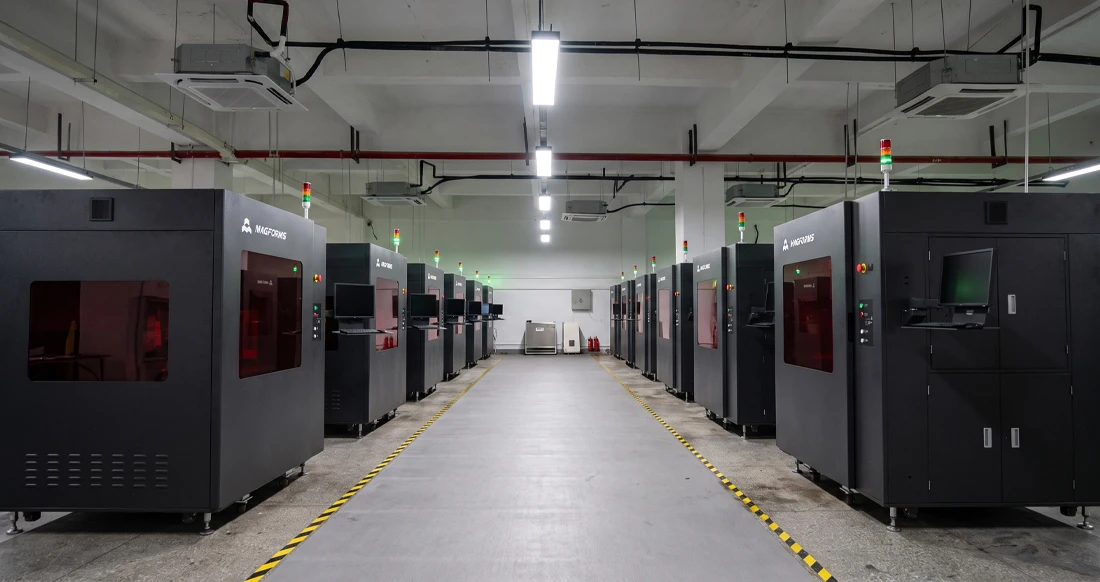
Magforms makes design and manufacture easier.
Popular Blogs
-
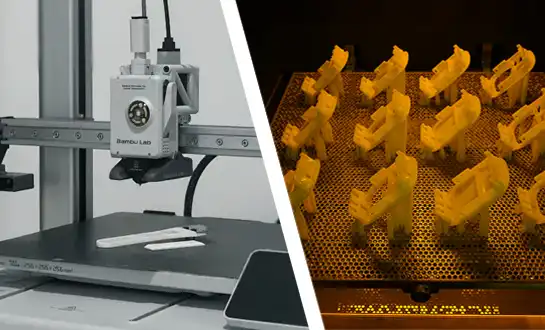 Industry InsightsManufacturing Industry
FDM vs. SLA Printer: Which Technology Is Right for Your Project?
-
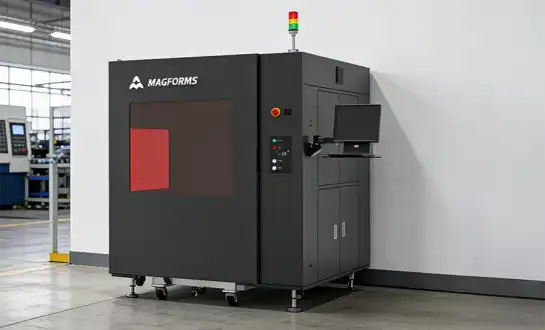 Industry InsightsManufacturing Industry
Top 5 Applications of Industrial 3D Printers in Manufacturing Today
-
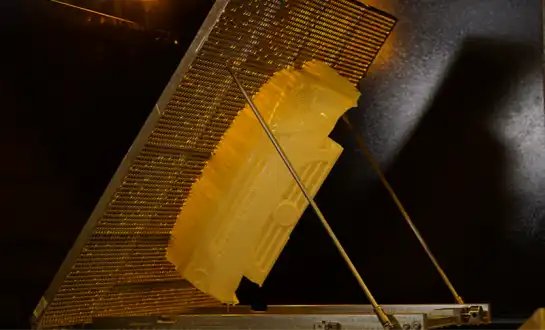 Industry InsightsManufacturing Industry
Why Stereolithography 3D Printers Are Unmatched for Microfluidic Device Prototyping?