Maximizing ROI with Your Industrial SLA 3D Printer Investment
To get the most out of your industrial SLA 3D printer investment, you need to understand how stereolithography technology improves manufacturing efficiency while optimizing long-term production costs. Precision manufacturing, optimized material usage, and faster product development cycles are just a few of the ways that an industrial SLA 3D printer can support demanding manufacturing applications. Businesses in the automotive, medical, aerospace, and consumer electronics industries can reduce time-to-market and optimize per-part costs by selecting stable equipment that supports multiple materials and provides reliable technical support. When procurement teams look at the full costs of owning an additive manufacturing machine, such as machine uptime, resin efficiency, and post-processing needs, they can get the most out of their investments.
Understanding Industrial SLA 3D Printing Technology
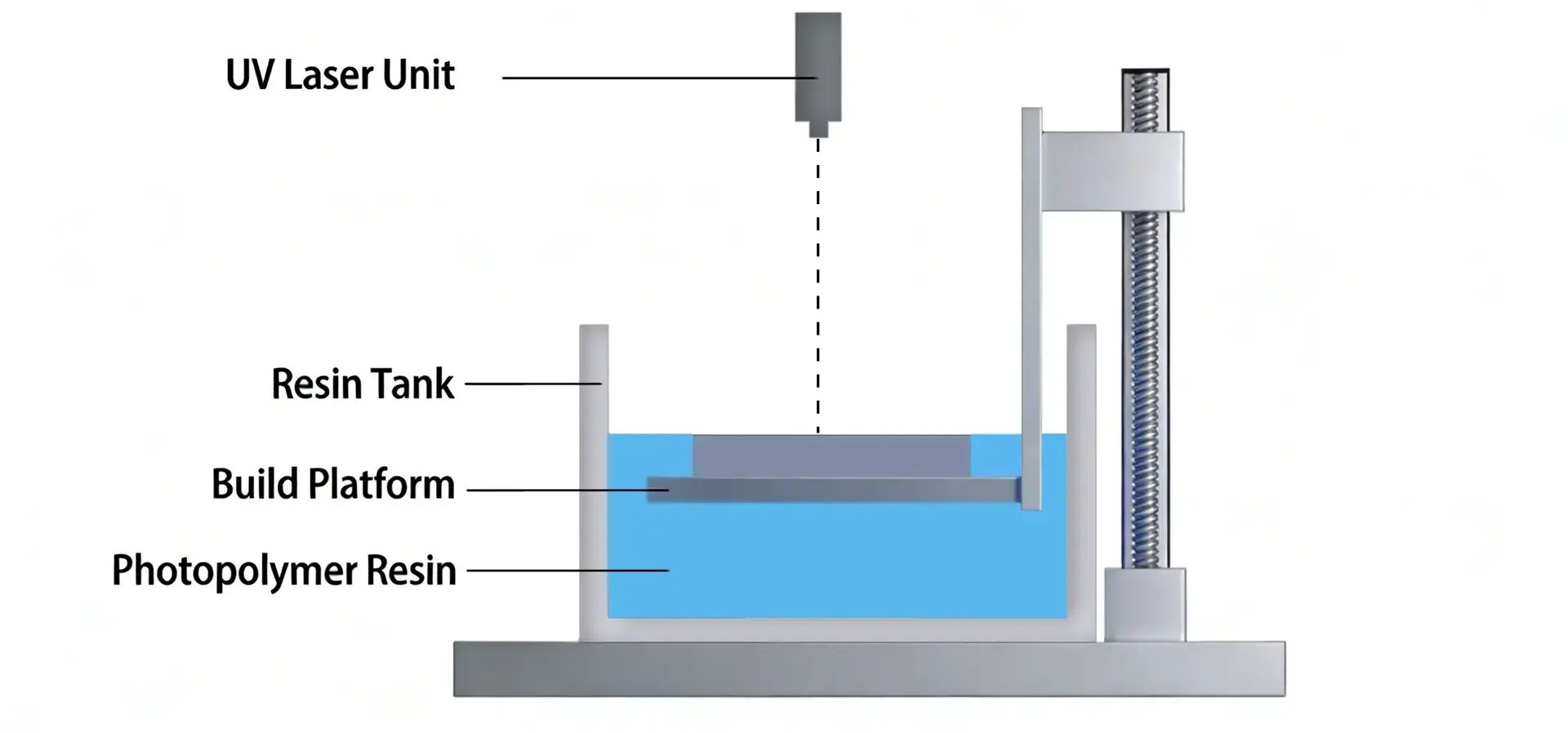
Stereolithography is an important technology for companies that need products with very good surface quality and accurate measurements. An industrial SLA 3D printer works by directing a precise laser beam across liquid photopolymer resin, selectively curing each layer with high process control and enabling fine feature reproduction at the micrometre scale. A solid-state 355nm laser system, high-precision galvanometer mirrors, resin vat, recoating mechanism, and thermally stable build platform are key components that work together to achieve consistent part quality. These components work together to produce parts with complex geometries and excellent surface quality.
👉 What is SLA 3D printing technology
How Stereolithography Delivers Business Value
A resin vat containing liquid photopolymer resin is prepared for the printing process, where the material is selectively cured by a UV laser. Galvanometer mirrors guide the laser beam across the resin surface, tracing the cross-sectional geometry of each layer to selectively cure the photopolymer material. After each layer is cured, the build platform moves according to the configured layer thickness, typically ranging from tens to hundreds of micrometres depending on the material, application requirements, and machine configuration. A recoating system then applies a new layer of resin before the next exposure cycle begins. This cycle continues until the complete part is formed and ready for cleaning and post-curing.
Material Versatility and Application Range
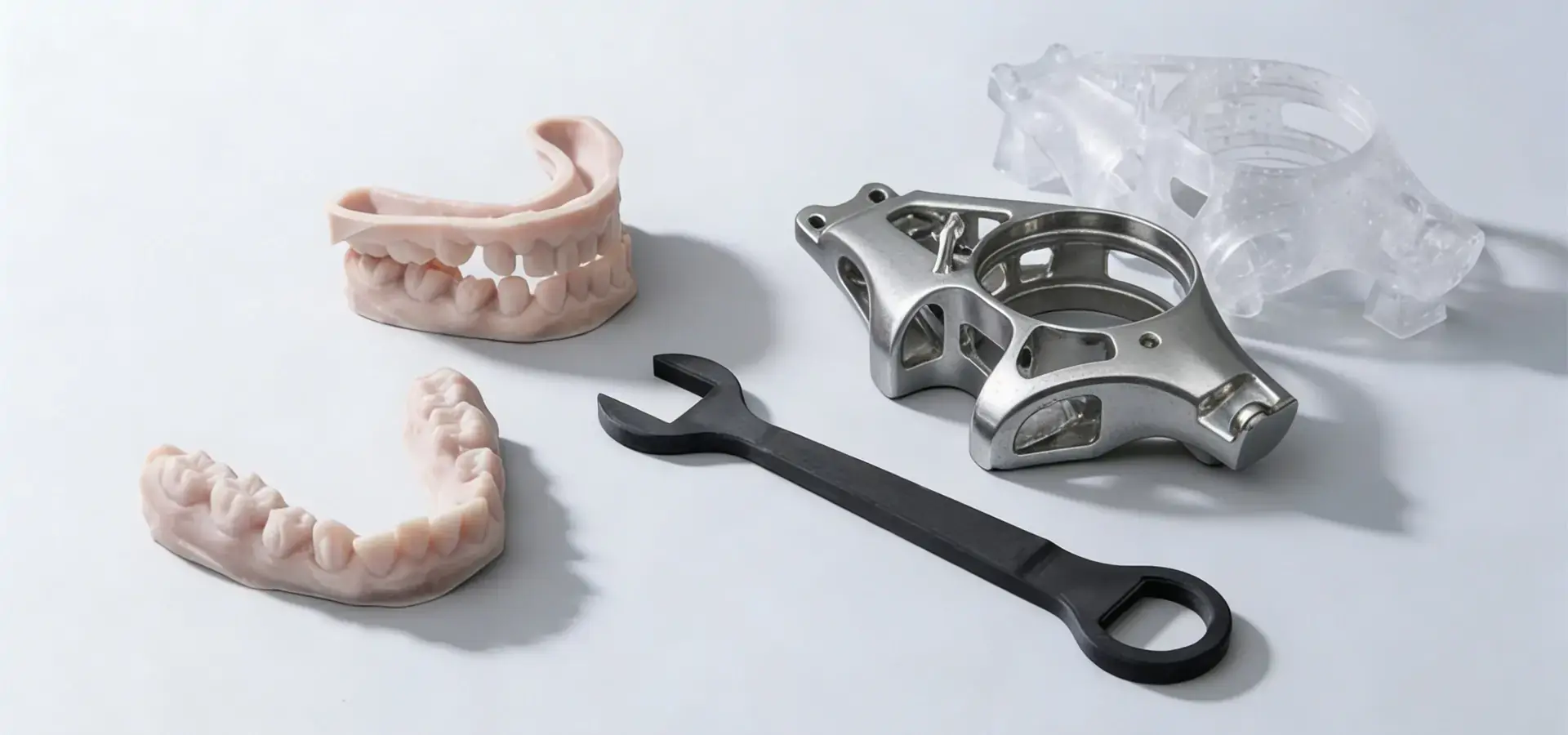
Modern industrial SLA systems support a wide range of photopolymer resins, including engineering-grade formulations with ABS-like mechanical properties and optically clear materials for functional prototypes. Certified biocompatible resins can be used for specific medical and dental applications such as models and surgical guides, while selected high-temperature resin formulations are designed for applications requiring elevated thermal resistance and sterilization compatibility. Because industrial SLA systems support application-specific resin options, they are valuable for industries that require rapid design validation and functional prototype testing.
Companies that work with cars use these systems to make prototypes of interior parts that are tested to make sure they fit right before expensive tooling is made. Aerospace engineers use industrial SLA 3D printers to validate complex bracket designs and geometries that may be difficult, time-consuming, or costly to manufacture through traditional machining methods. Consumer electronics companies try ergonomics and assembly interactions with printed casings over and over again every week.
👉 Explore how Industrial SLA technology is applied in real production environments through our Industrial SLA 3D printing application cases.
Key Factors Influencing ROI in Industrial SLA 3D Printer Investments
Whether the equipment becomes a long-term value generator or an unnecessary cost depends on how well businesses understand the factors that influence ROI. The measurement of ROI includes more than just the original buy price. It also takes into account increases in output, decreases in failure rates, and better operating efficiency.
Performance Metrics That Impact Financial Returns
The resolution, dimensional accuracy, surface quality, and material performance of an Industrial SLA 3D Printer directly influence the suitability of printed parts for different applications. Industrial SLA systems capable of producing parts smaller than 100 mm with dimensional accuracy around ±0.1 mm can reduce the need for additional finishing operations in many prototyping and small-batch production applications. Batch efficiency depends on production requirements and part layout. Larger build platforms can reduce cost per part when multiple components are efficiently arranged within a single build. Throughput depends on the speed of the laser scan and the thickness of the layer. Variable spot technology can improve production efficiency by adjusting laser spot size according to different printing requirements. Large spot sizes can accelerate bulk-area exposure, while smaller spots maintain detailed feature accuracy, potentially reducing build times compared with fixed-spot systems.
In settings with constant production, how much energy is used is important. Operating costs go up when equipment uses too much power during long build cycles. This is especially true for service bureaus that work multiple shifts. Temperature control systems help maintain consistent resin viscosity and printing conditions, reducing material-related defects and improving process stability.
Total Cost of Ownership Considerations
The initial equipment purchase price is only one component of total cost of ownership over the machine’s lifecycle. Resin consumption, maintenance, labor, energy usage, and downtime also influence the overall investment return. Resin costs can vary significantly depending on material formulation, performance requirements, and supplier strategy. Open-material systems can provide greater flexibility by allowing users to evaluate different qualified resin options, while closed-material systems may offer validated material performance and simplified workflow management. Post-processing work, like removing supports, cleaning, and UV sealing, adds costs to each part that can be cut down by streamlining processes.
Hidden costs are based on how much maintenance is needed. When machines are equipped with high-quality components such as Panasonic servo motors and Scanlab galvanometers, they can achieve improved operational stability. When a system has problems with tuning or parts breaking down every week, it slows down production, which hurts the company's image and causes customers to wait longer for their orders. Equipment using industrial-grade components such as AOC laser sources and Schneider electrical systems can improve long-term reliability when combined with proper maintenance and regular calibration procedures.
Comparing SLA with Alternative Technologies
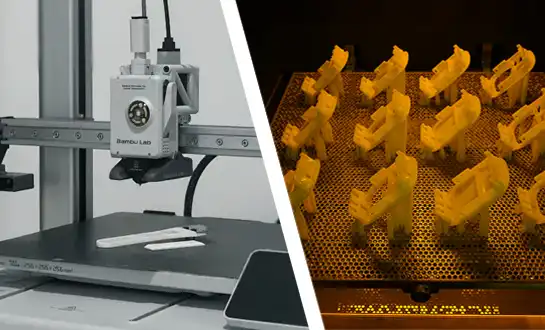
Although FDM printers generally have lower entry costs, industrial SLA systems typically provide superior surface finish and dimensional accuracy for applications such as dental models, precision prototypes, and visual validation parts. FDM remains valuable for applications requiring durable thermoplastic materials and larger functional components. SLS technology is well suited for functional production parts and complex geometries without support structures. However, it requires powder handling systems and may involve additional surface finishing depending on application requirements. DLP systems can achieve fast layer exposure by curing an entire layer simultaneously, making them effective for certain high-throughput applications. Industrial SLA systems, however, offer advantages in scalable build volumes, laser-controlled precision, and consistent surface quality for large-format prototyping and small-batch production requirements.
Choosing the Best Industrial SLA 3D Printer for Your Business Needs
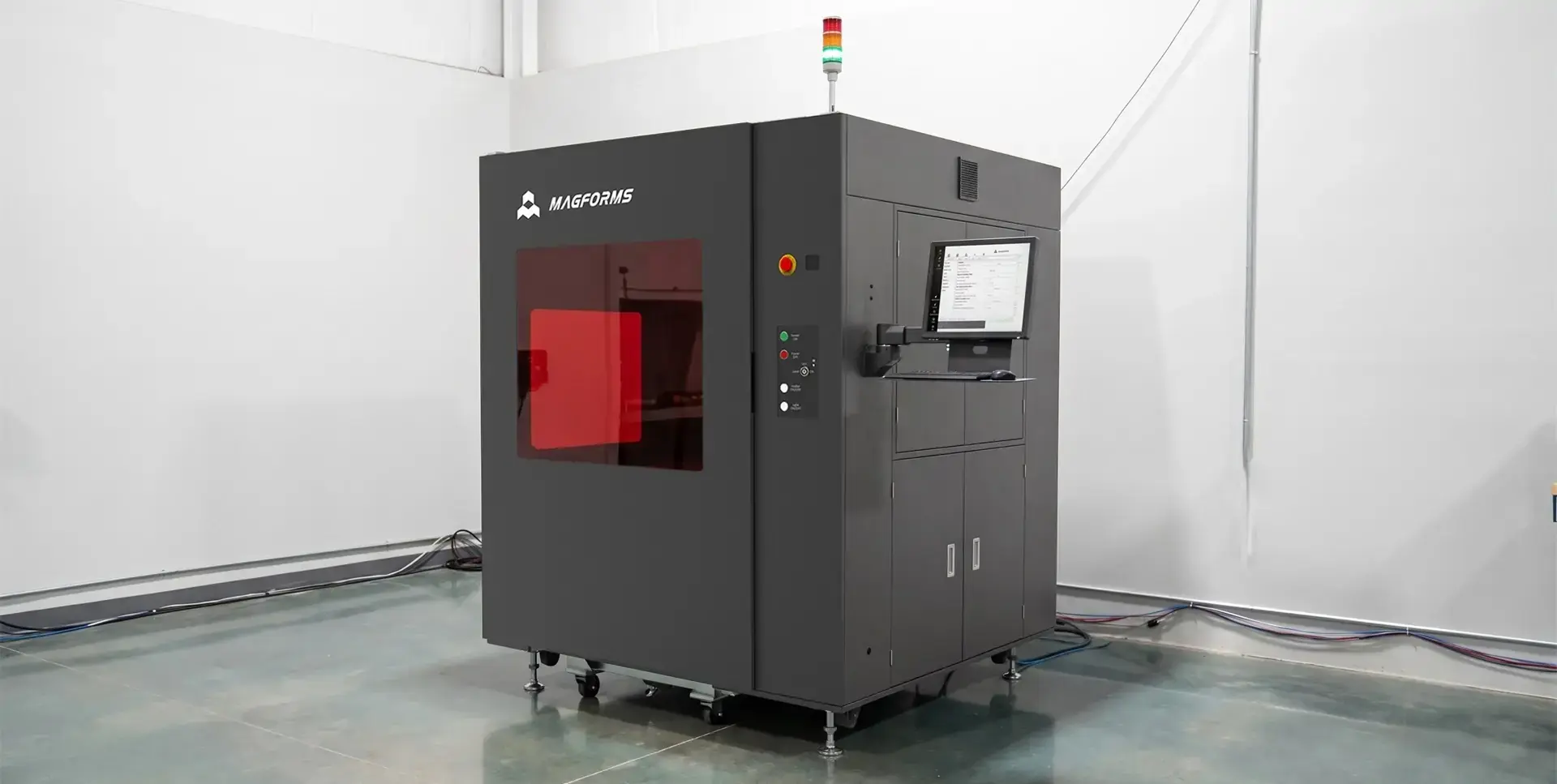
The choice of equipment plays an important role in determining whether an additive manufacturing investment delivers sustainable business value. Technical capabilities should be matched with actual production needs, and supplier stability and service quality should be taken into account when making procurement decisions.
Defining Your Manufacturing Objectives
When operations focus on prototyping, speed and a variety of materials are valued so that designs can be changed quickly. To make sure that hundreds of parts can be put together correctly, small-batch production environments need accurate parts that are all the same. For tooling purposes, systems must be able to keep their dimensions stable over long build times so that large patterns don't warp.
Evaluation Criteria for Equipment Selection
ROI is built on the idea of reliability. Machines with stable AOC laser sources and German Scanlab galvanometers keep the quality of the beam and the accuracy of the position even after millions of scanning rounds. A high-precision motion system with micron-level positioning capability helps maintain stable layer alignment. However, final part accuracy also depends on resin characteristics, optical calibration, thermal control, and process parameters. This helps minimize process variations that could affect part quality and dimensional consistency.
The working freedom is based on how well the materials work together. Businesses can find cheap materials and try special formulas for specific uses with open-system designs that support qualified industrial photopolymer resins designed for 355nm laser-based SLA processes. Closed material systems can provide validated performance and simplified workflows, while open systems offer greater flexibility in evaluating qualified resin options.
Quality of after-sales support is what separates successful implementations from ones that go wrong. A technology team that responds quickly and fixes problems within 24 hours keeps production plans from being thrown off by long periods of downtime. Suppliers of equipment that offer full training, software changes, and online troubleshooting make it easier to learn how to use the system and keep it running well for years.
Understanding Market Options
Well-known additive manufacturing companies such as 3D Systems and Formlabs serve different market segments with various resin-based 3D printing solutions. For industrial laser-based SLA applications, buyers should evaluate factors such as build volume, laser system, material compatibility, accuracy, and production reliability. Distributors and service networks in Europe and North America can provide valuable local support resources that help reduce response times and improve equipment availability. Material compatibility concerns in mixed-vendor environments can be reduced by suppliers that provide integrated material and equipment solutions.
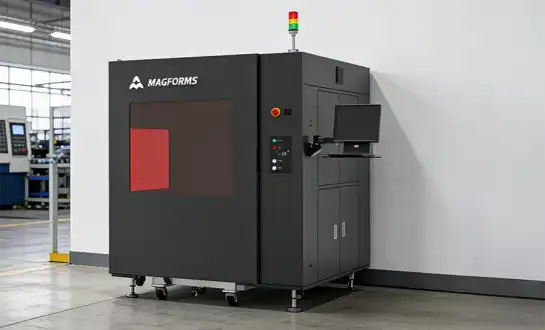
Magforms' SL800 Industrial SLA 3D Printer combines large build volume, variable laser spot technology, and industrial-grade components for demanding applications. This integrated approach helps improve compatibility between hardware parameters and resin characteristics, reducing potential variations caused by mismatched material and process settings. Their systems incorporate industrial components such as HIWIN linear guides and Philips optical components to support motion stability and long-term process consistency.
Optimizing Operations to Maximize ROI Post-Purchase
Getting new equipment is not the end of ROI optimisation; it is just the beginning. The best way to get the most out of your technology investment is to improve processes and do preventative upkeep.
Workflow Optimization Strategies
Print preparation software directly influences workflow efficiency, build success rate, and overall production consistency. The iBuild 2.0 interface provides streamlined workflow controls and responsive operation features that help reduce preparation time and improve operator efficiency. Intelligent support generation algorithms help optimize the balance between part stability during printing and easier post-processing afterward.
Variable laser spot technology shows improvements in operational efficiency. Large spots measuring 0.5 to 0.6 mm quickly fill in solid areas inside, while 0.15 to 0.2 mm micro-spots are used for supports and outlines. Compared with fixed-spot scanning approaches, dynamic spot adjustment can improve scanning efficiency in suitable applications by reducing unnecessary fine-detail scanning in large-area regions. Optimized scanning strategies and advanced path planning algorithms can further improve productivity by reducing unnecessary laser movement and improving exposure efficiency.
The way resin is managed cuts down on material loss by a large amount. Efficient resin management systems help reduce material waste by allowing excess resin on completed parts and supports to be recovered, filtered, and reused when appropriate. This type of resin management can help reduce material waste and improve overall resin utilization. Built-in temperature control helps maintain stable resin viscosity under changing environmental conditions, improving process consistency.
Integration with Existing Manufacturing Processes
Adopting additive manufacturing successfully means combining new features with existing processes. Printed prototypes can be inspected using measurement methods similar to those used for machined components, including CMM inspection and 3D scanning, depending on accuracy requirements. The accuracy is checked by using a CMM or 3D scanning. When parts meet the assembly tolerances, they go straight to fit testing, which cuts down on iteration cycles that used to take weeks.
Regular checks of the laser power should be part of quality control processes to make sure that the right resin cure energy density is being maintained. Using precision markers to check the smoothness of a platform can help find wear before it affects the accuracy of a part. Confirmation of the galvanometer's calibration ensures that the accuracy of the scanning path stays within the limits set for the whole build area.
Maintenance Planning for Sustained Performance
Schedules for proactive maintenance of the Industrial SLA 3D Printer keep unexpected failures from stopping production. Regular optical path inspection and cleaning according to manufacturer recommendations help prevent contamination that may affect laser transmission and print consistency. Periodic resin vat inspection helps identify surface damage, contamination, or wear before these factors affect print quality. Annual service performed by trained technicians helps identify wear-related issues before they affect equipment performance.
Rigid machine structures, vibration control designs, and stable mechanical components help maintain equipment accuracy and reliability during long-term industrial operation. Systems using high-quality linear guides and precision motion components help maintain Z-axis positioning accuracy and reduce mechanical variation during extended operation when properly maintained. These features make it last longer and lower the costs of maintenance over time while keeping the quality of the output consistent.

Enhancing Procurement Confidence and Investment Security
Strategies for reducing risk protect capital investments and make sure that production can continue when it's needed. Businesses can make smart purchases that pay off over the life of their tools by learning about guarantee arrangements, finance choices, and technology trends.
Warranty Coverage and Technical Support
Comprehensive warranty programs that cover key parts protect you financially against failures that happen too soon. Additional service agreements or maintenance plans can help businesses better manage replacement costs for consumable and wear-related components such as resin tanks and optical windows. Service level agreements that promise reaction times keep production plans on track even when there are technology problems.
Magforms provides professional after-sales support services designed for industrial production environments, including technical consultation, troubleshooting assistance, and equipment maintenance guidance. Their commitment to responding to customer inquiries within 24 hours helps shorten communication cycles and supports faster problem resolution during equipment operation. This responsiveness is especially useful when production is high, and downtime has a direct effect on revenue.
Flexible Financing and Procurement Options
Leasing agreements help businesses keep their working capital and give them access to new technology. When compared to big purchases up front, monthly payments better manage cash flow because they align equipment costs with revenue generation. Purchasing multiple systems may provide opportunities for volume-based pricing advantages and improved investment efficiency depending on supplier agreements.
When upgrading to new systems with better features, trade-in programs for old tools help cover the costs of the change. These choices make it affordable for companies that want to stay ahead of the competition by always getting better to update their technology.
Future-Proofing Technology Investments
As the industry moves toward faster speeds, bigger build volumes, and more material compatibility, the criteria used to choose equipment change. Systems with software that can be updated and hardware that can be put together in different ways can adapt to new needs without having to be completely replaced. Open-material designs make sure that new plastic formulas can be used as soon as they hit the market.
Future developments in additive manufacturing may include greater use of AI-assisted build preparation, automated quality monitoring, and data-driven process optimization. Investing in equipment that has extra processing power to support future software updates protects against losing value as these technologies get better. Cloud connectivity, remote monitoring, and predictive maintenance capabilities are expected to become increasingly important features in future industrial additive manufacturing systems.
Conclusion
To get the best return on investment (ROI) from industrial SLA 3D printer investments, you need to carefully choose the equipment, make sure it works perfectly, and be proactive about getting help. When businesses can make things more precisely, they can cut down on the time it takes to make prototypes, the waste of materials, and the need for extra processing. Selecting systems equipped with high-quality components, such as Scanlab galvanometers and Panasonic servo motors, can improve long-term reliability and help reduce the risk of unexpected downtime. Open material compatibility provides greater flexibility in evaluating resin options and optimizing material costs while requiring appropriate validation for production applications. A complete technical help system keeps output going by fixing problems quickly. When businesses look at the total costs of ownership, adopt optimised processes, and use the knowledge of their suppliers, additive manufacturing goes from being an investment to a way to make money and gain a competitive edge in both product creation and production.
FAQ
1. What factors most significantly impact industrial SLA 3D printer ROI?
Equipment reliability determines operational consistency and prevents revenue losses from unplanned downtime. Systems built with industrial-grade components such as AOC laser sources and Scanlab galvanometers can support consistent performance over extended operation when combined with proper calibration and maintenance. Print speed directly affects throughput; variable spot technology and optimized scanning strategies can improve productivity by reducing unnecessary scanning time in suitable applications. Material compatibility influences consumable costs—open systems supporting most 355nm resins provide sourcing flexibility that proprietary cartridge systems restrict. After-sales support quality affects how quickly technical issues are resolved; response times under 24 hours minimize production disruptions.
2. How does SLA compare with SLS and FDM for production applications?
Industrial SLA delivers superior surface finish and dimensional accuracy essential for applications requiring minimal post-processing. Industrial SLA parts typically achieve smoother surface finishes than many FDM-produced parts, reducing the amount of manual finishing required for applications where appearance and fine details are important. Compared with SLS, stereolithography offers transparent and biocompatible material options unavailable in powder-based systems. Build preparation proves simpler without powder handling and recycling infrastructure. While FDM offers advantages in thermoplastic material selection and functional prototypes, industrial SLA is often preferred when superior surface finish, fine details, and dimensional accuracy are required.
3. What maintenance routines maximize equipment lifespan and performance?
Regular optical path cleaning maintains laser beam quality and prevents contamination-related print defects. Regular resin vat inspections help identify surface imperfections, contamination, or wear before they affect print quality. Quarterly galvanometer calibration verification ensures scanning accuracy remains within specification across the entire build platform. Annual comprehensive service by trained technicians addresses wear components proactively. Monitoring platform flatness using precision indicators detects mechanical changes before they affect dimensional accuracy. Verifying laser power output maintains proper curing energy density that ensures complete resin polymerization and optimal mechanical properties.
Partner with a Trusted Industrial SLA 3D Printer Manufacturer
Magforms combines material science expertise with precision equipment engineering to deliver industrial SLA 3D printer solutions that maximize your manufacturing ROI. Our integrated approach ensures perfect compatibility between proprietary resins and hardware, eliminating the dimensional deviations and print failures that occur with mixed-vendor systems. Equipment built with components such as Scanlab galvanometers, Panasonic servo motors, and AOC laser systems helps provide the reliability required for demanding production environments. Open material architecture supports most 355nm formulations, giving you cost control flexibility without sacrificing quality. The professional after-sales team responds to inquiries within 24 hours, preventing the production delays that damage customer relationships. With 22 patents, 30 trademarks, and installations serving over 300 enterprises globally, Magforms represents proven performance backed by comprehensive technical support. Contact our procurement specialists at info@magforms.com to discuss how our industrial SLA 3D printer solutions align with your specific manufacturing objectives and budget requirements.
References
1. Gibson, I., Rosen, D., & Stucker, B. (2021). Additive Manufacturing Technologies: 3D Printing, Rapid Prototyping, and Direct Digital Manufacturing. Springer.
2. Wohlers, T. (2022). Wohlers Report 2022: 3D Printing and Additive Manufacturing Global State of the Industry. Wohlers Associates.
3. Jacobs, P. F. (2019). Stereolithography and Other RP&M Technologies: From Rapid Prototyping to Rapid Tooling. Society of Manufacturing Engineers.
4. Chua, C. K., & Leong, K. F. (2020). 3D Printing and Additive Manufacturing: Principles and Applications. World Scientific Publishing.
5. Lipson, H., & Kurman, M. (2021). Fabricated: The New World of 3D Printing. John Wiley & Sons.
6. Kruth, J. P., et al. (2018). "Quality Control and Process Monitoring in Additive Manufacturing." CIRP Annals - Manufacturing Technology, 67(2), 585-609.

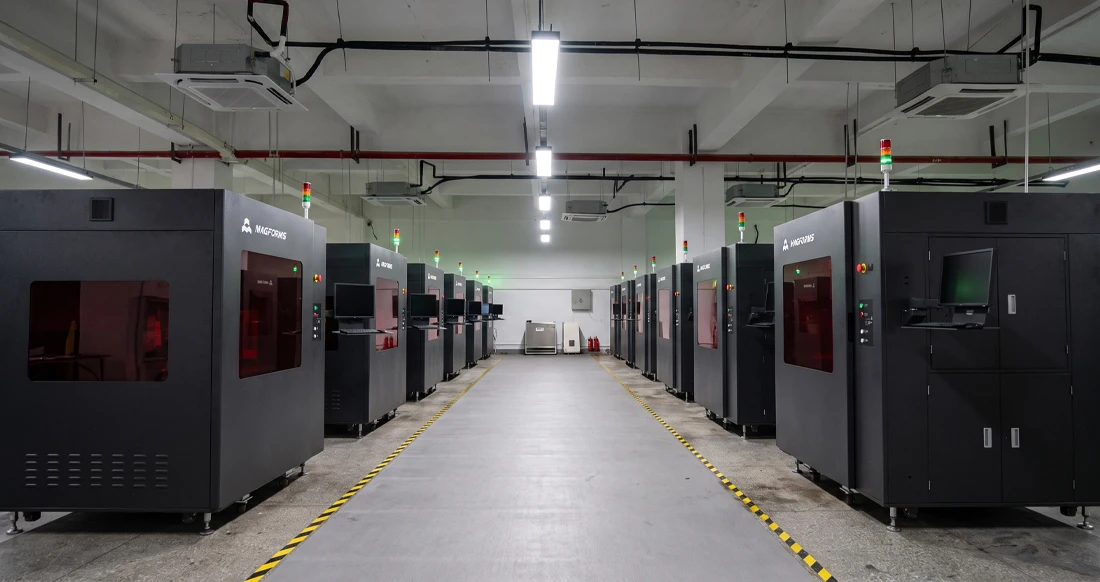
Magforms makes design and manufacture easier.
Popular Blogs
-
 Industry InsightsManufacturing Industry
FDM vs. SLA Printer: Which Technology Is Right for Your Project?
-
 Industry InsightsManufacturing Industry
Top 5 Applications of Industrial 3D Printers in Manufacturing Today
-
 Industry InsightsManufacturing Industry
Why Stereolithography 3D Printers Are Unmatched for Microfluidic Device Prototyping?