Why Choose a China Resin 3D Printer from a Trusted Manufacturer?
Businesses that want to use high-precision additive manufacturing but don't want to pay the high prices of Western brands can get a China resin 3D printer from a reputable maker. Chinese companies have made vat photopolymerization technology, especially mSLA and DLP systems, more available and dependable so that it fits strict industry standards. These printers are great choices for buyers in the car, aircraft, medical, and consumer electronics industries because they have advanced technical specs, can print on a wide range of materials, and offer quick support after the sale. Trusted makers stand out by having certifications that are recognised around the world, strict quality control procedures, and a history of working with global businesses.
Understanding China Resin 3D Printer Technology
Core Technical Architecture and Performance Metrics
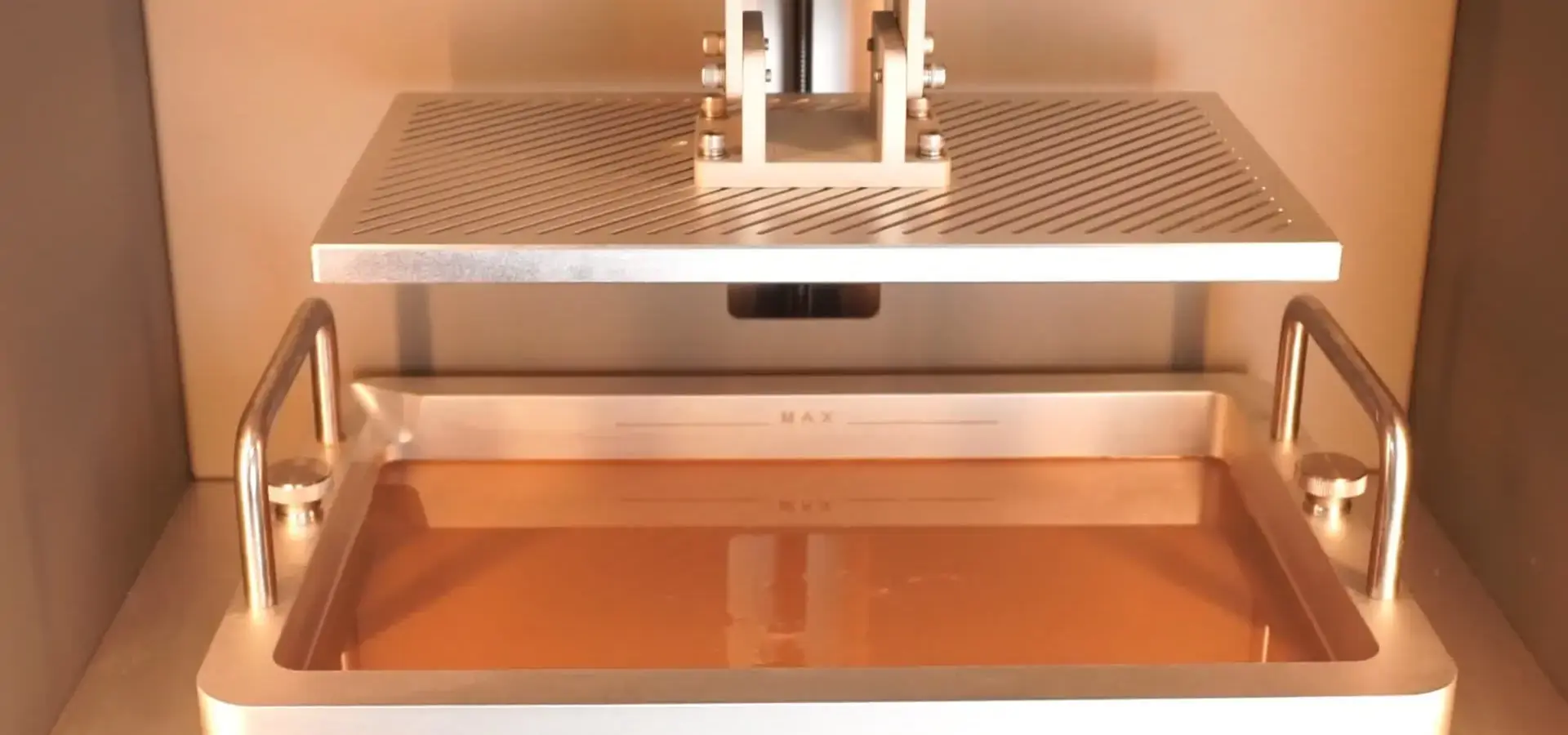
Chinese companies that make modern resin 3D printing systems are very good at quickly improving technology. Modern LCD-based mSLA systems commonly utilize monochrome LCD screens ranging from 4K to 14K resolution, enabling XY pixel sizes typically between 19 and 35 microns depending on the build area and screen size. This level of resolution directly affects the quality of the surface finish and the accuracy of the measurements, which are very important for uses like making models for jewellery casting and oral surgery guides.
The way the light source is set up is another place where big progress has been made. Premium LCD resin printers often employ COB LED light sources combined with Fresnel lenses or collimation optics, achieving light uniformity levels commonly exceeding 90% across the build platform. This uniformity guarantees reliable curing from edge to edge, eliminating the edge failure issues common in older desktop resin printers.
Precision in mechanics is just as important. Dual linear guide rails help minimize Z-axis wobble and layer alignment deviations, improving dimensional consistency throughout tall builds. This mechanical stability is crucial when printing vertically stacked parts that require smooth layer adhesion across hundreds of layers. Also, resin vats are much more chemically stable now than they were before. Modern FEP, nFEP, and ACF release films allow high-speed peeling forces, enabling some high-speed LCD resin printers to achieve print speeds approaching 100–150 mm/h under optimized conditions using dedicated high-speed resins and advanced release film technologies.
Material Compatibility and Open Ecosystem Advantages
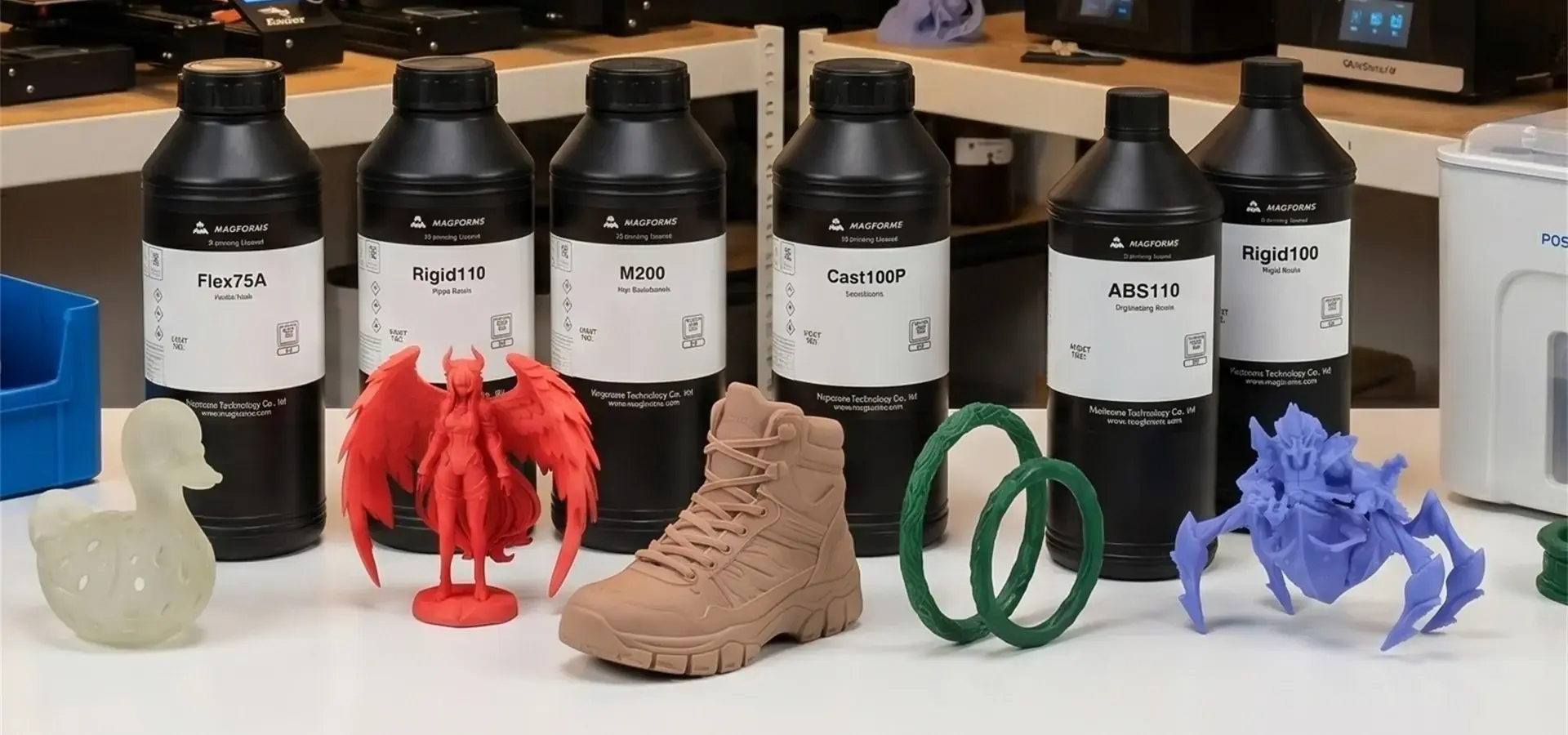
Chinese makers have mostly adopted open material systems, which is very different from the proprietary methods that Western names usually use. Users can adjust exposure parameters to optimize compatibility with a wide range of engineering, flexible, high-temperature, and biocompatible resins. The economic impact is substantial: third-party resins often cost 40–60% less than proprietary options, while offering unique properties such as the ability to produce ceramic-filled composite parts or castable wax-like patterns.
Compliance of China resin 3D printers with international safety and quality requirements has improved significantly in recent years. Manufacturers who want to sell their products abroad regularly get CE, FCC, and RoHS certifications to make sure their products meet international safety and electromagnetic compatibility standards. Compliance with regulations lowers the risk of buying things for people in North America and Europe, where regulations can slow down or stop the rollout of equipment.
Maintenance Protocols and Operational Longevity
Reputable makers give thorough upkeep instructions that include how to repair worn-out parts. As a key consumable, monochrome LCD screens typically provide service lives ranging from approximately 2,000 to 3,000 operating hours, which is four times longer than older RGB screens. It is easy for in-house technical teams to keep equipment without having to constantly ask the maker for help because clear documentation includes when to change FEP films, clean resin vats, and lubricate linear rails.
Support for troubleshooting is what sets high-quality brands apart from cheap options. Downtime is kept to a minimum by having access to technical literature in English, helpful online support channels, and new parts that can be sent from foreign stores or regional wholesalers. Leading makers keep extra parts for important parts like motherboards, LCD screens, and optical systems in stock. This way, new parts can be sent out within days instead of weeks.
Why Trust a Reputable China Resin 3D Printer Manufacturer?
Rigorous Quality Control and Testing Protocols
At the level of the component, quality checking starts. Manufacturers that you can trust do incoming quality control (IQC) on raw materials and subassemblies and then full final quality control (FQC) before sending the goods out. The optical integrity test checks that the UV light strength is the same at nine specific places on the build plate. This ensures that the curing process remains consistent every time. Z-axis alignment checks using dial indicators verify axis parallelism and eliminate backlash, preventing layer shift defects that compromise dimensional accuracy. This stops layer shift flaws that affect the accuracy of the dimensions.
When checking the durability of an LCD screen, dead pixels are looked at, and heat stress is measured. Serious makers put their machines through 72 hours of continuous operation burn-in tests, which can be dry runs or real print jobs. This is done to find power sources or control boards that break down too soon before the equipment leaves the factory. These guidelines cut down on DOA (Dead on Arrival) rates by a large amount, which is important for long-distance shipping from Chinese ports to foreign locations.
Intellectual Property and Innovation Investment
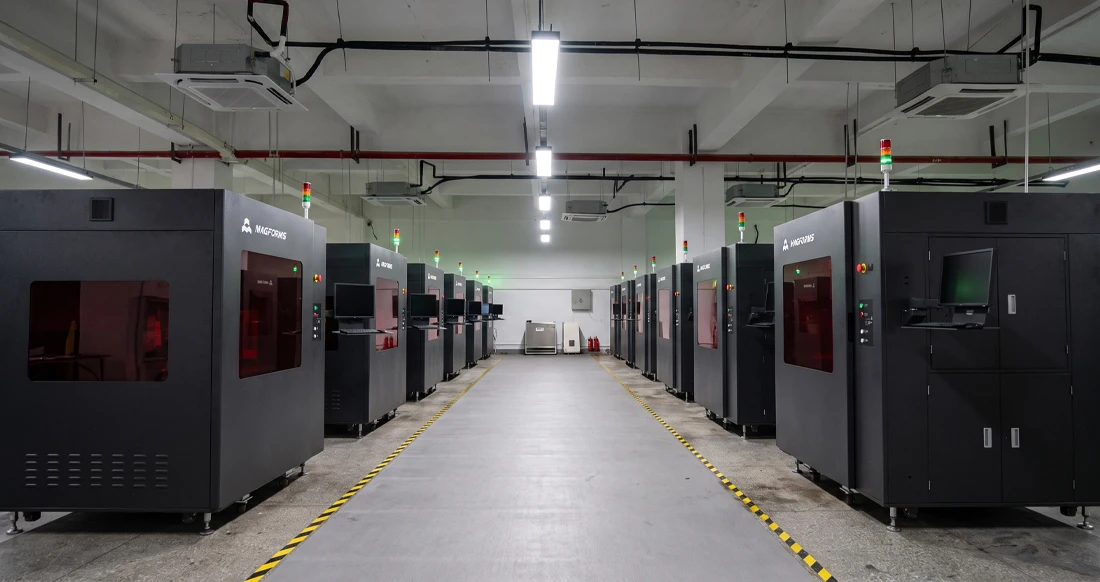
Leading Chinese manufacturers have moved beyond simple copying to genuine innovation. Patent portfolios may cover optical system designs, material formulations, process optimization methods, and equipment architecture innovations. Magforms, serving over 300 enterprises globally with products exported to dozens of countries, holds 22 patents and 30 registered trademarks—intellectual property that underpins continuous product improvement and differentiates offerings in competitive markets.
Research and development investment drives tangible performance improvements. Continuous investment in additive manufacturing technologies, including optical system optimization and process parameter development, has led to measurable improvements in printing efficiency and accuracy across product lines. These advancements shorten lead times for rapid prototyping and small-batch production, enabling customers to respond more quickly to market demands and competitive pressures.
Integrated Materials and Equipment Solutions
A distinguishing characteristic of advanced Chinese manufacturers is the provision of integrated solutions combining proprietary resins with optimized hardware. This vertical integration eliminates compatibility issues that plague users attempting to match third-party materials with equipment originally designed for different formulations. Dimensional deviations, incomplete curing, adhesion failures, and unplanned downtime associated with material-hardware mismatches are systematically addressed through coordinated development.
Magforms exemplifies this approach by offering end-to-end solutions where self-developed materials and printers undergo joint optimization. The synergy between material chemistry and machine parameters—exposure duration, UV intensity, peel forces—ensures predictable outcomes across production runs. This integration particularly benefits operations requiring certified material performance, such as medical device prototyping or aerospace component validation, where traceability and consistency are non-negotiable.
Comparing China Resin 3D Printers with Other Options
Technical Performance Benchmarks
When evaluating Chinese resin printers against alternatives, several performance dimensions warrant examination. Resolution capabilities now match or exceed premium European brands, and advanced Chinese mSLA (LCD-based) systems can achieve XY pixel sizes around 20-35 microns and layer thickness settings as low as 10 microns, depending on machine configuration. This precision enables reproduction of fine surface textures, intricate lattice structures, and tight tolerance features essential for injection molding inserts or optical component prototypes.
Print speed comparisons reveal Chinese equipment advantages due to monochrome LCD technology adoption. Layer exposure times of 1-2 seconds combined with rapid Z-axis movement yield total print times 50-70% shorter than earlier RGB-based systems. This speed advantage directly impacts throughput for service bureaus handling multiple client projects simultaneously or manufacturers producing batches of customized components.
Material compatibility breadth favors open-system Chinese printers. While Western brands increasingly offer third-party resin compatibility, Chinese manufacturers built this flexibility into their design philosophy from inception. Many open-material LCD resin printers support a broad range of standard, engineering, flexible, ceramic-filled, and biocompatible resins through optimized exposure parameter settings and material profiles—a capability that reduces inventory costs and expands application versatility.
Cost-Performance Analysis for B2B Buyers
Price-to-performance ratios for a China resin 3D printer represent perhaps the most compelling argument for Chinese equipment. Industrial-grade resin printers offering 200mm x 200mm x 200mm build volumes, monochrome 4K screens, and proven mechanical reliability are often available at substantially lower price points than comparable European or North American systems while offering similar core functionality. This cost differential enables smaller enterprises to access capabilities previously restricted to well-capitalized competitors.
Total cost of ownership extends beyond initial purchase price. Chinese printers' compatibility with economical third-party resins generates ongoing savings. A typical service bureau consuming 50 liters of resin monthly can realize annual savings exceeding $6,000 simply through material sourcing flexibility. When multiplied across a fleet of printers, these savings fund additional equipment purchases, staff training, or business development initiatives.
Operational expenses also merit consideration. Energy consumption, replacement component costs, and maintenance requirements directly impact profitability. Chinese manufacturers have optimized power supply efficiency and extended consumable lifespan, reducing these ongoing costs. Universal switching power supplies (110V-240V AC) eliminate voltage compatibility concerns across international markets, requiring only appropriate IEC power cables for regional deployment.
How to Choose the Right China Resin 3D Printer for Your Business
Critical Selection Criteria for Procurement Teams
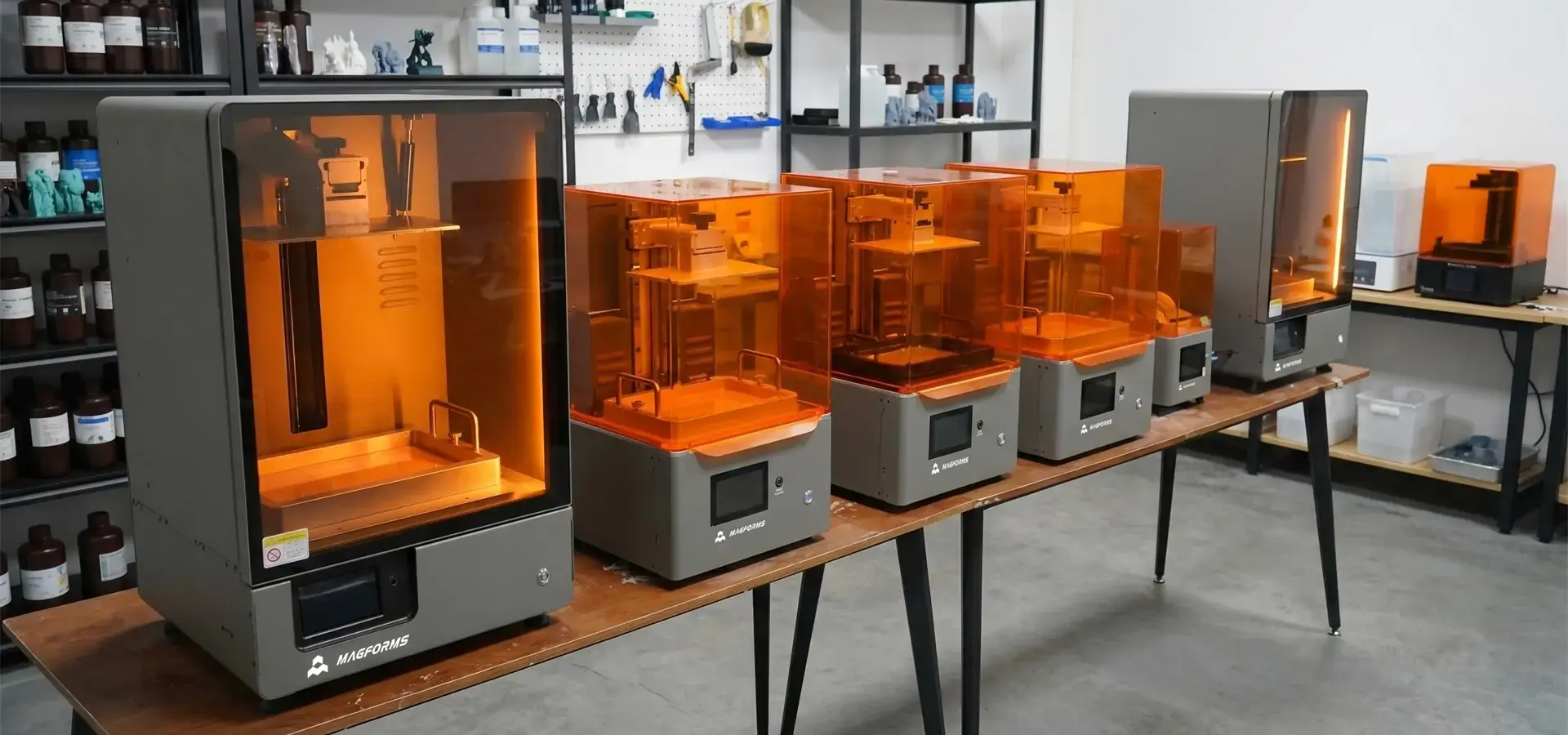
Resolution requirements should align with application demands. Dental model production and jewelry pattern creation necessitate maximum resolution—consider 8K or higher mSLA systems with sub-25-micron XY capability. Automotive interior component prototyping or consumer electronics housing development may function adequately with 4K resolution, allowing budget allocation toward larger build volumes or faster print speeds.
Build volume selection directly impacts part consolidation and production efficiency. Medical device manufacturers producing surgical guide batches benefit from larger platforms accommodating multiple parts per build, maximizing throughput. Conversely, hobbyist-focused service bureaus may prioritize compact footprints over expansive build areas, optimizing workspace utilization in constrained environments.
Print speed becomes crucial for high-volume operations. Service bureaus with rapid turnaround commitments or manufacturers supporting just-in-time production workflows should prioritize machines offering 100mm/h or faster print speeds. Variable lift speeds and optimized peel mechanisms in premium Chinese models significantly reduce total job completion times compared to entry-level alternatives.
Supplier Verification and Due Diligence
Manufacturer reputation assessment begins with verifiable operational history. Suppliers serving international markets for five-plus years demonstrate stability and customer satisfaction. Export volume, client testimonials, and case studies provide evidence of real-world performance. Participation in industry exhibitions across Europe, Asia, and North America signals commitment to transparent customer engagement and professional presentation.
Certification verification protects buyers from substandard equipment. Request copies of CE, FCC, and RoHS certificates, verifying document authenticity through issuing authority databases. ISO 9001 quality management certification indicates a systematic approach to manufacturing consistency. Intellectual property documentation—patents and trademarks—demonstrates innovation investment and reduces risk of purchasing designs infringing third-party rights.
After-sales support infrastructure requires careful evaluation. Inquire about warranty terms, typical response times for technical inquiries, availability of English-language documentation, and spare parts distribution networks. Manufacturers operating overseas warehouses in North America or Europe can provide replacement components within days, minimizing production disruptions. Technical training programs, whether on-site or virtual, accelerate operator proficiency and reduce user-error-induced failures.
Budget-Aligned Model Recommendations
Entry-level operations—startup service bureaus or university labs—should consider resin printers in the $800-$2,000 range offering 4K resolution, 150mm x 150mm build areas, and open material systems. These machines provide solid performance for learning workflows and serving initial client bases without excessive capital commitment.
Mid-tier buyers—established service providers or specialized manufacturers—benefit from $3,000-$8,000 systems featuring 6K-8K resolution, 200mm x 200mm x 250mm build volumes, and enhanced mechanical precision. These printers handle diverse projects simultaneously, supporting business growth without requiring frequent equipment upgrades.
Industrial-scale operations—automotive R&D departments, aerospace suppliers, or large medical device manufacturers—should evaluate premium Chinese equipment in the $10,000-$30,000 range. These systems offer 14K resolution, 300mm+ build platforms, advanced automation features, and comprehensive warranty coverage. Performance rivals equipment costing three times as much from Western brands, delivering exceptional return on investment.
Applications and Industry Benefits of China Resin 3D Printers
Digital Dentistry and Medical Device Production
Dental laboratories have embraced Chinese LCD resin printing technology for chairside manufacturing workflows. Clinics produce patient-specific models, surgical guides, and casting patterns for crowns directly from intraoral scans. The dimensional accuracy required—typically ±30 microns—ensures proper fitment and reduces remakes. Biocompatible resins enable production of temporary restorations and orthodontic aligner molds without equipment changes.
Medical device prototyping benefits similarly from precision and material versatility. Orthopedic implant manufacturers validate designs through multiple iteration cycles using cost-effective printing. Surgical planning models assist physicians in pre-operative visualization, improving procedural outcomes. Custom prosthetic components tailored to individual patient anatomy demonstrate the technology's capacity for mass customization in healthcare contexts.
Jewelry Design and Precision Casting
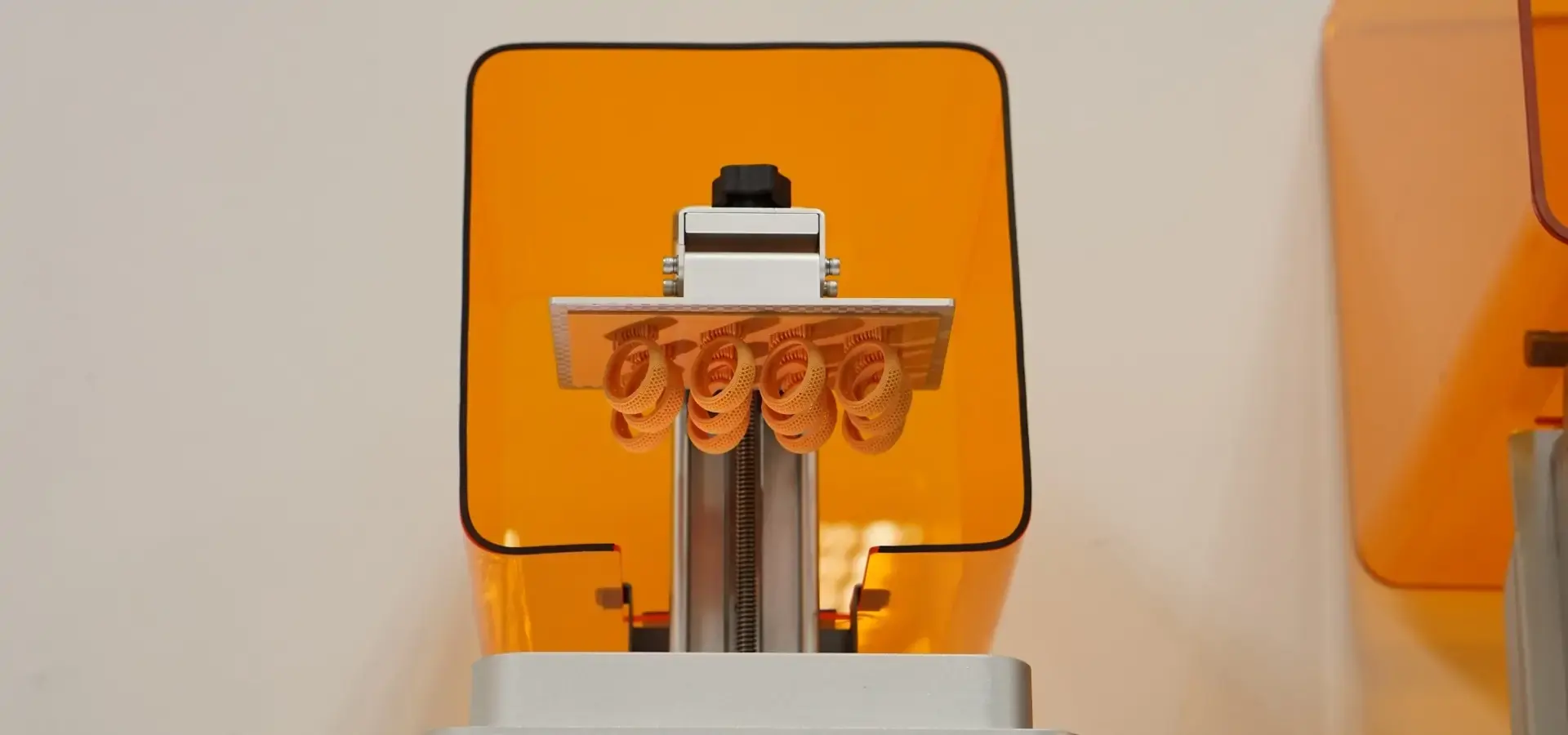
Jewelry manufacturers leverage high-resolution LCD-based mSLA and DLP printers for lost-wax casting pattern production. Intricate filigree work, gemstone settings, and complex geometries impossible to fabricate traditionally are printed in castable resins that burn out ash-free during investment casting. Surface finish quality directly from the printer minimizes hand-polishing labor, reducing production costs and time-to-market for custom pieces.
The capability to iterate designs rapidly transforms the creative process. Designers produce physical prototypes within hours of completing CAD work, enabling client approval before committing to precious metal casting. Small production runs of 10-50 identical pieces become economically viable, opening niche markets previously inaccessible due to tooling costs.
Automotive Prototyping and Aerospace Validation
Automotive manufacturers utilize China resin 3D printer equipment for interior component mock-ups, custom trim pieces, and functional testing of assembly interfaces. The speed advantage of Chinese equipment—printing overnight what previously required weeks of machining or molding—accelerates development cycles. Niche vehicle manufacturers producing limited runs benefit particularly, as 3D printing eliminates tooling investment for low-volume components.
Aerospace applications demand stringent material properties and dimensional accuracy. Chinese resin printers equipped with engineering-grade photopolymers are commonly used for prototype validation, fit-checking, and design verification of connectors, housings, and other non-flight-critical components. Small-batch production capabilities support spare parts manufacturing for legacy systems where original tooling no longer exists, reducing supply chain dependencies.
Consumer Electronics and Wearable Device Development
The rapid product update cycles characterizing consumer electronics align perfectly with resin printing capabilities. Designers produce functional prototypes of wearable device housings, earbud shells, and internal structural components within 24 hours of concept approval. Fit-testing with actual electronic assemblies identifies interference issues before committing to injection molding tooling, saving substantial costs on potential redesigns.
Chinese printer affordability enables maintaining dedicated equipment for specific product lines, eliminating scheduling conflicts and material changeover delays. Simultaneous development of multiple product variants proceeds in parallel, supported by machines optimized for their respective size ranges and resolution requirements.
Sustainability Considerations and Best Practices
Resin waste management has improved through recycling initiatives and eco-friendly material development. Used resin can be filtered and repurposed for non-critical applications, reducing disposal costs. Bio-based photopolymers derived from renewable feedstocks offer lower environmental impact than traditional petroleum-based formulations. Chinese manufacturers increasingly support these materials, expanding sustainable manufacturing options.
Integrating resin printing into existing workflows requires attention to environmental controls, proper ventilation, and operator safety protocols. Wash and cure stations automate post-processing, ensuring consistent part quality while minimizing solvent exposure. Scheduled maintenance prevents unexpected failures that disrupt production schedules and generate scrap parts.
Conclusion
Selecting a China resin 3D printer from a trusted manufacturer delivers measurable advantages across cost, performance, and operational flexibility dimensions. The maturation of Chinese additive manufacturing technology—evidenced through rigorous quality controls, international certifications, and proven application success—positions these systems as strategic assets for businesses spanning dental services, automotive development, aerospace manufacturing, and beyond. Procurement professionals evaluating options should prioritize suppliers demonstrating verifiable operational histories, comprehensive support infrastructure, and commitment to continuous innovation. The combination of accessible pricing, open material ecosystems, and technical capabilities matching or exceeding Western alternatives makes Chinese resin printers compelling choices for organizations seeking competitive advantages through advanced manufacturing capabilities.
FAQ
What advantages do Chinese resin printers offer compared to Western brands?
Chinese resin printers provide comparable technical performance—including resolution, print speed, and material compatibility—at price points 60-80% below Western counterparts. Open material systems reduce ongoing operational costs, while mature supply chains ensure component availability and responsive support.
How can buyers verify manufacturer credibility?
Examine operational history (five-plus years preferred), request certification documentation (CE, FCC, RoHS, ISO 9001), review client testimonials and case studies, and verify intellectual property portfolios through patent databases. Participation in international industry exhibitions indicates professional commitment and transparency.
Are there hidden costs beyond the initial equipment purchase?
Consider import duties (varies by destination country), shipping expenses, replacement consumables (LCD screens, FEP films), resin costs, and potential technical training fees. Reputable suppliers provide transparent pricing breakdowns and total cost of ownership estimates during procurement discussions.
Partner with Magforms for Superior Resin Printing Solutions
Magforms stands ready to support your additive manufacturing requirements with integrated solutions combining proprietary materials and precision-engineered equipment. Our extensive experience serving over 300 global enterprises across automotive, aerospace, medical, and consumer electronics sectors ensures we understand your unique production challenges. With 22 patents and 30 registered trademarks backing continuous innovation, our China resin 3D printer offerings deliver measurable performance improvements—enhanced printing efficiency, high-resolution LCD-based precision, long-term operational stability, and industry-leading reliability through thousands of operational hours.
As a trusted China resin 3D printer manufacturer and supplier, we provide comprehensive support including technical training, responsive service through info@magforms.com, and access to certified materials optimized for our hardware platforms. Discover how our end-to-end approach eliminates compatibility issues, reduces downtime, and accelerates your path to production. Contact our procurement specialists today to discuss equipment options tailored to your specific application requirements, budget parameters, and growth objectives.
References
1. Gibson, I., Rosen, D., & Stucker, B. (2021). Additive Manufacturing Technologies: 3D Printing, Rapid Prototyping, and Direct Digital Manufacturing (3rd ed.). Springer International Publishing.
2. Quan, Z., Wu, A., Keefe, M., & Qin, X. (2020). Additive manufacturing of multi-directional preforms for composites: Opportunities and challenges. Materials Today, 23(6), 503-516.
3. Ligon, S. C., Liska, R., & Stampfl, J. (2019). Polymers for 3D Printing and Customized Additive Manufacturing. Chemical Reviews, 117(15), 10212-10290.
4. Stansbury, J. W., & Idacavage, M. J. (2018). 3D printing with polymers: Challenges among expanding options and opportunities. Dental Materials, 32(1), 54-64.
5. Berman, B. (2020). 3D printing: The new industrial revolution. Business Horizons, 55(2), 155-162.
6. Tofail, S. A., Koumoulos, E. P., & Bandyopadhyay, A. (2021). Additive manufacturing: Scientific and technological challenges, market uptake and opportunities. Materials Today, 21(1), 22-37.

Magforms makes design and manufacture easier.
Popular Blogs
-
 Industry InsightsManufacturing Industry
FDM vs. SLA Printer: Which Technology Is Right for Your Project?
-
 Industry InsightsManufacturing Industry
Top 5 Applications of Industrial 3D Printers in Manufacturing Today
-
 Industry InsightsManufacturing Industry
Why Stereolithography 3D Printers Are Unmatched for Microfluidic Device Prototyping?