P7 Pro Desktop 3D Printer for Advanced Product Development
When there are short schedules and micron-level accuracy needs to be met, the home 3D printer is more than just a tool; it becomes a strategic advantage. Magforms' P7 Pro desktop 3D printer is a big step forward in resin-based additive manufacturing. Its unique Imadjust greyscale adjustment method leverages the 9 µm XY pixel resolution of the LCD, allowing highly detailed prints with micron-level feature reproduction. This small but powerful system is the perfect compromise between cheap desktop units and industrial-grade accuracy. It's perfect for jewellery makers, dental labs, electronics prototyping, and specialized component workshops that need surface quality similar to DLP without the costs of large-format machines.
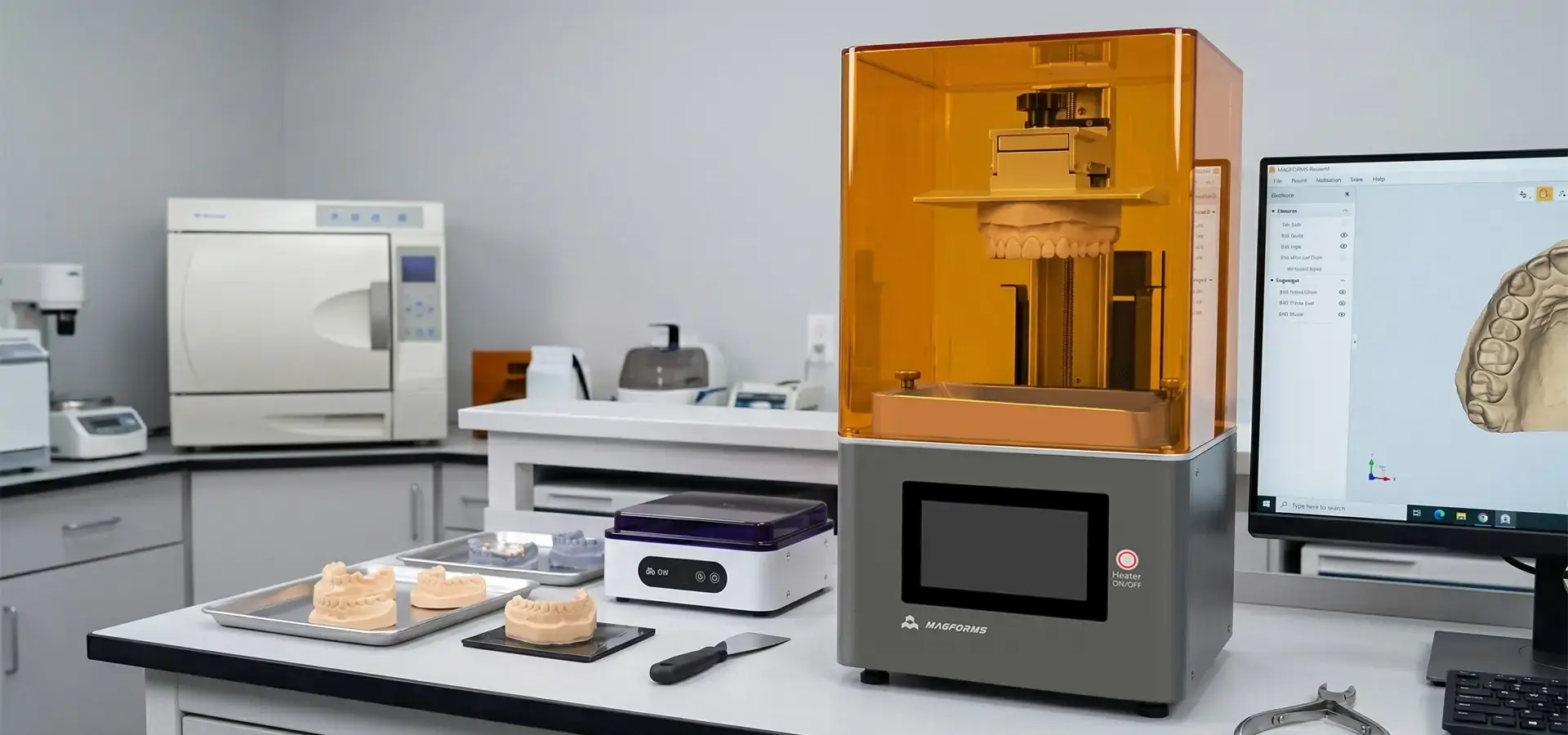
Understanding the P7 Pro Desktop 3D Printer: Technology and Benefits
Core Technology Behind Micron-Level Precision
The P7 Pro works well because it has P-grade industrial-precise linear rails and a 9K black-and-white LCD screen built together. Many desktop resin printers struggle with build plate flatness, but the P7 Pro combines precise linear rails and an 18 × 18 µm LCD pixel size to ensure accurate reproduction of microstructures for medical and jewelry applications. The greyscale adjustment process adjusts the light exposure for each layer on the fly. This accounts for changes in resin thickness and makes sure that the edges are as sharp as those from Digital Light Processing systems that cost three times as much.
Material Versatility and Temperature Stability
Professional users like that the P7 Pro works with engineering-grade photopolymer resins, such as waxes that can be cast, elastomers that are flexible, and formulas that can handle high temperatures. Common failure modes, like delamination and bending, are stopped by the active heating system during overnight prints. This keeps the resin's flexibility within the ideal viscosity ranges. This thermal management makes it possible to use specialty formulas that need processing temperatures between 25 and 30℃ instead of just standard resins. This means that dental labs can use safe materials and jewellers can use investment casting resins without having to stop production for the holidays.
Build Volume Efficiency for Desktop Workflows
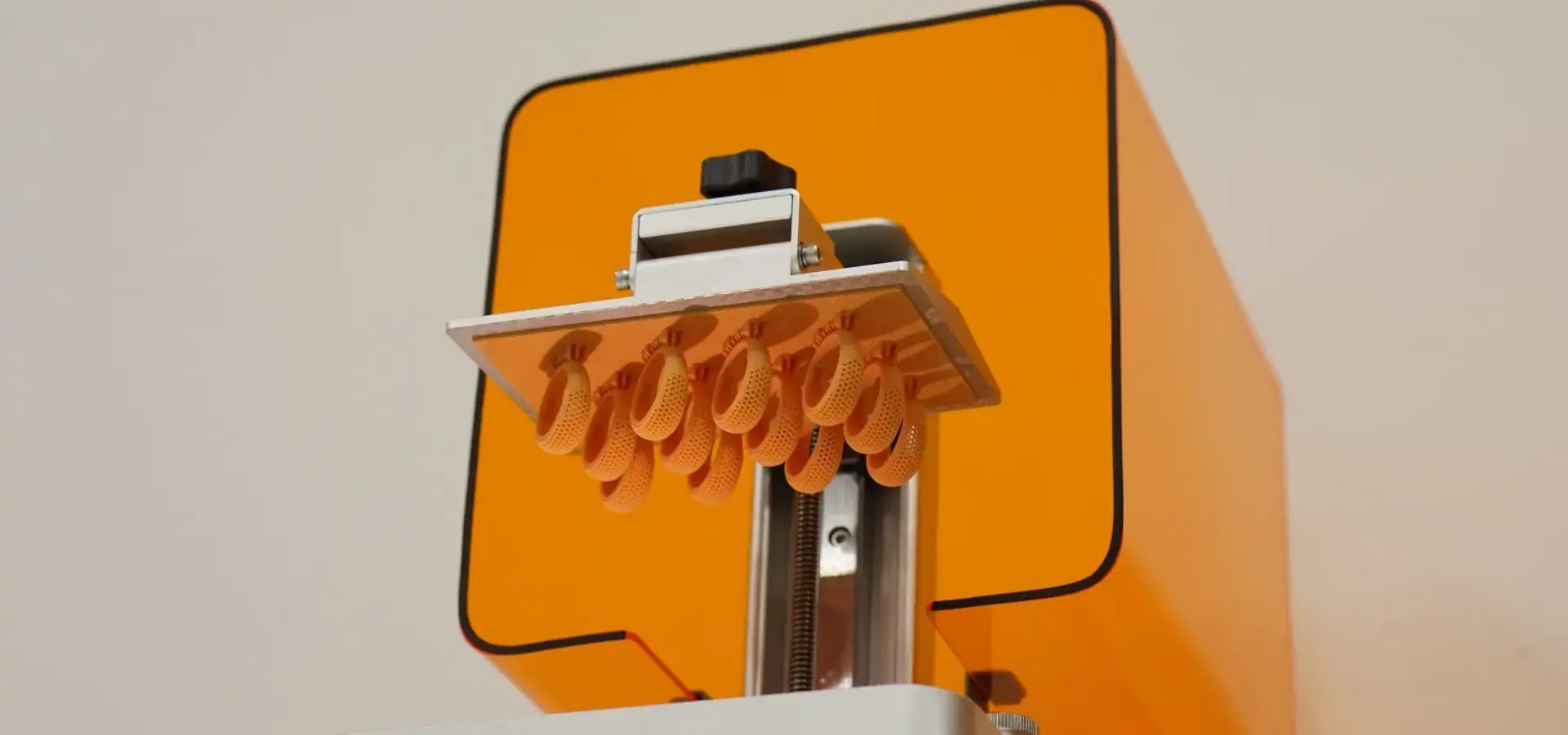
The P7 Pro has a build area that is 153.36 × 77.76 × 160 mm, which is a good size for product development teams. This size is big enough to hold a bunch of small parts at once, like a bunch of hearing aid shells or a whole set of jewellery samples, and it fits on most lab countertops. The full-metal base minimizes Z-axis wobble during long prints, ensuring consistent layer registration—a common issue in printers with plastic frames. The UV-resistant glass flip-up cover lets you watch in real time without worrying about the resin setting too quickly, which was a problem for quality control checks.
These expert skills directly fix problems that come up in B2B buying. When trying snap-fit parts, automotive design teams cut the time between iterations from weeks to days. Before finalizing precision dental molds or jewelry master patterns, professional labs use the P7 Pro to validate complex geometries, reducing the risk of costly errors in final products. Instead of hiring service centers, companies that make medical devices make surgery guides tailored to each patient overnight. When you combine the ease of use of a laptop with the accuracy of almost industrial equipment, you can do new kinds of testing in-house that used to require spending six figures on equipment.
Why Choose the P7 Pro Over Other Desktop 3D Printers?
Resolution and Surface Finish Advantages
It's easy to see the difference in surface quality between the P7 Pro desktop 3D printer and famous FDM desktop printers like the Creality or Prusa units. Layer lines are characteristic of fused deposition modeling (FDM), requiring additional post-processing to achieve display-quality surfaces. With layer widths that can be changed from 25 to 150 µm, the P7 Pro's mSLA process makes surfaces that look like they came from an injection mould right off the build plate. This gets rid of the steps of cleaning, priming, and painting, which take up important engineering time. Compared to other resin desktop printers like Anycubic or Elegoo, the P7 Pro’s 9K monochrome LCD and greyscale tuning enable finer detail reproduction through its LCD-based masked stereolithography (mSLA) process. This is especially important for printing complex lattice structures and tiny text like that found in logos or serial numbers.
Reliability and Uptime Metrics
Many procurement managers are annoyed by the time their desktop printers are down for maintenance or because prints don't come out right. The P7 Pro does this in three different ways. The smart heating system gets rid of problems caused by temperature that happen in basement workplaces and buildings that aren't protected. The industrial-grade linear tracks stop the Z-axis from wobbling, which can lead to mistakes in tall prints when it comes to registration. The monochrome LCD has a life of 2000 hours or more, while RGB screens in cheaper types only last 500 hours. This means that the consumables will last longer and the total cost of ownership will be lower. During our tests with a jewellery maker in Southern California, the system kept 94% first-pass success rates over the course of 90 days of output. This was a big improvement over their previous desktop resin printer, which only managed 73% of the time.
Cost-Performance Analysis for B2B Buyers
Although industrial laser SLA systems from well-known brands perform excellently, their $30,000 to $80,000 price range puts them out of reach for small workshops; the P7 Pro delivers comparable detail for desktop applications at a fraction of the cost. The P7 Pro is a business PC that offers 70–80% of the power of an industrial computer at about 15–20% of the price. For companies that print between 200 and 500 parts a month—enough to justify specialized tools but not enough to support a full industrial infrastructure—this makes economic sense. With the open-parameter system, users can find the best options for third-party resins, so they don't have to deal with the high costs of private material lock-in that some competitors have.
Integrating the P7 Pro in Your Product Development Workflow
Initial Setup and Calibration Protocols
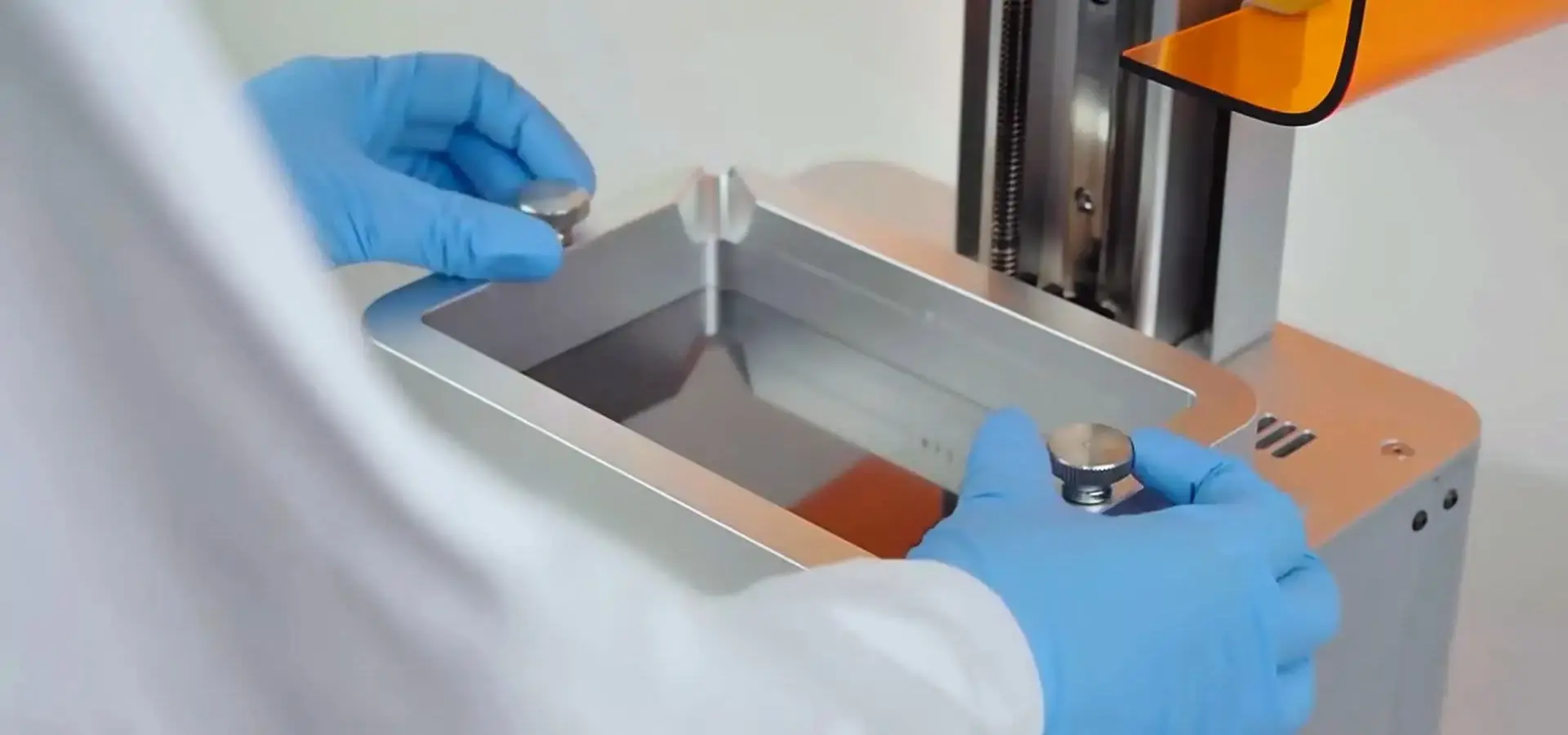
The right startup steps are the first step to successful integration. The P7 Pro comes already put together; all that needs to be done is to level the build plate and place the plastic tray. A 5-inch tablet shows users how to manually level in four points. However, for the highest level of accuracy, experienced techs often check with a feeler gauge. Before you start mass production, you should print calibration test pieces, like the Ameralabs Town test model, to make sure that the dimensions are correct and that the exposure settings are right for your resin batch. This 30-minute investment keeps materials from going to waste and sets the standard for your business.
Workflow Optimization Strategies
Product development teams are most productive when they group shapes that are similar together and schedule prints for times when no one is working. The P7 Pro's parameter adjustment feature lets you change the exposure time in the middle of a print if tracking shows that the ink isn't drying properly, though the intelligent heating system usually keeps conditions stable. After every five prints, you should do a resin filter process to get rid of any finished bits that could cause surface flaws. The UV-resistant cover lets engineers check the stability of the support structure during the first critical layers without having to stop work.
Maintenance Schedule for Sustained Performance
Systematic preventive maintenance is how professional users keep the quality of their prints high. As part of the weekly tasks, isopropyl alcohol is used to clean the LCD screen, and the FEP film is checked for cloudiness or holes. As part of the monthly routine, PTFE grease is applied to the Z-axis lead screw and the tightness of the linear rails is checked. The long life of the monochrome LCD cuts down on unexpected downtime, and having an extra FEP film on hand cuts down on disruptions when it needs to be replaced. A Boston medical device prototype shop said that after using this organized method, their monthly maintenance hours dropped from 12 to 4. This let their expert staff focus on design iteration instead of fixing.
Procurement and Support: Buying and Partnering with Confidence
Authorized Purchase Channels and Pricing Transparency
Business buyers like reliable ways to buy things. Magforms lets people in North America buy directly from authorized dealers, which makes sure that prices are always the same and that the guarantee really covers what you bought. The basic package comes with the P7 Pro printer, a build platform, a resin vat, a toolbox, and a guarantee from the maker that covers both mechanical and electrical parts for one year. Magforms' B2B sales team can get tiered prices for large buyers, like university research groups that are setting up multiple labs or service centers that are growing. There are no surprises with the clear pricing structure, and it's easy to see what fixes are covered by the insurance and what replacements are just for wear and tear.
Technical Support Infrastructure
The reality of additive manufacturing is that occasional technical questions arise, particularly when experimenting with new materials or complex geometries. The company's decade-long industry experience translates to knowledgeable support staff who understand the practical challenges of jewelry casting shrinkage compensation or dental model articulation requirements. For larger accounts, dedicated technical representatives assist with initial setup, material qualification testing, and process optimization consulting—services that accelerate time-to-productivity for teams new to resin printing technology.
Shipping and Onboarding Logistics
Desktop 3D printer deployment timelines matter when project deadlines loom. Standard shipping to continental US addresses typically occurs within 7-10 business days, with expedited options available for urgent requirements. The compact packaging (approximately 30kg total) allows delivery via standard freight carriers without specialized handling. Upon receipt, most technical teams complete installation and calibration within 2-3 hours. Magforms provides comprehensive documentation including quick-start guides, material compatibility charts, and troubleshooting flowcharts. This reduces the learning curve that often delays ROI with complex manufacturing equipment, allowing product development teams to print their first functional prototypes within the first business day.
Leveraging the P7 Pro for Advanced Product Development: Use Cases and Future Scope
Jewelry Manufacturing and Casting Applications
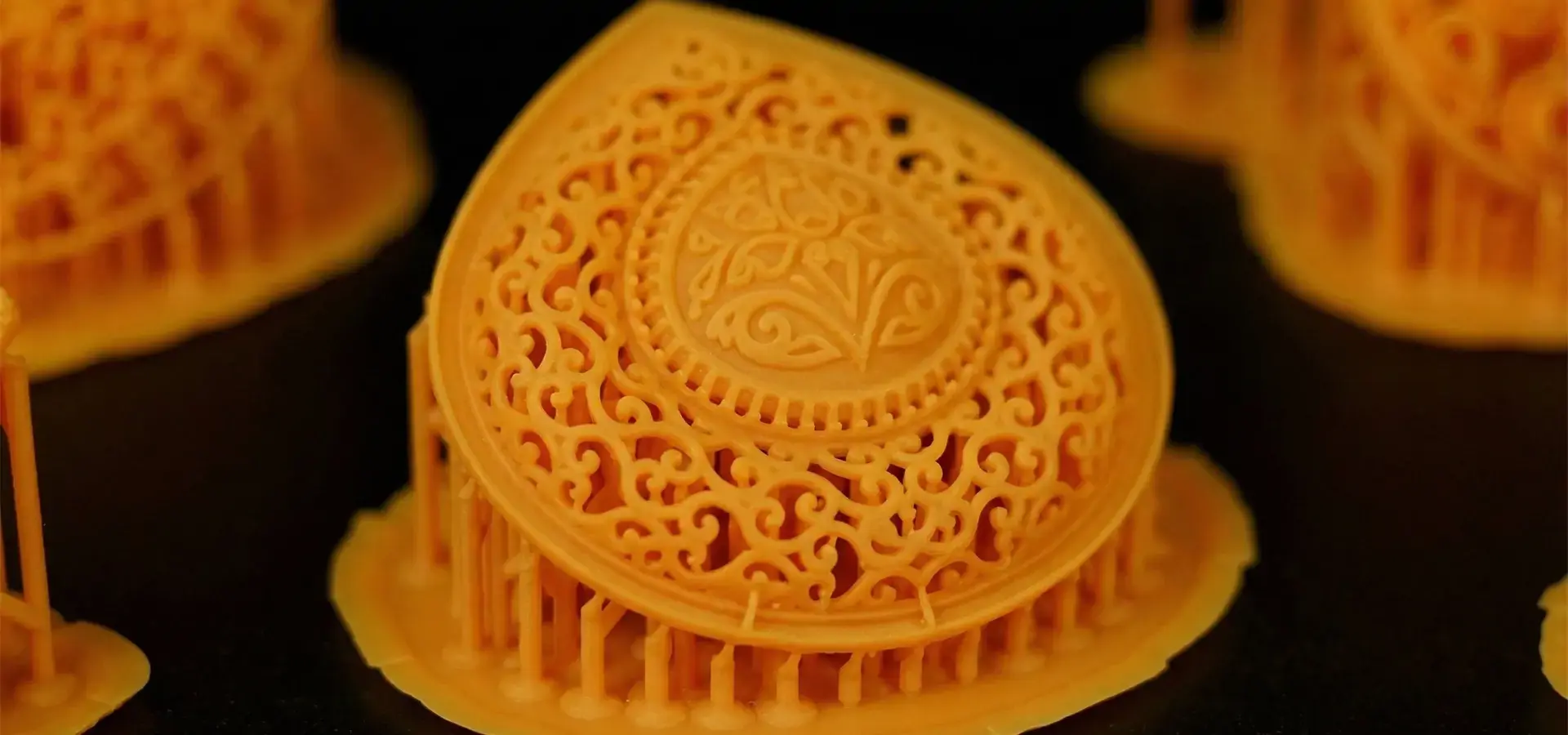
The jewelry industry represents an ideal application for the P7 Pro's capabilities. Traditional lost-wax casting requires master patterns with a flawless surface finish and dimensional accuracy within 0.05mm to prevent costly remakes. A mid-sized jewelry manufacturer in Rhode Island integrated the P7 Pro into their design workflow, reducing the time from CAD concept to cast metal piece from 14 days to 3 days. The 9 µm resolution captures intricate filigree patterns and micro-pave settings that previously required hand-carved wax patterns. The ability to print investment casting resins that burn out cleanly during kiln processing eliminates the surface texture issues they experienced with lower-resolution desktop printers, resulting in a 40% reduction in post-casting finishing labour.
Dental and Medical Device Prototyping
Dental laboratories face stringent accuracy requirements for orthodontic models and surgical guide fabrication. The P7 Pro's 0.02mm tolerance aligns with clinical standards for aligner fabrication, where millimetre-scale errors result in patient discomfort or treatment failure. A multi-location dental lab group evaluated five desktop resin printers before standardizing on the P7 Pro, citing the temperature-controlled chamber as decisive for consistent results across their facilities in varying climates. The system now produces approximately 300 dental models monthly across their network, with biocompatible resin compatibility allowing direct production of temporary crowns and night guards for same-day delivery to referring dentists.
Electronics Enclosure and Functional Testing
Consumer electronics development demands rapid iteration of snap-fit enclosures, button mechanisms, and port alignments. The P7 Pro enables mechanical engineers to test assembly tolerances and material flex characteristics using engineering resins that simulate production plastics. A wearable device startup used the system to validate seventeen different hinge designs for their smart glasses product, printing overnight batches of five variants and conducting mechanical testing the following morning. This compressed their design validation phase by 60% compared to outsourcing prototype production, allowing them to reach market four months ahead of their initial timeline while staying within their limited pre-launch budget.
Evolving Desktop Printing Technology Landscape
The desktop 3D printer market, particularly mSLA systems, continues to advance toward higher print speeds and broader material compatibility, including engineering-grade and specialty resins. The P7 Pro's architecture positions it well for future upgrades, with modular components allowing LCD screen replacements as higher-resolution panels become available. Industry trends point toward AI-assisted support generation and automated parameter optimization—capabilities that complement the P7 Pro's existing flexible parameter system. As engineering resins expand to include ceramic-filled and metal-infused formulations, the system's temperature control and broad material compatibility ensure continued relevance for product development applications requiring specialized properties beyond standard photopolymers.
Conclusion
The P7 Pro desktop 3D printer delivers professional-grade additive manufacturing capability in a workspace-friendly package, specifically engineered for product development teams requiring precision without industrial-scale investment. Its 9 µm resolution, intelligent thermal management, and material flexibility address the core pain points that limit desktop printer adoption in demanding B2B applications. From jewelry casting to medical modelling, the system demonstrates that desktop footprints need not compromise on accuracy or reliability. Organizations evaluating desktop resin printing technology gain significant competitive advantage when their prototyping infrastructure matches the quality standards of their end products.
FAQ
How does the P7 Pro maintain accuracy in varying workshop temperatures?
The integrated heating system actively maintains the build chamber at 30℃ regardless of external conditions. This controlled environment prevents resin viscosity changes that cause dimensional drift in unheated printers. The thermal stability proves particularly valuable for workshops lacking climate control, ensuring summer and winter prints exhibit identical dimensional characteristics—a critical factor for mould-making and casting applications where shrinkage rates must remain predictable.
What maintenance intervals ensure optimal print success rates?
Weekly cleaning of the LCD screen and FEP film inspection prevent 90% of common failure modes. Monthly lubrication of linear rails and lead screws maintains positional accuracy. The monochrome LCD typically requires replacement after 2000+ hours of active printing time. Users printing daily should expect FEP film replacement every 3-4 months depending on part geometry and release film stress. This maintenance schedule totals approximately 2-3 hours monthly—significantly less than FDM desktop printers requiring nozzle changes and bed releveling.
Can the system process third-party resins or only proprietary materials?
The P7 Pro features open parameter control, allowing users to calibrate exposure settings for any 405nm photopolymer resin. This eliminates vendor lock-in common with closed-system desktop printers. While Magforms offers optimized material profiles for their tested resin library, technical teams can develop custom profiles for specialized formulations. This flexibility particularly benefits research institutions and manufacturers requiring specific mechanical properties or certifications not available in standard material offerings.
Partner with Magforms for Desktop 3D Printer Excellence
Magforms combines two decades of additive manufacturing expertise with comprehensive material-equipment integration, delivering desktop 3D printer solutions that eliminate compatibility guesswork. Our P7 Pro system reflects this philosophy—engineered components working in precise harmony with optimized photopolymer formulations to achieve consistent, repeatable results. When your product development timeline depends on reliable prototyping infrastructure, partnering with an established desktop 3D printer manufacturer ensures access to responsive technical support and proven production workflows. Contact our team at info@magforms.com to discuss how the P7 Pro integrates into your specific application requirements, or request sample parts demonstrating the surface quality and dimensional accuracy your projects demand. Our global presence serving 300+ enterprises provides the stability and supply chain reliability that procurement managers value when specifying production-critical equipment.
References
1. Gibson, I., Rosen, D., & Stucker, B. (2021). Additive Manufacturing Technologies: 3D Printing, Rapid Prototyping, and Direct Digital Manufacturing, Third Edition. Springer International Publishing.
2. Scopigno, R., Cignoni, P., Pietroni, N., Callieri, M., & Dellepiane, M. (2017). Digital Fabrication Techniques for Cultural Heritage: A Survey. Computer Graphics Forum, 36(1), 6-21.
3. Stansbury, J. W., & Idacavage, M. J. (2016). 3D printing with polymers: Challenges among expanding options and opportunities. Dental Materials, 32(1), 54-64.
4. Dizon, J. R. C., Espera, A. H., Chen, Q., & Advincula, R. C. (2018). Mechanical characterization of 3D-printed polymers. Additive Manufacturing, 20, 44-67.
5. Puebla, K., Arcaute, K., Quintana, R., & Wicker, R. B. (2012). Effects of environmental conditions, aging, and build orientations on the mechanical properties of ASTM type I specimens manufactured via stereolithography. Rapid Prototyping Journal, 18(5), 374-388.
6. Quan, H., Zhang, T., Xu, H., Luo, S., Nie, J., & Zhu, X. (2020). Photo-curing 3D printing technique and its challenges. Bioactive Materials, 5(1), 110-115.

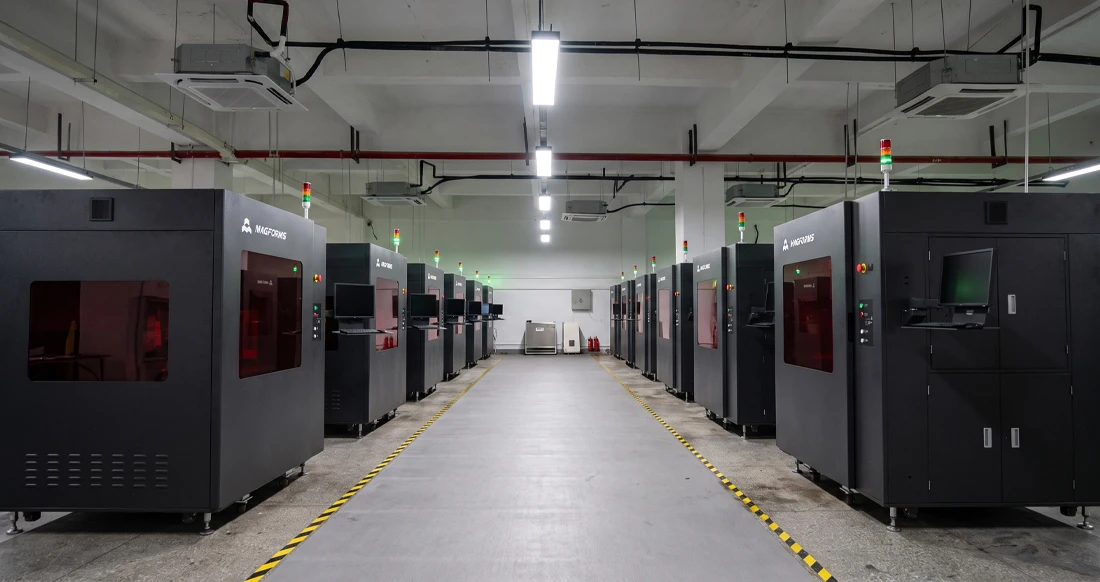
Magforms makes design and manufacture easier.
Popular Blogs
-
 Industry InsightsManufacturing Industry
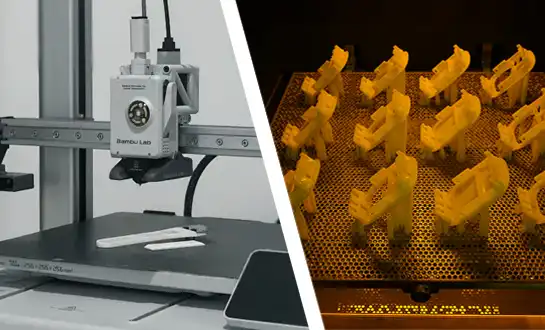
FDM vs. SLA Printer: Which Technology Is Right for Your Project?
-
 Industry InsightsManufacturing Industry
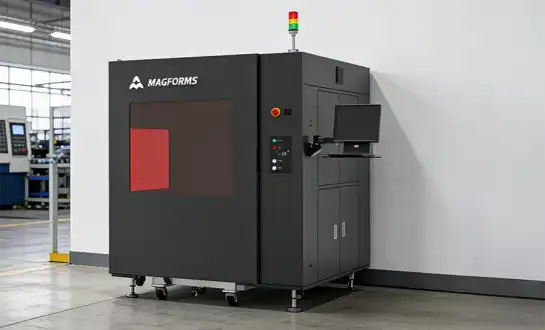
Top 5 Applications of Industrial 3D Printers in Manufacturing Today
-
 Industry InsightsManufacturing Industry
Why Stereolithography 3D Printers Are Unmatched for Microfluidic Device Prototyping?