P7 Pro Stereolithography 3D Printer for Functional Prototype Testing
When teams working on new products need accuracy and dependability, the P7 Pro stereolithography 3D printer performs exceptionally well, turning ideas into samples that can be tested. This high-tech resin-based system uses a high-resolution monochrome LCD to selectively expose UV light, curing liquid photopolymer resin layer by layer with precise control. This makes complex parts that exactly match the final design specs. With a 9 μm effective XY resolution achieved through greyscale-adjusted monochrome LCD exposure, the P7 Pro narrows the performance gap between standard desktop and high-end printers. This makes it a great choice for functional prototype testing in dental applications, jewellery casting models, consumer electronics housings, and precise mechanical assemblies.
Understanding Stereolithography 3D Printing and Its Benefits
One of the most accurate additive manufacturing technologies available today is vat photopolymerization, the process powering stereolithography 3D printers. A stereolithography 3D printer creates parts by selectively curing liquid photopolymer resin using either a scanning laser or a projected light source. The P7 Pro utilizes a high-resolution monochrome LCD masking system that controls UV exposure layer by layer. This hardens only the parts of the material that match the digital model that was sliced. Unlike filament extrusion (FDM), which deposits molten thermoplastic layer by layer, vat polymerization produces smoother surfaces and higher dimensional accuracy.
Core Process Advantages of Stereolithography Technology
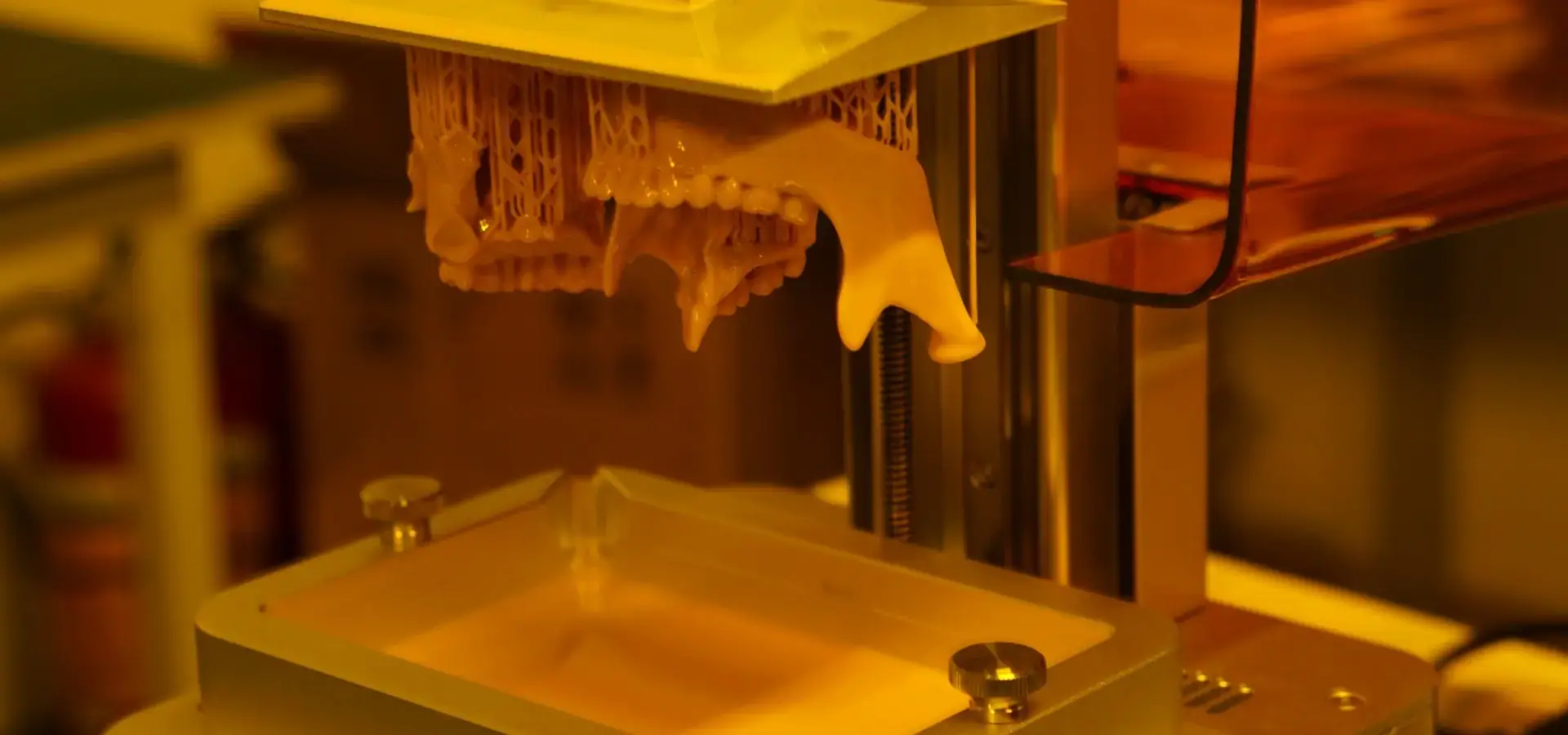
The P7 Pro shows how current stereolithography devices get around the problems with older manufacturing methods. It features a 6.8-inch 9K monochrome LCD screen that projects light patterns with 18 μm pixel size. This enables the reproduction of intricate textures, sharp edges, and micro-features smaller than the diameter of a human hair. The image is very accurate because of advanced optical engineering and P-grade industrial linear tracks that keep layers in place during long print sessions. Stable temperature is critical for consistent resin curing and polymerization performance. No matter what the weather is like outside, the P7 Pro has a clever heating system that keeps the build chamber at 30°C. This controlled temperature environment helps reduce issues such as incomplete curing, poor layer adhesion, and dimensional inconsistency during low-temperature operation. This makes reliable printing possible in more places and types of facilities.
Applications Across Multiple Industries
Stereolithography 3D printers are used by automotive engineering teams to test how well parts fit together and how they should be put together before they buy expensive tools. It only takes days instead of weeks to test interior trim pieces, custom panel elements, and specialised brackets for comfort and mechanical interference. Dental labs produce accurate models for orthodontic aligners, surgical guides, and crown workflows, enabling clinicians to deliver more predictable treatment outcomes. The P7 Pro's 0.02mm precision spec makes sure that prosthesis parts fit right the first time, which saves patients money and time and makes them feel better.
Jewelry makers use the system's ability to reproduce fine surface features required for lost-wax casting processes. Fine filigree patterns, smooth surfaces, and delicate point settings are all correctly transferred from digital sculptures to wax-burnout models, so the artist's intent is preserved throughout the production process. Engineers developing consumer electronics use engineering resins to prototype housing geometries, button mechanisms, and connector interfaces. This lets you check the mechanical strength of snap-fit parts and see how long they last before mass production starts.
Comparing the P7 Pro with Other 3D Printing Technologies
Material extrusion systems built around thermoplastic filament deposition offer lower equipment costs but sacrifice surface quality and dimensional accuracy. Visible layer lines from the stacked deposition process require extensive manual finishing to achieve acceptable cosmetic appearance, adding labor hours and introducing dimensional variability.
Stereolithography Versus FDM Performance Characteristics
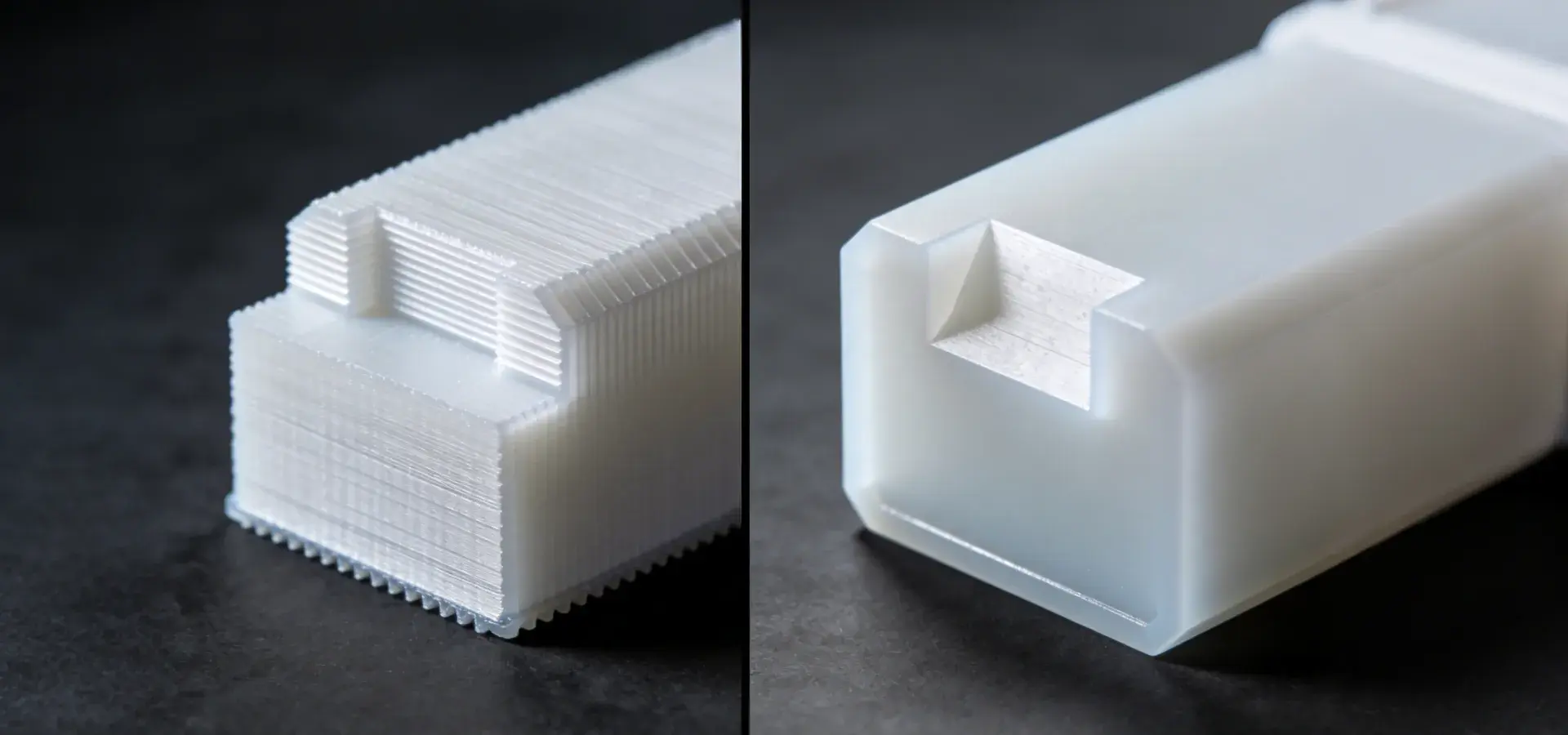
Parts produced by a stereolithography 3D printer generally exhibit more uniform mechanical properties across X, Y, and Z directions compared with FDM, where interlayer adhesion is weaker, making parts more susceptible to delamination under stress perpendicular to the build layers. The smoothness of the surface is very different between these systems. On curvy surfaces, FDM parts have noticeable stair-stepping artefacts, but stereolithography parts can achieve exceptionally smooth surfaces that approach injection-molded quality for many prototyping applications, often requiring minimal finishing. It is very helpful to have this quality when making master designs for making plastic moulds or direct-use show models.
Understanding DLP Technology Differences
Digital Light Processing (DLP) systems also cure liquid resin, but they use a digital micromirror device to project entire layers at once. The P7 Pro's greyscale-adjusted monochrome LCD can achieve comparable fine detail down to 9 μm, providing surface quality suitable for jewelry and casting applications. This grayscale-based image compensation technology (Imadjust) refines edge exposure control, helping compensate for native LCD pixel boundaries and improving fine-feature reproduction, delivering a surface finish that meets jewelry production and casting standards. Post-processing steps for both methods are similar. For example, alcohol cleaning is used to get rid of any uncured resin, and UV post-curing is used to fully develop the mechanical properties. The P7 Pro's compact build volume (153.36 × 77.76 × 160 mm) is ideal for small to medium-sized prototype batches, while maintaining a desktop-friendly footprint.
Market Position Among Resin Printing Systems
Procurement teams look at different stereolithography 3D printer choices and compare the original cost to the long-term costs of running the printer and the features that it needs to have. The P7 Pro is a good choice for businesses that need industrial-grade output but don't want to deal with the building infrastructure needs of large-format vat polymerisation systems. Its all-metal frame and P-grade linear motion parts make sure that the same results are achieved over thousands of print cycles, which lowers the cost per part by ensuring consistent uptime. Material compatibility goes beyond proprietary resin formulas, letting users choose engineering-grade photopolymers that are best for certain mechanical, thermal, or optical properties. This open-material environment helps keep costs down for consumables while still meeting standards for print quality.
Practical Guide to Using and Maintaining the P7 Pro 3D Printer
Successful stereolithography 3D printer operation requires understanding both the printing workflow and preventive maintenance procedures that maximize equipment longevity. The P7 Pro simplifies many traditional pain points through intelligent automation and user-centered interface design.
Daily Operation Best Practices
Print preparation begins with CAD model review to identify features requiring support structures. The accompanying slicing software automatically generates these temporary scaffolds while allowing manual adjustment for optimal removal after printing. Layer thickness settings between 25-150 μm balance speed against detail requirements, with thinner layers capturing finer vertical resolution at the expense of longer build times. The 5-inch touchscreen interface provides real-time parameter adjustment during active print jobs. Exposure times can be modified to compensate for resin age or ambient temperature variations without aborting the build process. This flexibility reduces material waste from failed prints caused by minor calibration drift.
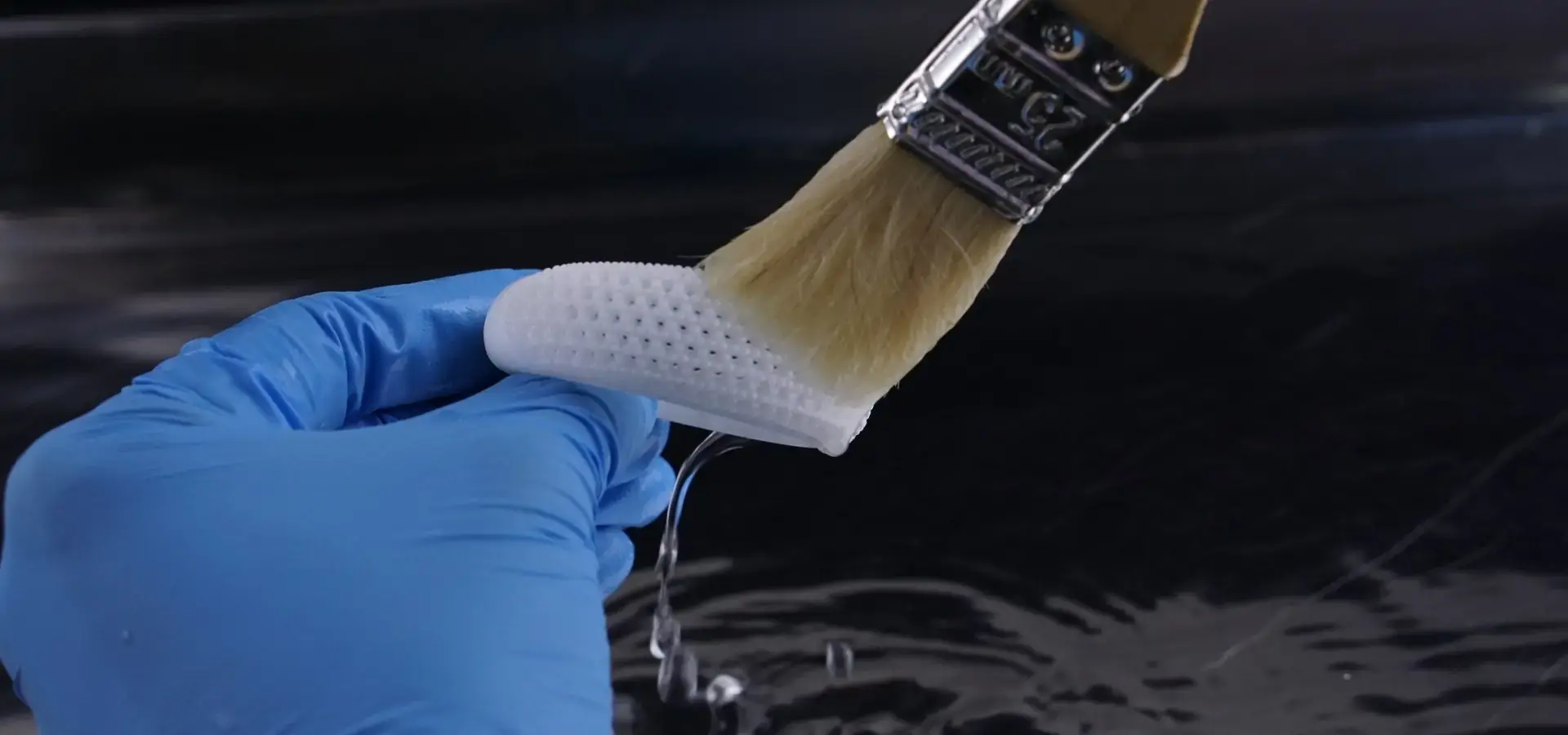
After print completion, parts require immediate washing in isopropyl alcohol or specialized cleaning solutions to prevent uncured resin from hardening on exterior surfaces. Support structure removal follows washing, taking advantage of the semi-cured state, allowing clean support removal without excessive force. Final UV post-curing in a dedicated curing chamber completes polymerization, achieving optimal mechanical performance, maximum material strength, and dimensional stability.
Maintenance Requirements and Troubleshooting
The resin vat represents a consumable component requiring periodic inspection and eventual replacement. The transparent bottom film gradually clouds from repeated light exposure and mechanical stress during the layer peeling process. The P7 Pro's UV-resistant acrylic flip-up cover protects the vat contents from accidental curing while providing full-visibility monitoring during operation, extending film lifespan through controlled light exposure.
Linear rail lubrication should occur every 500 hours of operation to maintain smooth Z-axis motion. The monochrome LCD screen, while more durable than older color displays, eventually degrades over extended use, with service life varying according to exposure settings, operating conditions, and production volume. Keeping detailed maintenance logs helps predict component replacement timing and avoid unexpected production interruptions.
Procurement Insights: Buying and Integrating the P7 Pro into Your Production
Organizations evaluating stereolithography 3D printer acquisitions must consider total cost of ownership beyond initial purchase price. Equipment investment represents only one element of a complete additive manufacturing implementation that includes consumables, training, facility preparation, and ongoing technical support.
Financial Planning for Resin Printing Systems
The P7 Pro positions itself as a cost-effective entry point for businesses requiring casting-quality output without six-figure capital expenditure. Small workshops, educational institutions, and individual makers gain access to precision previously limited to specialized service bureaus. Bulk material purchasing and regional distributor relationships further reduce per-part production costs as volume scales.
Medium and large manufacturing organizations often deploy multiple units to create redundant capacity and parallel production streams. This distributed approach balances initial investment across fiscal periods while building internal technical expertise across operator teams. Volume procurement programs may offer favorable pricing structures and expedited delivery schedules.
Integration and Support Infrastructure
Magforms, as a comprehensive stereolithography 3D printer supplier, provides integrated material and equipment solutions that eliminate compatibility uncertainties between third-party consumables and printing hardware. This vertical integration reduces troubleshooting complexity when print quality issues emerge, as technical support teams understand the complete system interaction rather than isolated component behavior.
The company's 22 patents and 30 registered trademarks demonstrate sustained research investment in photopolymerization technology advancement. This intellectual property foundation supports ongoing product refinement and ensures long-term material availability as resin formulation chemistry evolves. Organizations purchasing equipment today gain confidence that consumable supplies and technical documentation will remain accessible throughout the product lifecycle.
International logistics experience across European and Asian markets means procurement managers receive transparent shipping timelines, customs clearance guidance, and delivered duty calculations before finalizing purchase orders. This operational transparency helps budget planning and production scheduling, particularly for multi-site deployments requiring coordinated installation sequencing.
Why Choose the P7 Pro 3D Printer for Your Functional Prototype Testing?
Cost-conscious product development teams need equipment that delivers consistent results without extensive operator training or frequent technical intervention. The P7 Pro addresses these requirements through design choices that prioritize reliability and user accessibility while maintaining output quality suitable for engineering validation testing.
Performance Metrics That Matter
Dimensional accuracy of up to ±0.02 mm enables direct comparison between CAD specifications and physical prototypes. This precision supports go/no-go gauging, thread engagement testing, and assembly clearance verification without compensating for dimensional variation in test procedures. When prototype performance directly informs design decisions, measurement uncertainty must remain minimal to avoid false conclusions.
The extremely high printing success rate, even in challenging environmental conditions, translates to predictable project timelines and material consumption forecasts. Production planners can schedule prototype deliveries with confidence, knowing that environmental factors won't derail critical path activities. This reliability proves especially valuable during seasonal temperature extremes or in facilities lacking climate control infrastructure.
Scalability and Workflow Compatibility
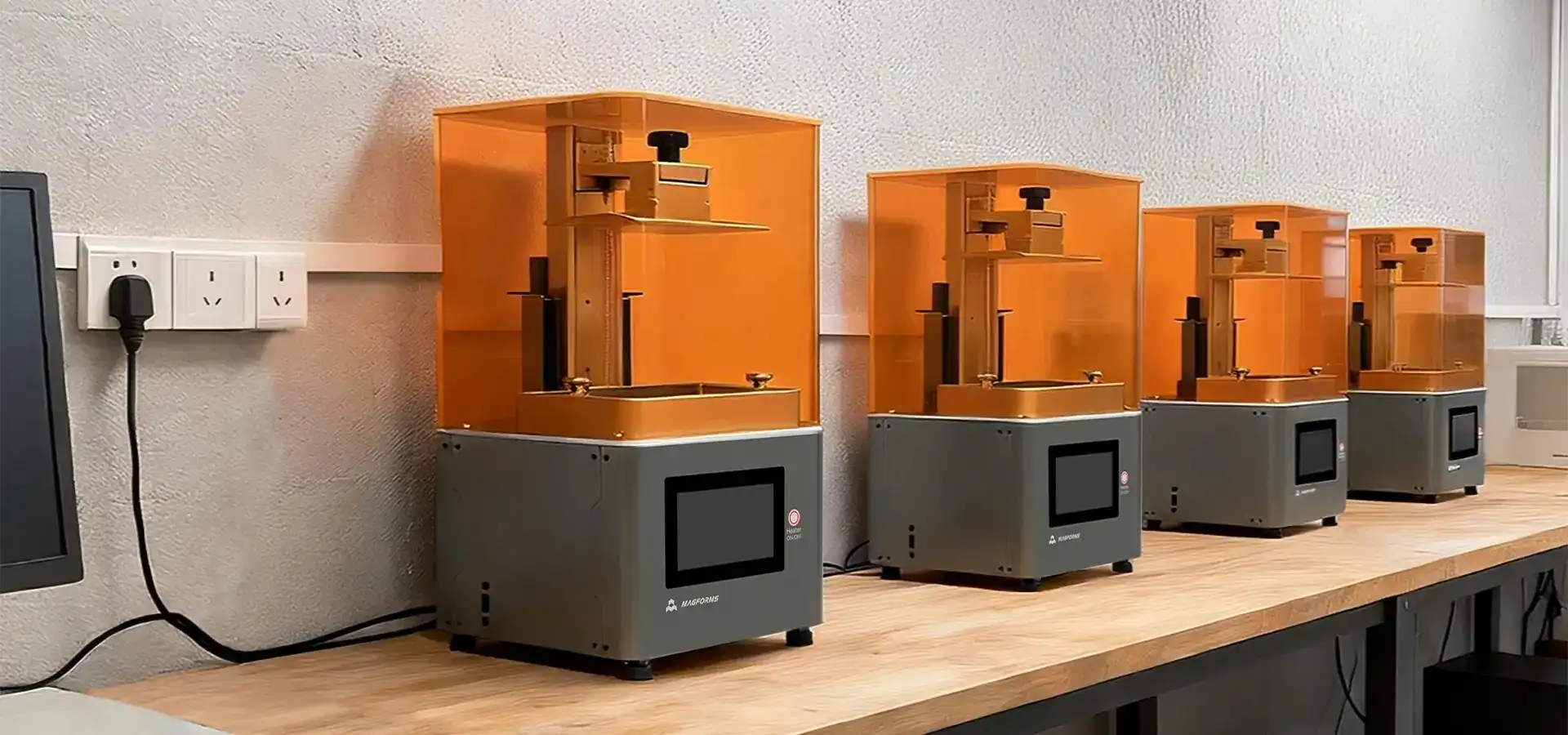
As businesses grow and prototyping demands increase, the P7 Pro's compact footprint allows expansion through additional unit deployment rather than facility reconfiguration to accommodate larger equipment. Multiple machines operating in parallel increase throughput while maintaining individual job flexibility. This modular scaling approach aligns capital investment with actual demand growth rather than speculative capacity planning.
Design teams already using digital sculpting tools and parametric CAD software find straightforward integration with standard STL file export workflows. The stereolithography 3D printer accepts industry-standard file formats without proprietary conversion requirements, preserving design intent from concept through physical validation.
Conclusion
The P7 Pro stereolithography 3D printer delivers professional-grade prototype quality within a desktop-friendly package suited to diverse manufacturing environments. Its 9 μm effective resolution through grayscale adjustment technology, temperature-stabilized build chamber, and 0.02mm accuracy specification meet demanding requirements across jewelry casting, dental prosthetics, automotive component validation, and consumer product development. Organizations seeking reliable functional prototype testing capabilities gain a cost-effective solution backed by comprehensive technical support and integrated material supply chains that simplify procurement and reduce operational complexity.
FAQ
What resin materials work with this stereolithography 3D printer?
The P7 Pro accommodates standard 405nm photopolymer formulations including rigid engineering resins, flexible elastomers, high-temperature materials, and castable jewelry resins. This open-system compatibility allows material selection based on specific mechanical property requirements rather than vendor lock-in constraints. Users can optimize consumable costs and functional performance characteristics by sourcing resins matched to application demands.
How does maintenance compare with other resin printing systems?
Maintenance requirements align with industry standards for vat polymerization equipment. The monochrome LCD screen demonstrates longer operational lifespan than older color displays, while the metal chassis construction resists wear from repeated resin exposure and cleaning cycles. Regular vat film inspection and periodic linear rail lubrication represent the primary preventive tasks, with component replacement intervals extending thousands of printing hours under normal operating conditions.
Can printed parts withstand functional stress testing?
Material selection determines mechanical performance capabilities. Engineering-grade photopolymer resins with enhanced toughness or heat resistance allow functional testing of snap-fit features, threaded connections, and moderately load-bearing structures, though they do not fully replicate the strength of injection-molded plastics. Standard resins exhibit brittle characteristics unsuitable for repeated flexing but serve well for dimensional validation and assembly verification. Matching resin properties to test requirements ensures prototype behavior accurately represents production material performance.
Partner With Magforms for Precision Prototyping Solutions
Magforms offers comprehensive stereolithography 3D printer solutions combining proven hardware, optimized material formulations, and technical expertise accumulated through years of additive manufacturing specialization. Our integrated approach eliminates compatibility guesswork between equipment and consumables, delivering reliable print quality from initial setup through long-term production scaling. The P7 Pro represents our commitment to accessible precision, providing casting-quality output without industrial equipment complexity or facility requirements.
Contact our technical team at info@magforms.com to discuss your specific prototyping challenges and explore how our stereolithography 3D printer options can accelerate your product development timeline. We provide detailed application consultations, sample part evaluation, and customized training programs that ensure successful technology integration within your existing workflows. With 22 patents supporting continuous innovation and presence across global markets, Magforms stands ready to support your precision manufacturing objectives with dependable equipment and responsive technical partnership.
References
1. Anderson, M. (2022). Additive Manufacturing Technologies: Comparative Analysis of SLA, DLP, and FDM Systems for Industrial Prototyping. Journal of Manufacturing Science and Engineering, 144(8), 081002.
2. Chen, L., & Roberts, K. (2023). Material Science in Photopolymerization: Resin Chemistry and Mechanical Property Development. Polymer Engineering & Science, 63(4), 1124-1138.
3. Gibson, I., Rosen, D., & Stucker, B. (2021). Additive Manufacturing Technologies: 3D Printing, Rapid Prototyping, and Direct Digital Manufacturing (3rd ed.). New York: Springer Publishing.
4. Thompson, R. (2023). Cost-Benefit Analysis of Desktop Stereolithography Systems in Small-Batch Manufacturing. International Journal of Advanced Manufacturing Technology, 127(5-6), 2455-2469.
5. Wang, J., & Martinez, E. (2022). Precision Validation Methods for Vat Photopolymerization Systems: Dimensional Accuracy and Surface Quality Metrics. Rapid Prototyping Journal, 28(9), 1698-1711.
6. Zhang, Y., Kumar, S., & Peterson, A. (2023). Temperature Effects on Resin Curing Kinetics in Stereolithography Processes. Additive Manufacturing Journal, 58, 103042.

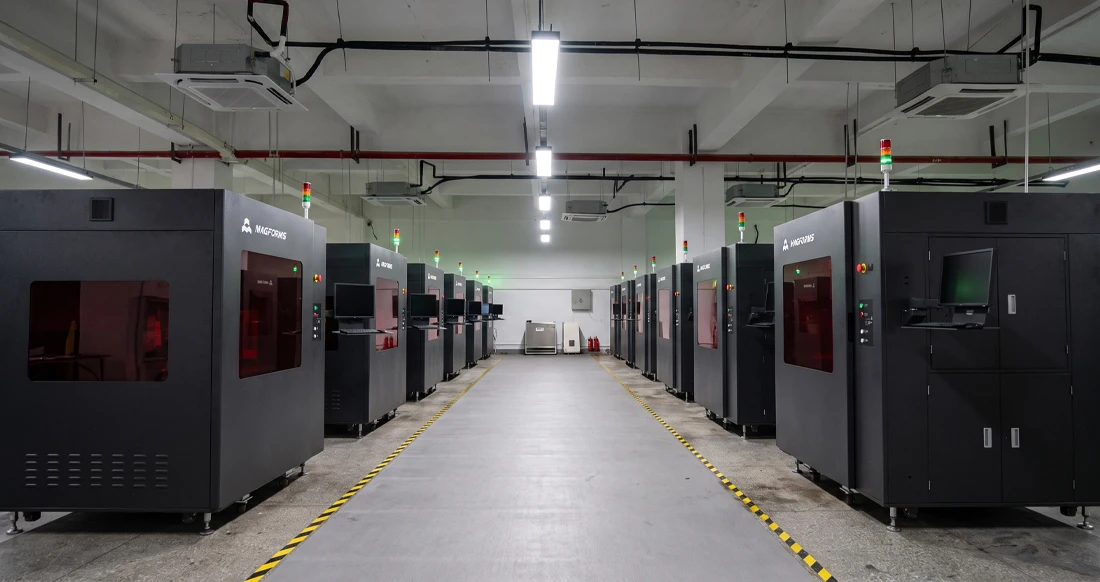
Magforms makes design and manufacture easier.
Popular Blogs
-
 Industry InsightsManufacturing Industry
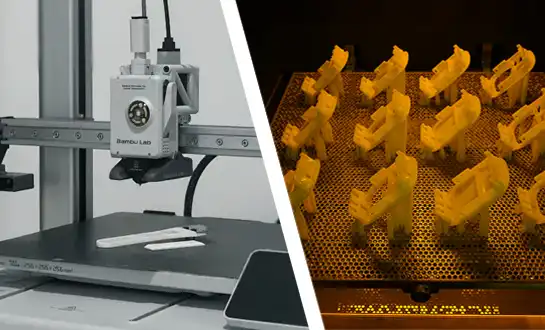
FDM vs. SLA Printer: Which Technology Is Right for Your Project?
-
 Industry InsightsManufacturing Industry
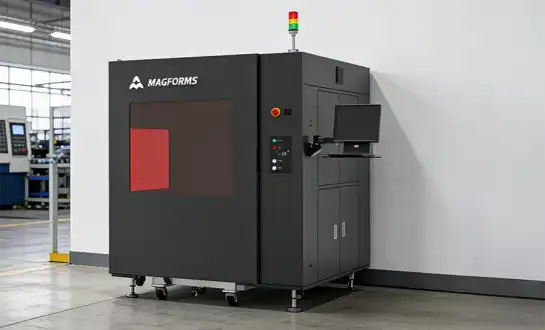
Top 5 Applications of Industrial 3D Printers in Manufacturing Today
-
 Industry InsightsManufacturing Industry
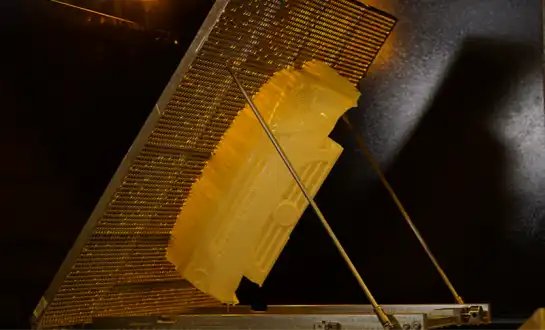
Why Stereolithography 3D Printers Are Unmatched for Microfluidic Device Prototyping?