What Features Should You Look for in a China Resin 3D Printer?
When looking at a China resin 3D printer, buyers should focus on how well it can resolve details, how evenly the light shines, how well it works with resin, how big the prints can be, how stable the machine is, and how well it offers help after the sale. These days, resin printers made in China have monochromatic LCD screens with XY resolutions as fine as 19 microns, COB light sources that deliver over 90% uniformity, dual linear rails that minimise Z-axis wobble, and open material systems that support engineering-grade, biocompatible, and flexible resins. They also have certifications like CE and RoHS, which means they can be used in dental, automotive, aerospace, and consumer electronics applications.
Introduction to China Resin 3D Printers
Thanks mostly to new ideas coming from China's manufacturing hubs in Shenzhen, Dongguan, and Zhejiang, resin 3D printing has gone from being an exclusive industry process to an easy-to-use, high-precision tool for making things. A China resin 3D printer typically employs vat photopolymerization technologies, primarily LCD-based (mSLA) systems and Digital Light Processing (DLP). These technologies use specific UV wavelengths to cure liquid photopolymer resins layer by layer.
Chinese resin printing equipment is different because of how quickly technology is changing and how well the supply chain works. In China, makers have made advanced features more accessible over the past ten years. For example, monochromatic LCD screens significantly reduce exposure times, with many standard resins curing in approximately 1.5-3 seconds per layer under optimized settings, and integrated COB light sources make sure that curing is the same from edge to edge. Because of this change, hardware costs have decreased substantially compared with many traditional industrial photopolymerization systems, making high-precision resin printing more accessible to businesses of all sizes.
For B2B buying managers, understanding this environment is very important. The Chinese market is widely recognized for offering strong cost-performance advantages, rapid technology adoption, and flexible OEM customization options. If you are in charge of a dental lab, an automobile development section, or an aircraft component seller, buying tools from China can save you money, help you adopt new ideas, and allow you to increase your production capacity. The environment has grown to include strict quality controls, international licenses, and full after-sales networks. This makes it a competitive option for businesses across multiple industries that need high-precision, stable additive manufacturing solutions.
Essential Features to Consider When Buying a China Resin 3D Printer
Choosing the right resin printing equipment demands careful evaluation of technical specifications that directly impact production outcomes. Below, we break down the core features that should guide your procurement decision.
Printing Technology and Resolution Capabilities
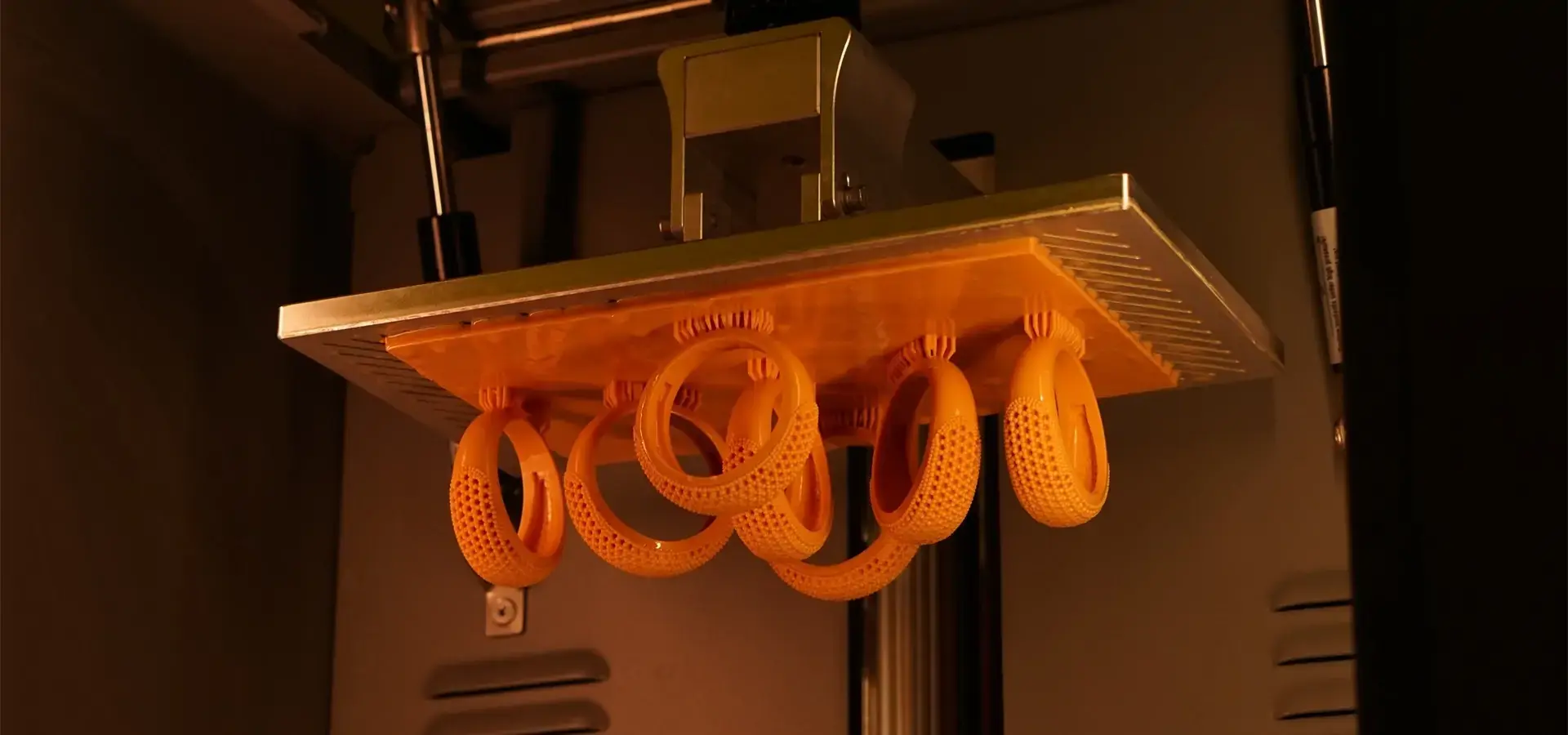
The light-curing system is what makes any resin printer work. In mSLA technology, an LCD screen masks UV light so that entire layers can be cured simultaneously. This is better than standard SLA, which uses a point laser to trace each shape. Parallel processing speeds up batch production cycles by a huge amount. This makes mSLA-based China resin 3D printers perfect for making a lot of dental models or patterns for casting jewellery.
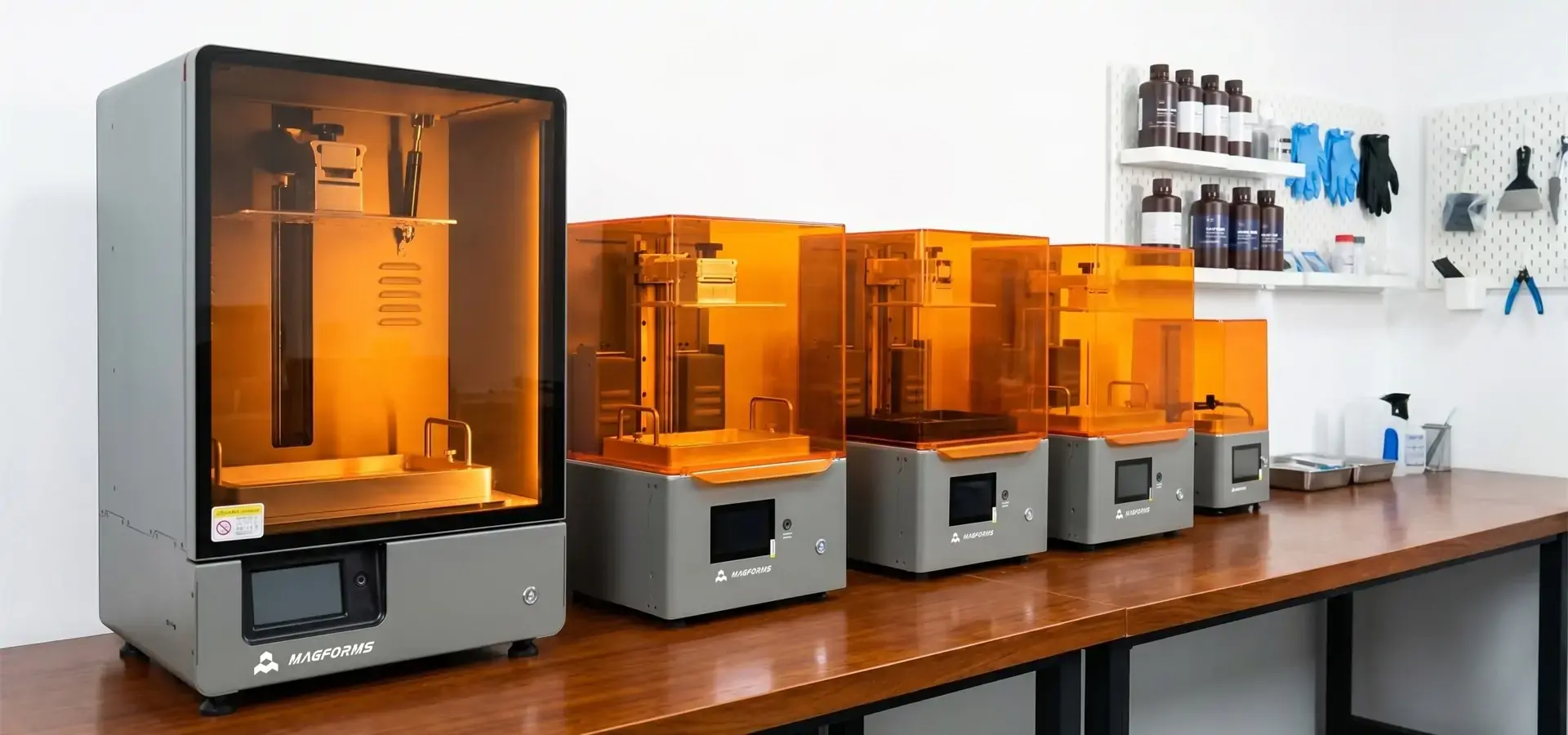
Both XY-plane pixel size and Z-axis layer width are used to measure resolution. XY pixel precision typically ranges from approximately 15 to 35 microns depending on screen size, resolution, and build area configuration. Modern Chinese equipment has monochrome LCD screens with resolutions ranging from 8K to 16K, enabling finer pixel sizes and improved surface quality. Magforms LCD systems are available in 8K, 9K, and 16K configurations to address different accuracy and productivity requirements. This level of detail makes it possible to reproduce textures that are less than one millimetre thick, which is important for gaming models and complex dental aligner bases. Precision in the Z-axis depends on factors including linear guide systems, lead screw quality, frame rigidity, and motion control calibration. High-quality dual linear rail designs help maintain excellent layer registration and minimize Z-axis wobble.
Build Volume and Production Scale Alignment
Build volume tells you if a printer is good for small-batch development or mass production. Small desktop resin printers typically offer build volumes below 200 × 120 × 200 mm and are commonly used by product designers and small service providers. Larger industrial LCD systems, such as Magforms' 302 × 161 × 380 mm platform, provide increased throughput and enable the production of larger components or higher-volume batches.
Bottlenecks can be avoided by matching the build amount to the output schedule. Mid-sized machines that balance output with area are helpful for a dental lab that makes 30 surgery guides every day. On the other hand, research institutions that are creating complicated aircraft joints need large-format SLA systems that can work with uneven shapes without breaking models up into multiple prints. This keeps the structure intact and cuts down on post-processing work.
Material Compatibility and Resin Ecosystem Flexibility
People who buy private systems often have to deal with material lock-in, which happens when tools will only accept resins made by the maker, which cost more. More and more Chinese companies are using open material designs, which let users use engineering resins from other companies, clear formulas, high-temperature versions, and flexible photopolymers without voiding guarantees.
This adaptability is very important in many fields. For surgical guide samples, companies that make medical devices need biocompatible resins that comply with applicable standards such as ISO 10993 when validated for their intended medical applications. Teams working on cars need tough resins that are like ABS and can stand up to mechanical stress tests. Jewellery makers want materials that can be made and don't burn out with ash. A flexible China resin 3D printer can handle these different types of materials because it has exposure settings that can be changed. This helps ensure that the curing process is properly optimized for different resin chemistries and performance requirements. Magforms' printers and self-developed materials are tightly integrated to eliminate the dimensional inconsistencies and print failures often encountered with mismatched third-party resins. We also support open systems so that we can be as flexible as possible in how we run our business.
Light Source Uniformity and Curing Consistency
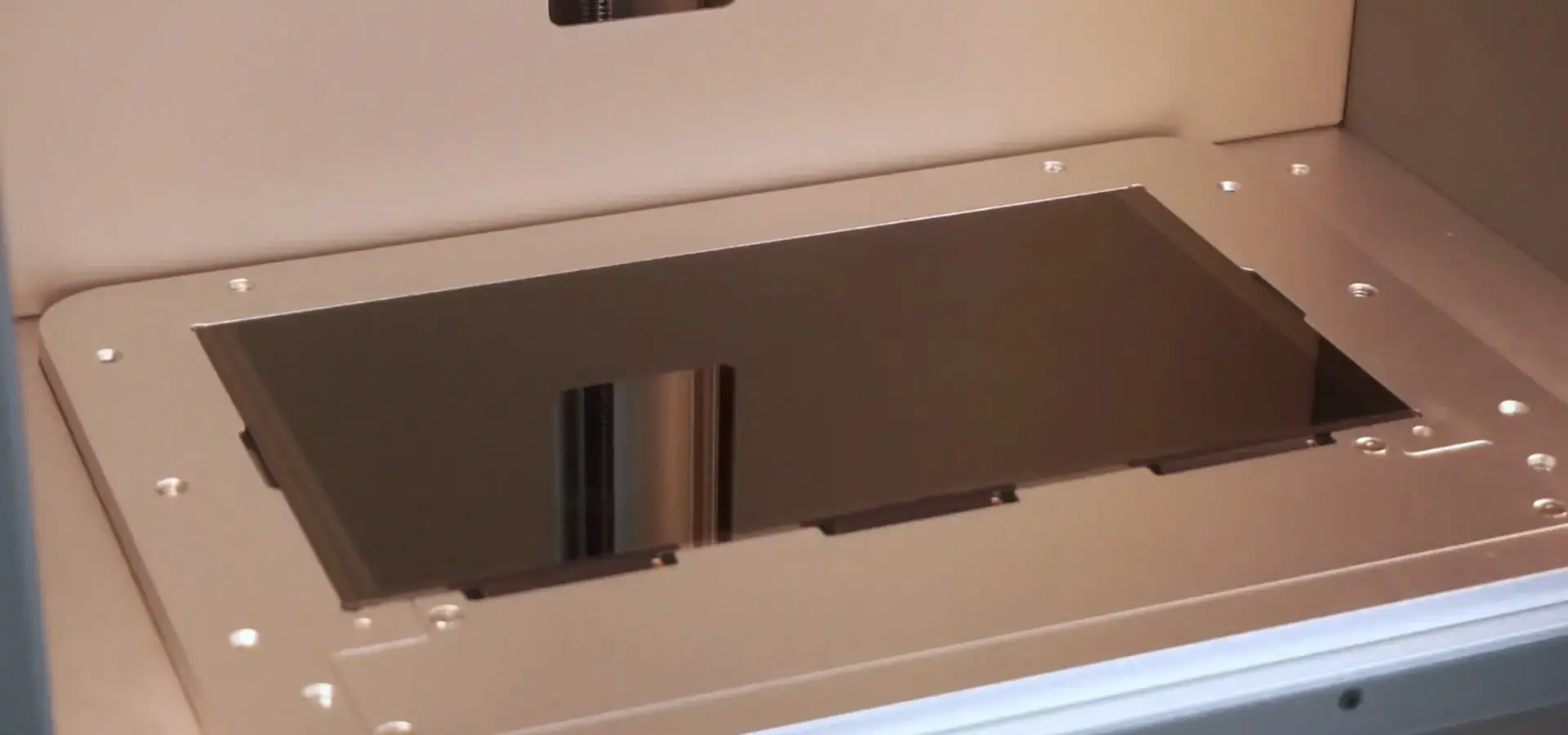
Differential cure happens when the light isn't spread out evenly across the build plate. Parts in the middle may work, but parts on the edges may fail because the UV light isn't strong enough. Most high-end Chinese equipment features COB light engines combined with optimized collimation optics, which can achieve light uniformity exceeding 90% across the build area, depending on machine design and calibration. Improved light uniformity helps maintain dimensional consistency and reduces variation across different regions of the build platform regardless of whether a part is positioned near the center or at the edge of the build platform.
Light regularity also has an effect on the dependability of batch production. When printing multiple jewellery patterns overnight, consistent curing prevents the costly problem where edges delaminate or fail to fully polymerize. Procurement managers should make sure that the light consistency requirements are met by testing samples and printing calibration lines that show differences in strength across the build area.
Software Interface and Operational Usability
Without easy-to-use software, even the most powerful gear is useless. Modern Chinese resin printers come with slicing software that automatically creates supports, finds the best direction to use the least amount of material, and lets you change the exposure settings by hand for each material profile. Operators can learn faster when the interface is easy to use, which speeds up the transition from installation to full production.
Some advanced software features include creating hollow structures to save resin on large parts, placing drainage holes to relieve suction forces during printing, and adaptable layer thickness, which speeds up sections with less detail while keeping resolution on features with a lot of detail. During pre-purchase demos, technical leaders should check the software's features to make sure they work with current CAD processes and file types.
Maintenance Requirements and After-Sales Support
Resin printers are precise tools that need to be maintained regularly. The FEP or nFEP release film at the bottom of the vat breaks down when exposed to UV light and cycle peeling forces. Replacement intervals vary depending on material type, printing frequency, and film condition. Operators should inspect release films regularly and replace them when wear becomes visible. When figuring out the total cost of ownership, procurement managers have to take into account how much consumables cost and how easy it is to get them.
Support after the sale is what separates trustworthy providers from risky businesses. When issues or hardware problems happen, downtime is kept to a minimum by expert teams that can fix problems remotely. Replacement parts and software updates can be accessed quickly through authorised sellers. Magforms has a technical support team with a lot of experience that helps customers with machine maintenance, software optimisation, and training for operators. This makes sure that customers have stable production from the start and for the life of the equipment. Our network for after-sales service covers foreign areas and offers help that is tailored to each country's time zones and language preferences.
How to Evaluate and Compare Top China Resin 3D Printer Brands
The Chinese resin printer market encompasses dozens of manufacturers, each claiming superior performance. Rigorous evaluation prevents costly missteps and aligns equipment capabilities with business objectives.
Performance Metrics: Speed, Precision, and Uptime
Printing speed depends on multiple factors including light intensity, resin reactivity, and mechanical lift mechanisms. Advanced monochrome LCD screens paired with high-intensity COB light sources enable leading Chinese models to achieve print speeds exceeding 100-150 mm/h under suitable resin and layer settings, helping reduce prototyping lead times compared with many conventional photopolymerization workflows. At Magforms, our proprietary optical system and motion control architecture are optimized for high-resolution LCD printing platforms, helping maximize productivity while maintaining dimensional accuracy.
Precision extends beyond nominal resolution specifications. Real-world accuracy involves calibration stability over extended print runs, temperature compensation algorithms, and vibration dampening. Buyers should request sample prints of geometric test models featuring thin walls, overhangs, and fine details, measuring outcomes with calipers to verify that stated micron-level tolerances hold true under operational conditions.
Machine uptime reflects mechanical robustness and component quality. Printers with failure rates significantly below industry norms undergo thousands of hours of continuous operation testing. Procurement managers should inquire about Mean Time Between Failures (MTBF) data and review service records from existing customers operating similar production volumes.
User Reviews and Real-World Reliability Testimonials
Verified user feedback provides insights impossible to glean from marketing materials. B2B buyers should seek testimonials from enterprises in similar sectors—dental labs evaluating equipment for orthodontic workflows, automotive suppliers assessing prototyping throughput, or jewelry manufacturers validating casting pattern quality. Independent forums and industry trade shows offer unfiltered perspectives on reliability, material compatibility quirks, and manufacturer responsiveness during technical issues.
Case studies demonstrating sustained production over months or years carry more weight than isolated success stories. A China resin 3D printer that consistently produces surgical guides meeting dimensional tolerances across hundreds of prints proves its suitability for medical applications better than any specification sheet.
Pricing Analysis and Total Cost of Ownership
Upfront purchase price represents only one component of lifetime costs. Consumables including release films, resin vats, and LCD screens require periodic replacement. Open material systems reduce per-liter resin costs significantly compared to proprietary formulations, potentially saving thousands of dollars annually for high-volume operations.
Return on investment calculations should factor in productivity gains from faster print speeds, yield improvements from reduced failures, and labor savings from intuitive software that minimizes manual intervention. A moderately priced printer that delivers 95% first-print success rates outperforms a budget model requiring extensive trial-and-error calibration, wasting materials and operator time.
Certifications and Authorized Distribution Channels
International certifications like CE, FCC, and RoHS compliance indicate adherence to safety and environmental standards essential for import clearance and workplace safety regulations. ISO certifications reflect manufacturing quality management systems. Buyers should verify that printers meet destination country requirements, avoiding customs delays or rejection.
Purchasing through authorized dealers ensures genuine equipment, valid warranties, and access to official technical support. Counterfeit or gray-market machines may lack documentation, spare part availability, or manufacturer backing, creating operational risks that negate initial cost savings. Magforms holds 22 patents and 30 registered trademarks, providing robust intellectual property protection and assurance of genuine innovation. Our products carry full certifications and are distributed through verified channels across Europe, Asia, and North America.
Practical Tips for Operating and Maintaining China Resin 3D Printers
Maximizing equipment performance and longevity requires systematic operational protocols and preventive maintenance routines.
Step-by-Step Guidelines for New Operators
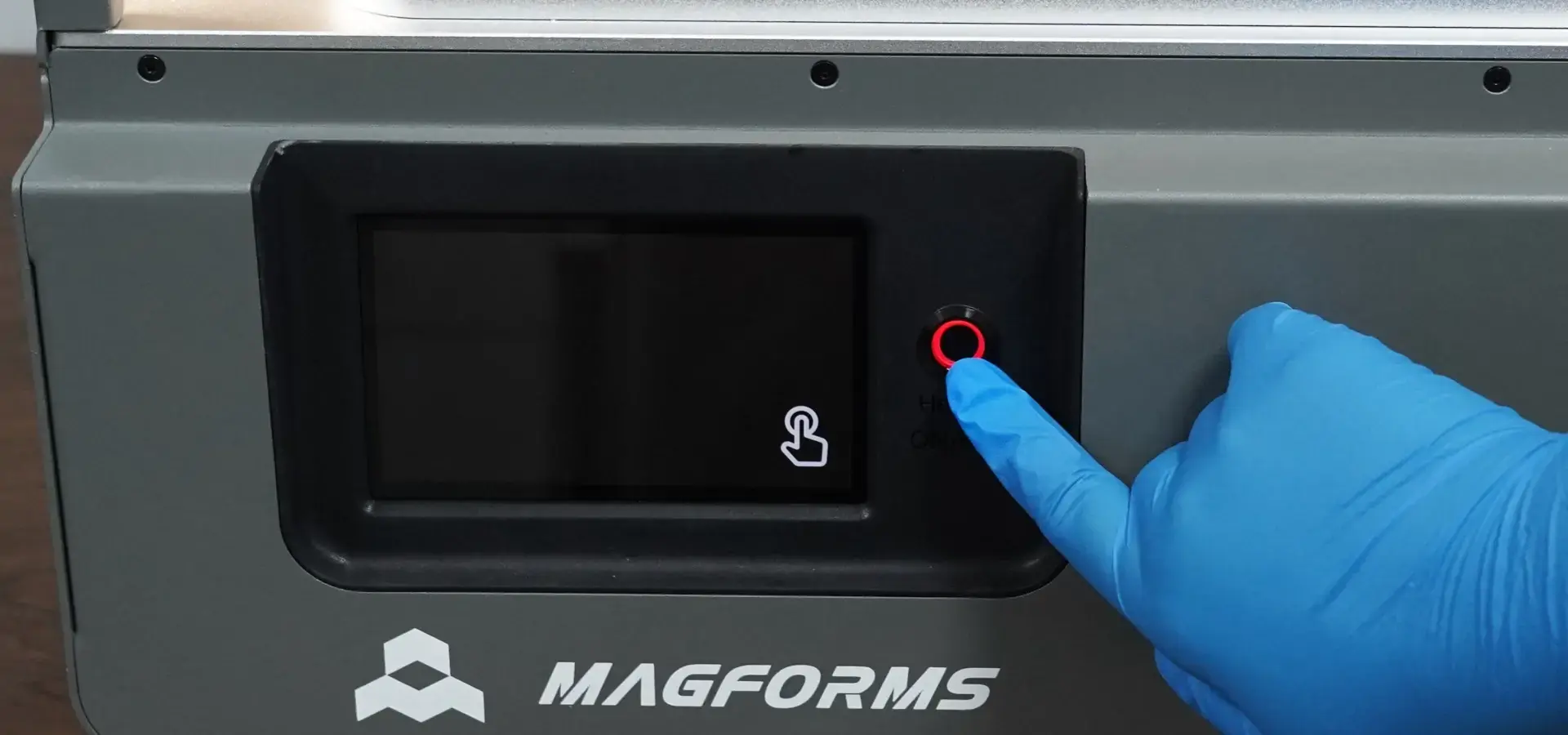
Initial setup involves leveling the build plate to ensure proper first-layer adhesion. Most modern Chinese printers feature assisted leveling with on-screen instructions, guiding operators through the process of adjusting screws until the plate sits parallel to the LCD screen within microns. Proper leveling prevents the frustrating scenario where prints peel off mid-job due to uneven contact.
Selecting appropriate resin settings involves matching exposure times to material reactivity. Standard resins typically require 7-10 seconds for bottom layers to ensure strong build plate adhesion, and 1.5-3 seconds for normal layers depending on resin color and opacity. Post-processing includes washing uncured resin with isopropyl alcohol or specialized cleaning solutions, followed by UV post-curing to achieve full mechanical properties. A structured workflow from file preparation through final curing reduces variability and accelerates the path to consistent, high-quality output.
Troubleshooting Common Issues
Print failures often stem from the interplay between peel forces and build plate adhesion. When parts delaminate mid-print, operators should verify that the release film is properly tensioned according to the manufacturer's maintenance guidelines and free from deformation or damage. Excessive suction from tight film contact can overpower adhesion, while loose film creates inconsistent layer formation. Adjusting lift speed and distance settings reduces peel forces, allowing prints to remain attached through the entire build cycle.
Dimensional inaccuracies may result from uncalibrated Z-axis movement or exposure parameter mismatches. Running calibration prints with known geometries identifies whether the printer consistently reproduces specified dimensions, guiding corrective adjustments. Software compensation features allow fine-tuning exposure times to account for resin batch variations or ambient temperature changes affecting cure kinetics.
Routine Maintenance and Preventive Care
Release film inspection should occur every 30-50 print hours, checking for cloudiness, micro-punctures, or stretching that compromises optical clarity. Replacing worn release films proactively helps maintain print quality and reduces the risk of resin leakage that may damage optical components and LCD screens. Cleaning the vat between different resin types avoids cross-contamination that alters curing behavior.
LCD screens have finite lifespans measured in exposure hours. Monitoring cumulative usage and replacing screens before output quality degrades maintains production consistency. Linear rails and lead screws benefit from periodic lubrication following manufacturer guidelines, ensuring smooth Z-axis motion without binding or wobble. Implementing a documented maintenance schedule with checklist tracking prevents overlooked tasks that lead to unexpected downtime.
How to Procure Your China Resin 3D Printer: Buying and Sourcing Strategies
Navigating international procurement requires understanding distribution channels, negotiation tactics, and logistics considerations.
Reliable Purchasing Channels and Due Diligence
Direct factory orders offer the best pricing for bulk purchases and OEM customization, allowing buyers to specify hardware configurations, software features, and branding tailored to resale markets or internal production needs. Engaging directly with manufacturers like Magforms provides access to engineering teams capable of adapting equipment to unique application requirements, whether that involves custom build volumes for aerospace components or specialized resin compatibility for dental workflows.
Authorized dealers and distributors provide localized support, simplified warranty claims, and faster spare part access. Buyers prioritizing rapid technical response times or uncertain about volume commitments benefit from dealer relationships that offer flexible purchasing terms. Online B2B marketplaces aggregate multiple suppliers, enabling comparison shopping, but require careful vetting to distinguish legitimate manufacturers from resellers or counterfeiters. Verifying business licenses, requesting factory audit reports, and arranging video facility tours mitigate procurement risks.
Bulk Orders and OEM Customization Advantages
Volume purchases unlock pricing tiers that dramatically reduce per-unit costs, making China resin 3D printer acquisition economically feasible for scaling production capacity across multiple facilities. Negotiating bulk deals also secures priority production slots, ensuring timely delivery even during peak demand periods.
OEM customization allows branding and feature specification tailored to market positioning. Distributors selling printers under their own brand can specify custom color schemes, bundled software, and pre-configured material profiles that differentiate their offerings. Production facilities can request machine modifications like enlarged build volumes, customized LCD resolutions (8K, 9K, or 16K), reinforced frames for industrial environments, or integrated filtration systems addressing VOC concerns in regulated workspaces.
Shipping Logistics and Customs Compliance
International shipping involves freight forwarding, customs declarations, and import duty calculations. Working with experienced logistics partners familiar with 3D printing equipment classification streamlines the process, avoiding misclassification that triggers delays or incorrect tariff assessments. Buyers should confirm whether prices quoted are FOB (Free on Board), CIF (Cost, Insurance, Freight), or DDP (Delivered Duty Paid), understanding their responsibility for insurance and customs clearance.
Compliance documentation includes commercial invoices, packing lists, certificates of origin, and product certifications like CE or FCC. European and American importers must ensure printers meet regional safety standards and electromagnetic compatibility regulations. Magforms provides comprehensive export documentation and supports clients through customs procedures, leveraging our experience exporting to dozens of countries and serving over 300 enterprises globally. Our participation in international exhibitions across Europe and Asia has built robust logistics partnerships that expedite cross-border transactions.
Conclusion
Selecting the optimal China resin 3D printer involves balancing technical specifications with operational requirements and long-term support considerations. Resolution capabilities, light uniformity, material compatibility, and build volume must align with your industry's precision demands and production scale. Evaluating manufacturers through performance metrics, user testimonials, and certifications distinguishes reliable partners from risky suppliers. Understanding maintenance protocols and troubleshooting techniques maximizes equipment uptime and print success rates. Strategic procurement through verified channels, bulk negotiation, and proper logistics planning ensures smooth acquisition and integration into manufacturing workflows, positioning your enterprise to leverage cutting-edge additive manufacturing technology competitively.
FAQ
What advantages do China resin 3D printers offer compared to Western brands?
Chinese manufacturers deliver comparable or superior technical specifications at significantly lower price points, often 10-20 times less expensive than Western industrial counterparts. Rapid technology adoption means features like monochromatic screens and integrated uniform light sources appear in Chinese models months or years before competitors. Open material systems eliminate proprietary resin lock-in, reducing operational costs substantially.
How do I choose the right printer model for my business needs?
Match resolution and build volume to your application requirements. Dental and jewelry work demands micron-level XY precision and smaller volumes. Automotive and aerospace prototyping requires larger build areas and engineering resin compatibility. Evaluate sample prints in materials relevant to your production to verify the printer meets quality standards before committing to purchase.
What warranty and technical support should I expect?
Reputable manufacturers provide 12-month warranties covering hardware defects and offer extended support contracts for ongoing maintenance. Responsive technical teams should offer remote diagnostics, software updates, and operator training. Magforms ensures comprehensive after-sales service including machine maintenance, preventive care guidance, and rapid spare parts supply, backed by our experienced team with deep industry expertise accumulated over years of market engagement.
Partner with Magforms for Superior China Resin 3D Printer Solutions
Magforms stands as a trusted China resin 3D printer manufacturer and supplier offering integrated solutions that combine self-developed printing materials with precisely matched hardware, helping reduce compatibility challenges that can occur when hardware and materials are sourced from different suppliers. Our proprietary technologies combine high-resolution LCD imaging systems, optimized optical engines, and intelligent exposure algorithms to deliver high productivity while maintaining exceptional dimensional accuracy and surface quality, while maintaining micron-level accuracy validated by thousands of operational hours across aerospace, medical, automotive, and consumer electronics applications. With 22 patents, 30 trademarks, and a proven track record serving over 300 enterprises in dozens of countries, we provide the technical foundation and global market presence that procurement managers demand. Our expert consultants offer tailored recommendations, OEM customization options, and competitive pricing designed to solve your specific manufacturing challenges. Contact us at info@magforms.com to explore our comprehensive product catalog and initiate an inquiry for reliable, high-performance resin 3D printing equipment backed by responsive after-sales support that respects your timeline and production goals.
References
1. Gibson, I., Rosen, D., and Stucker, B. (2021). Additive Manufacturing Technologies: 3D Printing, Rapid Prototyping, and Direct Digital Manufacturing, Third Edition. Springer International Publishing.
2. Stansbury, J.W., and Idacavage, M.J. (2016). "3D printing with polymers: Challenges among expanding options and opportunities." Dental Materials, 32(1), 54-64.
3. Huang, Y., Leu, M.C., Mazumder, J., and Donmez, A. (2015). "Additive Manufacturing: Current State, Future Potential, Gaps and Needs, and Recommendations." Journal of Manufacturing Science and Engineering, 137(1), 014001.
4. International Organization for Standardization. (2021). ISO/ASTM 52900:2021 Additive manufacturing — General principles — Fundamentals and vocabulary. ISO Standards Catalogue.
5. Ligon, S.C., Liska, R., Stampfl, J., Gurr, M., and Mülhaupt, R. (2017). "Polymers for 3D Printing and Customized Additive Manufacturing." Chemical Reviews, 117(15), 10212-10290.
6. Quan, H., Zhang, T., Xu, H., Luo, S., Nie, J., and Zhu, X. (2020). "Photo-curing 3D printing technique and its challenges." Bioactive Materials, 5(1), 110-115.

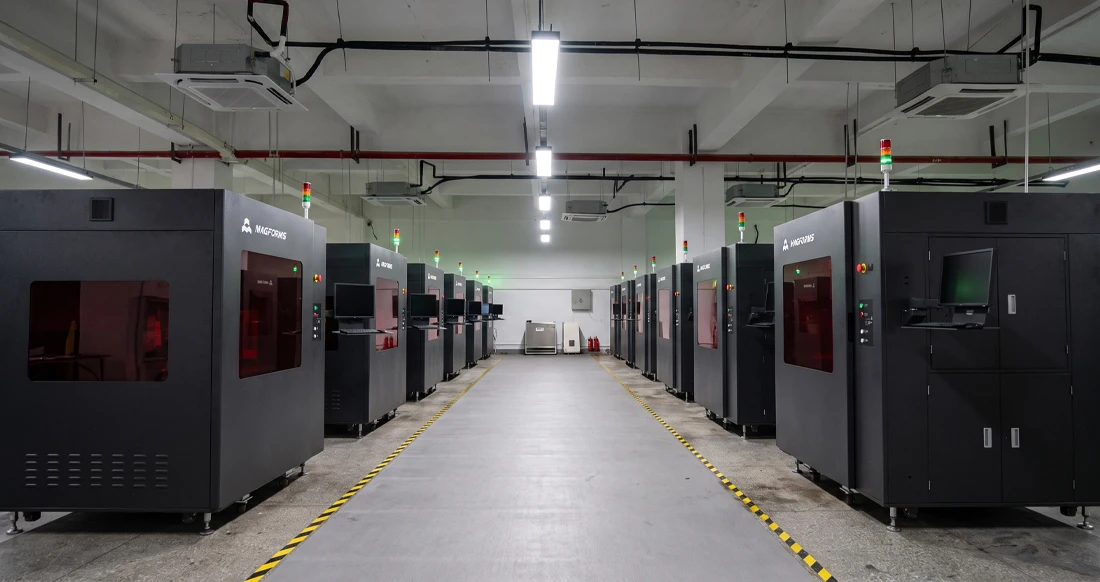
Magforms makes design and manufacture easier.
Popular Blogs
-
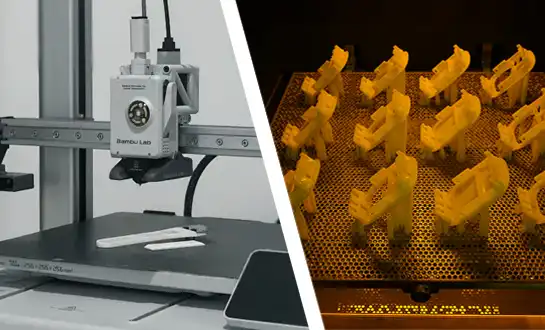 Industry InsightsManufacturing Industry
FDM vs. SLA Printer: Which Technology Is Right for Your Project?
-
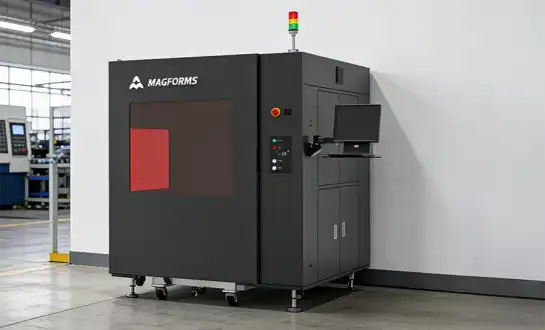 Industry InsightsManufacturing Industry
Top 5 Applications of Industrial 3D Printers in Manufacturing Today
-
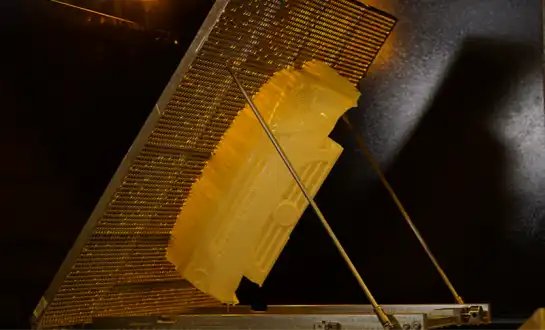 Industry InsightsManufacturing Industry
Why Stereolithography 3D Printers Are Unmatched for Microfluidic Device Prototyping?