Technical Advantages of Stereolithography 3D Printers in Prototyping
Laser-based photopolymerization technology in the Stereolithography 3D printer makes it possible for prototypes to be made with unprecedented accuracy. With this advanced way of additive manufacturing, liquid plastic is turned into solid parts one layer at a time. Dimensional accuracy is as high as 0.05 mm, and the surface quality is excellent. For procurement workers looking for reliable prototyping solutions, SLA technology solves major problems like high failure rates, wasted materials, and uneven accuracy that are common with old ways of making things. Because the technology can make isotropic parts with the same strength along all directions, it is essential for businesses that need to test the functionality of complex geometries before investing in expensive tools.
Understanding Stereolithography 3D Printing Technology
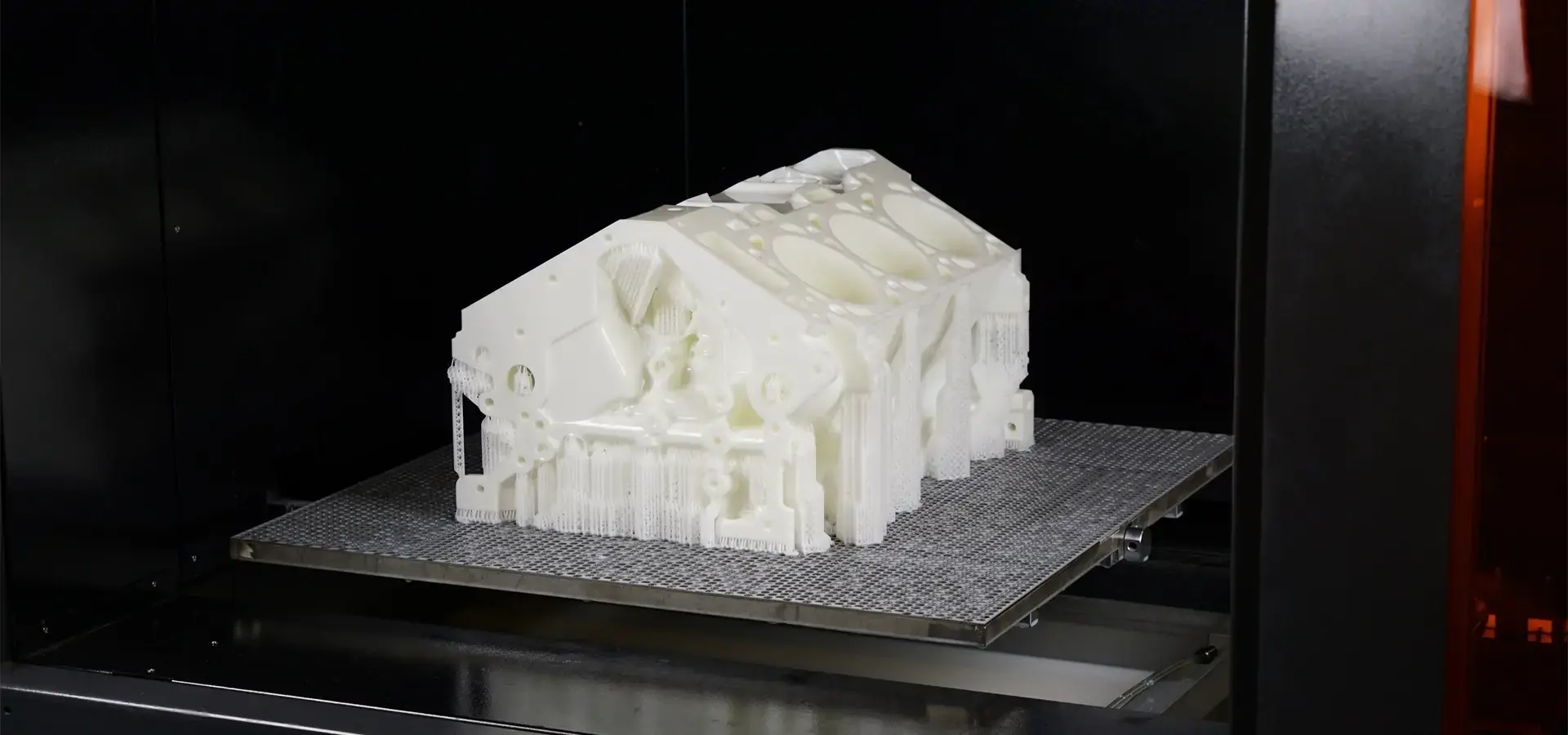
A powerful laser carefully cuts cross-sections of computer-aided design models onto surfaces made of liquid photopolymer plastic. This is how stereolithography works. Chuck Hull came up with this vat photopolymerization method, which is very different from other additive manufacturing methods because it uses lasers to cure the material.
Professional SLA systems need German Scanlab galvanometers for exact laser control, AOC lasers for steady energy output, and Panasonic AC servo motors to make sure the platform moves correctly. These high-quality parts work together to provide industrial-grade performance that procurement teams can depend on for important development tasks.
Temperature control systems in the resin tank of a Stereolithography 3D printer keep the stickiness of the material at its best, and the build platform's precise movement lets you make layers with sizes between 25 and 300 microns. This technical structure makes it possible for very precise measurements. The best Stereolithography 3D printer systems can print things that are within 0.1 mm of being exactly 100 mm long.
SLA technology works with a lot of different photopolymer resins, from standard materials that can reproduce fine details to industrial resins that are as durable as ABS. During polymerization, chemical bonds are formed between layers. This creates isotropic material qualities, which get rid of the Z-axis weakness that comes with filament-based printing.
Different types of advanced resin formulations are available, such as high-temperature versions that can handle bending temperatures above 250°C, flexible materials with Shore A hardness ratings, and biocompatible versions that meet Class I/IIa medical standards. Because this material is so flexible, buying experts can choose the best options for each application.
Technical Advantages of Stereolithography 3D Printers in Prototyping

The technical advantage of SLA technology is shown by a number of performance metrics that have a direct effect on the quality and speed of prototyping. These benefits solve some of the most important problems that buying teams face when they are looking for reliable, high-precision manufacturing solutions.
Precision laser spot control in modern SLA systems makes it possible to achieve XY resolutions between 25 and 140 microns. This lets them make copies of detailed features that would not be possible with traditional manufacturing methods. The surface quality that is left over is close to Class A automobile standards, and it usually doesn't need much post-processing to look good in use.
The variable spot-size laser technology is a big step forward in this field. Large laser spots (0.5–0.6 mm) speed up the filling process inside the mold, while fine spots (0.18–0.2 mm) make sure that the contours and details are clearly defined. By using this smart method, printing can be done 30–50% faster than with traditional methods, while still being very accurate.
Adding deep learning methods to printing makes it even more efficient. By optimizing scanning lines and using smart layer processing, printing speeds up by an extra 20%. These technology improvements solve a problem that has been around for a long time: how to balance the need for high efficiency with the need for precision?
Premium models like the SL600 have a marble base that makes them very stable. This keeps the printer from vibrating, which could affect the quality of long production runs. This strong base makes sure that the dimensions are always correct in batch production situations.
Unlike layer-based methods, which make parts that are weak in certain directions, SLA makes parts that are strong everywhere. During polymerization, chemicals cross-link between layers, making molecular links that are similar to those in injection-molded parts. This means that SLA samples can be used for functional testing under real-life load conditions.
Practical Applications of Stereolithography 3D Printers in Various Industries

SLA technology can be used in many different business settings where accuracy and fine reproduction are very important. Real-world applications show that the technology can meet the needs of certain industries while still being cost-effective.
Automakers use SLA technology to make quick prototypes of interior parts, custom trim pieces, and snap-fit kits to make sure they work. Being able to make parts that are waterproof and the right size lets you test fluidic channels and complicated shapes before investing in expensive injection molding tools.
The speed benefits of the technology are especially useful during the creation of new vehicles, where iterative design changes need to be quickly confirmed in the real world. SLA's ability to make prototypes overnight speeds up the decision-making process and cuts down on total development times.
Dental uses show off Stereolithography 3D printer SLA's accuracy by making physically correct models, bases for orthodontic aligners, and surgery guides. The biocompatible materials that can be used with this technology allow for direct patient touch, going beyond standard prototyping to make medical products that work.
Medical device makers use SLA to make samples of orthopedic implants and custom surgical tools. The technology's ability to replicate complicated internal shapes encourages new minimally invasive surgery methods and personalized treatment plans for each patient.
For aerospace uses, the tightest tolerances for size and material performance are needed. These needs are met by SLA technology, which makes it possible to make structural samples that are light, precise connections, and internal cooling channels that are hard to machine in any other way.
Small-batch production is possible with this technology, which makes it possible to make specific parts cheaply without having to buy expensive tools. This feature is especially useful for testing prototypes of parts that will be made with expensive metal additive manufacturing methods.
Comparing Stereolithography with Other 3D Printing Technologies for Prototyping
Knowing the technical differences between the different types of additive manufacturing lets you make smart buying choices based on the needs of your particular application. SLA technology has clear benefits, but it also has some drawbacks when compared to other methods.
Fused Deposition Modeling is a cheap way to make quick prototypes of ideas, but it has problems like obvious layer lines and uneven strength that make it less useful for practical testing. Digital Light Processing uses the same resin-based method as SLA, but its resolution is usually smaller because display devices are limited to a set number of pixels.
Through galvanometer control systems, SLA's laser-based method offers almost endless XY precision, making it possible to reproduce features that can't be done with pixel-based technologies. The surface quality that is left is almost as good as that of injection molding without any extra steps.
Even though SLA systems may need more money up front than FDM options, they usually have a lower total cost of ownership because they don't need as much post-processing and have better first-pass success rates. Because the technology can make working samples, it gets rid of the need for many iteration rounds that come with less accurate methods.
When you look at the better material qualities and less trash that comes with failed prints, engineering-grade SLA resins are a better value for money than specialized FDM filaments. Open-source compatibility breaks down standard seller lock-in models, which lets you choose how to get materials in a variety of ways.
Through its large-format powers and efficient group processing, SLA technology fills the gap between making one-of-a-kind prototypes and small-batch production. Systems that can handle build sizes greater than 600 mm can make useful parts that are too big or multiple parts at the same time.
The technology can be used to make bridges because the quality stays the same from batch to batch. It can also be used to make production-quality parts while traditional tools are being made. This feature is especially useful for apps with low volume but high worth.

Maintenance and Operational Tips for Maximizing Stereolithography 3D Printer Performance
To get the best SLA performance, you need to use systematic repair methods and best operating practices. These steps make sure that the quality of the work is always the same, and they also extend the life of tools and cut down on unexpected downtime.
Cleaning the resin tank on a regular basis keeps it from getting dirty, which could hurt the quality of the print or cause the part to fail early. Following the right steps to handle resin, like keeping it at a controlled temperature and shielding it from light, will protect its qualities throughout its useful life.
Laser system tuning needs to be checked on a regular basis to make sure that the build area gets the same amount of energy. Checks for galvanometer alignment stop the distortion of dimensions that could happen over long production runs. This keeps the tight limits needed for precision development applications.
Professional technical support for Stereolithography 3D printer systems is very helpful for keeping systems running at their best. Remote consultation teams that are available 24/7 and promise response times within an hour make sure that problems don't stop output too much when they happen. For mission-critical applications, on-site tech help for difficult issues covers all bases.
Regular software changes add new material profiles and better speed, that make the system more useful. Training programs help workers find the best print settings for each job while avoiding common mistakes that could cause builds to fail or quality to be lowered.
Continuous operation testing makes sure that the system works well in real-world situations. Leading manufacturers do validation tests that take thousands of hours to show that failure rates are much lower than industry standards. This gives trust for manufacturing uses that need to be scaled up.
Material compatibility tuning makes sure that different resin formulas work the same way. Systems that use third-party material sources often have problems with compatibility. Integrated supply methods, in which materials and tools are co-developed, get rid of these problems.
Conclusion
Stereolithography 3D printers are the best at making precise prototypes because they offer unmatched accuracy, better surface quality, and isotropic strength qualities that make it possible to test the functionality of complex geometries. The technology's varying spot-size laser systems and AI-optimized scanning lines make printing 30–50% faster while still allowing for very precise measurements. SLA technology meets important procurement needs for reliable, high-precision manufacturing solutions in the automobile, aircraft, medical, and consumer electronics industries. When you combine high-quality hardware parts, compatibility with open-source materials, and full expert support, you get a great deal for companies that want to speed up product development while still keeping the highest quality standards.
Partner with Magforms for Advanced Stereolithography 3D Printer Solutions
Magforms offers the best development services for procurement workers by combining cutting-edge SLA technology with a full range of support services. Our industrial-grade systems are very stable and accurate because they are built with German Scanlab galvanometers, variable spot-size laser technology, and marble bases. We have the technical know-how and dependability your company needs with 22 patents, 30 registered brands, and a global presence that serves over 300 businesses. Our integrated method, which combines improved materials and tools, gets rid of compatibility problems and makes printing 30–50% faster while still being accurate to the micron level. Discover the benefits of working with a specialized Stereolithography 3D printer maker that wants you to succeed. Get in touch with our expert team at info@magforms.com to talk about your unique prototyping needs and find out how our solutions can help you speed up the development of your products while maintaining the highest quality standards.
References
1. Gibson, I., Rosen, D., and Stucker, B. "Additive Manufacturing Technologies: 3D Printing, Rapid Prototyping, and Direct Digital Manufacturing," Springer, 2015.
2. Melchels, F. P. W., Feijen, J., and Grijpma, D. W. "A Review on Stereolithography and Its Applications in Biomedical Engineering," Biomaterials Journal, Vol. 31, 2010.
3. Hull, C. W. "Apparatus for Production of Three-Dimensional Objects by Stereolithography," United States Patent 4,575,330, 1986.
4. Jacobs, P. P. Society of Manufacturing Engineers, "Rapid Prototyping and Manufacturing: Fundamentals of Stereolithography," 1992.
5. Chartrain, N. A., Williams, C. B., and Whittington, A. R. "A Review on Fabricating Tissue Scaffolds Using Vat Photopolymerization," Acta Biomaterialia Journal, Vol. 74, 2018.
6. Stansbury, J. W. and Idacavage, M. J. "3D Printing with Polymers: Challenges Among Expanding Options and Opportunities," Dental Materials Journal, Vol. 32, 2016.

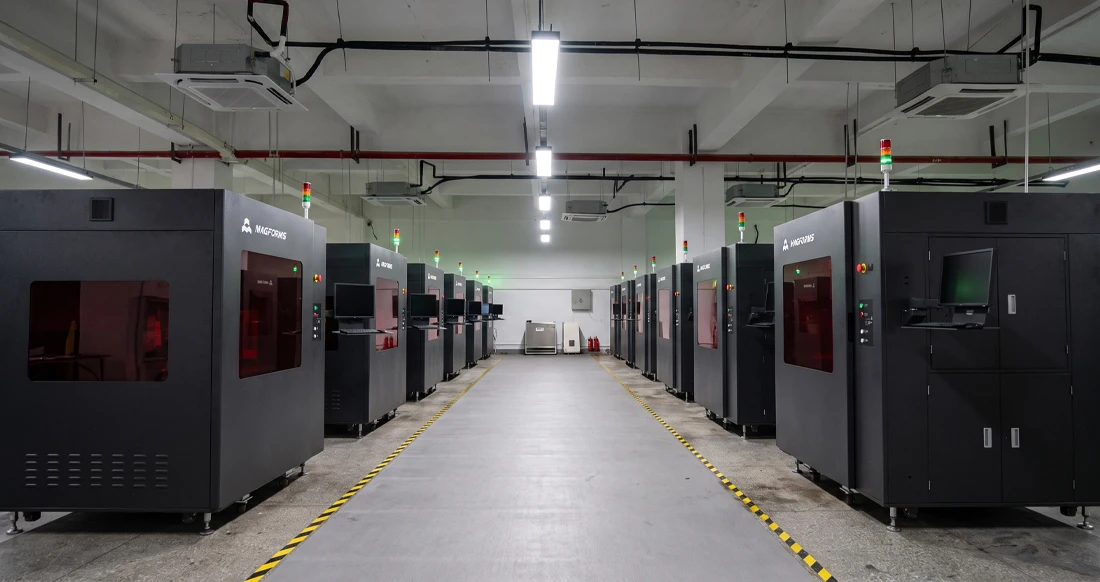
Magforms makes design and manufacture easier.
Popular Blogs
-
 Industry InsightsManufacturing Industry
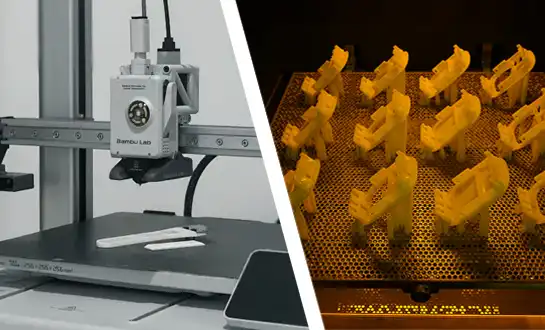
FDM vs. SLA Printer: Which Technology Is Right for Your Project?
-
 Industry InsightsManufacturing Industry
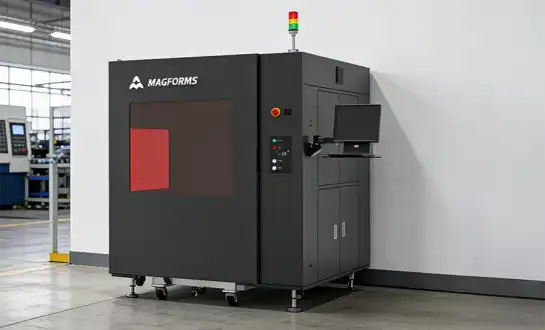
Top 5 Applications of Industrial 3D Printers in Manufacturing Today
-
 Industry InsightsManufacturing Industry
Why Stereolithography 3D Printers Are Unmatched for Microfluidic Device Prototyping?