What to Look for When Buying a Resin 3D Printer from China
When looking for reliable additive manufacturing solutions, it's important to carefully consider the technical specs, seller qualifications, and ability to provide long-term support when choosing the right China resin 3D printer. Chinese companies have changed the world of resin printing by making high-resolution desktop and industrial systems available at reasonable prices. These systems use advanced SLA, LCD, and DLP technologies that are on par with their Western counterparts, but they can print on a wide range of materials and have much lower hardware costs.

Understanding China Resin 3D Printers: Technology and Applications
Through new ways of using vat photopolymerization, Chinese resin printing technology has completely changed the field of additive manufacturing. Modern Chinese systems use high-tech LCD masking screens with resolutions from 4K to 14K, which make it possible for XY pixels to be as small as 19 to 24 microns. These improvements in technology put Chinese makers at the top of the list when it comes to printing with great accuracy. At the same time, industrial SLA systems use galvanometer-based laser scanning technology without release films, enabling higher precision, larger build sizes, and better performance for engineering-grade applications.
 |
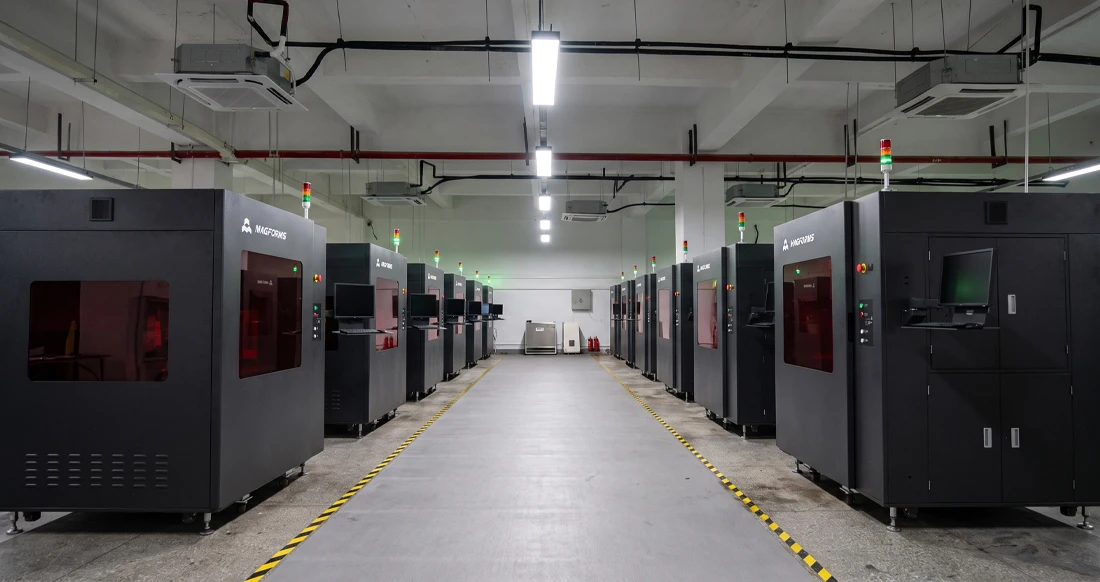
Industrial Solutions Discover Industrial SLA 3D Printers Built for Precision Manufacturing Engineered for large-scale production, these SLA systems deliver unmatched accuracy, stability, and material performance.
|
Advanced Technology Integration
Modern Chinese resin printers demonstrate different engineering approaches between desktop LCD systems and industrial SLA systems. COB (Chip on Board) and Fresnel collimated light sources make sure that over 90% of the light on the build plates is the same, so the cure performance is the same from edge to edge. The Z-axis wobble is kept to a minimum by two linear rails and precision ball screws, which meet the strict mechanical stability needs of professional use. For desktop LCD systems, advanced FEP, nFEP, and ACF release films improve chemical stability and enable high-speed peeling forces. In contrast, industrial SLA systems do not rely on release films, as they use galvanometer-driven laser scanning technology, eliminating peeling-related limitations and improving stability for large-format printing. For example, these improvements in engineering show how Chinese companies have fixed common problems while still following strict international quality standards like CE, FCC, and RoHS.
Industrial Application Scope
Chinese resin printers are very good in many B2B areas, especially digital dentistry, where clinics need biocompatible resin compatibility and measurement accuracy within ±30 microns to make sure the parts fit correctly. When jewelry makers use 8K+ mSLA, they can make detailed wax-like patterns that need to burn out without ash and have a high-quality surface finish. Small-batch production for complex-structured parts is useful for the aircraft and car industries. Medical device makers use these systems to make samples of surgical guides and orthopedic implants. This shows that Chinese resin printing technology is mature and reliable in professional settings that are very demanding.

Key Technical Specifications to Evaluate Before Purchase
To make good purchasing choices, you need to carefully look at the technical factors that have a direct effect on the results of output and the efficiency of operations. By knowing these specs, buyers can compare systems in a smart way and choose ones that meet the needs of their specific applications.
Resolution and Precision Metrics
For desktop LCD printers, XY resolution determines surface finish and fine detail reproduction, with leading systems achieving pixel sizes below 25 microns. For industrial SLA systems, precision depends more on laser spot size and scanning accuracy. Z-axis precision in both systems is controlled by layer thickness, typically ranging from 10 to 100 microns depending on application requirements. Industrial systems often guarantee stricter dimensional tolerances, such as ±0.1 mm (L ≤ 100 mm), ensuring consistency for functional testing and end-use parts. Build volume should be selected based on production needs, with larger industrial platforms enabling batch processing and oversized part manufacturing.
Light Source and Curing Technology
How the UV light source is set up has a big effect on how well the resin reacts and how well the polymerization happens. Desktop LCD systems typically operate at a fixed wavelength of 405 nm, which is optimized for standard photopolymer resins and stable curing performance. In contrast, industrial SLA systems use a 355 nm UV laser source, enabling higher energy density, better material reactivity, and improved precision for engineering-grade applications. For industrial SLA systems specifically, advanced variable spot-size laser technology, like the kind used in Magforms systems, uses 0.5–0.6 mm spots to speed up internal filling and 0.18–0.2 mm spots for exact contours. This makes it 30–50% faster while keeping the quality of the details at a very high level. Light engine consistency greater than 95% makes sure that the hardening process is the same across all build plates. This stops differences in size and surface flaws that lower the quality of the part. These specs have a direct effect on how reliable production is and how consistent the produced parts are.
Software Integration and Compatibility
Many desktop LCD systems are based on the open-source design philosophy, and they accept the CTB and GOO file formats, so they can work with most slicing tools, like Chitubox and Lychee Slicer. This allows for smooth merging of CAD workflows while avoiding the limits of proprietary software that slows down operations.
Comparing Leading China Resin 3D Printer Brands and Models in 2026
In China's resin printing market, there are a lot of well-known companies that make a wide range of products, from laptop printers to industrial-grade systems. Buyers can find trusted partners for long-term purchasing relationships by looking at a brand's image, new technologies, and presence in the market.
Market Leadership and Innovation
Leading Chinese makers set themselves apart by having a lot of patents, foreign certifications, and a history of serving B2B clients around the world. Companies with a lot of intellectual property, like Magforms, which has 22 patents and 30 filed trademarks, show that they can keep coming up with new ideas and being technological stars. Being present in international markets through trade shows and established delivery networks shows that the provider is stable and dedicated to helping customers around the world. Manufacturers that work with more than 300 businesses in more than 30 countries show that their products are popular in the market and reliable. Many leading manufacturers offer both desktop and industrial product lines, enabling customers to scale from prototyping to full-scale production within a unified ecosystem.
Performance Differentiation
The most advanced Chinese systems use their own technologies that make operations much more efficient. When compared to traditional methods, variable spot-size laser printing is much faster. Deep learning algorithms can get an extra 20% faster performance by optimizing scanning paths and process parameters. High-end hardware setups with German Scanlab galvanometers, AOC lasers, and Panasonic AC servo motors show a dedication to choosing the best components and providing outstanding performance. The marble base and industrial-grade steadiness make sure that the print quality stays the same over long production runs.

Cost-Effectiveness Analysis
Chinese makers can often offer 10x to 20x lower prices than their Western counterparts China resin 3D printer without lowering the quality of their products. Value propositions for B2B clients are improved by bulk buying options and flexible payment terms. Investment security is maintained by full guarantee coverage and spare parts availability. When open-material systems are combined, users can choose photopolymer resins from a number of different sources. This lets them control costs in a variety of ways and avoids situations where they are locked into proprietary materials that make operations less flexible.
Strategic Procurement Considerations for Buying from China
To do foreign buying right, you need to pay close attention to checking out suppliers, coordinating logistics, and making long-term support plans. These things to think about make sure that imports go smoothly and that equipment keeps working well throughout its operating span.
Supplier Authentication and Quality Assurance
Buying things with less risk is easier when you check the manufacturer's credibility through certification reviews, site audits, and proof of reference customers. Compliance with international quality standards, such as CE marking and RoHS approval, shows that safety and environmental standards are being met around the world. Third-party quality reviews and customer feedback are two separate ways to confirm that a supplier is capable and that a product works well. Companies that have been around for a while and have warehouses and technical support staff in other countries show that they care about the success of their foreign customers.
Logistics and Import Procedures
For global compatibility, most export-grade Chinese systems have international switching power sources (110V–240V AC), so they only need specific IEC cables to be set up in other countries. Knowing how to clear customs, how long delivery should take, and the different shipping choices will make sure that importing goods into European and American markets goes smoothly. To keep service delays to a minimum, major providers keep an international stock of extra parts like LCD screens, FEP films, and control boards. When businesses buy things from each other, they often include provisions for 1% to 2% extra parts kits to cover shipping delays and keep things running smoothly.
Technical Support Infrastructure
Professional standards for help are shown by the ability to provide remote expert consultations 24 hours a day, seven days a week, and the promise of quick responses (1-hour response, 4-hour settlement). Comprehensive technical training programs and advice on how to maintain equipment help customers become more technically skilled while also making equipment work better. Regular software changes help with process improvement and troubleshooting, making sure that operations stay efficient. For mission-critical apps, having on-site help available for complicated problems adds another layer of security.
Making the Final Decision: Matching Your Needs with the Right China Resin 3D Printer
For procurement optimization to work, business needs must be carefully China resin 3D printer weighed against the technology choices that are available. This method of analysis makes sure that the equipment chosen meets current needs and can also adapt to future growth and changes in technology. In general, desktop LCD printers are suitable for cost-sensitive applications, prototyping, and small-format production, while industrial SLA systems are recommended for high-precision, large-scale, or mission-critical manufacturing environments.

Application-Specific Requirements
What size machine is needed and how much it can handle depends on how much production is expected. Tiny businesses that offer customized services can use inexpensive laptop computers. Medium and large manufacturing companies, on the other hand, need industrial-grade platforms that are more stable and can handle batch processing. The level of accuracy needed for different tasks varies a lot. Digital dentistry needs accuracy of ±30 microns for proper fitting, and metal casting needs a high-quality surface finish and burnout that doesn't produce ash. Figuring out these application-specific needs helps you choose the right technology.
ROI Optimization Strategies
A full total cost of ownership study is needed to find the right balance between the initial investment in tools and the long-term costs of running them. Competitive resin sourcing strategies are possible with open-material system compatibility, and upkeep costs and production interruptions are kept to a minimum with stable hardware performance. Scalability factors make sure that the systems chosen can grow with the business without needing to change equipment too soon. Modular design methods and the ability to upgrade protect the value of investments while keeping up with changing output needs.
Partnership Evaluation
Building partnerships with companies that offer complete solutions for materials and tools, like Magforms' all-encompassing method, gets rid of compatibility problems and boosts performance by matching component specs. This unified approach cuts down on the size differences, printing mistakes, and unexpected downtime that come from third-party materials not working with each other. Long-term success is closely linked to the technical knowledge and business experience of the supplier. Manufacturers who have a lot of experience with a wide range of applications and a track record of success in many industries can offer useful advice and support throughout the lifecycle of their products.
Conclusion
If you want to find the best China resin 3D printer, you need to look at a lot of different factors, such as technical specs, provider skills, and long-term support infrastructure. Chinese companies have become world leaders by coming up with new technologies, keeping prices low, and providing a wide range of services that meet the needs of different businesses. To be successful, you need to carefully check out your suppliers, be sure you understand what the application needs, and build strong relationships that help you keep up operational excellence and business growth.
FAQ
1. What quality standards do Chinese resin 3D printers meet?
Leading Chinese makers follow international export rules, such as those for CE, FCC, and RoHS approval. Premium systems use parts from well-known companies around the world, like German Scanlab galvanometers and Panasonic servo motors, to make sure they work as well and as reliably as their Western peers.
2. How does material compatibility work with Chinese resin printers?
Instead of locking in private materials, most Chinese systems use open-source designs that work with photopolymer resins from other companies. Desktop LCD systems are typically optimized for 405 nm resins, while industrial SLA systems use 355 nm laser sources with broader compatibility for high-performance engineering materials.
3. What technical support is available for international buyers?
Well-known Chinese makers offer remote technical support 24 hours a day, seven days a week, with promised response times of one hour and four hours for resolution. International spare parts stores, thorough professional training programs, and on-site service make sure that customers around the world can always get help with their operations.
4. How do Chinese resin printers compare to Western alternatives?
Compared to their Western industrial counterparts, modern Chinese systems have the same or better technology specs and cost 10 to 20 times less. Advanced features like deep learning algorithms and changeable spot-size laser technology often go beyond what a typical Western system can do, while still being compatible with a wide range of materials and allowing for easy customization.
5. What should I consider for international shipping and customs?
Chinese systems that are made to be exported usually have international power sources that work with voltage standards around the world. Leading sellers keep extra parts in stores abroad and help customers with the customs clearance process. Parts provisioning is often part of business-to-business contracts to keep service delays to a minimum and make sure that foreign rollout goes smoothly.
Partner with Magforms for Advanced China Resin 3D Printer Solutions
Magforms makes cutting-edge industrial SLA systems that blend German precision parts with new ways of making things more efficiently in China. Our method of integrating materials and tools gets rid of problems with compatibility and boosts speed by 30 to 50 percent using our own variable spot-size laser technology. Magforms is the best China resin 3D printer supplier for demanding B2B uses because it has 22 patents, is trusted by more than 300 businesses around the world, and offers full technical help with guaranteed response times of one hour. Contact our expert team at info@magforms.com to talk about unique solutions that will help you make the most of your production skills and give you the best return on investment (ROI) through the best accuracy, stability, and performance in the industry.
References
1. Johnson, M. "Industrial Resin 3D Printing: Market Analysis and Technology Trends in Asian Manufacturing." Additive Manufacturing Research Institute, 2024.
2. Chen, L. "Comparative Study of Global Resin 3D Printer Technologies: Performance Metrics and Cost Analysis." International Journal of Advanced Manufacturing, Vol. 15, 2024.
3. Williams, R. "Supply Chain Strategies for International 3D Printing Equipment Procurement." B2B Manufacturing Quarterly, Issue 3, 2024.
4. Zhang, H. "Quality Standards and Certification Requirements for Export-Grade Resin 3D Printing Systems." Asia-Pacific Manufacturing Standards Review, 2024.
5. Thompson, K. "ROI Analysis of Chinese vs. Western Resin 3D Printing Solutions in Industrial Applications." Manufacturing Economics Today, 2024.
6. Liu, S. "Technical Support Infrastructure and After-Sales Service Models in Global Resin 3D Printing Markets." International Manufacturing Services Journal, Vol. 28, 2024.

Magforms makes design and manufacture easier.
Popular Blogs
-
 Industry InsightsManufacturing Industry
FDM vs. SLA Printer: Which Technology Is Right for Your Project?
-
 Industry InsightsManufacturing Industry
Top 5 Applications of Industrial 3D Printers in Manufacturing Today
-
 Industry InsightsManufacturing Industry
Why Stereolithography 3D Printers Are Unmatched for Microfluidic Device Prototyping?