SLA Printer vs FDM: Which Wins in Precision Printing?
If you need very high accuracy, SLA technology is clearly the better choice than FDM technology for most precision applications. Photopolymer resins are cured by UV lasers in SLA printers, which can make layers as thin as 10 microns. FDM printers, on the other hand, usually make layers that are 100 to 300 microns thick. Because of this basic difference, stereolithography is the best method for making medical devices, aerospace parts, and detailed prototypes where size accuracy has a direct effect on safety and functionality.
Understanding the Core Technologies Behind Precision Printing
To start the battle between SLA technology and FDM, you need to know how each method turns digital designs into physical objects. A UV laser is used in stereolithography to cure liquid photopolymer resin one layer at a time. The laser scanning system precisely controls where the resin hardens, making cross-sections that are very accurate and have smooth surfaces.

FDM technology is different because it heats thermoplastic filament and forces it out of a nozzle. Each layer is built on top of the one below it because the material deposits follow paths that have already been planned. Although this method of additive manufacturing is flexible and low-cost, the mechanical nature of filament deposition makes it impossible to achieve high precision.
These technologies are different in three main ways:
- Laser curing vs. filament extrusion as a way to make layers
- State of the material during printing: Using liquid resin instead of heated plastic
- Potential for accuracy: Precision down to the micron level vs. standard tolerances
Because the laser spot can be controlled to very small diameters, the vat polymerization process used in SLA systems can make very fine details. Modern SLA printers can make spots that are between 0.18 mm and 0.6 mm wide. This lets you print at different resolutions, which is good for both speed and accuracy.
Traditional FDM systems aren't as good as SLA technology when it comes to making complex shapes with tight tolerances.
Precision Comparison: Real-World Performance Data
Dimensional accuracy is very different between these technologies, as shown by tests done in the lab. For parts less than 100 mm long, SLA printers always get within 0.1 mm of accuracy, while FDM systems usually get within 0.2 to 0.5 mm, depending on the shape of the part and the properties of the material.
There are even bigger differences in the quality of the surface finish. The surface roughness of SLA parts that come off the build platform is between 1.5 and 3.0 μm, while the surface roughness of FDM prints is usually between 6 and 15 μm because of the visible layer lines and filament deposition patterns.
The ability to print with high resolution shows why professionals choose stereolithography for tough jobs:
Metrics for SLA Performance:
- Smallest feature size: 0.1 to 0.2 mm
- 0.01-0.15 mm is the range for layer height.
- Resolution in X and Y: up to 47 microns
- Accuracy on the Z-axis: ±25 microns
Performance Metrics for FDM:
- Smallest feature size: 0.4 to 0.8 mm
- There are 0.1 to 0.3 mm of layer height.
- 100–400 microns of XY resolution
- Accuracy of the Z-axis: ±100 microns
The properties of the material also affect how precise the results are. Photopolymer resins harden evenly and don't have any internal stresses, but FDM materials can warp and shrink as they cool. SLA technology gives you the stability you need for quality manufacturing processes if you need consistent dimensional accuracy across multiple production runs.

Industry Applications: Where Precision Matters Most
These technologies have been used in different areas because they need different levels of accuracy. A lot of the work that goes into making cars depends on SLA printers to make working prototypes of complex interior parts and assemblies. To test design ideas before spending a lot of money on tooling production, these parts need to fit and finish perfectly.
Even higher standards are needed for aerospace applications. Strict size requirements must be met for small precision connectors and parts with odd shapes. Because it can achieve accuracy down to the micron level, SLA technology is necessary for testing prototypes in this field.
The most precise applications are found in the medical and dental fields. For customized dental models to fit a patient correctly, they need to be accurate to within 50 microns. Surgical guides and prototypes for orthopedic implants can't handle changes in size that could put patients at risk.
When making wearable electronics and small assemblies, SLA precision helps with consumer electronics prototyping. Because laser curing can handle fine details, snap-fit features, and precise mounting points can be accurately shown.
Both technologies are used in different ways in the creative and cultural industries. FDM is good for making big models for decorations, but SLA is much better at making copies of fine artistic details and complex textures that make copies look real.
If you need to serve a lot of different industries with different precision needs, investing in SLA capability will make sure you can handle the toughest needs while still staying competitive.

Material Considerations and Compatibility Factors
The types of materials that are available have a big effect on how precisely they can be printed. Engineering resins, clear materials, high-temperature mixtures, and flexible photopolymers can all be used with SLA systems. Each type of material has its own properties, but all of them still benefit from the accuracy of laser curing.
Open-source designs in modern SLA printers let users choose materials from a number of different suppliers. This adaptability helps keep costs down while making sure that the material has the best properties for each use. Biocompatible materials are used in medical applications, and high-strength engineering plastics are used to make functional prototypes.
When choosing an FDM material, the main focus is on thermoplastic filaments that have different mechanical properties. The variety of materials available is large, but the accuracy issues with filament deposition stay the same, no matter what material is used.
Post-processing needs are very different for each technology. SLA parts need to be cured with UV light and have their supports removed, but their final surface quality is reached right away. For FDM prints to have the same level of surface smoothness, they may need a lot of finishing steps.
Because it reduces waste, SLA technology is better for precision applications. Resin that hasn't hardened can be used in other prints, but failed FDM prints mean that all the material is lost.
If you need to be able to change the way materials are used and be very precise, SLA systems are the best way to get both.
Cost Analysis: Beyond Initial Investment
To figure out the total cost of ownership, you have to look at more than just the price of the equipment. SLA printers usually require bigger initial investments, especially for large-format systems that can print in bulk. The extra cost is usually worth it, though, because less post-processing and higher success rates make things run more smoothly.
Costs of doing business include things like materials used, repairs needed, and wages paid to workers. SLA technology cuts down on waste by using precise laser control and resin that can be used again and again. Advanced systems are 30–50% more efficient than traditional methods because they can print spots of different sizes.
Because they require less post-processing work and have higher print success rates, SLA systems are better for precise applications where labor costs are important. Production environments have high costs when prints don't work, so reliability is an important economic factor.
Maintenance costs depend on how complicated the system is and how it is used. The high-quality parts in industrial SLA printers make them last longer and have less downtime than cheaper alternatives.
A long-term value assessment should take into account how much can be made and where the product fits in the market. When you can handle orders with a lot of precision, you often get higher prices that cover your higher operational costs.
Focusing on system reliability and efficiency gives better long-term value than the lowest initial cost if you want to get the best return on your investment while keeping precision capabilities.
Performance Metrics: Speed vs Precision Trade-offs
Finding the right balance between print speed and accuracy in measurements is a key decision point in production settings. Point-by-point laser scanning made it hard for older SLA systems to work quickly, but newer technology with variable spot sizes solves this problem well.
Large laser spots (0.5 to 0.6 mm) are used for filling in the inside of the part, and fine spots (0.18 to 0.2 mm) are used for contours and details. This method speeds up the printing process overall while keeping accuracy where it matters most. Deep learning algorithms improve scanning paths even more, which speeds things up by another 20%.
How the build platform is used affects metrics for productivity. When used in production, large-format SLA systems can print a lot of small parts or one big part at once, which increases throughput. Being able to make functional parts that are too big in a single build gets rid of the need for assembly and any possible tolerance stack-up problems.
With SLA technology, the quality of all print jobs stays higher and more consistent. Each layer gets the same amount of laser exposure, which makes sure that the material properties are the same all the way through the build volume.
Changes can happen in FDM systems because of worn-out nozzles, changing temperatures, and inconsistent filaments.
Failure rates have a big effect on productivity as a whole. For normal production runs, SLA systems with tried-and-true parts have success rates of over 95%. On the other hand, FDM technology may have higher failure rates due to issues with warping, layer adhesion, and support failures.
SLA technology gives professional manufacturing environments the dependability they need to keep to schedule and produce high-quality goods every time.

Making the Right Choice for Your Precision Needs
To choose the best printing technology, you need to carefully look at the needs of the application, the production volume, and the quality standards. Companies that work with many different types of industries benefit from SLA's flexibility and accuracy, even if it costs more at first than FDM options.
Technical leaders should put system specs that work with their most demanding applications at the top of their list. Print accuracy, compatibility with materials, and dependability are all important factors that have a direct effect on the success of production and customer satisfaction.
When making a budget, you should think about the total cost of ownership instead of just the price of buying the equipment. The higher quality and higher productivity of SLA technology often make the higher prices worth it by making operations more efficient and helping the company stand out in the market.
Production environments need to have support infrastructure. Access to technical experts, quick response times, and thorough training all help make sure that the system is used to its fullest potential and that losses caused by downtime are kept to a minimum.
Scalability in the future should affect the choices we make about technology now. Being able to handle needs that are getting more complicated sets businesses up for growth while protecting their equipment investments.
For long-term success, SLA systems are the best way to build a technology platform that can change with your business needs while still giving you accurate results every time.
Conclusion
The battle for precision printing between SLA and FDM technologies shows that stereolithography clearly performs better in tough situations. SLA printers are the best choice for industries that need tight tolerances and consistent results because they are very accurate in terms of size, surface finish, and the types of materials they can print on. While FDM technology can be used for less important tasks at a lower cost, modern SLA systems are better for professional manufacturing settings where quality cannot be compromised because they are more precise, more efficient, and more reliable.
Partner with Magforms for Advanced SLA Printer Solutions
Magforms stands as a leading SLA printer manufacturer, delivering integrated solutions that combine cutting-edge hardware with optimized materials for unmatched precision printing performance. Our industrial-grade systems feature German Scanlab galvanometers, AOC lasers, and variable spot-size technology that increases printing speeds by 30-50% while maintaining micron-level accuracy. With 22 patents, global presence across 300+ enterprises, and comprehensive technical support including 1-hour response guarantees, Magforms provides the reliability and expertise your precision manufacturing operations demand. Contact us at info@magforms.com to discover how our SLA printer technology can transform your production capabilities.
References
1. Gibson, I., Rosen, D., & Stucker, B. (2015). Additive Manufacturing Technologies: 3D Printing, Rapid Prototyping, and Direct Digital Manufacturing. Springer.
2. Jacobs, P. F. (1992). Rapid Prototyping and Manufacturing: Fundamentals of Stereolithography. Society of Manufacturing Engineers.
3. Melchels, F. P., Feijen, J., & Grijpma, D. W. (2010). A review of stereolithography and its applications in biomedical engineering. Biomaterials, 31(24), 6121-6130.
4. Stansbury, J. W., & Idacavage, M. J. (2016). 3D printing with polymers: Challenges among expanding options and opportunities. Dental Materials, 32(1), 54-64.
5. Thompson, M. K., et al. (2016). Design for Additive Manufacturing: Trends, opportunities, considerations, and constraints. CIRP Annals, 65(2), 737-760.
6. Wohlers, T., & Gornet, T. (2014). History of additive manufacturing. Wohlers Report 2014: 3D Printing and Additive Manufacturing State of the Industry Annual Worldwide Progress Report.

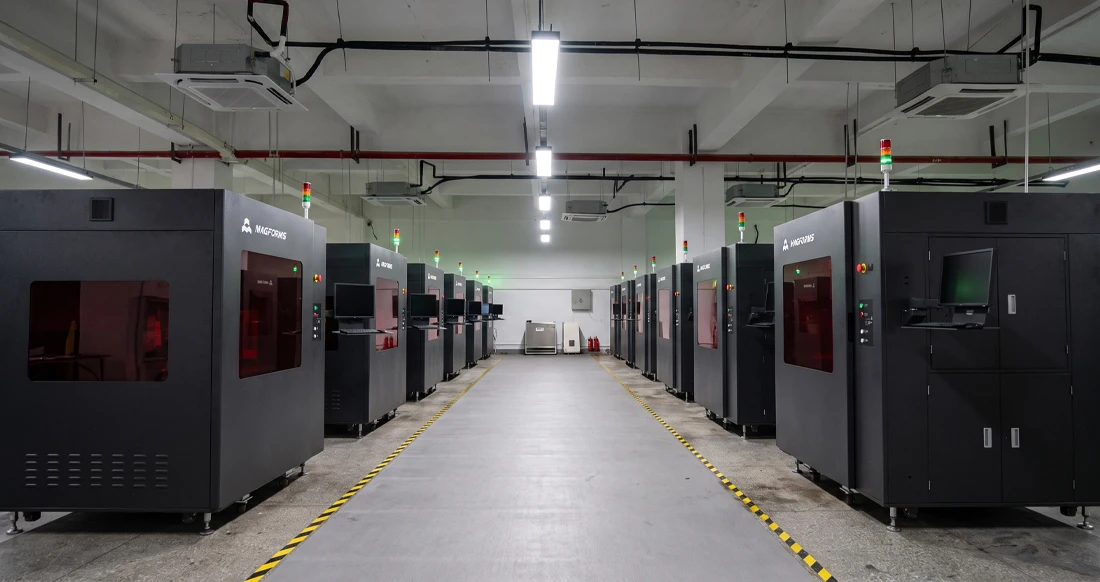
Magforms makes design and manufacture easier.
Popular Blogs
-
 Industry InsightsManufacturing Industry
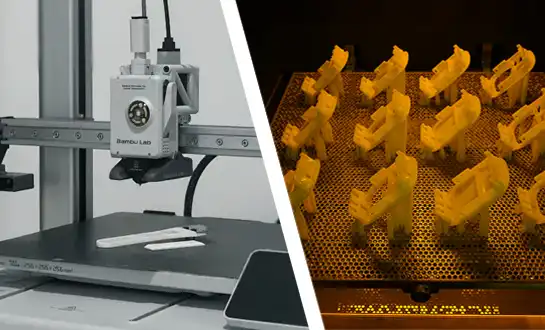
FDM vs. SLA Printer: Which Technology Is Right for Your Project?
-
 Industry InsightsManufacturing Industry
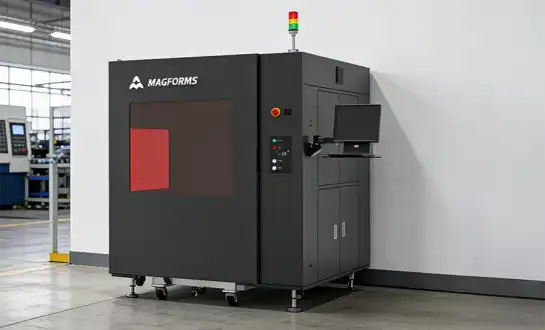
Top 5 Applications of Industrial 3D Printers in Manufacturing Today
-
 Industry InsightsManufacturing Industry
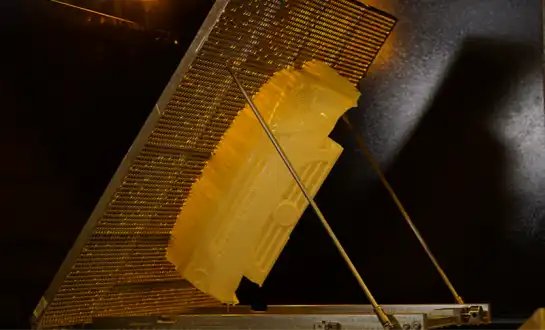
Why Stereolithography 3D Printers Are Unmatched for Microfluidic Device Prototyping?