Stereolithography (SLA) 3D Printing: The Original Technology Explained
The stereolithography 3D printer is the foundational breakthrough in additive manufacturing, establishing the blueprint for precision 3D printing that continues to drive industrial innovation today. As the first commercially viable 3D printing method, SLA technology uses ultraviolet light to cure liquid photopolymer resins into solid, highly detailed parts with exceptional surface quality. Modern stereolithography 3D printer systems deliver unprecedented accuracy and reliability, making them indispensable for industries requiring tight tolerances and smooth finishes. Understanding SLA's capabilities and applications helps manufacturers make informed decisions about integrating this transformative technology into their production workflows.
Understanding Stereolithography 3D Printing Technology
Core Photopolymerization Process
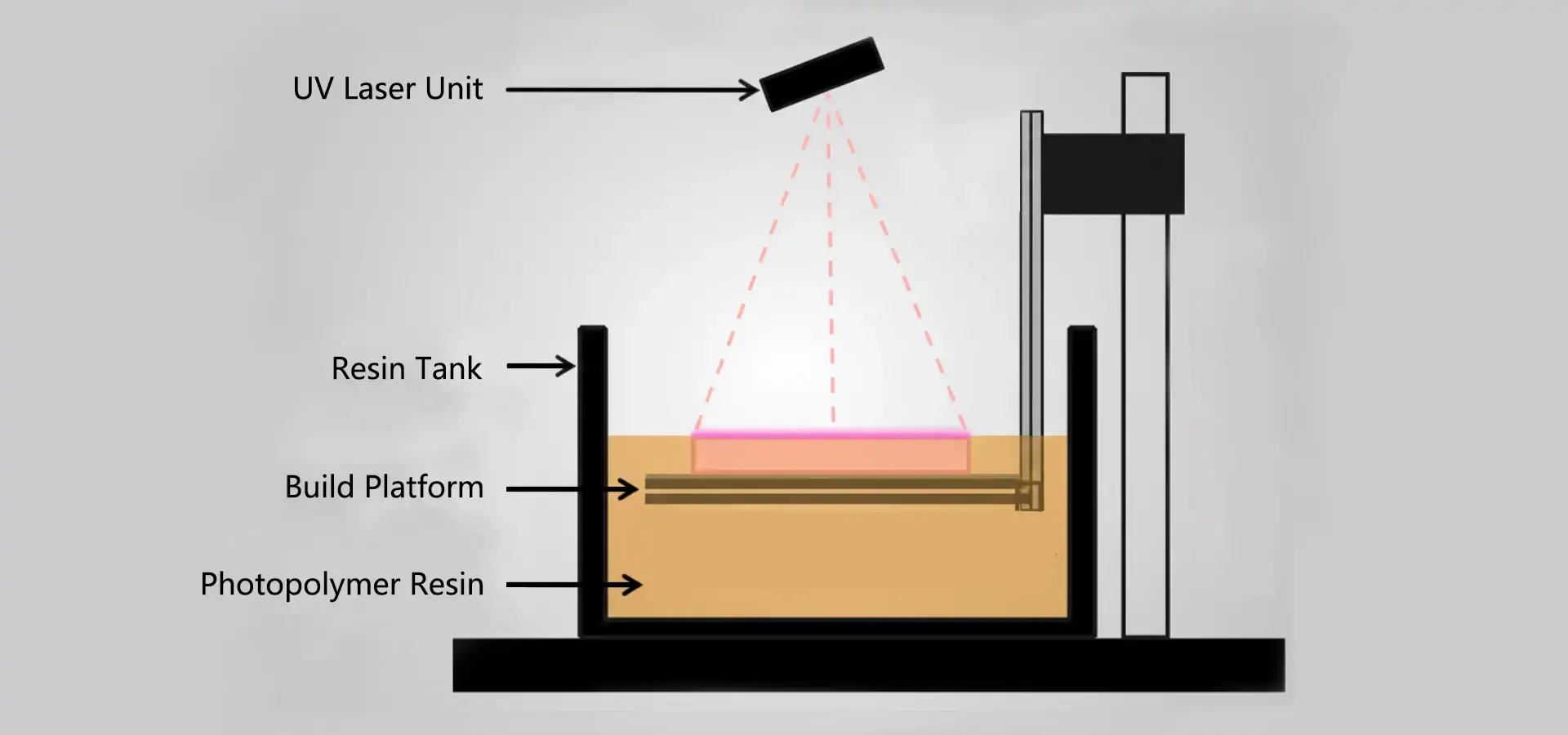
SLA innovation works through a modern photopolymerization process where bright laser light specifically cures fluid gum into strong plastic. The laser bar follows exact designs over each layer of fluid photopolymer, solidifying the fabric according to computerized plan details. This layer-by-layer approach empowers the creation of complex geometries with complex inner structures that would be incomprehensible to accomplish through conventional fabrication methods.
Modern Stereolithography 3D printers accomplish exceptional exactness through advanced laser control components. High-quality galvanometer frameworks coordinate the laser pillar with remarkable exactness, whereas advanced computer program calculations optimize filtering designs for both speed and quality. The curing profundity and introduction parameters can be absolutely controlled to coordinate particular tar characteristics, guaranteeing reliable comes about over distinctive materials and applications.
Essential System Components and Architecture
Contemporary SLA printers consolidate a few basic components that determine general execution capabilities. The laser framework serves as the heart of the operation, with control yield and wavelength particularly tuned for ideal photopolymer actuation. Galvanometer mirrors give fast, exact bar directing, whereas the construct stage moves vertically to suit each modern layer formation.
The tar dealing with framework keeps up ideal fabric conditions throughout the printing process. Temperature control components guarantee reliable consistency, whereas fixed chambers avoid defilement and keep up steady curing conditions. Progressed filtration frameworks expel mostly cured particles, amplifying tar life and keeping up print quality over amplified generation runs.
Material Diversity and Performance Characteristics
The extent of accessible photopolymer tars has extended drastically, advertising specialized properties for assorted applications. Standard gums give fabulous general-purpose execution with great mechanical properties and surface coverage. Engineering-grade materials offer upgraded quality, temperature resistance, and chemical compatibility for requesting applications.
Specialized definitions address particular industry prerequisites with exceptional exactness. Biocompatible tars meet exacting therapeutic gadget measures, whereas castable materials burn out cleanly for gems and dental applications. Adaptable tars empower rubber-like parts for gaskets and soft-touch components, illustrating the flexibility of advanced photopolymer chemistry.
Comparing SLA with Other 3D Printing Technologies
SLA versus Fused Deposition Modeling Performance
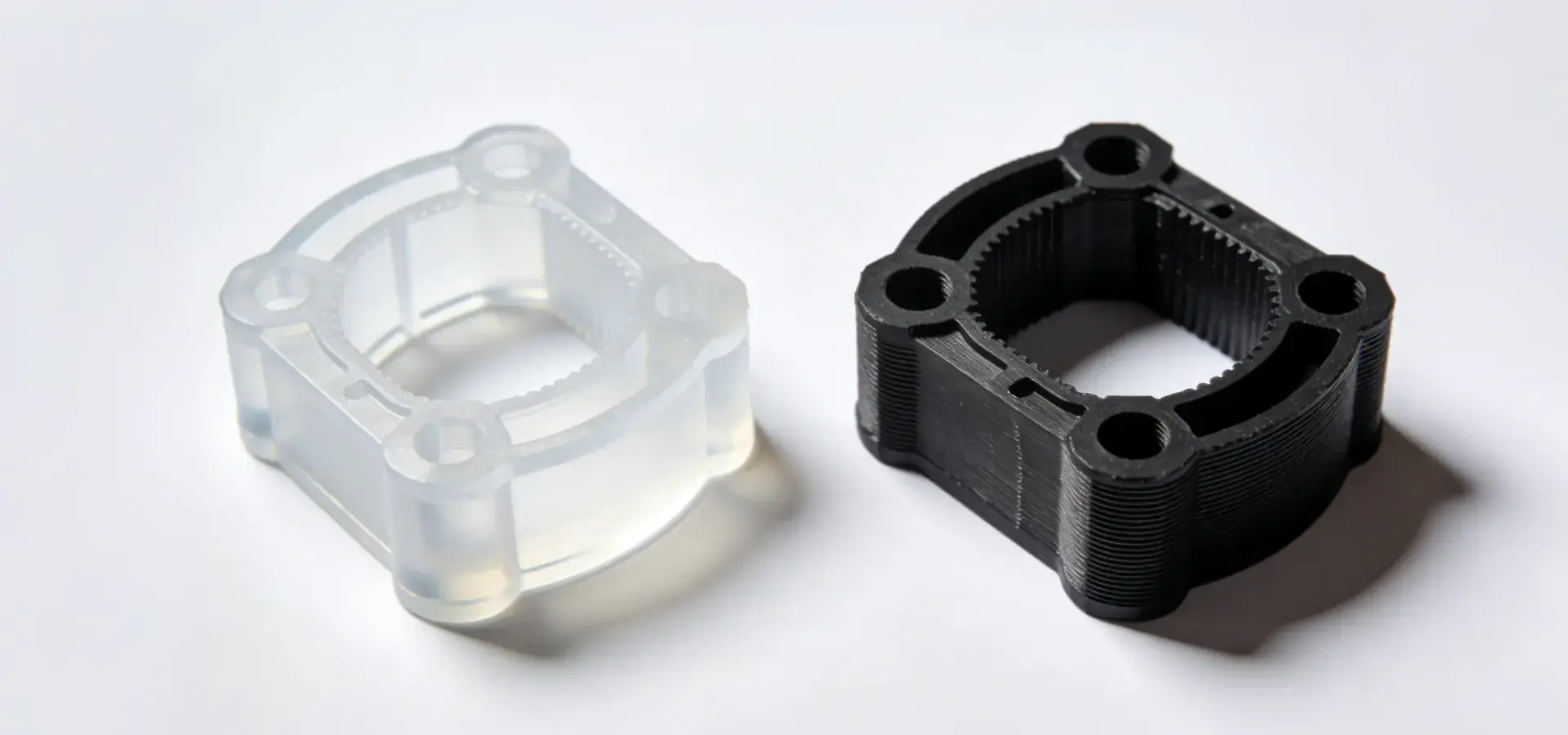
While FDM innovation has taken a toll on preferences and fabric differing qualities, SLA reliably conveys prevalent surface quality and dimensional precision. The laser-based curing process disposes of unmistakable layer lines that characterize FDM prints, creating smooth surfaces that regularly require negligible post-processing. This surface quality advantage makes SLA especially important for consumer-facing models and wrapped-up parts where appearance matters.
Resolution capabilities speak to another noteworthy differentiator between these innovations. SLA frameworks routinely accomplish layer statures underneath 0.05mm with remarkable XY determination, empowering propagation of fine subtle elements and sharp highlights. This accuracy advantage gets to be basic for applications requiring tight tolerances or complex surfaces that characterize item usefulness and aesthetics.
Competitive Analysis with DLP and Multi-Jet Technologies
Digital Light Handling offers SLA's resin-based approach, but employs anticipated light sources instead of checking lasers. Whereas DLP can offer speedier printing speeds for certain geometries, laser-based frameworks give prevalent versatility and pillar quality control. The centered laser spot empowers steady vitality thickness over expansive construct regions, keeping up uniform quality in any case of portion positioning.
Multi-Jet Printing speaks to another exactness alternative, utilizing inkjet-style printing of UV-curable materials. Be that as it may, SLA innovation offers broader fabric compatibility and ordinarily accomplishes superior mechanical properties in wrapped up parts. The nonstop fluid tar environment of SLA printing empowers superior atomic holding between layers, resulting in more isotropic mechanical behavior.
How to Choose the Right Stereolithography 3D Printer for Your Business?
Critical Evaluation Parameters for Procurement
Selecting a fitting stereolithography framework requires cautious evaluation of different execution variables that straightforwardly affect generation capabilities. Construct volume decides the most extreme portion measure and clump capacity, whereas laser control and checking speed impact the general throughput. Determination details characterize the finest points of interest achievable, even though higher determination regularly requires longer print times.
Material compatibility speaks to a significant thought for long-term operational adaptability. Open-system structures permit clients to select gums from numerous providers, giving flexibility and fabric optimization opportunities. Closed frameworks may offer superior integration and support, but can restrain fabric choices and increase operational costs over time.
Here are the fundamental specialized details that procurement experts ought to assess when comparing stereolithography systems:
- Construct envelope measurements - Decides the most extreme portion estimate and clump printing capacity for generation planning
- Laser details - Control yield, wavelength, and bar quality specifically influence printing speed and fabric compatibility
- Determination capabilities - XY determination and the least layer thickness characterize the achievable detail levels and surface quality
- Fabric taking care of frameworks - Tar conveyance, temperature control, and filtration components affect unwavering quality and fabric waste
- Computer program integration - CAD compatibility, cutting calculations, and preparing control highlights impact workflow efficiency
These specialized parameters work together to characterize the general capabilities and operational characteristics of each framework. Understanding how these determinations align with your generation necessities empowers educated venture choices that optimize both execution and cost-effectiveness.
Investment Considerations and Support Infrastructure
Beyond specialized details, fruitful SLA usage depends intensely on a comprehensive back foundation and benefit capabilities. Guarantee scope, specialized preparation, and responsive support administrations directly affect efficiency and add to taken a toll of ownership. Providers advertising 24/7 back and quick reaction times offer assistance to minimize generation disturbances when specialized issues arise.
Financing choices and updated ways give extra adaptability for developing businesses. Measured framework plans empower capability extension without total gear substitution, ensuring introductory ventures whereas obliging changing requirements. Preparing programs guarantees administrators can maximize framework capabilities while keeping up security measures and ideal portion quality.
Maintenance, Safety, and Operational Best Practices
Preventive Maintenance Protocols
Maintaining top execution from Stereolithography 3D printer orderly consideration to both equipment and consumable components. Standard laser calibration guarantees reliable bar quality and control yield, whereas optical framework cleaning avoids defilement that may influence print quality. Construct stage leveling and gum tank upkeep straightforwardly affect first-layer grip and by and large portion accuracy.
Resin dealing with strategies essentially impacts both security and operational effectiveness. Legitimate capacity conditions avoid untimely curing and keep up fabric properties, whereas filtration frameworks expel defilement that seems to cause print disappointments. Temperature observing guarantees ideal consistency for reliable layer arrangement and mechanical properties.
Safety Protocols and Environmental Considerations
Working with photopolymer tars requires strict adherence to security conventions outlined to ensure administrators and keep up sound work environments. Individual defensive gear counting nitrile gloves, security glasses, and fitting ventilation, avoids skin contact and inward breath introduction. Appropriate squander transfer strategies guarantee natural compliance while minimizing health risks.
Workspace plan contemplations incorporate satisfactory ventilation frameworks, spill control measures, and crisis reaction strategies. UV presentation controls secure both administrators and uncured materials, whereas legitimate lighting avoids coincidental gum formation. Normal security training and convention overhauls keep groups educated around best practices and administrative requirements.
Applications and Future Trends of SLA 3D Printing
Industry Applications and Market Expansion
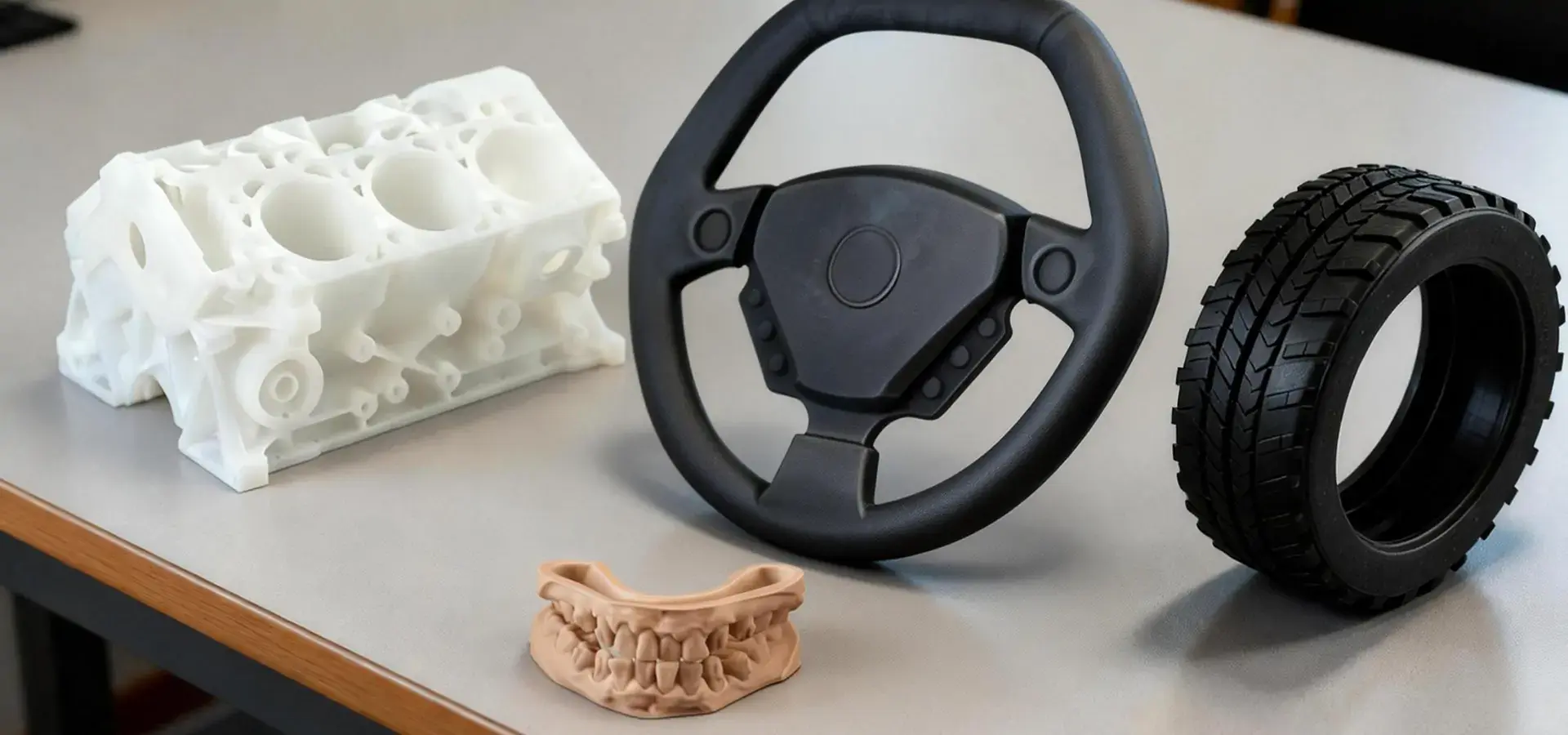
The flexibility of stereolithography innovation has driven selection over various businesses where accuracy and surface quality are foremost. Car producers utilize SLA for quick prototyping of interior components, lighting assemblies, and custom tooling applications. The capacity to deliver useful models with production-like properties quickens plan approval and decreases development cycles.
Medical and dental applications have grasped SLA innovation for its biocompatibility choices and unique precision. Custom surgical guides, dental models, and prosthetic components benefit from the exact generation of complex anatomical geometries. The combination of fabric certification and dimensional precision makes SLA especially important for patient-specific therapeutic devices.
Aerospace applications use SLA's capacity to create complex geometries with negligible weight penalties. Model components, custom tooling, and low-volume generation parts illustrate the technology's capability to meet exacting industry necessities. The plan flexibility advertised by added substance fabricating empowers optimization opportunities that conventional strategies cannot achieve.
Technological Evolution and Innovation Trends
Recent advances in laser innovation, materials science, and preparation control are proceeding to grow SLA capabilities and applications. Higher-power laser frameworks empower speedier printing speeds without compromising quality, whereas progressed galvanometer frameworks move forward precision and repeatability. Integration of manufactured insights and machine learning calculations optimizes printing parameters naturally, decreasing setup time and improving victory rates.
Material advancement remains a key driver of innovative headway, with modern definitions focusing on particular industry prerequisites. High-temperature polymers, strengthened composites, and multi-functional materials extend the extent of applications where SLA can supplant conventional fabricating strategies. These improvements position the Stereolithography 3D printer as a generation innovation rather than simply a prototyping tool.
Company Introduction and Product Service Information
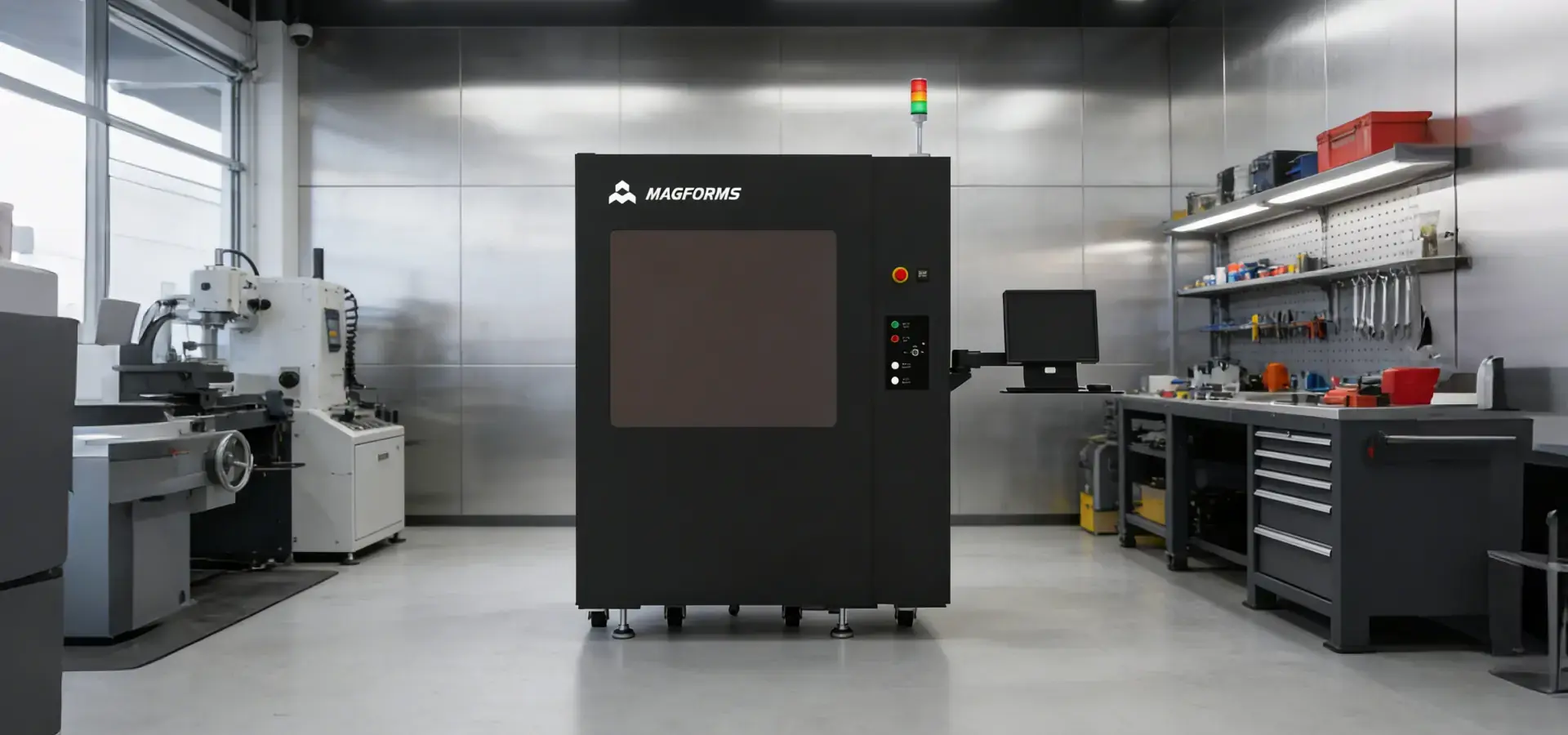
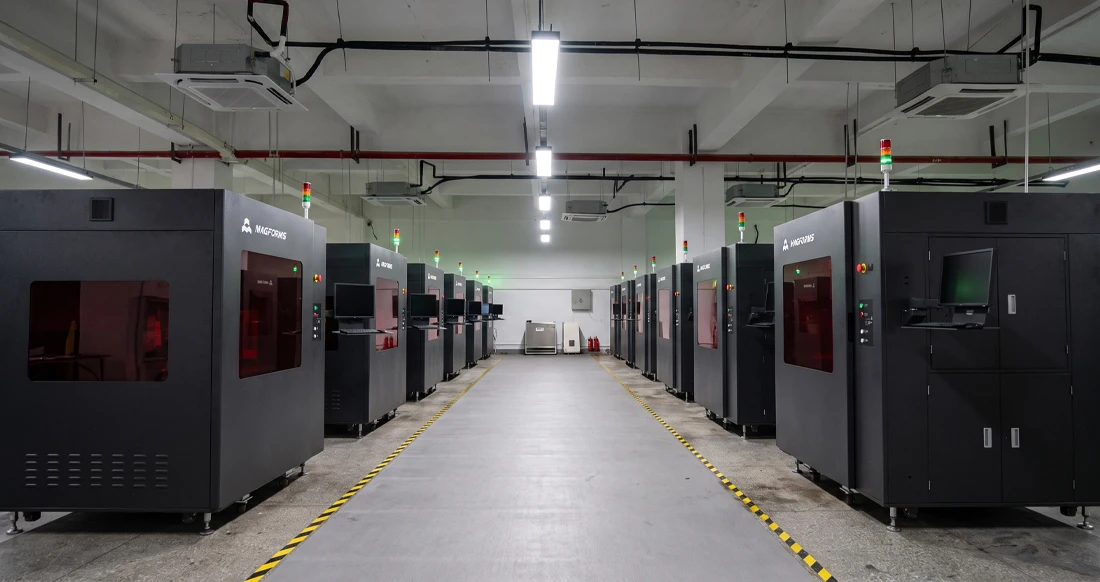
Magforms specializes in delivering cutting-edge industrial stereolithography solutions designed specifically for demanding manufacturing environments. Our comprehensive product portfolio includes high-performance SLA systems ranging from precision desktop units to large-format industrial platforms capable of producing oversized functional components.
Our flagship systems incorporate premium components from globally recognized suppliers, including German Scanlab galvanometers, AOC lasers, and Panasonic AC servo motors. This commitment to quality hardware ensures exceptional reliability and performance consistency across extended production runs. The Helios-P450 model features a stable marble base construction, achieving printing accuracy of ±0.1mm for parts up to 100mm in length.
Revolutionary variable spot-size laser technology sets our systems apart from conventional alternatives, delivering 30-50% faster printing speeds while maintaining exceptional quality standards. Our proprietary deep learning algorithms provide additional speed improvements of up to 20%, optimizing scan patterns in real-time for maximum efficiency. The intelligent laser control uses large spot sizes for rapid internal filling and fine spots for precise contour definition.
Magforms takes pride in offering an open-source system architecture that provides customers with complete freedom in material selection. This approach eliminates vendor lock-in concerns while enabling cost optimization through competitive resin sourcing. Our systems accommodate photopolymer materials from multiple suppliers, ensuring operational flexibility and supply chain security.
With 22 patents and 30 registered trademarks, Magforms maintains a strong intellectual property foundation that drives continuous innovation and product development. Our global presence extends across dozens of countries, serving over 300 enterprises worldwide. Active participation in international exhibitions and technical conferences demonstrates our commitment to industry leadership and customer education.
Conclusion
Stereolithography 3D printer to evolve as a cornerstone technology in modern manufacturing, offering unmatched precision and surface quality for diverse applications. The combination of advanced laser systems, sophisticated materials, and intelligent process control creates opportunities for manufacturers to achieve previously impossible design goals while reducing development cycles and production costs. Success with SLA technology depends on understanding both its capabilities and limitations, selecting appropriate equipment for specific applications, and implementing proper operational procedures. As material science and hardware continue advancing, stereolithography will expand its role from prototyping into full-scale production applications across multiple industries.
FAQ
What makes stereolithography superior to other 3D printing methods?
Stereolithography excels in applications requiring exceptional surface finish, tight dimensional tolerances, and complex geometric details. The laser-based curing process eliminates visible layer lines while achieving resolutions below 0.05mm. This precision advantage makes SLA ideal for functional prototypes, aesthetic models, and small-batch production where quality cannot be compromised.
How do I select the right resin material for my application?
Material selection depends on the specific mechanical, thermal, and chemical requirements of your application. Standard resins work well for general prototyping and visual models, while engineering-grade materials provide enhanced strength and temperature resistance. Specialized formulations address specific needs such as biocompatibility for medical devices or flexibility for gaskets and seals.
What factors should I consider when budgeting for SLA equipment?
Total cost of ownership includes initial equipment purchase, ongoing material costs, maintenance expenses, and operator training. Open-system architectures provide material sourcing flexibility that can significantly reduce operational costs over time. Consider productivity benefits, quality improvements, and design freedom capabilities when evaluating return on investment potential.
How can I ensure optimal performance from my stereolithography system?
Regular maintenance, including laser calibration, optical system cleaning, and proper resin handling, directly impacts print quality and equipment longevity. Following manufacturer guidelines for preventive maintenance while maintaining proper environmental conditions ensures consistent performance. Operator training and ongoing technical support help maximize system capabilities and minimize downtime.
Experience Magforms' Advanced Stereolithography Solutions
Magforms stands ready to transform your manufacturing capabilities with our industry-leading stereolithography 3D printer solutions designed for demanding production environments. Our integrated approach combines premium hardware, optimized materials, and comprehensive support services to deliver unmatched reliability and performance. Whether you need rapid prototyping capabilities or scaled production capacity, our technical experts provide personalized consultation to identify the optimal system configuration for your specific requirements. Contact our team at info@magforms.com to discuss your project needs and discover how our variable spot-size laser technology and open-system architecture can revolutionize your manufacturing workflow. As a trusted stereolithography 3D printer manufacturer, we invite qualified businesses to experience our technology through complimentary sample printing services.
References
1. Jacobs, P. F. "Rapid Prototyping and Manufacturing: Fundamentals of Stereolithography." Society of Manufacturing Engineers, 1992.
2. Gibson, I., Rosen, D., Stucker, B. "Additive Manufacturing Technologies: 3D Printing, Rapid Prototyping, and Direct Digital Manufacturing." Springer Science & Business Media, 2014.
3. Chua, C. K., Leong, K. F. "3D Printing and Additive Manufacturing: Principles and Applications." World Scientific Publishing, 2017.
4. Ngo, T. D., Kashani, A., Imbalzano, G., Nguyen, K. T., Hui, D. "Additive manufacturing (3D printing): A review of materials, methods, applications and challenges." Composites Part B: Engineering, 2018.
5. Quan, Z., Wu, A., Keefe, M., Qin, X., Yu, J., Suhr, J., Byun, J. H., Kim, B. S., Chou, T. W. "Additive manufacturing of multi-directional preforms for composites: opportunities and challenges." Materials Today, 2015.
6. Melchels, F. P., Feijen, J., Grijpma, D. W. "A review on stereolithography and its applications in biomedical engineering." Biomaterials, 2010.

Magforms makes design and manufacture easier.
Popular Blogs
-
 Industry InsightsManufacturing Industry
FDM vs. SLA Printer: Which Technology Is Right for Your Project?
-
 Industry InsightsManufacturing Industry
Top 5 Applications of Industrial 3D Printers in Manufacturing Today
-
 Industry InsightsManufacturing Industry
Why Stereolithography 3D Printers Are Unmatched for Microfluidic Device Prototyping?