The Ultimate Guide to SLA Printers: How It Works, Pros/Cons, and Best Uses
Stereolithography (SLA) printing stands as one of the most precise and versatile additive manufacturing technologies available today. An SLA printer uses a laser to cure liquid photopolymer resin layer by layer, creating highly detailed parts with smooth surface finishes. This comprehensive guide explores everything you need to know about SLA technology, from its fundamental working principles to practical applications across industries. Whether you're considering your first stereolithography system or looking to upgrade existing equipment, understanding the capabilities, limitations, and best practices of SLA printing will help you make informed decisions that drive your business forward.

Understanding SLA Printer Technology
Stereolithography represents a revolutionary approach to additive manufacturing that has transformed how we think about rapid prototyping and small-scale production. At its core, an SLA printer operates by selectively curing liquid photopolymer resin using a precisely controlled laser beam, building objects from the bottom up with exceptional accuracy and surface quality.
How SLA Printing Works?
The stereolithography preparation starts with an advanced 3D model that gets cut into thousands of lean cross-sectional layers. Amid printing, a construct stage begins submerged in a vat of fluid photopolymer tar. A laser bar follows the first layer on the tar surface, causing the uncovered regions to set and follow to the construction stage. The stage at that point moves up somewhat, and new gum streams over the cured layer. This cycle repeats until the whole protest is complete.
Modern SLA frameworks utilize advanced galvanometer frameworks to coordinate laser bars with extraordinary accuracy. Companies like Magforms consolidate German Scanlab galvanometers and AOC lasers in their gear, guaranteeing steady bar quality and situating exactness. These high-grade components empower printing resistances of ±0.1 mm for parts beneath 100mm, meeting the requesting prerequisites of aviation and therapeutic applications.
Key Components and Their Impact on Performance
The laser source serves as the heart of any stereolithography framework, with control yield and bar quality straightforwardly influencing print speed and resolution. Construct stages must keep up culminating leveling and exact development, which is why premium frameworks frequently include marble bases and accuracy servo engines. The tar vat requires customary support and occasional substitution, as delayed laser introduction slowly corrupts the straightforward foot layer.
Magforms' variable spot-size laser innovation speaks to a noteworthy progression in SLA printing effectiveness. By utilizing 0.5-0.6mm expansive spots for inner filling and 0.18-0.2mm fine spots for point by point forms, these frameworks accomplish 30-50% speedier printing speeds compared to routine fixed-spot approaches. This advancement addresses the long-standing industry challenge of adjusting speed with precision.
Material Compatibility and Applications
Photopolymer tars have advanced beyond fundamental prototyping materials to incorporate engineering-grade definitions with specialized properties. Standard gums offer great surface wrap-up and dimensional precision for concept models and visual models. Intense gums give upgraded strength for useful testing, whereas adaptable definitions empower applications requiring rubber-like properties.
Engineering tars grow SLA capabilities into generation applications, advertising properties comparable to injection-molded thermoplastics. High-temperature definitions withstand lifted working conditions, whereas biocompatible tars meet FDA necessities for therapeutic device prototyping. Straightforward gums empower optical applications and liquid stream visualization.
Benefits and Limitations of SLA 3D Printing
Stereolithography technology offers compelling advantages for precision manufacturing applications, though understanding its limitations ensures realistic expectations and proper implementation strategies.
Advantages That Drive Industrial Adoption
The prevalent surface wrap-up accomplished by SLA printing regularly kills the requirement for broad post-processing, diminishing time-to-market for models and low-volume parts. Layer lines stay essentially imperceptible, and fine subtle elements duplicate with remarkable devotion. This quality advantage makes stereolithography perfect for applications where aesthetics matter, such as customer item models or structural models.
Dimensional precision speaks to another key quality of SLA innovation. Cutting-edge frameworks reliably accomplish resiliencies within ±0.1mm, empowering coordinate generation of useful parts and exactness tooling. This exactness stems from negligible warm push amid printing, as the tar cures at room temperature without the distorting issues common in thermal-based processes.
Material flexibility proceeds, extending as gum producers create specialized definitions. Engineers can presently select materials based on particular mechanical, thermal, or chemical necessities rather than tolerating compromise properties. This adaptability underpins applications extending from dental apparatuses to aviation components.
Challenges and Considerations
SLA printer taking care of requires careful consideration of security conventions, as uncured photopolymers can cause skin disturbance and require appropriate ventilation. Post-processing steps, counting washing and UV curing, include complexity compared to a few elective innovations. These necessities require dedicated workspace ranges and security equipment.
Print disappointments can happen due to different variables, from inappropriate support era to gum defilement. Not at all like FDM printing, where wasted prints squander as well as fiber, SLA disappointments can sully whole tar vats. This affectability requires more cautious planning and observing throughout the printing process.
Build volume confinements influence portion estimate capabilities, in spite of the fact that large-format SLA frameworks like Magforms' Helios-P600 and Helios-P800 models address this limitation for numerous applications. These frameworks empower group generation of numerous smaller parts or single expansive components, maximizing efficiency for commercial operations.

Comparative Analysis with Other Technologies
When compared to FDM printing, SLA conveys predominant surface quality and dimensional precision but requires more cautious handling of the fabric, dealing with it, and post-processing. The fabric costs per portion frequently surpass FDM, in spite of the fact that the decreased wrapping up requirements can balance this contrast for appearance-critical applications.
Digital Light Handling (DLP) offers numerous characteristics with SLA, but employs anticipated light designs instead of scanning lasers. Whereas DLP can accomplish speedier print speeds for certain geometries, SLA regularly offers way better surface quality and fabric compatibility. The laser-based approach also empowers variable spot sizes for optimized speed-quality balance.
Choosing and Procuring the Right SLA Printer for Your Business
Selecting the appropriate stereolithography system requires careful evaluation of your specific requirements, from part size and material needs to production volume and budget constraints.
Critical Selection Criteria
Build volume speaks to the most self-evident imperative when assessing SLA frameworks. Desktop units regularly offer construct regions around 150mm³, appropriate for small models and decoration applications. Mechanical frameworks amplify this capability altogether, with large-format alternatives pleasing parts over 600mm in length.
Print determination influences both surface quality and highlight propagation capability. Standard SLA printers accomplish layer statures of 0.1mm, whereas high-precision frameworks can reach 0.025mm layers. In any case, better determination significantly increases print times, making this an adjustment between quality needs and generation schedules.
Material compatibility changes altogether between open and closed frameworks. Restrictive stages restrain fabric choices but ensure optimized execution, whereas open frameworks like those advertised by Magforms permit clients to select from different tar providers. This adaptability empowers superior control and access to specialized materials as they become available.
Evaluating Manufacturers and Support Services
Established producers ordinarily offer more comprehensive back systems and demonstrated unwavering quality records. Companies with broad, obvious portfolios, such as Magforms with its 22 licenses and 30 trademarks, illustrate a commitment to progressive advancement and development.
Technical bolster capabilities ended up significant when generation plans depend on gear uptime. See for producers advertising quick reaction times, with a few companies ensuring one-hour reaction and four-hour determination for specialized issues. On-site benefit accessibility and neighborhood parts stock can minimize downtime amid component failures.
Training and usage bolster make a difference for groups maximize their speculation returns. Comprehensive programs ought to cover hardware operation, support strategies, and investigation procedures. A few producers give continuous specialized workshops and application development assistance.
Procurement Strategies and Total Cost Considerations
Initial hardware costs speak to, as it were, one component of add up to proprietorship costs. Calculate the progressing fabric costs, support prerequisites, and potential efficiency gains when assessing choices. Open-system printers regularly give superior long-term cost control through competitive fabric sourcing.
Financing alternatives and bulk acquiring programs can improve cash flow management for developing operations. A few producers offer rental courses of action or volume rebates that make high-end gear more accessible to smaller organizations.
Warranty scope and benefit assurances ensure against unforeseen repair costs and amplified downtime. A comprehensive scope ought to incorporate both equipment components and specialized support, with clear reaction time commitments and enhancing procedures.
Maximizing SLA Printer Performance and Output Quality
Achieving consistent, high-quality results from stereolithography systems requires attention to multiple factors, from initial setup through ongoing maintenance procedures.
Critical Print Parameters and Optimization
SLA printer choice equalizes print quality with generation speed. More slender layers create smoother surfaces and better points of interest, but essentially increment construct times. Most applications achieve ideal results with 0.05-0.1mm layers, in spite of the fact that particular necessities may justify better resolution.
Exposure time settings must coordinate gum properties and wanted mechanical characteristics. Underexposure leads to powerless parts and dimensional mistakes, whereas overexposure causes detail misfortune and potential twisting. Present-day frameworks like those from Magforms consolidate profound learning calculations that naturally optimize presentation parameters for distinctive materials and geometries.

Support structure plan influences both portion quality and post-processing necessities. Appropriate bolsters anticipate portion twisting amid printing but must be carefully situated to minimize surface checking. Progressed computer program instruments robotize much of this prepare whereas permitting manual alterations for basic areas.
Post-Processing Techniques and Best Practices
Washing evacuates uncured tar from wrapped up parts, regularly utilizing isopropyl alcohol or specialized cleaning arrangements. Ultrasonic cleaners move forward productivity and reach into complex geometries, in spite of the fact that manual cleaning may be vital for sensitive features. Appropriate washing anticipates skin contact with uncured tar and guarantees total curing in the ensuing steps.
UV curing completes the polymerization process and accomplishes the final mechanical properties. Committed UV chambers give controlled conditions with a fitting wavelength and concentration. Remedy times change by fabric and portion thickness, with a few applications requiring particular temperature profiles for ideal properties.
Surface wrapping up procedures can assist in improving portion appearance and usefulness. Light sanding expels minor flaws, whereas vapor smoothing makes glass-like surfaces on certain materials. These strategies require material-specific approaches and security precautions.
Maintenance Strategies for Long-Term Reliability
Regular cleaning avoids tar defilement and extends component life. Every day support incorporates stage cleaning and tar mixing, whereas week by week strategies cover optical component cleaning and calibration confirmation. These schedules take negligible time but avoid expensive disappointments and quality issues.
Component substitution plans offer assistance keep up steady execution and anticipate unforeseen downtime. Gum vat movies ordinarily require substitution every few hundred print hours, whereas laser modules may last a few thousand hours. Following component utilization empowers proactive substitution, so that some time before disappointments occur.
Software upgrades frequently incorporate execution enhancements and modern fabric profiles. Producers frequently discharge firmware overhauls that improve print quality, include highlights, or improve unwavering quality. Remaining current with these upgrades guarantees ideal execution and access to the most recent capabilities.
Integrating SLA Printing Solutions into Your Production Workflow
Successful implementation of stereolithography technology requires careful planning and integration with existing processes, considering both immediate needs and long-term scalability.
Industry-Specific Applications and ROI Opportunities
Automotive manufacturers leverage SLA printing for rapid prototyping of interior components, dashboard elements, and custom tooling. The technology enables multiple design iterations within shortened development cycles, reducing time-to-market for new vehicle models. Complex geometries that would require expensive injection molds can be produced directly, enabling cost-effective low-volume customization.
SLA printers and dental applications represent high-value opportunities for SLA technology. Biocompatible resins enable direct production of surgical guides, dental appliances, and custom prosthetics. The precision and surface quality of stereolithography eliminate many traditional manufacturing constraints, enabling personalized medical devices that improve patient outcomes.
Aerospace components benefit from the dimensional accuracy and material properties achievable with advanced SLA resins. Complex internal geometries, lightweight structures, and rapid prototyping capabilities support innovation in this demanding industry. Small-batch production of specialized components becomes economically viable compared to traditional manufacturing approaches.

Workflow Optimization and Productivity Enhancement
Build preparation software significantly impacts overall productivity and part quality. Modern platforms automate support generation, optimize part orientation, and estimate material usage and print times. Advanced features like nested printing and automatic layout optimization maximize build platform utilization.
Magforms' integrated material and equipment approach eliminates compatibility issues that plague many SLA operations. The optimized matching between proprietary resins and printer hardware reduces print failures and dimensional variations that can disrupt production schedules. This integration delivers measurable improvements in first-pass success rates and overall equipment effectiveness.
Production planning benefits from accurate time estimates and material consumption data. Batch processing strategies can optimize throughput while maintaining quality standards. Some operations implement lights-out printing for overnight production, though this requires robust process control and monitoring systems.
Scalability and Future Expansion Considerations
Growth strategies should consider both horizontal and vertical scaling options. Adding identical printers enables capacity expansion while leveraging existing expertise and processes. Alternatively, upgrading to larger build volumes or specialized materials can expand application scope.
Technology evolution continues to advance SLA capabilities through improved materials, faster printing speeds, and enhanced automation features. Investing in systems with upgrade paths and manufacturer commitment to ongoing development helps protect long-term investments.
Market expansion opportunities may emerge as SLA technology becomes more accessible and cost-effective. Service bureaus can leverage high-end equipment to serve multiple customers, while manufacturers might bring previously outsourced applications in-house as volumes justify equipment investment.
Conclusion
SLA printer offers compelling advantages for organizations requiring high-precision, smooth-surface parts with excellent dimensional accuracy. The technology continues evolving rapidly, with innovations in laser systems, materials, and process automation expanding its applicability across industries. Success with SLA printing requires careful attention to material handling, process optimization, and maintenance procedures, but the results justify this investment for appropriate applications. Understanding the total cost of ownership, including equipment, materials, and support services, enables informed procurement decisions that align with business objectives and growth strategies.
FAQ
What printing speeds can I expect from modern SLA printers?
Print speeds vary significantly based on part geometry, layer thickness, and quality requirements. Typical build rates range from 10-25mm of vertical height per hour for standard resolutions. Advanced systems incorporating variable spot-size technology, such as those from Magforms, achieve 30-50% faster speeds through optimized laser scanning strategies while maintaining precision.
How do material costs compare between different SLA systems?
Material costs depend heavily on resin type and procurement flexibility. Proprietary systems often charge premium prices for branded materials, while open platforms enable competitive sourcing. Engineering and specialized resins typically cost 2-5 times more than standard formulations, though their enhanced properties often justify the expense for demanding applications.
What maintenance requirements should I plan for?
Daily maintenance includes basic cleaning and resin management, typically requiring 10-15 minutes. Weekly procedures cover optical cleaning and calibration checks. Monthly maintenance involves more thorough system inspection and component replacement as needed. Planning for 2-4 hours weekly maintenance time ensures optimal performance and prevents unexpected downtime.
How do I ensure consistent print quality across multiple jobs?
Consistent quality requires standardized procedures for file preparation, material handling, and post-processing. Environmental control helps maintain stable printing conditions, while regular calibration verification catches drift before it affects parts. Using integrated material and equipment systems reduces variables that can impact quality between different production runs.
Partner with Magforms for Advanced SLA Printing Solutions
Magforms delivers cutting-edge stereolithography systems engineered for demanding industrial applications. Our integrated approach, combining proprietary materials with precision-engineered equipment, eliminates compatibility issues while delivering industry-leading performance. With German Scanlab galvanometers, AOC lasers, and variable spot-size technology achieving 30-50% faster print speeds, our systems maximize productivity without compromising quality. As an established SLA printer manufacturer with 22 patents and global presence across multiple industries, we provide comprehensive technical support, including one-hour response times and extensive training programs. Contact our engineering team at info@magforms.com to discuss your specific requirements and discover how our advanced stereolithography solutions can accelerate your product development and manufacturing capabilities.
References
1. Gibson, Ian, David Rosen, and Brent Stucker. "Additive Manufacturing Technologies: 3D Printing, Rapid Prototyping, and Direct Digital Manufacturing." Springer Science & Business Media, 2015.
2. Melchels, Ferry P.W., Jan Feijen, and Dirk W. Grijpma. "A Review on Stereolithography and its Applications in Biomedical Engineering." Biomaterials Journal, Volume 31, Issue 24, 2010.
3. Jacobs, Paul F. "Rapid Prototyping & Manufacturing: Fundamentals of Stereolithography." Society of Manufacturing Engineers, 1992.
4. Stansbury, Jeffrey W. and Mike J. Idacavage. "3D Printing with Polymers: Challenges among Expanding Options and Opportunities." Dental Materials, Volume 32, Issue 1, 2016.
5. Hull, Chuck W. "Apparatus for Production of Three-Dimensional Objects by Stereolithography." United States Patent Office, Patent Number 4,575,330, 1986.
6. Ngo, Tuan D., Alireza Kashani, Gabriele Imbalzano, Kate T.Q. Nguyen and David Hui. "Additive Manufacturing Technologies for Advanced Composite Materials: A Review." Composite Structures, Volume 186, 2018.

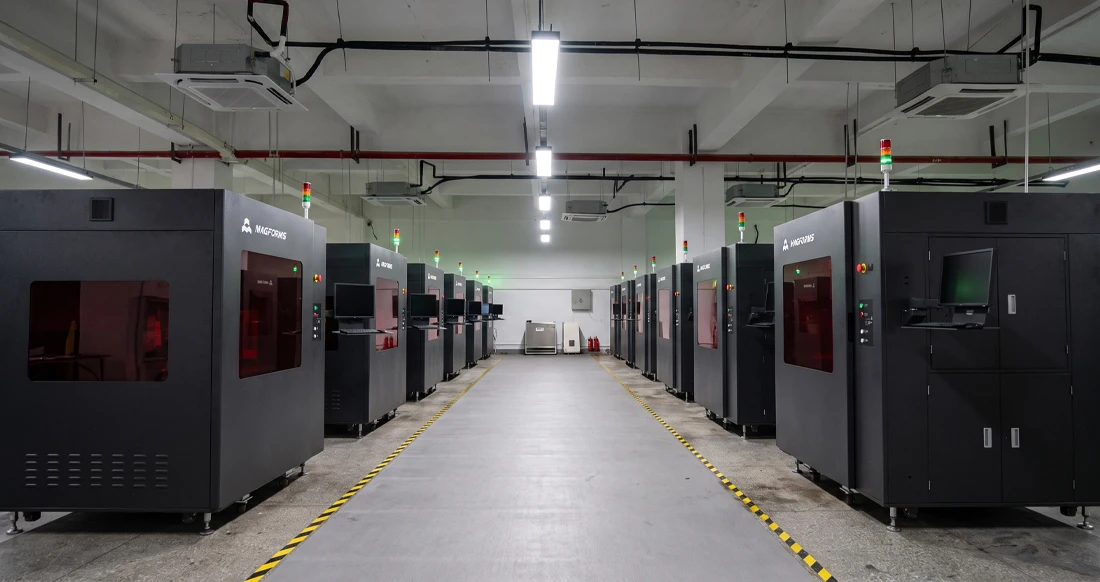
Magforms makes design and manufacture easier.
Popular Blogs
-
 Industry InsightsManufacturing Industry
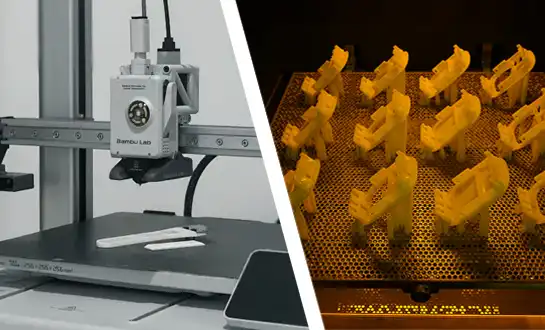
FDM vs. SLA Printer: Which Technology Is Right for Your Project?
-
 Industry InsightsManufacturing Industry
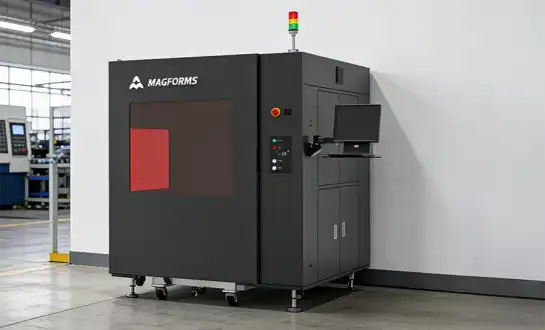
Top 5 Applications of Industrial 3D Printers in Manufacturing Today
-
 Industry InsightsManufacturing Industry
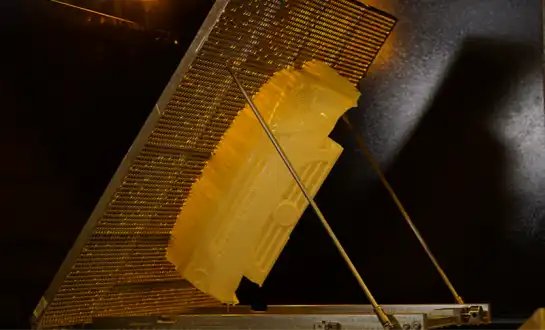
Why Stereolithography 3D Printers Are Unmatched for Microfluidic Device Prototyping?