What Tolerances Can a Stereolithography 3D Printer Achieve?
Tolerances between 0.05 mm and 0.15 mm, based on the size and geometry of the part, are common for stereolithography 3D printer technology. Because of this level of accuracy, SLA printing is perfect for fields that need to keep very close limits, like aircraft, medical devices, and precision manufacturing. The laser-based hardening process in SLA makes accurate layer-by-layer polymerization of photopolymer resins. This gives the parts a smooth surface finish and better dimensional stability than other additive manufacturing technologies.

Understanding Dimensional Tolerance in SLA 3D Printing
Dimensional tolerance is the allowed difference from the stated part dimensions. It is a key factor that decides whether printed parts work as they should. Tolerances work much better in SLA technology than in most other additive manufacturing methods. This is what makes accuracy the most important thing about this printing process.
Defining Tolerance Standards in Industrial Applications
With an error range of 0.05 mm to 0.15 mm, SLA technology is the best way to make things that need to be very precise. This level of detail makes it possible to make working prototypes, parts that will be used, and tools that meet strict size requirements. Tight tolerances are important for industries like car, aircraft, and medical device making to make sure that parts fit correctly, work properly, and meet safety standards.
SLA's ability to keep dimensions accurate across a range of part shapes and sizes is useful for industrial users. Injection casting needs expensive tools for every different part. SLA printing, on the other hand, can print with repeated accuracy straight from digital files, which lowers development costs and speeds up product iteration cycles.
Comparison with Other Additive Manufacturing Technologies
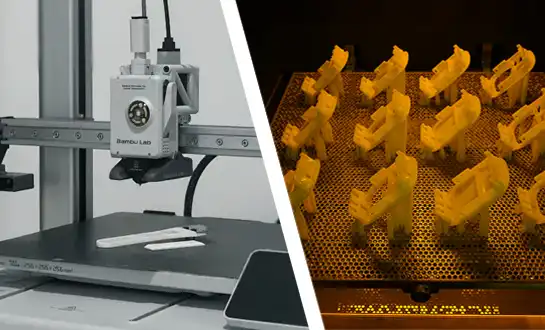
When it comes to controlling dimensions, SLA is better than Fused Deposition Modeling (FDM) and other 3D printing methods. Tolerances for FDM are usually between 0.2 mm and 0.5 mm because of differences in how well layers stick together and how much they shrink when heated. Digital Light Processing (DLP) printers are almost as precise as SLA printers, but their pixel density may not be as high, which can affect how smooth the surface is.
The photopolymerization method that SLA uses makes chemical bonds between layers. This gives the material uniform mechanical qualities and low interior stress. This feature gets rid of the directional weakness that often happens with filament-based printing and makes sure that the part's dimensions stay the same all the way through the curing process.

Key Factors Affecting Tolerance in SLA 3D Printing
The end size accuracy of SLA-printed parts is affected by a number of variables that are all related to each other. By knowing about these factors, producers can improve their printing methods and get results that are uniform and reliable across production runs.
Printer Hardware Configuration and Calibration
In SLA printing, setting the tolerances is all done by the laser system. The minimum feature precision is directly related to the laser spot width, which in industrial systems is usually between 85 and 140 microns. High-end printers often have German Scanlab parts that are part of advanced galvanometer systems. These systems provide accurate laser placement that stays accurate across the whole build platform.
When it comes to controlling dimensions, mechanical steadiness is just as important. Vibration and temperature drift are kept to a minimum during printing by systems with rock bases and precision-engineered parts. Regular testing methods make sure that mechanical parts keep working the way they're supposed to over time, which stops tolerances from slowly getting smaller.
Resin Properties and Material Selection
Different photopolymer resins shrink in different ways when they cure in a Stereolithography 3D printer, which changes the size of the end part. When polymerized, standard resins tend to shrink between 2% and 4%, but different industrial resins may shrink in different ways. By knowing how these materials behave, workers can prepare for changes in size that are likely to happen during the printing process.
Controlling the temperature has a big effect on how thick the glue is and how it cures. Heated glue tanks keep the qualities of the material stable, which lowers changes in viscosity that could affect the thickness of layers and the depth of drying. This stable temperature helps make it easier to keep the same dimensions over long production runs.
Process Parameters and Environmental Controls
Choosing the layer thickness strikes a balance between print speed and accuracy of measurements. Thinner layers, usually 25 to 50 microns, give you better control over the dimensions and surface finish, but they take longer to print. Thicker layers, up to 300 microns, speed up production while keeping tolerances low enough for less important uses.
Print direction changes both the quality of the surface and the ability to meet tolerances. Parts that are angled to keep cross-sectional area changes between layers as small as possible usually have better physical stability. The placement and design of the support structure affect the accuracy of the final part by controlling heat pressures and stopping distortions during the printing process.
Practical Applications and Case Studies of SLA Tolerances
Real-life examples show how the ability to tolerate SLA can lead to real business gains in a wide range of fields. These case studies show how flexible and accurate the technology is in tough production settings.
Aerospace and Automotive Component Production
Aerospace companies use SLA printing to make parts with complicated shapes that would be too hard or too expensive to machine in the usual way. SLA can keep tolerances of 0.1 mm while adding interior channels and lightweight design features to samples of engine parts, hydraulic system housings, and structural brackets.
Functional samples for electronic housing, special interior components, and low-volume production parts are all used in the automotive industry. Tight tolerances allow direct fit testing of printed parts, which cuts down on development times and avoids expensive equipment changes during the design proof phase.

Medical and Dental Precision Applications
For surgery guides, implant samples, and custom limbs, SLA's biocompatible resin choices and exact dimensional control are used in medical device making. SLA's accuracy is especially useful for dental uses because it lets you make accurate dental models, orthodontic braces, and surgical forms that need to fit the body perfectly.
Case studies in the creation of orthopedic implants show how SLA prototypes help surgeons plan complicated treatments ahead of time by using models that are unique to each patient. The three-dimensional accuracy makes sure that printed models are a good representation of the human body, which leads to better surgery results and shorter operations.
Electronics and Consumer Product Development
SLA printing with a Stereolithography 3D printer is used by companies that make consumer goods to make housing samples, test components, and make sure they work. Because the technology can make smooth surfaces and tight standards, it's possible to get a good idea of how the product will look and how it will work with other parts before investing in injection molding tools.
When making wearable tech, SLA's accuracy is especially helpful because these items need to fit and look just right to make sure the user is comfortable and the tech works. Product creation times are cut down by being able to quickly change patterns while keeping the same dimensions.
How to Evaluate and Select SLA 3D Printers Based on Tolerance Requirements
To choose the right SLA tools, you need to carefully look at the tolerance needs, output volumes, and needs specific to the application. This evaluation process makes sure that the best technology fits with the goals and budgets of the industry.
Assessing Application-Specific Precision Needs
The first step in the review process is to clearly define the tolerance needs for the apps that will be used. Critical aspects that need to be tightly controlled should be named and ranked, as these details will determine what equipment is chosen. For parts with more than one tolerance zone, you might need more powerful printers that can control the level of accuracy in different parts of the part.
The choice of printer is also affected by industry standards and government rules. For medical devices, processes may need to be verified and able to be documented. In aircraft, on the other hand, traceability and repeatability verification are necessary. Knowing these needs ahead of time keeps you from having to make expensive changes to your tools as your production grows.
Comparing Desktop and Industrial SLA Systems
Most desktop SLA printers are pretty accurate for how much they cost, but they might not be stable enough or consistent enough for use in production settings. Industrial systems offer better control over tolerances thanks to better hardware setups, weather controls, and the ability to watch the process.
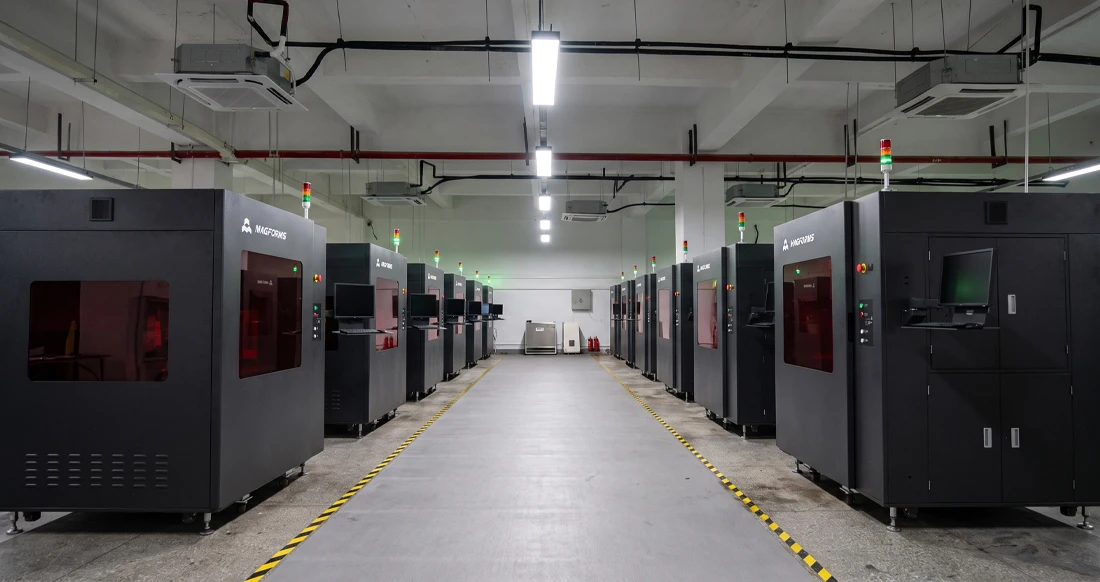
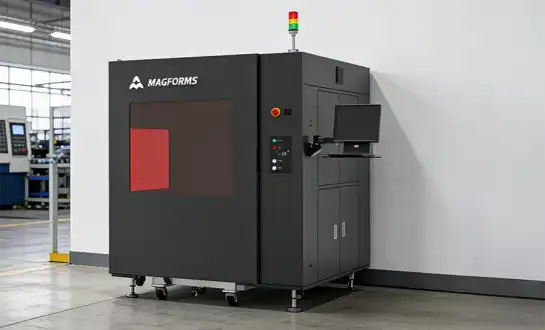
Build space affects both the size of parts that can be made and how efficiently batches can be made. Large-format industrial printers make it possible to make large parts all at once or quickly handle a lot of smaller parts at once. This is shown by the Magforms Lab300 model, which has a stable marble base and can accurately cut parts up to 100 mm long to within 0.1 mm.

Evaluating Manufacturer Support and Technology Features
Advanced technical features can have a big effect on how well tolerances are met and how efficiently production is done. Magforms' industrial SLA systems use variable spot-size laser technology, which increases speed by 30 to 50 percent while keeping accuracy high through smart scanning methods. Large spot sizes speed up the filling of the inside, while small spots make sure that the features are defined correctly.
Long-term tolerance stability is directly affected by how well the manufacturer can support their products. Complete training programs, quick technical support, and preventative maintenance help make sure that equipment keeps meeting tolerance standards for as long as it is in use. Application engineering support can help improve processes for certain applications that need to be very precise with tolerances.
Optimizing SLA 3D Printing Process to Maintain Consistent Tolerances
To get and keep tolerances that are the same, you need to pay close attention to testing methods, environmental controls, and process optimization. These steps guarantee stable dimensions and reliable output over time.
Calibration and Maintenance Protocols
Regular calibration checks make sure that the laser's position, the width of the layers, and the glue exposure parameters stay within the allowed ranges. Advanced systems have automated tuning features that make them less reliant on operators while still making sure that results are always the same. Keeping track of testing data lets you look for trends and plan for maintenance.
Common causes of tolerance drift in a Stereolithography 3D printer are taken care of by preventive maintenance routines. These include laser power loss, galvanometer accuracy, and mechanical wear. Clean room practices keep resin from getting contaminated, which could change how it cures and how stable its dimensions are. Changes in temperature and humidity that could affect the qualities of materials are tracked by environmental tracking systems.
Post-Processing Optimization for Dimensional Stability
Post-processing steps have a big effect on the end size of the part and must be carefully managed to keep the standards that were set. Washing methods get rid of uncured resin without warping the part, and UV curing schedules finish polymerization and keep the measurements stable. Standardized post-processing steps make sure that results are the same for all workers and production shifts.
Support removal methods change the accuracy of local measurements in touch areas. Advanced support creation methods reduce surface flaws caused by supports while still making sure the part is stable enough to print. Careful design of the supports strikes a balance between making them easy to remove and keeping their shape.
Quality Control and Measurement Verification
Before they can be used or processed further, printed parts must go through dimensional verification processes to make sure they meet certain standards. When it comes to measuring important dimensions, coordinate measuring machines (CMMs) are very accurate, and optical scanning systems can do full-part dimensional analysis.
Statistical process control methods keep track of how well tolerances are met over time and look for trends that could mean that equipment is drifting or the process is changing. This method is based on data and lets you make changes before they go outside of tolerance, which keeps the quality of the work uniform.
Conclusion
The excellent tolerances of SLA technology, which range from 0.05 mm to 0.15 mm, make it the best choice for high-precision additive production tasks. Advanced gear setups, optimized process parameters, and full support systems work together to make it possible to consistently meet strict dimension requirements in a wide range of businesses. To be successful in situations where tolerance is important, you need to choose the right tools, keep a close eye on the process, and keep working on optimizing things so that the dimensions stay stable throughout the production lifecycle.
FAQ
What tolerance range can modern SLA printers achieve?
Tolerances for modern stereolithography systems are usually between 0.05 mm and 0.15 mm, but this depends on the shape, size, and setup of the printer. For important uses, industrial-grade systems with advanced laser control and mechanical stability can keep the tighter end of this range stable all the time.
How do different resin types affect dimensional accuracy?
Because different resins shrink and cure at different rates, choosing the right resin has a big effect on the end part's limits. When polymerized, standard resins tend to shrink by 2 to 4 percent, but industrial resins may have different physical stability properties. These material-specific traits can be fixed by using the right glue and making the process run more smoothly.
What factors most influence tolerance consistency in production runs?
Tolerance uniformity is mostly affected by how well the equipment is calibrated, how well the surroundings is controlled, and how stable the process parameters are. Regular calibration methods, temperature control, and standard working procedures make sure that the same level of accuracy in measurements is maintained over long periods of time.
How does part orientation affect achievable tolerances?
Print direction affects the ability to meet tolerances by changing the amount of support needed, how layers stick together, and how heat stress is distributed. The best direction keeps changes in cross-sectional area between layers to a minimum and limits changes in dimensions caused by supports.
Can SLA printing match injection molding tolerances?
For many uses, SLA printing can get tolerances that are the same as injection casting. This is especially true for complicated shapes that would be hard or expensive to make. For simple parts, injection molding may be able to get closer to specs, but SLA gives you more design freedom because you don't have to worry about making the right tools.
What maintenance practices are essential for tolerance preservation?
Dimensional accuracy is kept over time with regular laser calibration, galvanometer accuracy checks, and weather tracking. Quality control for the resin, clean work areas, and written repair plans make sure that tolerances are always met throughout the lifetime of the equipment.
Partner with Magforms for Precision SLA Solutions
Magforms offers advanced technology and a wide range of support services that industrial producers looking for reliable stereolithography 3D printer providers can use. Our industrial SLA systems use German Scanlab galvanometers, precise laser control, and smart changeable spot-size technology to give accurate results within 0.1 mm for tough jobs. Magforms offers combined material and equipment solutions backed by fast technical help and a lot of industry knowledge. They have 22 patents and have worked with more than 300 businesses around the world to show their effectiveness. Email our engineering team at info@magforms.com to talk about your needs for precision production and to look into custom SLA options.
References
1. Gibson, I., Rosen, D., & Stucker, B. "Additive Manufacturing Technologies: 3D Printing, Rapid Prototyping, and Direct Digital Manufacturing." Springer Science & Business Media, 2015.
2. Jacobs, P. F. "Fundamentals of Stereolithography." Society of Manufacturing Engineers, 1992.
3. Melchels, F. P., Feijen, J., & Grijpma, D. W. "A Review on Stereolithography and its Applications in Biomedical Engineering." Biomaterials Journal, Volume 31, Issue 24, 2010.
4. Chartrain, N. A., Williams, C. B., & Whittington, A. R. "A Review on Fabricating Tissue Scaffolds Using Vat Photopolymerization." Acta Biomaterialia, Volume 74, 2018.
5. Quan, H., Zhang, T., Xu, H., Luo, S., Nie, J., & Zhu, X. "Photo-curing 3D Printing Technique and Its Challenges." Bioactive Materials, Volume 5, Issue 1, 2020.
6. Ligon, S. C., Liska, R., Stampfl, J., Gurr, M., & Mlhaupt, R. "Polymers for 3D Printing and Customized Additive Manufacturing." Chemical Reviews, Volume 117, Issue 15, 2017.

Magforms makes design and manufacture easier.
Popular Blogs
-
 Industry InsightsManufacturing Industry
FDM vs. SLA Printer: Which Technology Is Right for Your Project?
-
 Industry InsightsManufacturing Industry
Top 5 Applications of Industrial 3D Printers in Manufacturing Today
-
 Industry InsightsManufacturing Industry
Why Stereolithography 3D Printers Are Unmatched for Microfluidic Device Prototyping?