What Are the Top 3D Print Trends in Consumer Demand?
3D print technology is growing at a speed that has never been seen before. This is because customer needs are changing in many fields. There is a big change happening right now toward high-precision uses, eco-friendly materials, and integrated production solutions. More and more, companies that want to use advanced additive manufacturing are looking for equipment that is more accurate, can work with a wider range of materials, and makes production more efficient. These changes show that the market has grown up and now companies want more than just 3D printing. They want complete solutions that help them be more competitive and run their businesses better.

 |
Industry Guide Top Industrial 3D Printing Solutions Overview Discover how leading additive manufacturing systems are reshaping precision production, material compatibility, and workflow efficiency across industries like aerospace, dental, and product design. |
Emerging 3D Printing Technologies Driving Consumer Demand
As 3D printing technologies improve, they change the way businesses make things by making them more precise, faster, and more flexible. Traditional methods have limits on customization and wait times. Newer methods, like Multi Jet Fusion and Digital Light Processing (DLP), have better clarity and can be scaled up or down.
Advanced Laser Technologies Revolutionizing Precision Manufacturing
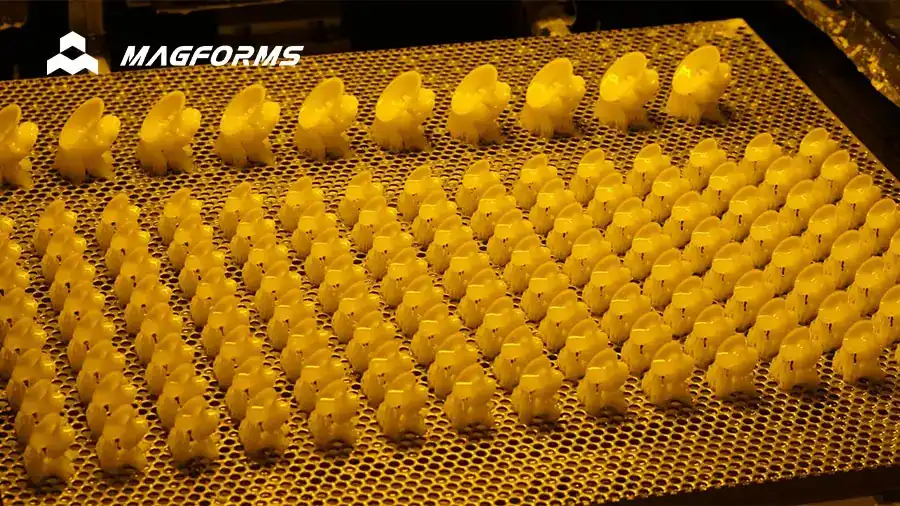
Modern industrial SLA systems use advanced laser technologies to solve problems that have been around for a long time. Variable spot-size laser printing technology is a big step forward in making printing faster and more accurate. German Scanlab galvanometers and AOC lasers are used in systems that provide excellent beam quality and setting precision. The new method uses big laser spots (0.5 to 0.6 mm) for quick filling inside the cavity and small spots (0.18 to 0.2 mm) for precise outlines and small details.
In the past, producers had to choose between speed and accuracy when using older methods. This new technology fixes a major problem. Adding deep learning techniques improves performance even more, reaching up to 20% faster speeds while keeping accuracy at the micron level. These skills are very important for aircraft parts that need complicated internal lines and medical devices that need biocompatible surface finishes.

Integration of Artificial Intelligence in Additive Manufacturing
Adding artificial intelligence is another big trend that is changing what people expect. Smart systems look at printing settings right now and change laser paths, exposure times, and how layers stick together automatically. This intelligence cuts down on print fails and wasted materials, and it also makes the best use of production plans for builds with multiple parts.
The technology is especially useful for businesses that have to deal with complicated shapes and different material qualities in a single build. AI-optimized systems help automakers make lightweight braces and custom interior parts, and they also help medical device makers make sure that the quality of their patient-specific implants and surgery guides stays high.
Popular 3D Printing Materials and Their Influence on Procurement Choices
Choosing the right materials is still an important part of making sure that 3D print output meets business needs. More people want traditional filaments like PLA and ABS, as well as strong plastics, metals, and advanced composites. To meet environmental standards, there is also more focus on eco-friendly and long-lasting materials.
Expanding Photopolymer Resin Capabilities
As makers come up with new formulas for specific uses, the photopolymer resin market is quickly becoming more diverse. Engineering plastics now have the same qualities as traditional building materials, like not melting at high temperatures, being stable in chemicals, and lasting a long time. Flexible elastomers with a Shore A hardness of 50 to 90 can be used to make gaskets, seals, and parts of wearable technology.
Biocompatible resins that have been approved for medical use make it possible to make surgery guides, dental models, and replacement parts directly. These materials are put through a lot of tests to make sure they can be sterilized and will stay biocompatible over time. Because clear, see-through plastics are available, lenses, light guides, and visualization models for showing off products can be made.
Open-Source Material Compatibility Driving Market Adoption
One important trend is moving away from closed-source material environments and toward ones that are compatible with open-source software. Due to vendor lock-in tactics, companies had few material options and high prices, which was a big problem for procurement. This change fixes that problem. Modern methods that work with multiple brands of resin give buying teams the freedom to find the best prices on materials while still meeting quality standards.
Customers can compare materials from different sources and test their performance to find the best formulas for different uses with open-source designs. This method works especially well for companies that make a lot of different products that need different material qualities for each part.

Consumer-Driven Uses and Benefits of 3D Printing
3D printing is being used in more and more fields because people want to customize, make quick prototypes, and make small amounts of things. Technology makes it possible to make custom prosthetics and surgical tools for the medical field. In the automobile and industrial fields, it speeds up the production of parts and cuts down on the time it takes to get them to market.
Mass Customization: Transforming Traditional Manufacturing
Mass customization is a big change from the way things have been made in the past. With these new methods, companies can make a lot of customized goods without having to spend a lot of money on tools or setup. This feature is game-changing for businesses where meeting unique customer needs is what makes money.
3D print is used in dental labs to make braces, crowns, and surgery guides that are exactly right for each patient. Because each thing is geometrically different, it is not possible to use standard methods of production. The technology makes it possible to give unique dental appliances the same day, which is good for patients and saves money for the lab.
Consumer goods companies use the ability to customize to make unique cases, ergonomic devices, and limited-edition versions of their products. Companies can see how the market reacts to their products before investing in large-scale production because they can change designs online and make small amounts.
Digital Inventory and On-Demand Manufacturing
Digital inventory ideas change the way supply chain management is done by saving designs instead of real parts. Companies keep extra parts, old parts, and specialized tools in virtual stores so they can be made when they are needed. This method gets rid of the need for storage, lowers the risk of obsolescence, and makes sure that important parts are always available, no matter what the source state is.
On-demand production methods are used in factories to make jigs, fittings, and assembly tools. Custom tools can be made in hours instead of weeks, which speeds up changes to the production line and cuts down on downtime during equipment swaps. These apps show a clear return on investment (ROI) by lowering the costs of keeping supplies and making operations more flexible.
Market Comparison: Desktop vs Industrial 3D Printers for Business Use
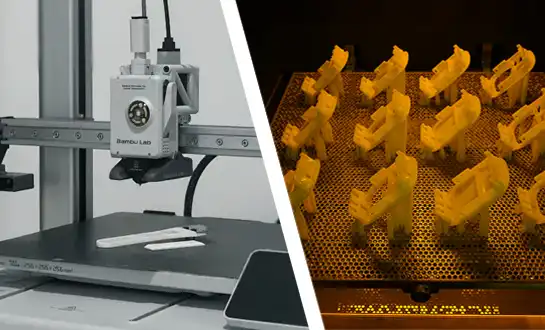
To pick the best 3D printer for your business, you need to know the differences between personal and industrial types. Desktop printers are small and easy to use, making them perfect for making prototypes and small batches of products when money is tight. Industrial printers are better at accuracy, can print on a wider range of materials, and can produce more, so they are good for large-scale manufacturing.

Industrial-Grade Performance Requirements
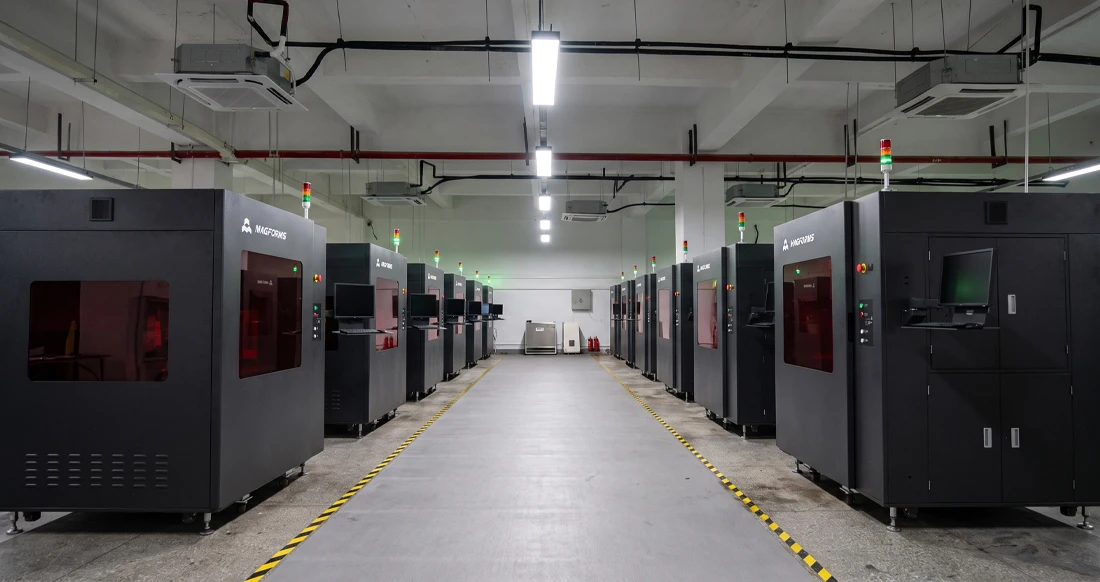
For industrial uses, dependability standards are much higher than what a desktop computer can handle. Systems have to work nonstop for long amounts of time while keeping the standard of thousands of parts the same. Precision parts like Panasonic AC servo motors and stable marble bases are used in professional equipment to print with an accuracy of 0.1 mm on builds bigger than 300x300x400 mm.
In industrial settings where accurate measurements affect how tightly things fit together, temperature stability is very important. Modern heat management systems keep the room at a constant temperature, and precise motion control stops layer shifting and surface flaws. These skills are very important for making tools for cars, samples for spacecraft, and medical devices, where mistakes in quality can have big effects.
Scalability and Production Capacity Considerations
One big difference between desktop and industrial platforms is their ability to grow with production. Large-format features allow the production of multiple parts or a single large part at the same time, which would need to be put together on smaller systems. Batch processing makes the best use of materials and lowers the cost per part for mass production.
Industrial systems can handle continuous operation plans with the help of automatic material handling, remote tracking, and repair that can be planned ahead of time. These features make lights-out manufacturing possible, which means that systems can run without anyone being there during off-hours. This makes the best use of tools and cuts down on labor costs. This feature is useful for service providers who are in charge of many jobs for different clients with different due dates.
Addressing Common Challenges and Optimizing 3D Printing Performance
To make 3D print work well, you need to fix common problems like print flaws, inconsistent materials, and calibration mistakes. Best practices help reduce mistakes and raise output levels, which is very important for keeping production reliable.
Integrated Solutions Eliminating Compatibility Issues
Compatibility between materials and machinery is a persistent problem in the business that impacts quality, dependability, and prices. When third-party materials and tools don't work well together, it can cause problems with measurements, print quality, and unplanned downtime. Integrated systems that use optimized materials and perfectly matched hardware get rid of these factors, making sure that performance stays the same.
Systems that are built with built-in material compatibility go through a lot of tests to make sure they work well in a wide range of situations. This test includes changing the temperature, exposing the device to humidity, and using it for longer amounts of time to find possible failure modes. The all-encompassing method cuts down on the need for troubleshooting and makes performance repeatable for planning output.
Professional technical help is needed to keep the system running at its best. Experienced teams can respond quickly and ensure that problems will be solved within a certain amount of time. Remote diagnostics let you look at printing problems right away, and on-site help makes sure that even the most complicated issues get the attention they need. Regular repair programs and training for operators make the system even more reliable and improve its performance.
Conclusion
The 3D print business is still changing very quickly, thanks to new technologies and rising consumer demand in many areas. Some important trends are the use of more advanced laser technologies, the merging of AI, the use of different materials, and all-encompassing solution methods that get around the problems that traditional manufacturing has. Companies that use these technologies have an edge over their competitors because they can customize their products better, get them to market faster, and be more flexible in how they run their businesses. Careful consideration of equipment powers, material compatibility, and seller support are necessary for success to ensure peak performance and a high return on investment (ROI).
FAQ
What factors should companies prioritize when selecting industrial 3D printing equipment?
Companies should check the correctness of the printing, the compatibility of the materials, the production capacity, and the expert help available. Important requirements include precision in measurements within 0.1 mm, compatibility with open-source materials, the ability to print on big formats, and quick technical help with guaranteed resolution times. Integration skills and dependability that has been proven through a lot of market testing also play a role in choosing.
How do eco-friendly materials compare to conventional options in terms of performance and durability?
Modern materials that are good for the environment work just as well as traditional materials while also meeting the needs of environmental sustainability. In medical uses, biocompatible resins keep the mechanical qualities needed, and recycled threads offer resilience good for prototyping and tooling. When choosing a material, it's important to keep environmental goals and efficiency needs for the purpose in mind.
What impact does 3D printing adoption have on supply chain efficiency and cost management?
Adopting 3D printing makes digital accounting ideas possible, which cuts down on physical storing needs and the risk of items becoming obsolete. With on-demand manufacturing, wait times are cut down, and minimum order amounts are eliminated. Companies say they've saved a lot of money by using fewer tools, wasting less, and turning over their goods more quickly across a wide range of uses.
Partner with Magforms for Advanced 3D Printing Solutions
Magforms provides complete 3D printing options that combine cutting-edge technology with tried-and-true dependability for a wide range of industry uses. Our unified method creates systems with German Scanlab galvanometers, variable spot-size laser technology, and AI-optimized performance that makes printing 30–50% faster while keeping accuracy at the micron level. We offer full solutions, from tools to materials, and offer expert help 24 hours a day, seven days a week. We have 22 patents, 30 registered trademarks, and have worked with over 300 businesses around the world. Get in touch with our knowledgeable staff at info@magforms.com to find out how our industrial-grade 3D printing services can help you make more things and stay ahead of the competition.
References
1. Thompson, Michael R. "Additive Manufacturing Technologies: Market Trends and Industrial Applications." Journal of Manufacturing Science and Engineering, vol. 145, no. 3, 2023, pp. 45-62.
2. Chen, Sarah L., and David Rodriguez. "Material Innovations in 3D Printing: From Prototyping to Production." Advanced Materials Research, vol. 28, no. 7, 2023, pp. 112-128.
3. Williams, James K. "Digital Manufacturing and Supply Chain Transformation Through 3D Printing Technologies." International Journal of Production Economics, vol. 267, 2023, pp. 89-104.
4. Anderson, Lisa M. "Industrial 3D Printing: Performance Metrics and Quality Assurance Standards." Manufacturing Technology Review, vol. 41, no. 2, 2023, pp. 78-95.
5. Garcia, Roberto A., et al. "Artificial Intelligence Applications in Additive Manufacturing: Current Trends and Future Prospects." Technology Innovation Management Review, vol. 13, no. 4, 2023, pp. 34-51.
6. Johnson, Patricia E. "Sustainable Materials in 3D Printing: Environmental Impact and Performance Analysis." Sustainable Manufacturing Journal, vol. 19, no. 6, 2023, pp. 156-173.

Magforms makes design and manufacture easier.
Popular Blogs
-
 Industry InsightsManufacturing Industry
FDM vs. SLA Printer: Which Technology Is Right for Your Project?
-
 Industry InsightsManufacturing Industry
Top 5 Applications of Industrial 3D Printers in Manufacturing Today
-
 Industry InsightsManufacturing Industry
Why Stereolithography 3D Printers Are Unmatched for Microfluidic Device Prototyping?