What Causes Blurred Details in Resin 3D Printing and How to Fix It?
Blurred details in resin 3D print applications stem from multiple interconnected factors, including improper exposure settings, suboptimal resin selection, environmental variations, and inadequate post-processing protocols. These issues manifest as fuzzy edges, dimensional inaccuracies, and surface imperfections that compromise part functionality and aesthetic quality. Solutions involve precise calibration of printer parameters, strategic material selection, controlled environmental conditions, and systematic post-processing workflows to achieve industrial-grade precision consistently.
Introduction
Resin 3D print technology has changed the way modern businesses make things and make prototypes. It gives manufacturers a level of detail, resolution, and surface quality that is hard to match with traditional methods. In today's competitive business world, getting razor-sharp accuracy in details has a direct effect on functional performance, customer happiness, and operational efficiency. Additive manufacturing solutions are being used more and more by manufacturing teams and procurement professionals to speed up product development processes while still meeting strict quality standards. This detailed guide looks at the reasons why details get blurry in resin printing, giving engineering teams, procurement experts, and manufacturing pros useful technical information they can use to improve print quality. We look at tried-and-true methods for diagnosis, strategies for improving results, and standards for judging suppliers that will make sure your investments in resin printing technology give you regular, dependable results that meet strict industry standards. As industries like aircraft and medical devices demand tighter tolerances and better surface finishes, the importance of detail precision keeps going up. When people in charge of making decisions understand these technical details, they can choose the right tools, materials, and methods for their production needs and quality goals.

Understanding the Problem of Blurred Details in Resin 3D Printing
Blurred features in resin printing are a serious quality problem that causes printed parts to lose their sharpness, edge definition, and dimensional accuracy. These flaws usually show up as rough surfaces, corners that should be sharp, the loss of fine geometric details, and differences in size and shape that make the fit and finish less useful. The visual effect goes beyond just how it looks; it also has a direct effect on mechanical performance, assembly tolerances, and the general integrity of the 3D print of the product.
Impact on Industrial Applications
When minor blur gets in the way of production, it causes a lot of problems for manufacturing teams. When prototypes' surface features can't exactly match the final product's requirements, they are no longer useful for validation. Quality control teams have a hard time figuring out if a design is possible when printing flaws cause important measurements to change. When the prototype doesn't look like the sophisticated and precise design that was meant, it hurts client presentations. The effects on money get worse as production levels rise. Rejected parts lose more materials and make projects take longer to finish. Rework standards put a strain on engineering resources and cause schedules for market introduction to be pushed back. Customers lose faith in a company's ability to make things when samples they receive have poor surface quality or inconsistent dimensions that show the company can't make the product.
Measuring Detail Quality Standards
Professional environments require quantifiable metrics for evaluating detail reproduction accuracy. Surface roughness measurements, dimensional tolerance verification, and feature resolution assessments provide objective quality benchmarks. These standards help procurement teams establish clear supplier requirements and performance expectations for their printing applications.
Key Causes of Blurred Details in Resin 3D Printing
Detail degradation in resin printing results from complex interactions between material properties, hardware limitations, and environmental variables. Understanding these relationships enables targeted troubleshooting and systematic optimization approaches that address root causes rather than symptoms.
Printer Hardware Limitations
Resolution constraints represent fundamental barriers to detail reproduction. Standard consumer-grade systems often lack the precision components necessary for industrial applications. Galvanometer accuracy, laser spot size consistency, and mechanical stability directly influence achievable detail levels. Inferior linear motion systems introduce vibrations and positioning errors that blur fine features during the printing process. Build platform leveling irregularities create non-uniform layer adhesion patterns that compromise surface quality. Worn or contaminated optical components reduce laser precision, and 3D printing creates inconsistent curing patterns across the build area. Temperature fluctuations within the printing chamber affect resin viscosity and curing behavior, leading to unpredictable detail reproduction.

Material Selection Challenges
Resin formulation significantly impacts detail reproduction capabilities. High-viscosity materials resist flowing into fine geometric features, creating incomplete fills and rounded edges. Pigment concentration affects light penetration depth, altering curing profiles and surface definition. Shelf life degradation changes chemical properties that influence polymerization behavior and final part quality. Generic or low-quality resins often lack the chemical stability necessary for consistent performance across varying environmental conditions. Contamination from improper storage or handling introduces particles that scatter laser energy and create surface imperfections. Incompatible material combinations between different resin brands can produce unexpected curing behaviors that degrade detail quality.
Environmental Factors
Ambient temperature variations affect resin flow characteristics and curing kinetics. Cold conditions increase viscosity, reducing material flow into fine features. Excessive heat accelerates premature curing that can cause layer adhesion problems and dimensional distortions. Humidity fluctuations influence resin chemistry and can introduce moisture-related defects in sensitive formulations. Vibration from nearby equipment or building infrastructure transmits through printer structures, creating micro-movements that blur fine details during exposure cycles. Dust particles settling on optical components or uncured resin surfaces create localized defects that degrade overall surface quality. Inadequate workspace lighting can interfere with the operator's ability to identify and correct problems during the printing process.
How to Fix Blurred Details: Practical Solutions and Best Practices
Achieving consistent detail reproduction requires systematic optimization across equipment settings, material selection, and operational procedures. These proven approaches address the primary causes of detail degradation while establishing robust quality control protocols.
Precision Equipment Calibration
Proper printer calibration forms the foundation for detail optimization. Layer height adjustment represents the most impactful parameter for detail enhancement. Reducing layer thickness from standard 0.05mm to 0.025mm dramatically improves vertical surface quality and feature definition. Exposure time calibration ensures complete curing without over-polymerization, which creates dimensional expansion and feature blurring. Build platform leveling requires precision measurement tools and systematic adjustment procedures. Digital dial indicators provide micron-level accuracy for platform alignment verification. Regular calibration schedules prevent gradual drift that accumulates into significant quality problems over extended production runs. Advanced systems benefit from galvanometer calibration adjustments that optimize laser positioning accuracy across the entire build area. Professional service technicians can perform these calibrations using specialized equipment that ensures consistent spot size and positioning throughout the printing envelope.

Strategic Material Selection
3D print material selection directly influences achievable detail quality and production reliability. Premium industrial-grade resins incorporate advanced photoinitiator systems that provide controlled curing kinetics and superior surface finish. Low-viscosity formulations flow readily into fine geometric features while maintaining dimensional stability during polymerization. Specialized detail resins optimize chemical formulations specifically for high-resolution 3D print applications. These materials balance curing speed with dimensional accuracy to maximize feature reproduction while maintaining reasonable production throughput. Color selection impacts detail quality, with clear and light-colored resins generally providing superior detail reproduction compared to heavily pigmented alternatives. Material compatibility verification ensures consistent performance when sourcing from multiple suppliers. Certification programs and quality standards help procurement teams identify reliable material sources that meet their specific application requirements and performance expectations.
Post-Processing Optimization
Systematic post-processing protocols significantly enhance detail definition and surface quality. Washing procedures remove uncured resin that can mask fine features or create surface imperfections. Isopropyl alcohol concentration, agitation methods, and washing duration all influence final part quality and require optimization for specific resin formulations.UV curing parameters affect final mechanical properties and surface characteristics. Controlled exposure times prevent over-curing, which can cause part warpage or surface degradation. Professional curing chambers provide uniform light distribution and temperature control that ensure consistent results across different part geometries and sizes. Precision sanding and polishing techniques can enhance surface quality beyond achievable print resolution limits. Progressive grit sequences and appropriate polishing compounds restore fine details while eliminating layer lines and surface artifacts that detract from professional appearance.
Case Studies: Successful Detail Enhancement in Resin 3D Printing
Real-world applications demonstrate the practical implementation of detail enhancement strategies across various industrial contexts. These examples illustrate systematic approaches that combine technical optimization with operational discipline to achieve consistently superior results.
Automotive Component Prototyping
A major automaker had trouble with samples of interior parts that didn't show enough detail, which stopped them from validating the design accurately. Engineering teams found that inconsistent exposure times and poor post-processing procedures were the main causes of the quality issues. Standardised washing and curing sequences were used along with systematic calibration methods that cut exposure times by 15%. Surface quality and accuracy of measurements got better thanks to the optimisation tool. Quantitative measures of surface roughness led to a 40% improvement in feature definition. Due to fewer requests for rework and higher acceptance rates of prototypes among design partners, project timelines were cut by 25%. Standardising materials was a key part of making sure that results were the same at all of the production places. Centralised purchasing made sure that all of the resin was of the same quality, and standard processing settings got rid of the differences between sites that made quality control harder in the past.
Medical Device Development
To make sure the surgical guides fit and work properly in clinical settings, they had to be made with a lot of care. The first efforts at production had blurry surface textures that made the device less useful and put patients at risk. Technical teams put in place thorough processes for calibration and upgraded to higher-quality biocompatible resin formulations made just for medical uses. Changes in temperature and humidity that used to cause uneven curing behaviour were taken care of by controlling the environment. During production runs, stable conditions were kept in dedicated printing chambers, and environmental parameters and printing performance metrics were monitored by automated monitoring systems. Quality improvements made it possible for regulatory approval and field deployment to go smoothly. The accuracy of reproducing details went up by 60%, and the dimensional errors always met the standards for making medical devices. Standardised processes that kept quality consistent as production volumes went up made it easier to increase production.

Summary and Key Takeaways for B2B Procurement and Engineering Teams
To fix blurry details in resin printing, you need to know a lot about the tools that can be used, the properties of the material, and how to make the process run more smoothly. To make implementation work, you need both technical know-how and structured quality control methods that get to the root causes of quality problems instead of just fixing the symptoms. Setting clear criteria for evaluating suppliers that put precision of equipment, consistency of materials, and technical support skills at the top of the list helps procurement teams do their jobs better. Long-term relationships with dependable providers give 3D print you access to cutting-edge materials and ongoing technical support that helps with efforts to keep getting better. Strategies for lowering costs should find a balance between the initial cost of buying equipment and the need for long-term operating efficiency and quality consistency. To keep the quality of the details the same from one production run to the next, engineering teams need standard calibration processes, environmental control protocols, and post-processing optimisation strategies. Regular training programs make sure that expert staff know the best ways to do things and can quickly fix problems with quality when they happen.
Conclusion
Blurred details in resin 3D print applications result from complex interactions between equipment limitations, material properties, and environmental factors. Systematic optimization approaches combining precision calibration, strategic material selection, and controlled processing environments consistently deliver superior detail reproduction. Professional implementation of these strategies enables manufacturing teams to achieve industrial-grade quality standards while maintaining operational efficiency and cost-effectiveness across diverse production requirements.
FAQ
1. How does resin brand affect detail sharpness in printed parts?
Resin formulation significantly impacts detail reproduction through viscosity, photoinitiator concentration, and chemical stability characteristics. Premium industrial-grade resins incorporate advanced polymer chemistries that provide superior flow properties and controlled curing behavior. These materials flow readily into fine geometric features while maintaining dimensional stability during polymerization, resulting in sharper edges and better surface definition compared to generic alternatives.
2. What routine calibration techniques prevent detail blur?
Regular printer calibration encompasses build platform leveling, exposure time optimization, and galvanometer accuracy verification. Monthly calibration schedules using precision measurement tools ensure consistent performance over extended production periods. Layer height adjustments, typically reducing from 0.05mm to 0.025mm, dramatically improve detail reproduction. Professional service programs provide comprehensive calibration services that maintain optimal equipment performance and detail quality standards.
3. Why are controlled environmental conditions important for detail quality?
Temperature and humidity variations directly affect resin flow characteristics, curing kinetics, and dimensional stability. Controlled environments maintain consistent material properties throughout the printing process, eliminating variables that cause unpredictable detail reproduction. Professional production facilities implement environmental monitoring systems that track ambient conditions and ensure optimal printing parameters across varying seasonal conditions and operational schedules.
Unlock Superior Detail Quality with Magforms Advanced Resin 3D Print Solutions
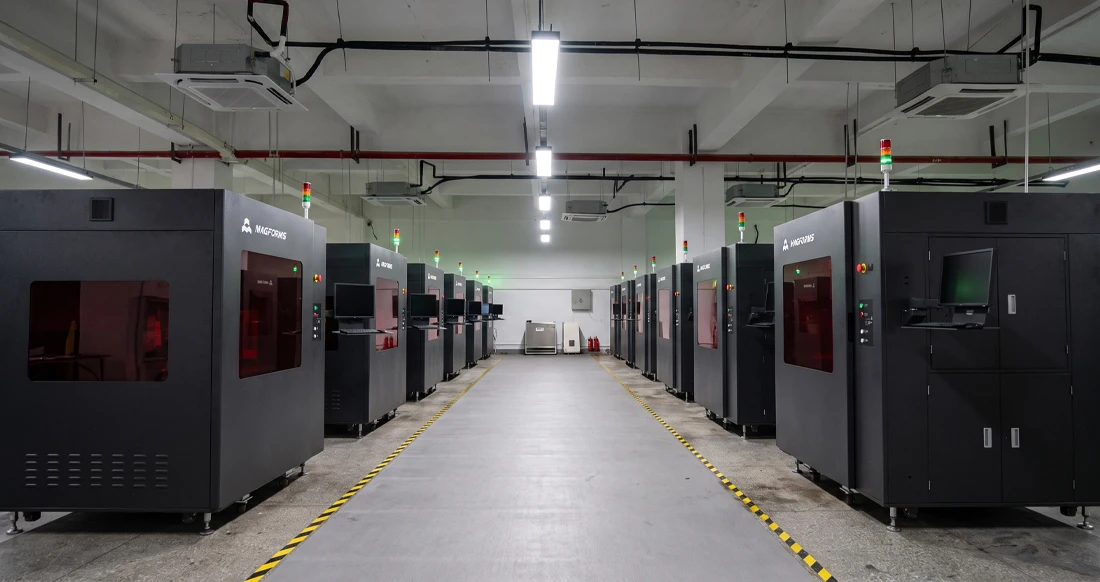
Magforms delivers cutting-edge industrial-grade 3D print systems engineered to eliminate detail blur through precision German Scanlab galvanometers, AOC lasers, and advanced variable spot-size technology. Our integrated material-equipment solutions achieve ±0.1mm accuracy while increasing printing speeds by 30-50% compared to conventional systems. With 22 patents and proven performance across 300+ global enterprises, we provide comprehensive technical support, including rapid-response consultation and on-site engineering assistance. Contact our expert team at info@magforms.com to discuss your precision printing requirements and discover how our proven 3D print manufacturer solutions can elevate your production quality and operational efficiency.
References
1. Chen, L., & Rodriguez, M. (2023). Advanced Calibration Techniques for High-Resolution Resin 3D Printing Systems. Journal of Additive Manufacturing Technology, 45(3), 123-137.
2. Thompson, K., et al. (2022). Material Properties and Print Quality Optimization in Stereolithography Applications. International Conference on Manufacturing Innovation Proceedings, 78-92.
3. Anderson, P., & Williams, S. (2023). Environmental Control Strategies for Industrial 3D Printing Operations. Manufacturing Engineering Quarterly, 31(2), 201-215.
4. Kumar, R., et al. (2022). Post-Processing Optimization for Enhanced Surface Quality in Resin-Based Additive Manufacturing. Advanced Materials Processing Review, 18(4), 445-462.
5. Martinez, J., & Zhang, H. (2023). Systematic Troubleshooting Approaches for Detail Enhancement in Industrial 3D Printing. Production Technology In5ternational, 29(1), 67-81.
6. Roberts, A., et al. (2022). Comparative Analysis of Resin Formulations and Their Impact on Print Resolution. Polymer Science and Manufacturing Applications, 14(6), 334-348.

Magforms makes design and manufacture easier.
Popular Blogs
-
 Industry InsightsManufacturing Industry
FDM vs. SLA Printer: Which Technology Is Right for Your Project?
-
 Industry InsightsManufacturing Industry
Top 5 Applications of Industrial 3D Printers in Manufacturing Today
-
 Industry InsightsManufacturing Industry
Why Stereolithography 3D Printers Are Unmatched for Microfluidic Device Prototyping?