What Industries Benefit Most from the P7 Pro Desktop 3D Printer?
The P7 Pro is a state-of-the-art LCD-based resin desktop 3D printer designed for businesses requiring fast and highly accurate prototyping. Desktop resin 3D printing has become essential across industries because it enables rapid prototyping, cost-effective production, and high customization. Resin-based desktop units now achieve detail levels comparable to industrial SLA/DLP systems, benefiting sectors from jewellery design to medical device prototyping. This post's goal is to find the industries that gain a lot of competitive edge by using the P7 Pro. This will help procurement professionals make smart choices that will boost innovation and operational efficiency while also fixing important problems like inconsistent precision and material compatibility.
Understanding the Core Capabilities of the P7 Pro Desktop 3D Printer
The P7 Pro stands out in the market for desktop 3D printers because it has great technical specs and was designed with the user in mind. This desktop LCD resin 3D printer features a greyscale adjustment algorithm, achieving an effective XY accuracy of up to 9 micrometres through grayscale pixel compensation technology. This positions the P7 Pro as a professional-grade desktop 3D printer suitable for precision manufacturing applications. With this level of accuracy, the printed parts are just as detailed as those made with regular DLP printers. They can meet the strict production standards needed for jewellery casting models and other high-detail uses.
Exceptional Precision Through Advanced Technology
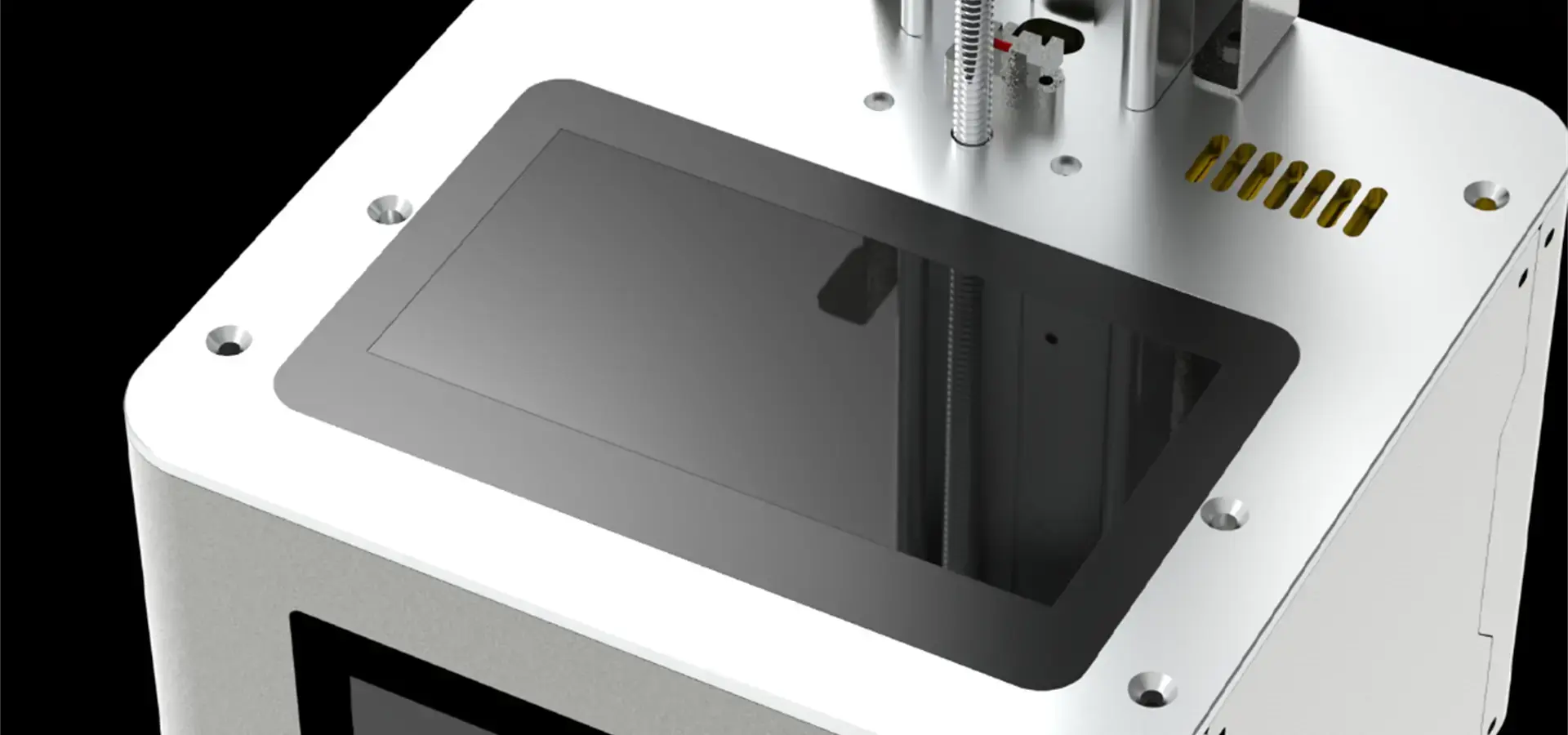
The P7 Pro uses industrial-grade linear rails and a 6.8-inch monochrome 9K LCD screen. This setup provides a pixel size of 18 × 18 micrometres and a resolution of 8520 × 4320 pixels, enabling extremely sharp and detailed prints. The uniform light source contributes to dimensional accuracy of up to ±0.02 mm under optimized printing conditions. This level of accuracy gets rid of the differences in size and print errors that many PC units have when they try to do thorough work. It is possible to recreate very accurately even the smallest details, like skin textures, fine threads, and tiny geometric shapes.
Reliability Across Environmental Conditions
Many people who use desktop 3D printers have problems with prints failing when the temperature changes. This is a common problem that the P7 Pro solves by having a clever heating system that keeps the printing area at 30°C all the time. This temperature control maintains a stable printing environment at 30°C, minimizing print failures. It prevents layer separation and warping, ensuring the structural integrity of printed parts. The heating system helps maintain stable printing performance across a wide range of ambient temperatures, so it is reliable all year long and cuts down on waste and output delays.
Robust Construction and User-Friendly Operation
Built on a frame made of all metal, the P7 Pro is strong and stable, making it perfect for printing. Vibrations and directional shift that can build up over long print jobs are kept to a minimum by the structure's strength. The 5-inch tablet interface with highly customised UI is liked by operators because it lets them change printing settings in real time while jobs are still running. This freedom is very helpful when fixing problems or finding the best choices for new materials. The flip-up cover made of UV-resistant resin stops ultraviolet light while letting you see clearly. This keeps the resin from drying by accident and lets you check the quality of the print without stopping the printing process.
The build space of 153.36 × 77.76 × 160 mm is just the right size for a desktop and can easily hold enough parts for production. Users can choose layer thicknesses between 25 and 150 micrometres, which lets them balance speed and detail. This makes it possible for both fast development and final production runs that need the best surface quality.
Key Industries Leveraging the P7 Pro for Innovation and Efficiency
The technical capabilities of the P7 Pro desktop resin 3D printer align perfectly with the specialized requirements of several high-value industries. Each sector faces unique challenges in balancing precision, production speed, and cost-effectiveness—challenges this desktop unit addresses directly.
Jewelry Design and Manufacturing
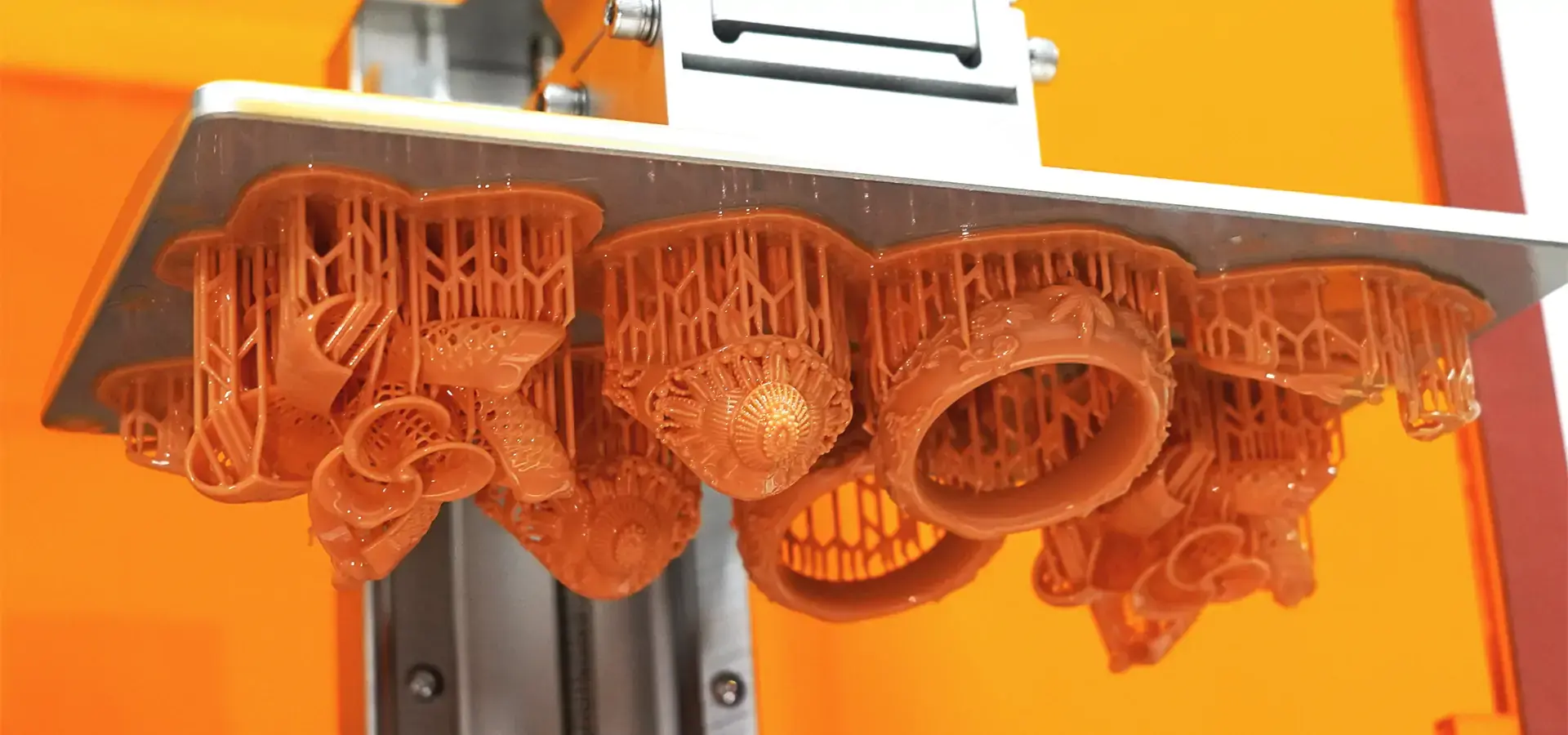
The jewellery business might be the most natural place for the P7 Pro to be used. Investment casting is a traditional way to make jewellery, and the process starts with making very detailed master designs. Every small shape, colour, and design feature that will show up in the finished metal piece must be included in these forms. Any flaws in the master have a direct effect on the jewellery that is made from it.
The grayscale compensation technology of the P7 Pro helps achieve effective edge accuracy of up to 9 micrometres for highly detailed jewellery patterns. Professional jewellery casting standards are met by this accuracy level, which makes it possible to reliably make rings with complex designs, pendants with detailed details, and custom carvings. The desktop form factor is great for small and medium-sized jewellery shops because it lets them make casting models in-house without having to buy expensive industrial casting tools. The design-to-market timeline is sped up a great deal when changes can be made quickly, like when a test print can be made in hours instead of weeks for external testing.
Dental Laboratories and Orthodontics
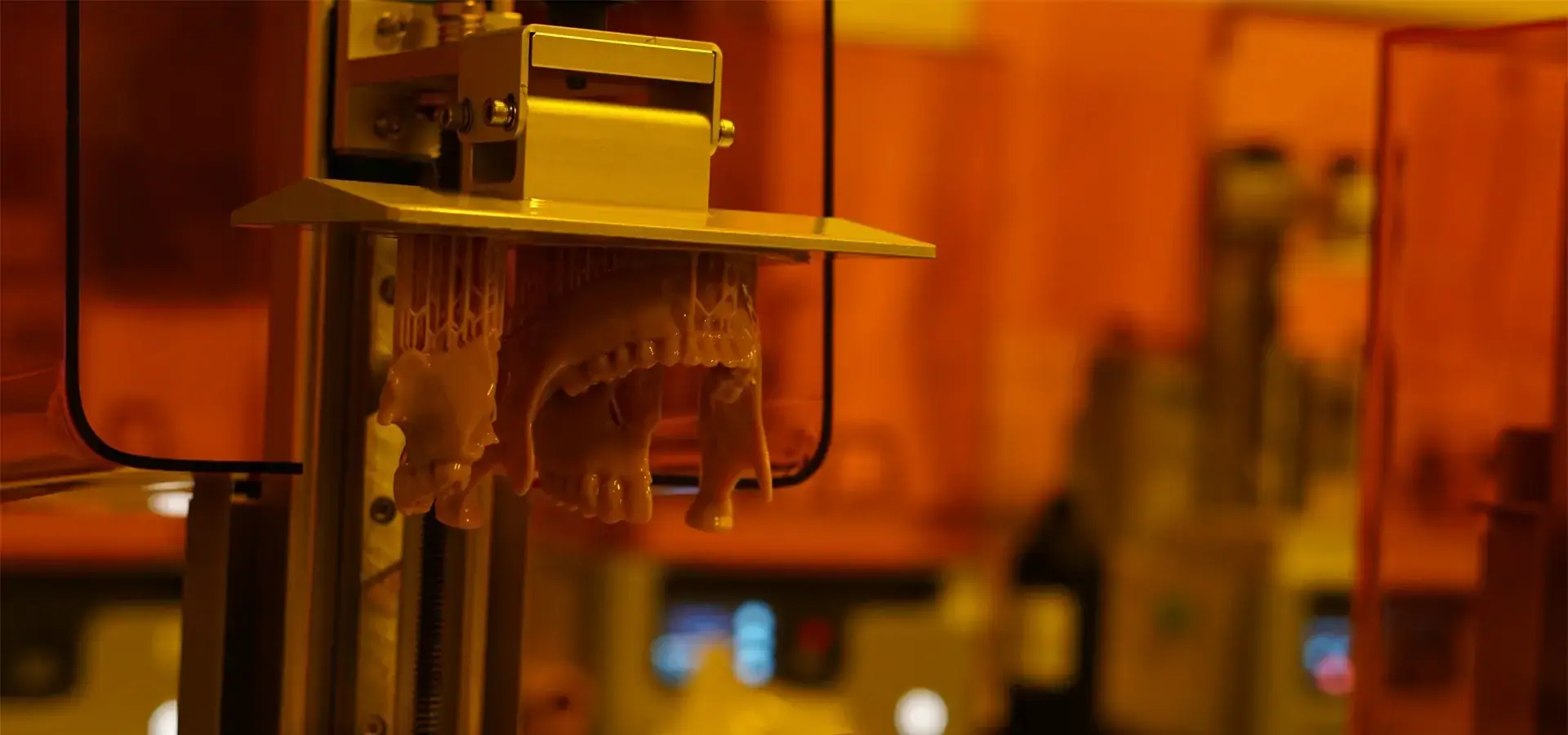
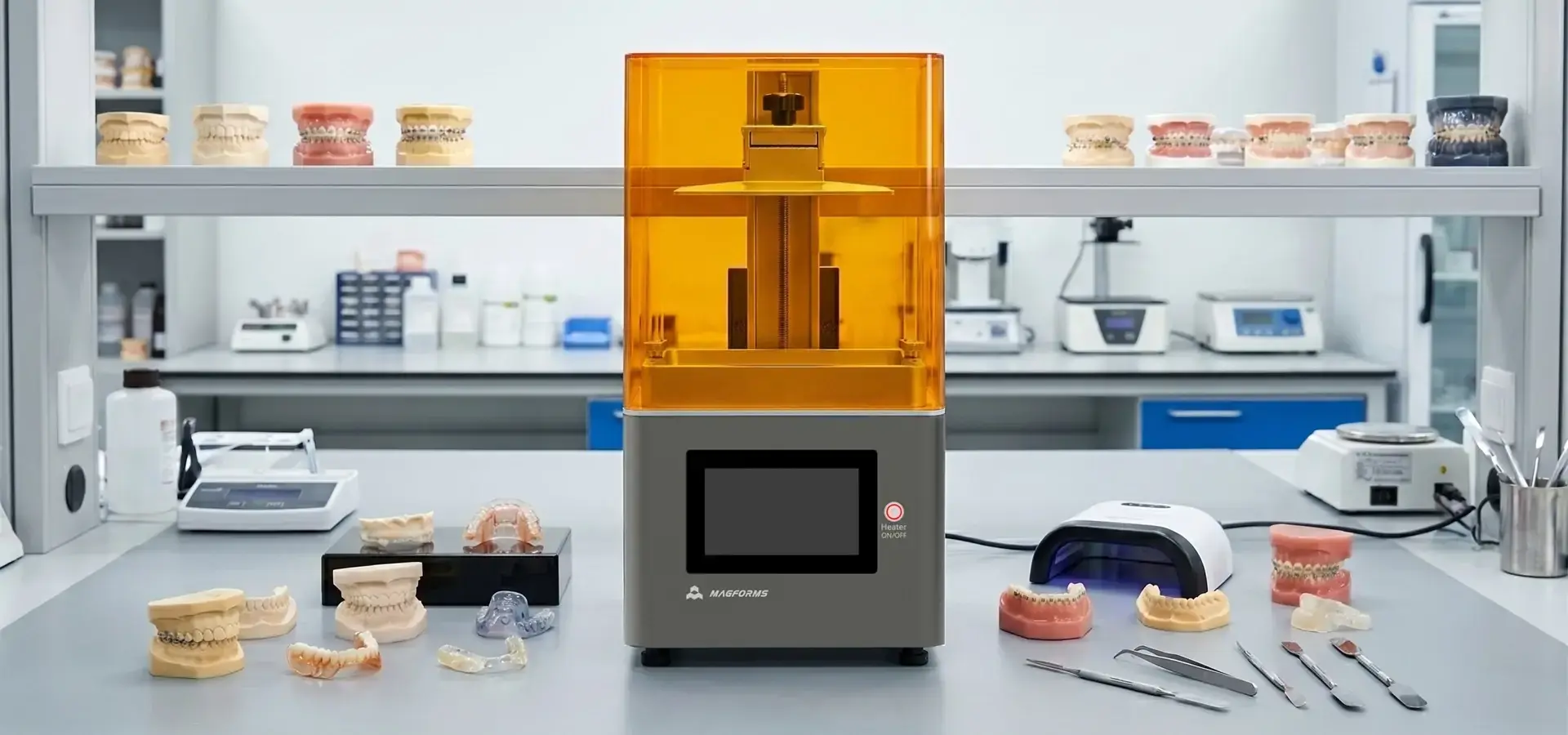
Biocompatible resins with high dimensional accuracy are essential in dental applications, as prosthetics and orthodontic devices must precisely match patient anatomy. The P7 Pro is used by dental labs to make unique dental models, bases for orthodontic aligners, surgery guides, and samples for dental implants. The high dimensional accuracy helps printed models closely reproduce data captured by modern intraoral scanners. This keeps the necessary physical integrity for a good fit and function.
The clever heating system is especially useful in dental production settings where changing seasons can't affect the quality of the work that is being done. Laboratories that print a lot of things every day like the high success rate because it cuts down on the number of copies and wasted materials. The small size of the desktop means that it can be put right in the production areas without needing a separate room for making. This makes the process more efficient.
3D Printing Service Providers
Professional 3D printing service companies are always under pressure to offer more services while keeping the prices of their tools low. The P7 Pro gives these companies their main production tools that can handle high-precision printing jobs in many different fields. With just one desktop unit, service providers can do everything from dental modelling to making jewellery, miniatures, and intricate mechanical parts.
This desktop 3D printer supports a wide range of resin types, including castable resins, engineering resins, transparent resins, and flexible resins, suitable for multiple professional applications. Because of this, service bureaus can meet the needs of a wide range of clients without having to buy a lot of different tools. The low cost compared to industrial resin printers increases the return on investment. This is especially true for small and tiny businesses that need professional quality but don't have the money for big industrial equipment.
Medical Device Prototyping
The P7 Pro is used in the medical device industry for more than just dentistry uses. It is used to make samples of surgical tools, anatomical models for planning surgeries before they happen, and orthopedic implant design prototypes. Surgeons can practise complicated procedures on accurate models before going into the operating room because CT and MRI scan data can be used to make models that are unique to each patient. Medical device companies that are making new instruments can quickly change designs and test their comfort and usefulness with physical samples before investing in expensive tools for mass production.
The accuracy and smoothness of the surface that this desktop resin 3D printer can produce make sure that anatomy details are shown correctly, which is very important for teaching models used in medical training programs. The mix of capability and cost is very appealing to university research labs and teaching hospitals because it makes professional-grade additive manufacturing affordable for school funds.
Consumer Electronics and Product Design
Consumer goods businesses have to be able to make quick prototypes because their products only last a few months on average. The P7 Pro is used by industrial designers to make working models of device cases, button groups, connecting housings, and other internal structure parts. The desktop form factor lets it be put right in design labs, which lets same-day changes keep up with short development timelines.
Because it is so precise, snap-fit features, threaded inserts, and tight specs can be tried in real life instead of just using computer models. This hands-on testing finds problems with the design quickly, before the expensive injection moulding tools are ordered. When working on different projects for different clients, product design teams can switch between stiff, flexible, and clear resins, which makes the material versatile.
Cultural and Creative Industries
The P7 Pro is used by artists, sculptors, and cultural organisations to make copies of artefacts, limited-edition collectibles, and figures with lots of details. High-precision desktop 3D printing is used by museums to make archival-quality copies of sensitive historical items that can be handled and shown by the public while the originals are kept safe. Being able to reproduce fine surface textures makes sure that the artistic purpose is carried over correctly from digital work to real life.
Small creative companies and independent artists like how small it is and how easy it is to use, which means they don't need dedicated techs. Precision production is now open to creative workers who don't have engineering skills because the output quality is professional and the process is easy to use.
Procurement Considerations for Businesses Interested in the P7 Pro
Procurement professionals evaluating the P7 Pro should approach the decision with a comprehensive understanding of total cost of ownership beyond the initial purchase price. While the desktop unit offers competitive upfront pricing compared to industrial resin systems, ongoing consumable costs, maintenance requirements, and operational efficiency all impact long-term value.
Total Cost of Ownership Analysis
The P7 Pro's material compatibility represents a significant economic advantage. Unlike proprietary systems that require costly manufacturer-specific resins, the P7 Pro is optimized to work with a wide range of third-party photopolymer resins while maintaining excellent results with Magforms' own formulations. This flexibility gives procurement teams negotiating power with resin suppliers and insulates operations from single-source supply chain disruptions.
Maintenance costs remain minimal due to the robust construction and straightforward user-serviceability. The monochrome LCD screen, while a consumable component, typically delivers thousands of print hours before requiring replacement. The full-metal chassis and industrial-grade linear rails reduce wear-related failures common in consumer-grade desktop units. This durability translates to lower downtime costs and extended service life, improving return on investment calculations significantly.
Comparative Value Against Competitors
When benchmarked against well-known desktop 3D printer manufacturers like Creality, Prusa, Anycubic, and FlashForge, the P7 Pro frequently provides stronger ROI due to its specialized focus on precision resin printing. Many competitors position their desktop units as general-purpose FDM systems or entry-level resin printers targeting hobbyists rather than professional production environments. The P7 Pro's 9-micrometer resolution and consistent 0.02mm accuracy place it in a different performance category entirely, offering performance characteristics commonly associated with higher-priced systems.
Technical decision-makers appreciate that Magforms backs their equipment with comprehensive technical support developed through years of industry experience. The company's integrated approach—developing both materials and equipment in-house—ensures deep compatibility optimization that third-party material/equipment combinations cannot match. This integration eliminates the finger-pointing between material and equipment suppliers that often occurs when troubleshooting print quality issues.
Purchasing Through Authorized Channels
Procurement teams should prioritize purchasing through authorized Magforms distributors to ensure authenticity and full warranty coverage. Authorized channels provide access to bulk order pricing advantages, dedicated after-sales support, and guaranteed access to firmware updates and technical training resources. The company's global presence, supported by 22 patents and 30 registered trademarks, demonstrates technological stability and ongoing innovation commitment.
For B2B procurement, the availability of application-specific technical training and workflow optimization consulting adds substantial value beyond the hardware itself. Magforms' experience serving over 300 enterprises globally means their technical teams understand industry-specific workflows and can provide guidance tailored to specific production requirements.
Maximizing Productivity: Maintenance and Troubleshooting Best Practices for the P7 Pro
Even the most reliable desktop 3D printer requires systematic maintenance to sustain peak performance throughout its operational life. The P7 Pro's design prioritizes maintainability, but users must implement consistent maintenance protocols to maximize uptime and print quality.
Regular cleaning of the resin vat and build platform prevents contamination that can cause adhesion failures or surface defects. After completing print jobs, any remaining uncured resin should be filtered back into storage bottles to remove cured particles. The FEP film lining the vat bottom should be inspected regularly for clouding or punctures, as damage here directly impacts print quality. Replacement represents routine maintenance rather than a repair issue.
The linear rail system benefits from occasional lubrication using manufacturer-recommended lubricants. This simple maintenance step prevents binding and ensures smooth Z-axis motion throughout the entire build height. The LCD screen should be kept clean and free from cured resin, though the UV-resistant cover provides excellent protection during normal operation.
Software updates released by Magforms often include optimizations for print speed, new material profiles, and enhanced slicing algorithms. Procurement teams should establish protocols for reviewing and implementing updates during scheduled maintenance windows. The 5-inch touchscreen interface simplifies the update process, typically requiring only a USB drive with updated firmware.
When troubleshooting print failures, users should systematically check environmental factors like ambient temperature, resin age and storage conditions, and mechanical adjustments. The intelligent heating system maintains internal temperature stability, but proper room conditions still impact resin viscosity and curing characteristics. Magforms provides comprehensive troubleshooting documentation and technical support resources, backed by responsive customer service teams.
Future Outlook: The Role of Desktop 3D Printing in Industrial Evolution
Desktop additive manufacturing continues evolving rapidly, with technological advances expanding capabilities while improving accessibility. The integration of artificial intelligence into slicing software and print monitoring systems promises to automate parameter optimization and detect potential failures before they occur. IoT connectivity will enable remote monitoring and production management, allowing service bureaus to operate multiple desktop units efficiently.
Material science innovations continue expanding the functional possibilities of resin printing. New formulations deliver mechanical properties approaching injection-molded engineering thermoplastics while maintaining the detail advantages of photopolymer systems. Biocompatible and bioabsorbable resins will expand medical applications, potentially enabling direct production of implantable devices rather than just surgical planning models.
The supply chain implications of distributed desktop manufacturing deserve particular attention from procurement managers. As desktop 3D printer capabilities continue improving, businesses gain flexibility to produce certain components on-demand locally rather than maintaining inventory or relying on distant suppliers. This localized production capability reduces working capital tied up in inventory, minimizes logistics costs, and improves responsiveness to customer demands.
Procurement strategies should align desktop additive manufacturing adoption with long-term business goals rather than treating it as isolated equipment acquisition. Companies that integrate these capabilities deeply into design workflows and production planning gain disproportionate competitive advantages over those using the technology only peripherally.
Conclusion
The P7 Pro desktop 3D printer delivers professional-grade precision and reliability in a compact, accessible format that transforms production capabilities across diverse industries. From jewelry workshops requiring intricate casting models to dental laboratories producing patient-specific prosthetics, the technical specifications and thoughtful design of this desktop resin 3D printer address real production challenges faced by small and medium-sized enterprises. The 9-micrometer resolution, intelligent thermal management, and robust construction eliminate common pain points that limit productivity with lesser equipment. Procurement professionals evaluating additive manufacturing solutions will find the P7 Pro represents exceptional value when total cost of ownership, material flexibility, and technical support are properly considered.
FAQ
What materials can the P7 Pro desktop 3D printer use?
The P7 Pro demonstrates broad compatibility with various photopolymer resins, including castable resins optimized for jewelry investment casting, dental resins meeting biocompatibility standards, engineering resins providing mechanical strength, transparent resins for optical applications, and flexible resins for parts requiring elasticity. Magforms' self-developed materials are precisely matched to the printer's characteristics, though quality third-party resins also produce excellent results.
How does the P7 Pro compare to industrial resin printers in precision?
The P7 Pro achieves 9-micrometer XY resolution through its grayscale adjustment program, placing it within the precision range of entry-level industrial systems costing significantly more. The 0.02 mm dimensional accuracy and 18 × 18 μm pixel size enable professional production work previously requiring industrial equipment. While large-format industrial SLA/DLP printers offer greater build volumes, the P7 Pro matches or exceeds many entry-level industrial units in XY resolution and layer precision.
Is the P7 Pro suitable for small and medium-sized enterprises?
Absolutely. The desktop form factor, competitive pricing, and professional output quality make the P7 Pro ideal for small businesses, independent studios, and specialized workshops. The equipment delivers industrial-grade results without requiring dedicated technicians or extensive floor space. Small jewelry workshops, dental labs, and design studios gain production capabilities that were previously economically inaccessible, enabling them to compete effectively against larger competitors.
Contact Magforms Today for Your Desktop 3D Printer Solutions
Businesses ready to transform their prototyping and production capabilities should explore how Magforms' P7 Pro desktop 3D printer addresses their specific manufacturing challenges. Our technical team brings years of industry expertise to help you evaluate whether this desktop resin 3D printer aligns with your precision requirements and production workflow. Magforms combines proprietary material formulations with optimized hardware design, eliminating compatibility issues while delivering exceptional print quality and reliability. As an established desktop 3D printer manufacturer, we support clients throughout the entire implementation process, from initial equipment selection through ongoing technical training and application optimization. Contact our team at info@magforms.com to request detailed specifications, arrange sample print evaluations, or discuss volume pricing for desktop 3D printer for sale. We're committed to helping you achieve faster prototyping cycles, reduced production costs, and enhanced design flexibility through accessible precision manufacturing technology.
References
1. Gibson, I., Rosen, D., & Stucker, B. (2021). Additive Manufacturing Technologies: 3D Printing, Rapid Prototyping, and Direct Digital Manufacturing. Springer International Publishing.
2. American Society for Testing and Materials (ASTM). (2020). Standard Terminology for Additive Manufacturing Technologies (ASTM F2792-12a). ASTM International.
3. Wohlers, T. (2022). Wohlers Report 2022: 3D Printing and Additive Manufacturing Global State of the Industry. Wohlers Associates, Inc.
4. Lipson, H., & Kurman, M. (2020). Fabricated: The New World of 3D Printing. John Wiley & Sons.
5. Campbell, T., Williams, C., Ivanova, O., & Garrett, B. (2021). Could 3D Printing Change the World? Technologies, Potential, and Implications of Additive Manufacturing. Atlantic Council Strategic Foresight Initiative.
6. Diegel, O., Nordin, A., & Motte, D. (2019). A Practical Guide to Design for Additive Manufacturing. Springer Series in Advanced Manufacturing.

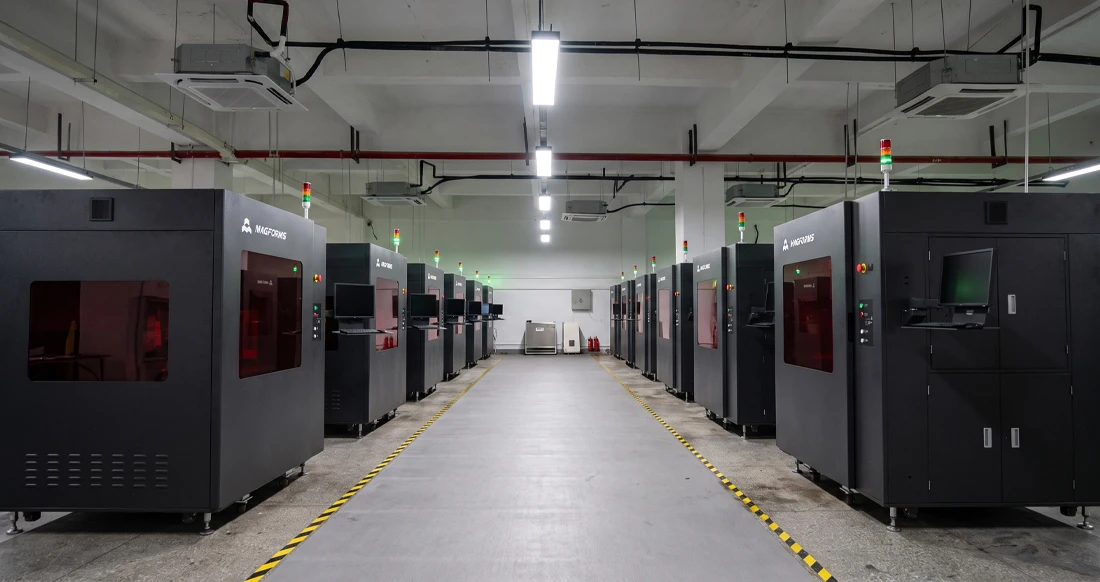
Magforms makes design and manufacture easier.
Popular Blogs
-
 Industry InsightsManufacturing Industry
FDM vs. SLA Printer: Which Technology Is Right for Your Project?
-
 Industry InsightsManufacturing Industry
Top 5 Applications of Industrial 3D Printers in Manufacturing Today
-
 Industry InsightsManufacturing Industry
Why Stereolithography 3D Printers Are Unmatched for Microfluidic Device Prototyping?