What Industries Need Stereolithography 3D Printers Most?
Stereolithography 3D printer technology works best in fields that need high accuracy, complicated geometries, and the ability to make prototypes quickly. The healthcare and dental industries are the first to use SLA for custom implants and surgical guides. The aircraft and automobile industries use SLA for lightweight parts and working prototypes. This advanced additive manufacturing technology is also widely used in research institutions, jewelry factories, and companies that make consumer gadgets because it can produce parts with very accurate dimensions and surfaces.

Understanding Stereolithography 3D Printing Technology
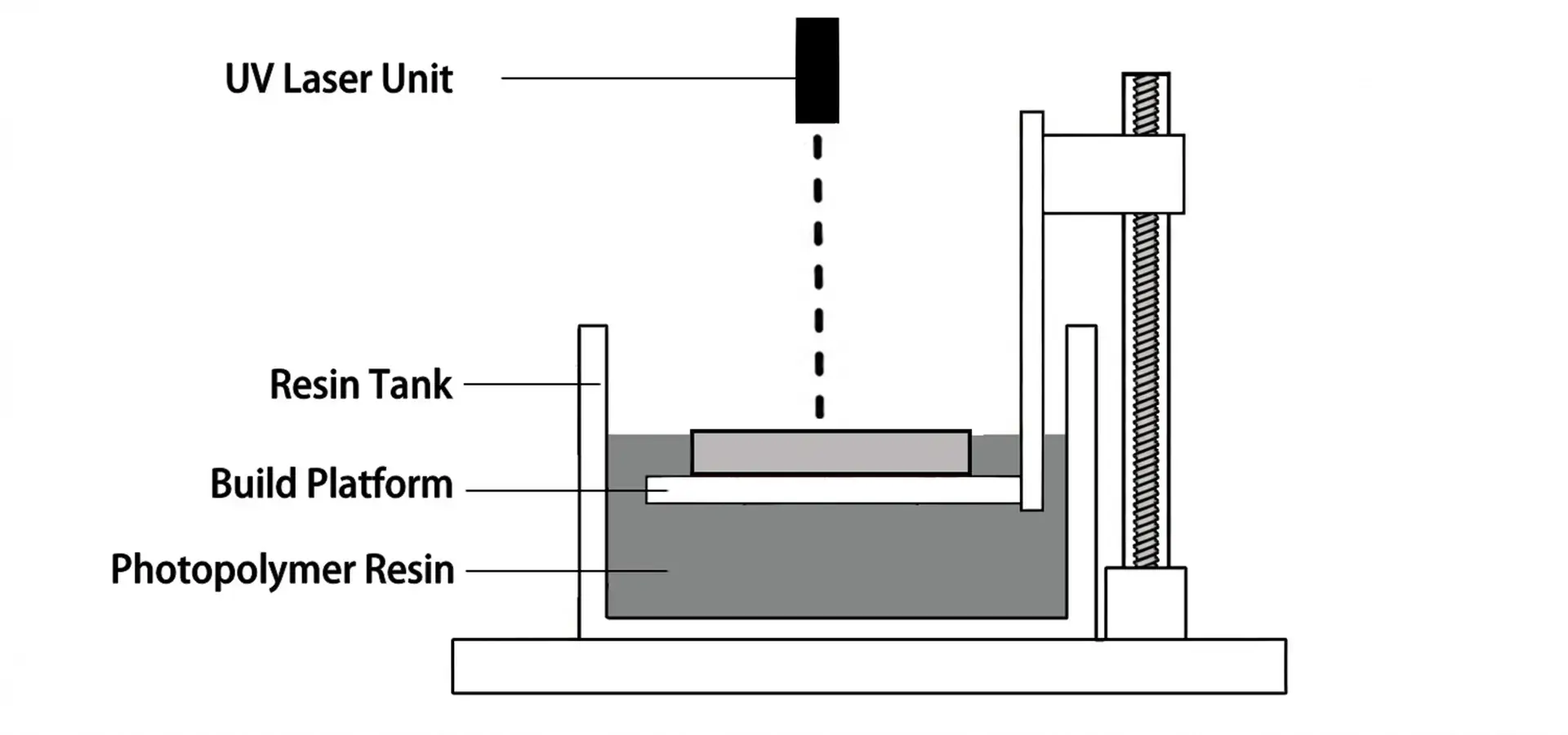
With exact laser curing, stereolithography turns liquid photopolymer material into solid objects, which is a completely new way to make things. A strong UV laser cuts cross-sections of computer-aided design models onto the plastic surface to start this complex process. This sets off photopolymerization reactions that solidify each layer very precisely. Laser systems managed by galvanometers, precise build platforms, and temperature-controlled resin vats are the main parts of this technology. German Scanlab galvanometers and AOC lasers are built into advanced systems like those from Magforms. This makes sure that the beam is placed perfectly and that the power stays on throughout the printing process.
Material Versatility and Applications
Modern Stereolithography 3D printer systems can use a variety of plastic formulas that are made to meet the needs of different industries. Standard resins are great for testing because they can reproduce details very well, and engineering-grade materials have better mechanical qualities than regular thermoplastics. Medical device rules are very strict, but biocompatible resins for Stereolithography 3D printer use meet them. This means they can be used in direct patient contact applications in healthcare fields. High-temperature plastics can handle high temperatures, which is important for parts used in cars and airplanes. Castable wax materials invest casting easier in jewelry and precision manufacturing. Because the materials can be changed, SLA technology can be used in a wide range of industrial settings.
Performance Advantages Over Alternative Technologies
When it comes to accuracy, stereolithography is better than fused deposition modeling. For parts less than 100 mm long, errors can be as low as 0.1 mm. Chemical linking between layers gives the material isotropic strength, which gets rid of the directional weaknesses that come with filament-based printing. Another big benefit is the surface quality. SLA parts have very few layer lines and can be finished straight from the printer with a glass-smooth finish. This gets rid of the need for a lot of post-processing work and lets prototypes be tested right away to see how they work.
Top Industries Leveraging Stereolithography 3D Printers
The healthcare and medical fields use SLA technology the most because they have to meet strict accuracy and biocompatibility standards. For special orthodontic devices, surgery guides, and temporary restorations, dental labs use high-resolution printing. Making implants and devices that fit each patient perfectly has changed the way many types of medical care are done. The aerospace and car businesses use SLA's rapid prototyping services to shorten the time it takes to make new products. Additive manufacturing makes it possible to machine parts with complex internal shapes that were previously impossible to do. Layer-by-layer building methods give designers more freedom when making lightweight structural parts.
Consumer Electronics and Precision Manufacturing
The consumer electronics industry relies on SLA technology a lot to make samples of complicated housing designs and internal parts. For rapid iteration processes to work, printing technologies must be able to repeatedly reproduce small features and keep tolerances very close. Making optimal shapes that fit the human body perfectly is especially helpful for companies that make wearable tech. Castable plastic materials are used by companies that make jewelry and other high-end goods to make master designs for investment casting processes. The high quality of the surface removes the need for manual finishing steps and makes it possible to make complicated geometrical designs that were not possible with traditional manufacturing methods.

Research and Educational Applications
SLA technology is used by academic schools and study facilities because it can be used for a wide range of experiments. Research can be done much faster when prototypes of test tools, specialized lab equipment, and proof-of-concept devices can be made quickly. When materials are compatible with different plastic formulations, experts can look for new uses in many fields.
Choosing the Right SLA 3D Printer for Your Industry Needs
To choose the right SLA tools, you need to carefully think about the build number needs, the accuracy requirements, and the material compatibility needs. When the build environment allows it, desktop systems are great for testing. Industrial-grade machines, on the other hand, can handle bigger parts and higher throughput needs. Some important performance specs are the laser spot width, which sets the minimum feature resolution, and the XY placement accuracy, which has a direct effect on the accuracy of the dimensions. Advanced systems have variable spot-size technology that speeds up the printing process by using bigger spots for filling inside the lines while keeping the fine detail resolution for the features on the outside.
Industrial Versus Desktop Considerations
Industrial Stereolithography 3D printer systems have strong mechanical parts that are made to work continuously in industrial settings. Features like hot glue tanks lower the viscosity of the material for better flow, and advanced peeling systems lower the forces needed to separate layers when they change. When making big or fragile parts with a Stereolithography 3D printer that need to be of uniform quality, these improvements become very important. Desktop units are a cheap way for businesses to try out SLA features without having to make a big cash investment. Even though they can only make small parts at a time, current desktop systems can achieve very high levels of accuracy that make them useful for many testing and small-part production tasks. When artificial intelligence programs are added to advanced systems like Magforms, they make them up to 20% faster by optimizing scanning lines and changing processing parameters. In the past, printing speed and surface quality had to be chosen between each other. These new ideas fix that problem.
Material Ecosystem Considerations
With open-source printer designs, you can choose from a variety of suppliers, giving you more options for saving money. When you use a proprietary system, you can only choose materials that are made by that maker. This can make operations more expensive and limit your ability to do experiments. Handling standards for resins are very different depending on the mixture. For example, some materials need special storage conditions or safety rules. Biocompatible resins usually need strict steps to keep them from getting contaminated, and high-temperature materials might need to be worked on in places that are hot.

How to Maximize ROI with Stereolithography 3D Printers?
To get the best return on investment, SLA technology needs to be strategically added to current processes while operational efficiency is improved. The most obvious benefit is shorter prototype iteration cycles. With standard production methods, tooling changes can take weeks, but with SLA, design validation can happen the same day. To get the most out of the build platform, production planning methods should think about batching suitable parts. Putting several parts into one print job lowers the cost per part while keeping quality standards high. Advanced support creation methods make sure that reliable part removal happens while minimizing the waste of materials.
Operational Efficiency Optimization
Preventive repair plans make equipment last longer and reduce the amount of time it needs to be fixed without warning. Regular testing methods keep the accuracy of the dimensions within the acceptable range, and replacing parts before they break down saves money by avoiding costly production stops. Magforms' technical support team is available 24 hours a day, seven days a week, and guarantees a reaction time of less than four hours for urgent problems. Keeping track of the inventory of materials becomes essential for keeping operations running smoothly. Rotation procedures are needed to keep resin from going to waste because of its short shelf life, and safety stock levels need to balance the costs of having them against the risk of production. Building relationships with dependable providers guarantees that materials will always be available. Training programs for workers make output more efficient and cut down on mistakes. Teams can get reliable results while using as little material as possible if they know the best orientation strategies, support placement methods, and post-processing workflows.
Procurement Guide
A thorough needs assessment that includes both present and expected future needs is the first step in making a successful buying strategy for a Stereolithography 3D printer. Projections for build volumes should take into account changes to the product plan, and precision requirements should match the tolerances of the end-use application. Material compatibility standards often have a bigger impact on choosing a Stereolithography 3D printer than the original cost of buying it. When judging a vendor, you should focus on how well they can provide expert help, how readily available spare parts are, and how they handle software updates. Response times for important support situations are affected by how close service centers are to each other, and guarantee terms have a direct effect on how much something costs to own in total.
Supplier Relationship Management
By forming partnerships with experienced providers, you can get more than just equipment sales. You can also get application knowledge. Technical consulting services help find the best printing settings for different materials and shapes, and training programs help operators get better faster. When you buy goods in bulk, you save money on each item while making sure you always have a supply. Resin and component providers often offer big discounts for yearly contracts, but storage needs to be able to handle large amounts of material without lowering the quality of the material. When doing business around the world, international shipping issues become important because some resin mixtures are limited by laws in some places. When you work with providers who know how to handle foreign logistics, you can avoid delays and problems with compliance.
Conclusion
Stereolithography 3D printing technology solves important industrial problems in many fields that need very precise shapes and complex designs. The industries with the highest acceptance rates are healthcare, aerospace, automobiles, and consumer electronics. This is because their performance needs are most closely aligned with Stereolithography 3D printer capabilities. For adoption to go well, it's important to carefully choose the right Stereolithography 3D printer, make the best use of materials, and plan operations so that you get the best return on your investment and meet quality goals.
FAQ
Which industries benefit most from stereolithography 3D printing technology?
Because of their need for accuracy and biocompatibility, healthcare and dentistry are the first industries to accept new technologies. SLA is used for fast prototyping and making lightweight parts in the aerospace and automotive industries. This technology is also used a lot in research institutions, jewelry factories, and companies that make consumer gadgets because it gives better surface finishes and more accurate measurements.
How does SLA compare to other 3D printing methods?
When compared to fused deposition modeling, stereolithography produces better surface quality and more accurate measurements. Because of the chemical bonds between the layers, the strength is the same everywhere. This gets rid of the specific weaknesses that come with filament-based ways. SLA also makes it possible to get higher detail resolution and better surface finishes with less post-processing.
What maintenance procedures ensure optimal SLA printer performance?
Cleaning the resin tank on a regular basis keeps it from getting dirty and makes sure that the drying properties stay the same. Laser measuring methods keep the dimensions accurate, and leveling the build platform makes sure that the layers stick together properly. Regularly replacing parts that wear out, like FEP films and screens, keeps the print quality high and stops unexpected downtime.
Partner with Magforms for Advanced Stereolithography Solutions
Magforms offers state-of-the-art stereolithography 3D printer technology backed by a lot of business knowledge and full technical support. Our industrial-grade SLA systems use changeable spot-size laser technology to boost speed by 30 to 50 percent while keeping the highest levels of accuracy. We know how hard it is to work in modern industrial settings because we have 22 patents and a strong presence in over 300 businesses around the world.
Our unified method, which combines improved hardware with compatible resin formulas, gets rid of compatibility problems and guarantees consistent results. Get in touch with our tech support team at info@magforms.com to talk about your specific needs and find out how our stereolithography 3D printer solutions can help you speed up the development of your products while still meeting high-quality standards.
References
1. Gibson, Ian, et al. "Additive Manufacturing Technologies: 3D Printing, Rapid Prototyping, and Direct Digital Manufacturing." Springer, 2021.
2. Melchels, Ferry P.W., et al. "A Review on Stereolithography and its Applications in Biomedical Engineering." Biomaterials Journal, Vol. 31, No. 24, 2020.
3. Jacobs, Paul F. "Fundamentals of Stereolithography." Society of Manufacturing Engineers, 2019.
4. Hull, Charles W. "Apparatus for Production of Three-Dimensional Objects by Stereolithography." Patent Documentation and Industrial Applications, 2018.
5. Chartrain, Nicholas A., et al. "A Review on Fabricating Tissue Scaffolds Using Vat Photopolymerization." Acta Biomaterialia, Vol. 74, 2019.
6. Stansbury, Jeffrey W., and Mike J. Idacavage. "3D Printing with Polymers: Challenges Among Expanding Options and Opportunities." Dental Materials Research, Vol. 35, No. 4, 2020.

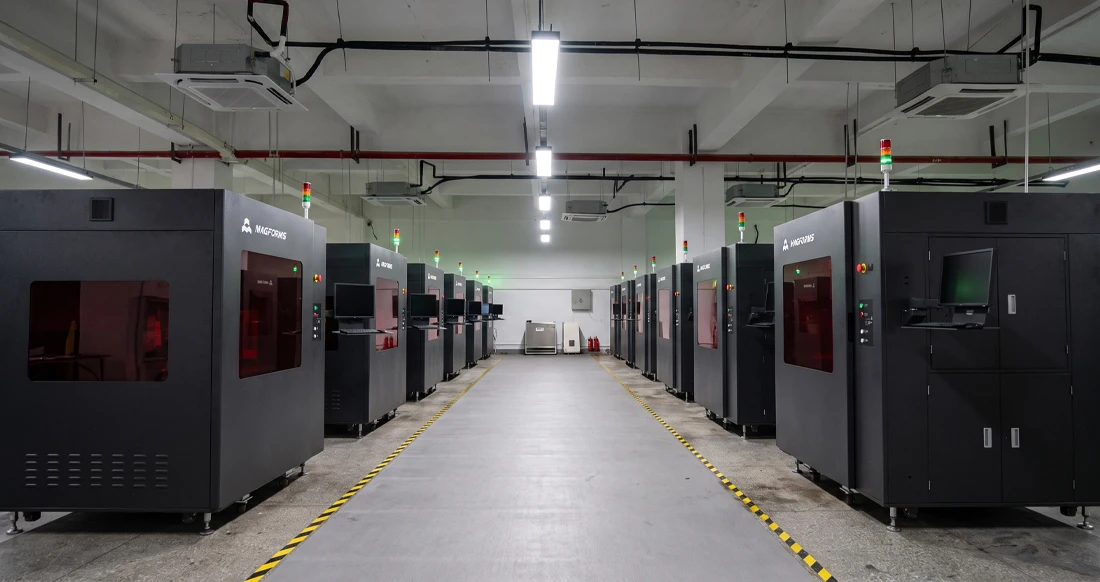
Magforms makes design and manufacture easier.
Popular Blogs
-
 Industry InsightsManufacturing Industry
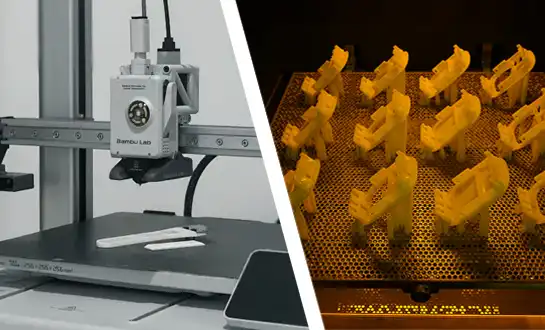
FDM vs. SLA Printer: Which Technology Is Right for Your Project?
-
 Industry InsightsManufacturing Industry
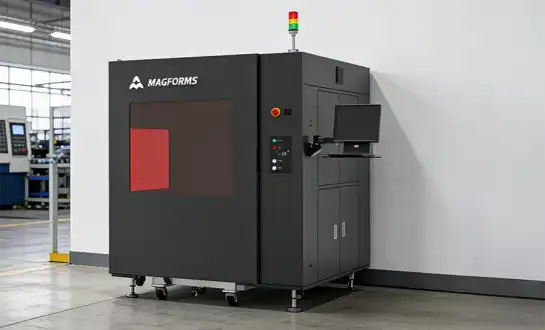
Top 5 Applications of Industrial 3D Printers in Manufacturing Today
-
 Industry InsightsManufacturing Industry
Why Stereolithography 3D Printers Are Unmatched for Microfluidic Device Prototyping?