What Is an Industrial SLA 3D Printer and How Does It Work?
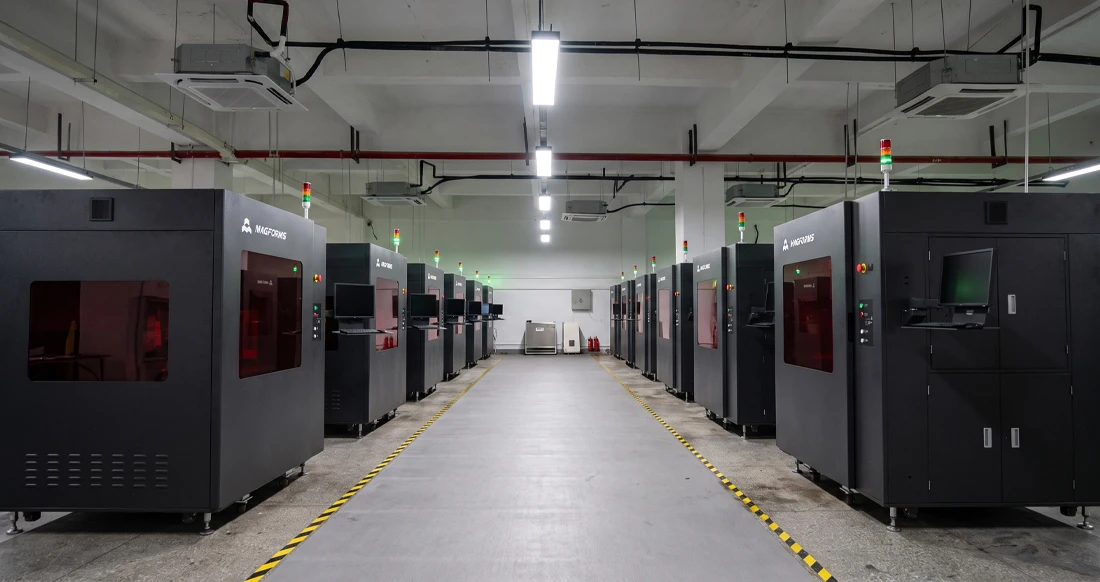
An Industrial SLA 3D Printer is a very accurate additive manufacturing system that uses stereolithography to make three-dimensional things by using a focused laser beam to carefully cure liquid photopolymer resin. Industrial models are different from consumer-grade desktop computers because they have high-power solid-state lasers, advanced galvanometer scanning systems, and large-format temperature-controlled platforms that make them very accurate and stable. This technology turns digital CAD designs into physical parts one layer at a time. This saves makers money on standard tooling costs and lets them get surface finishes that are as good as injection molding. Using industrial SLA systems is like a bridge between fast prototyping and low-to-medium-volume production. They solve problems like high tooling costs, long lead times, and the inability to make complicated shapes with regular machining methods.
Understanding Industrial SLA 3D Printing Technology
Core Principles of Stereolithography
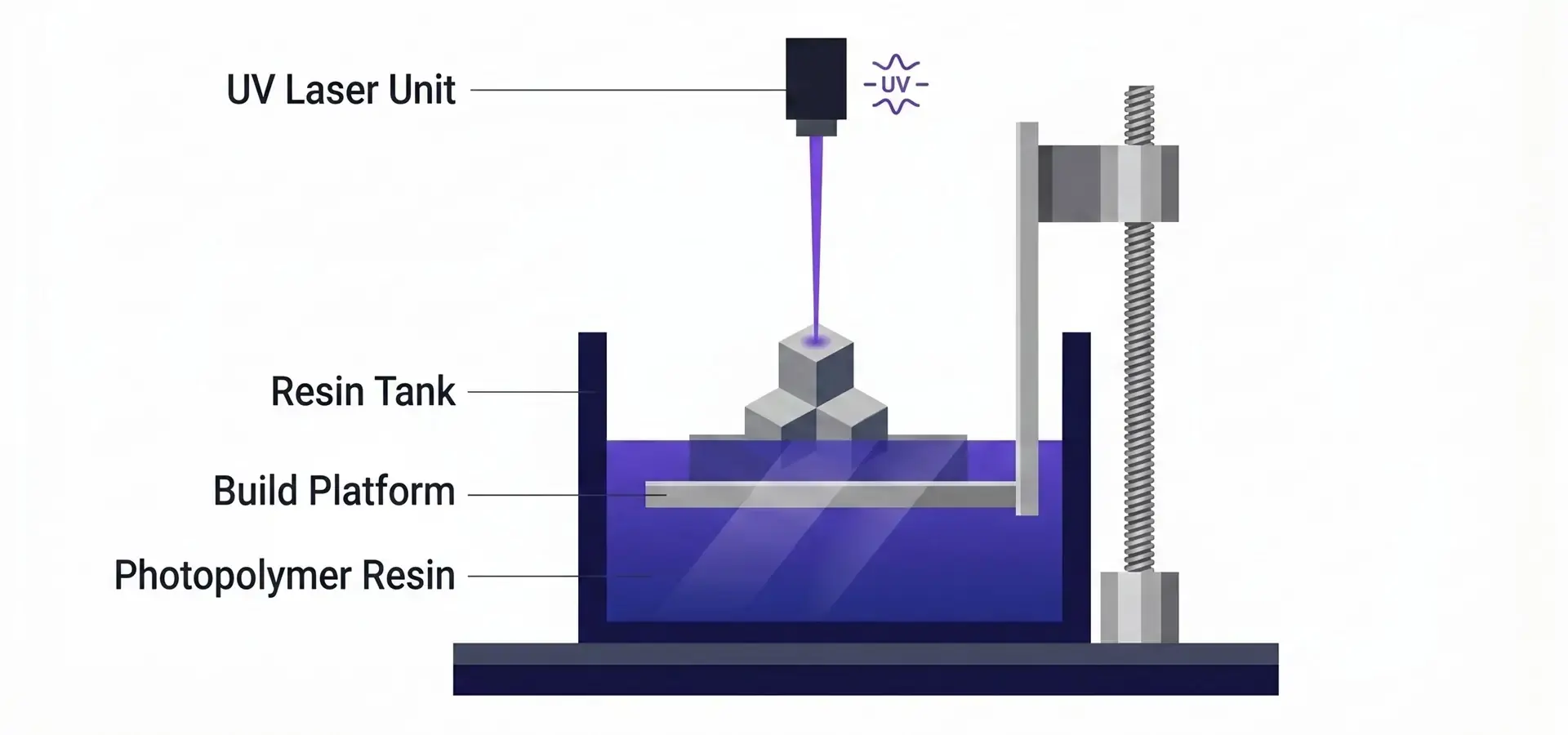
In stereolithography, a UV laser selectively scans across the surface of a liquid resin vat as part of a precise photopolymerization process. The high energy density of the laser starts a chemical reaction that hardens the liquid resin in certain places, making a single layer of the part. As each layer hardens, the build platform moves down slowly, usually by 0.025 mm to 0.10 mm in industrial SLA systems, and a new layer of resin is spread across the surface by a recoater blade or resin leveling system. This loop will keep going for hundreds or thousands of times until the whole part comes out. For this process to work correctly, the laser needs to be stable, the galvanometer needs to be accurate, and the machine needs to be consistent over long print sessions.
👉 how stereolithography (SLA) works in industrial 3D printing
Differences from Desktop and Other Additive Methods
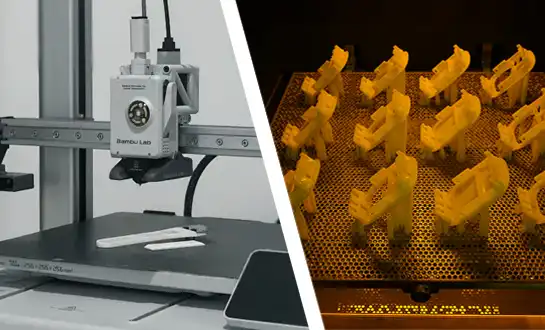
Several important technological advances set industrial systems apart from other types of systems. Desktop resin 3D printers based on mSLA/DLP (LCD masking technologies) typically use LED light sources and LCD masking systems, while SLA systems use a laser-based optical scanning path to selectively cure resin. Industrial SLA models use high-output solid-state UV lasers (e.g., AOC laser sources) that maintain stable energy output for long production cycles, often exceeding 10,000 hours of operation. Adding German Scanlab galvanometers ensures consistent laser spot quality and energy distribution across the entire build area, minimizing edge distortion. This stops the irregular distortion that happens at the edges of smaller systems' build volumes. Industrial platforms also have closed-loop servo motors from companies like Panasonic that allow for platform placement accuracy of ±8 μm and liquid level control typically within sub-50 μm stability ranges depending on system configuration. In terms of surface quality and dimensional accuracy, industrial SLA generally outperforms FDM and offers smoother surface finishes than SLS, particularly in applications requiring fine detail and high-resolution surface definition.
👉 Industrial SLA 3D Printing Systems And Configurations
Material Versatility in Industrial Applications
A lot of different engineering-grade photopolymer resins can be used with Industrial SLA 3D Printers, depending on the performance needs. Standard mixtures include ABS-like resins for useful development, PP-like materials for snap-fit parts, and igh-temperature resins with heat deflection temperatures (HDT) exceeding 100°C. Clear materials let you try how things look and how well they work with light, and flexible formulas make gaskets and seals that work like rubber. Advanced systems have an open material design that lets procurement teams get resins from different suppliers. This means that materials formulated for 355 nm SLA laser systems can often be used without strict material-lock restrictions. This makes it easier for users to try out new formulas as the needs of the industry change, which lowers running costs.
Key Benefits and Industrial Applications of SLA 3D Printing
Superior Precision and Surface Quality
Stereolithography uses a laser-based fixing system to make things that are very accurate in size and have smooth surfaces. Tolerances of ±0.1 mm for parts less than 100 mm long and ±0.1% for larger parts are possible with Industrial SLA 3D Printers. This meets the exacting needs of the aircraft and medical device industries. This is made better by variable laser spot technology, which changes the beam width on the fly while printing. It uses 0.5–0.6 mm spots for quick infill scans and 0.15–0.2 mm micro-spots for small contours and support structures. The stair-step effect between layers is even less noticeable thanks to built-in grayscale processing methods. This makes parts with minimal visible layer lines and surface roughness values typically in the range of ~1–5 μm Ra, depending on geometry, resin type, and exposure parameters. With this level of quality, extra finishing steps are often not needed, which cuts down on both labor costs and time to market.
Accelerated Production Cycles
When it comes to additive manufacturing, speed is a key economic edge. Modern commercial SLA systems use galvanometer scanning systems capable of beam speeds of up to 12 m/s, though most of the time they work at speeds between 6 and 10 m/s. More importantly, smart scanning systems have self-learning algorithms that improve print paths over time by up to 20% depending on geometry and slicing strategy. These algorithms learn from output data that is collected. With this mix of variable spot technology and AI-enhanced pathing, printing is 30–50% faster than with traditional stereolithography methods. These speed gains mean shorter development processes and faster responses to market needs for companies that do quick prototyping or small-batch customization.
Real-World Industrial Applications
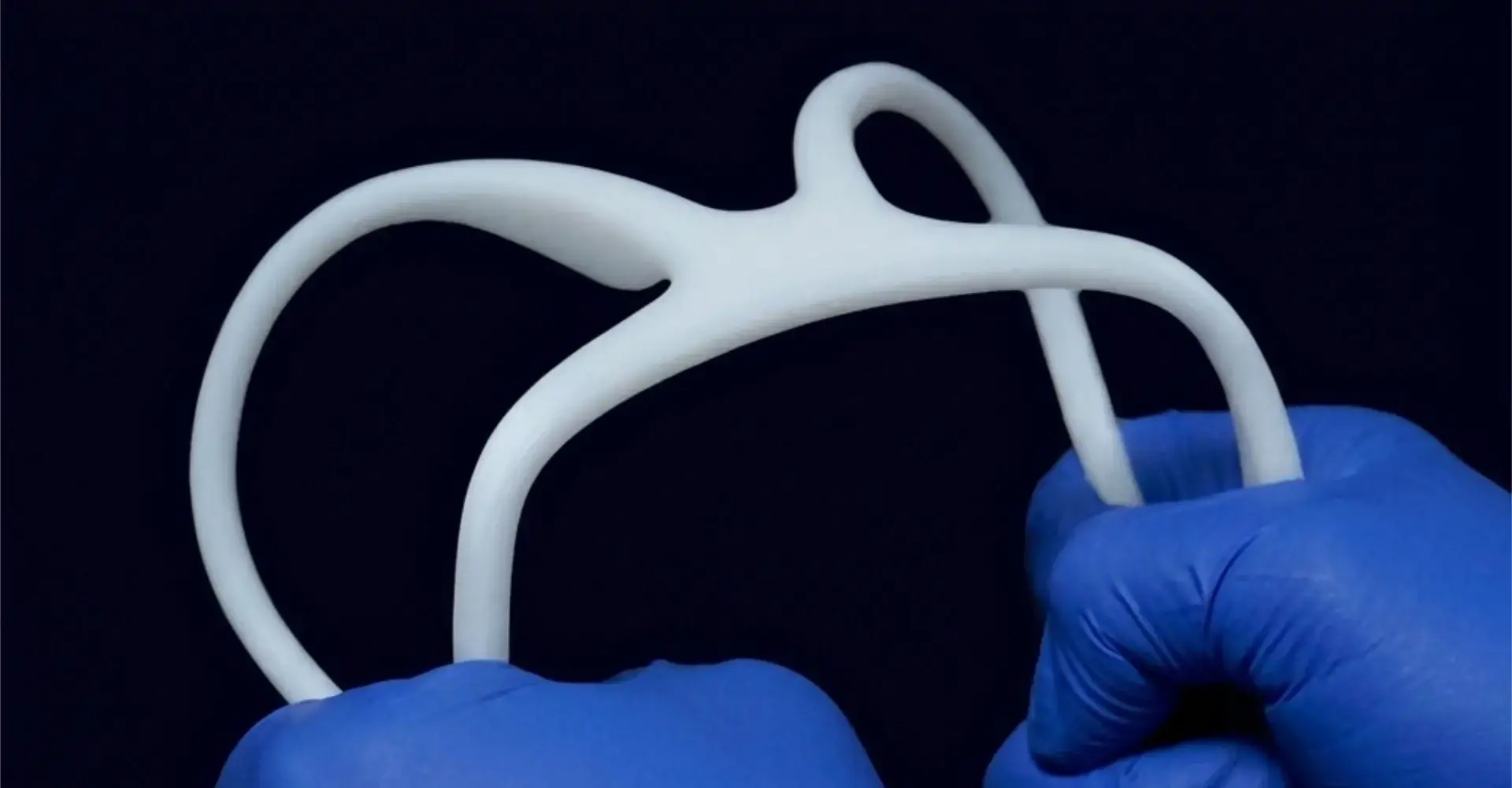
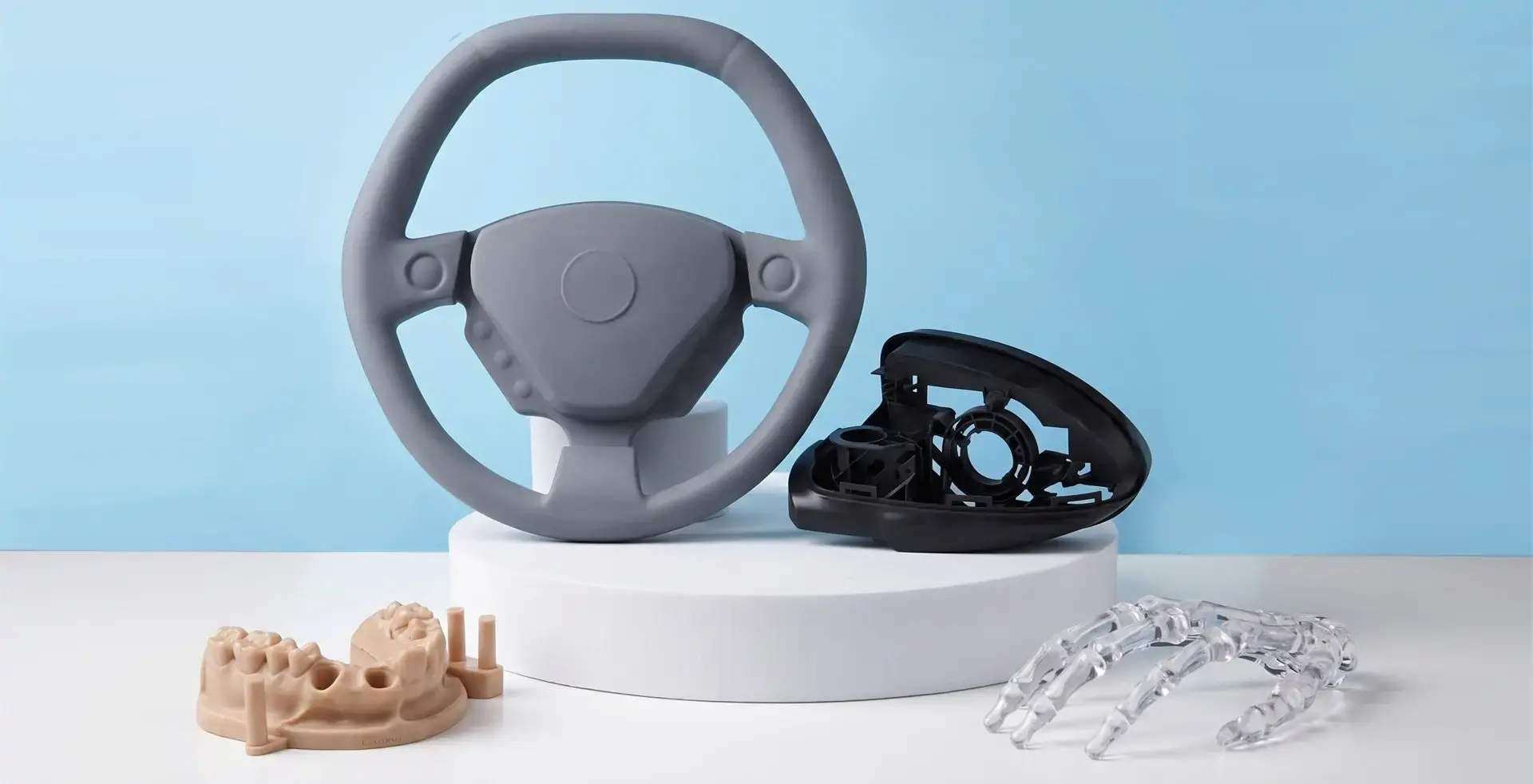
Stereolithography is useful in many types of industry. These systems are used by automotive engineering teams to make big master models for vacuum casting and investment casting. They are also used to make dashboard samples that are tested for airflow and fit before expensive steel tooling is made. In-flight uses, makers make complicated connectors and parts with odd shapes that have to meet strict accuracy standards and allow design changes that would not be possible with traditional machining. Stereolithography is used in the medical and dental fields to make a lot of anatomical surgery guides and dental arch models for clear aligner thermoforming. The biocompatibility and smooth surfaces of these models reduce bacterial adhesion and improve sterilization efficiency. Developers of consumer goods use the technology to make look-and-feel prototypes with surfaces that can be painted or plated right away. This lets focus groups test the products with samples that are similar to the final products. Stereolithography can make parts with better side-wall quality and isotropic mechanical features that are useful for all of these uses.
👉How Automotive Manufacturers Use SLA 3D Printing for Rapid Prototyping
Comparing Industrial SLA 3D Printers: What to Consider When Choosing
Build Volume and Throughput Capacity
To choose the right build envelope, you need to carefully look at the average part size and output number. Entry-level industrial systems may have build sizes of around 300 x 300 x 400 mm, which is good for prototyping small parts and starting up service centers. Mid-range platforms are 450 mm by 450 mm by 500 mm, which means they can fit bigger medical device and car tooling units. Large-format Industrial SLA 3D Printers, like the 600-series and 800-series models, can print parts that are bigger than 600 × 600 × 800 mm. This means that full-size aircraft parts can be made and many parts can be processed at once. Procurement teams have to weigh the need for more builds against the costs of the initial investment and the costs of running the business over time.
Accuracy, Material Compatibility, and System Stability
Technical standards have a direct effect on the quality of output and the efficiency of operations for the Industrial SLA 3D Printer. How well each layer lines up with the one below it is determined by the platform placement accuracy, which is measured in micrometers. Systems that use Panasonic servo motors and HIWIN linear guides from Taiwan can place things with an accuracy of ±8 μm at the platform level and recoat them with an accuracy of less than 0.02 mm. Material compatibility includes more than just the chemistry of the resin. It also includes temperature control systems that keep the flexibility of the resin at its best even when the temperature and humidity change, which stops print failures caused by stiffness. Stability depends on using high-quality parts, like German Scanlab galvanometers, Schneider electrical parts, and Philips UV-blocking lamps, along with a strong mechanical design that includes rigid metal enclosures and vibration-damping base structures designed to minimize mechanical resonance that don't expand too much. They work together to keep failure rates well below the average for the business while the system is running 24 hours a day, seven days a week.
Support Infrastructure and Total Cost of Ownership
For stereolithography technology to be successful in the long run, all of its suppliers must be fully supported. Warranty programs should cover both hardware parts and software updates, and they should have clear rules about how to repair parts and get expert help. Local extra parts stocks cut down on downtime during fixes, and the ability to do diagnostics from a distance speeds up troubleshooting. Training programs that teach workers the right way to handle resin, support generation methods, and post-processing techniques get the most out of the tools and make the parts better. When figuring out the total cost of ownership, you have to think about how much resin is used, how much energy is used, when to do upkeep, and how much money you might save by using less scrap and making things faster.
Procurement Insights: Buying and Maintaining Industrial SLA 3D Printers
Purchase Models and Budget Planning
When planning how to buy things, procurement teams have to make important choices. When you buy something directly from the manufacturer, you own it outright and have the most control over where to get materials and when to make them. You can also spread out the cost of the purchase over a longer period of time, usually five to seven years. Leasing models have cheaper up-front costs and may include maintenance services, but the total amount paid over the lease time is usually more than the price of buying the item directly. Financing for tools as part of a hybrid agreement can help keep working capital high while also increasing asset equity. When making a budget, it's important to include not only the base price of the printer but also the cost of extras like wash stations, air filtering systems, post-curing rooms, and spare resin vats.
Supply Chain Logistics and Inventory Management
For production to keep going, it's important to have reliable access to new parts and materials. To make sure prices are competitive and special formulas are available, procurement strategies should build ties with more than one resin provider. Keeping small amounts of commonly used resins, recoating blades, and optical protection covers on hand on-site keeps production going and keeps too much capital from being stuck in inventory. Standardizing on compatible models makes it easier to handle extra parts and train technicians for businesses that have more than one printer. When buying goods and services from other countries, they need to think about things like border fees, shipping times, and local rules and regulations.
Maintenance Best Practices and Quality Assurance
Routine repair plans protect the quality of prints and make tools last longer. Every day, they have to check the resin levels, look for dirt in the coating processes, and make sure that the glass surfaces stay clean and scratch-free. As part of weekly processes, the Z-axis zero point is calibrated and laser power tests are run to make sure that the energy output stays the same. Deep cleaning once a month gets rid of resin buildup in the corners of the vats and checks that the galvanometers are aligned across the whole build area. As part of quality assurance, dimensions are checked against original CAD files using coordinate measuring machines or 3D scanning. Mechanical properties are tested according to ASTM D638 (tensile strength), D790 (flexural modulus), and D256 (impact resistance) standards. Print success rates are recorded to find process drift before it affects production deliverables.
Trusted Suppliers and Brands for Industrial SLA 3D Printers
Market-Leading Manufacturers and Technology Innovators
In the market for Industrial SLA 3D Printer stereolithography tools, there are many well-known brands that are known for their technology advances and dependability. 3D Systems was one of the first companies to use SLA technology, and they still offer large-format industrial platforms with big stores of materials and global service networks. Formlabs started out as a PC company, but now they also make systems for factories that focus on easy-to-use interfaces and streamlined processes. New Asian providers have come up with competitive alternatives that combine high-quality foreign parts with aggressive pricing strategies. These are especially appealing to buyers who are looking for good deals on prices.
Identifying Authorized Dealers and Distribution Networks
Authorized distributors who offer regional support and proven knowledge are helpful for procurement pros. Authorized sellers usually have certifications from the manufacturers, trained service techs, and extra parts stockpiles that are specific to the area. In the US market, dealer networks reach major industrial hubs in the Southeast, Midwest, and West Coast areas. This makes sure that on-site service calls are answered quickly. Checking the credentials of dealers on maker websites and reading customer reviews on industry boards are two ways to find partners who are more interested in long-term client success than short-term sales relationships.
Building Strategic Supplier Partnerships
Working with reliable suppliers over a long period of time has benefits that go beyond just buying tools. Some of the benefits of strategic relationships are better prices on consumables, early access to new products, the chance to try new materials in beta programs, and offers to technical training classes. Time-to-value can be sped up by getting application-specific advice from suppliers who have experience in certain industry areas, like making tools for cars or medical devices. Regular business reviews with supplier account managers give you a chance to talk about problems with output, look into upgrading equipment, and arrange service level agreements that are specific to your needs.
Conclusion
Industrial SLA 3D printing has grown from a new way to make prototypes to a technology that can be used in mass production and meet important manufacturing needs in the medical, military, and consumer electronics industries. Stereolithography systems are essential for businesses that want to cut down on tooling costs, speed up development cycles, and make complex shapes that aren't possible with traditional methods. They can do all of this with micron-level accuracy, smooth surface finishes, and a wide range of materials. For buying to go well, technical requirements, supplier skills, and the total cost of ownership must all be carefully looked at. Procurement teams can get equipment that meets consistent quality standards, reduces downtime, and reacts to changing production needs by working with well-known makers and approved distributors. Knowing these basics gives people who make decisions the confidence to use stereolithography in their industrial processes.
FAQ
What distinguishes industrial systems from desktop SLA printers?
Industrial platforms have high-power solid-state lasers, accurate galvanometers, and servo-driven motion systems that make long production runs more accurate and reliable. Compared to consumer-grade tools, these systems can handle bigger build volumes and a wider range of materials.
How does dimensional accuracy compare to CNC machining?
CNC machining can achieve higher dimensional precision in certain geometries, particularly for functional metal parts, but industrial stereolithography can get as accurate as ±0.1 mm, which is good enough for fit-form-function testing. It also has benefits for internal holes and complex undercuts that are hard to do with traditional methods.
What ongoing maintenance do these systems require?
Daily checks of the resin level, weekly Z-axis adjustment, and a deep cleaning once a month keep the print quality high. Laser power verification and galvanometer alignment make sure that the output is always the same. Replacing the recoating blades and optical safety covers on a regular basis stops the performance from slowly going downhill.
Can parts withstand outdoor environmental exposure?
Standard photopolymer plastics are sensitive to UV light, so they need protective coats when used outside. There are UV-stabilized resin formulas, but for important uses, it is still best to check them with ASTM G154 aging tests.
Partner with Magforms for Advanced Industrial SLA 3D Printer Solutions
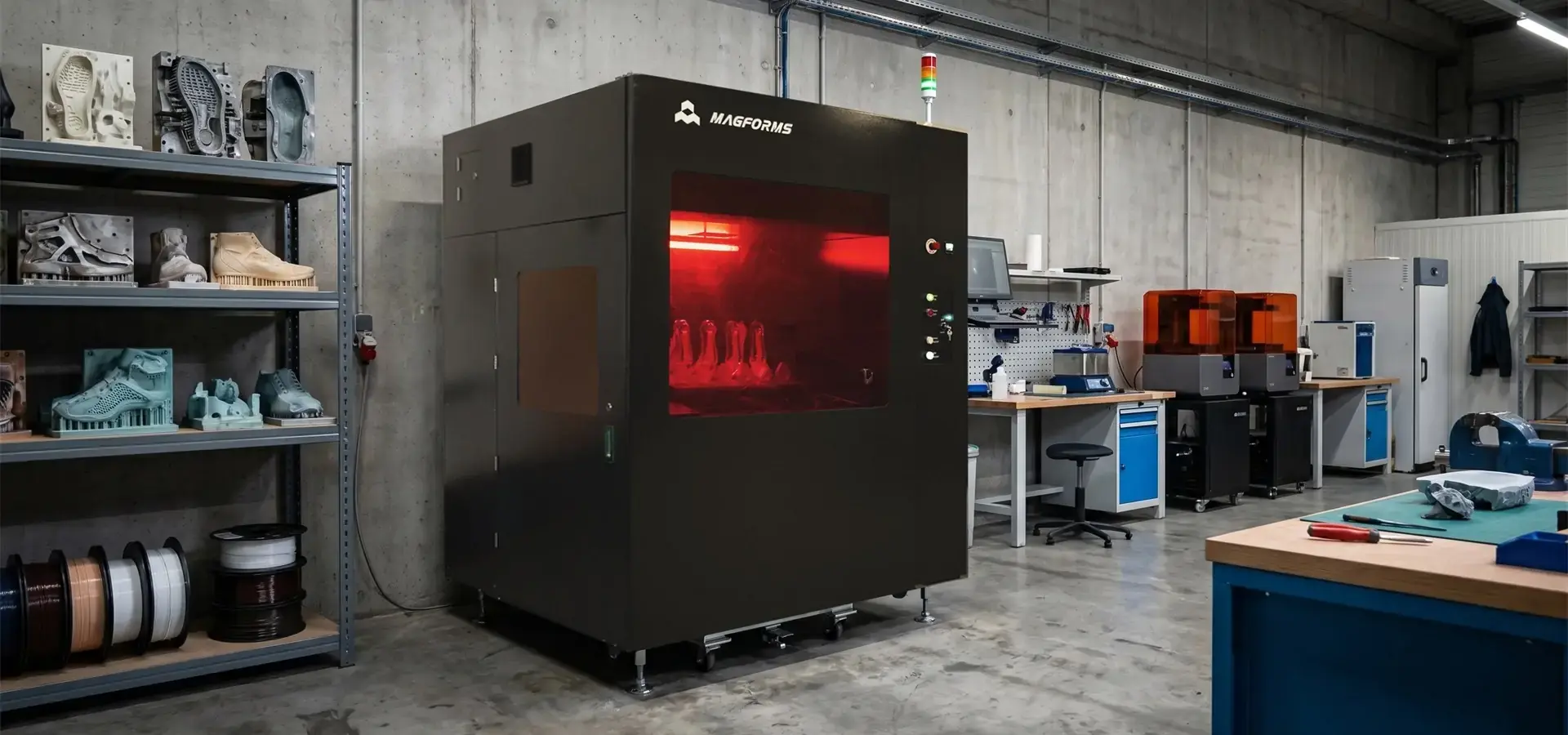
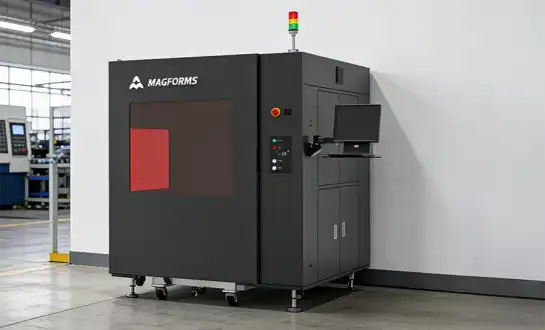
Magforms offers complete stereolithography solutions that combine its own tools with photopolymer materials that have been optimized. These solutions solve the main problems that makers have when they need to use high-precision, stable additive manufacturing. With AOC lasers, German Scanlab galvanometers, and Panasonic servo motors, our systems can achieve pointing accuracy of ±8 μm and scanning speeds of up to 12 m/s. Magforms serves over 300 businesses around the world through combined material and equipment supply chains. Its 22 patents and 30 registered trademarks support its commitment to constant innovation. Our professional after-sales team answers technical questions within 24 hours, which keeps output from being held up by delays that can happen with slower support services. Contact us at info@magforms.com to talk to one of our procurement experts about your unique needs and find out how our Industrial SLA 3D Printer options can help you run your manufacturing operations more efficiently.
References
1. Gibson, I., Rosen, D., and Stucker, B. (2015). Additive Manufacturing Technologies: 3D Printing, Rapid Prototyping, and Direct Digital Manufacturing. Springer.
2. Jacobs, P. F. (1992). Rapid Prototyping & Manufacturing: Fundamentals of Stereolithography. Society of Manufacturing Engineers.
3. ASTM International. (2021). ASTM F2792-12a: Standard Terminology for Additive Manufacturing Technologies. West Conshohocken, PA.
4. Chua, C. K., and Leong, K. F. (2017). 3D Printing and Additive Manufacturing: Principles and Applications. World Scientific Publishing.
5. Wohlers, T. (2023). Wohlers Report 2023: 3D Printing and Additive Manufacturing Global State of the Industry. Wohlers Associates.
6. Bourell, D. L., et al. (2017). Materials for Additive Manufacturing. CIRP Annals - Manufacturing Technology, 66(2), 659-681.

Magforms makes design and manufacture easier.
Popular Blogs
-
 Industry InsightsManufacturing Industry
FDM vs. SLA Printer: Which Technology Is Right for Your Project?
-
 Industry InsightsManufacturing Industry
Top 5 Applications of Industrial 3D Printers in Manufacturing Today
-
 Industry InsightsManufacturing Industry
Why Stereolithography 3D Printers Are Unmatched for Microfluidic Device Prototyping?