What Makes a Fast Resin 3D Printer Truly Efficient?
A really fast resin 3D printer takes into account many technical factors to consistently produce high-quality work in short production times. This efficiency comes from advanced vat photopolymerization technologies, including high-transmittance monochrome LCD panels (mSLA), optimized release films (such as FEP or nFEP), and precise motion control systems that reduce peel forces and layer separation time. These printers can achieve vertical print speeds exceeding 100 mm per hour under optimized conditions, significantly outperforming traditional laser-based SLA systems. They can achieve dimensional accuracy typically within ±20–50 microns, depending on calibration, material, and environmental conditions. To be efficient, the material and hardware must work together smoothly, the optical systems must be strong and provide even UV light, and predictive repair methods must be used to keep downtime to a minimum. When companies test these machines, they need to look at more than just the speed ratings. They need to know how heat management, resin chemistry, and closed-loop feedback systems work together to affect real-world output and part consistency in various production settings.
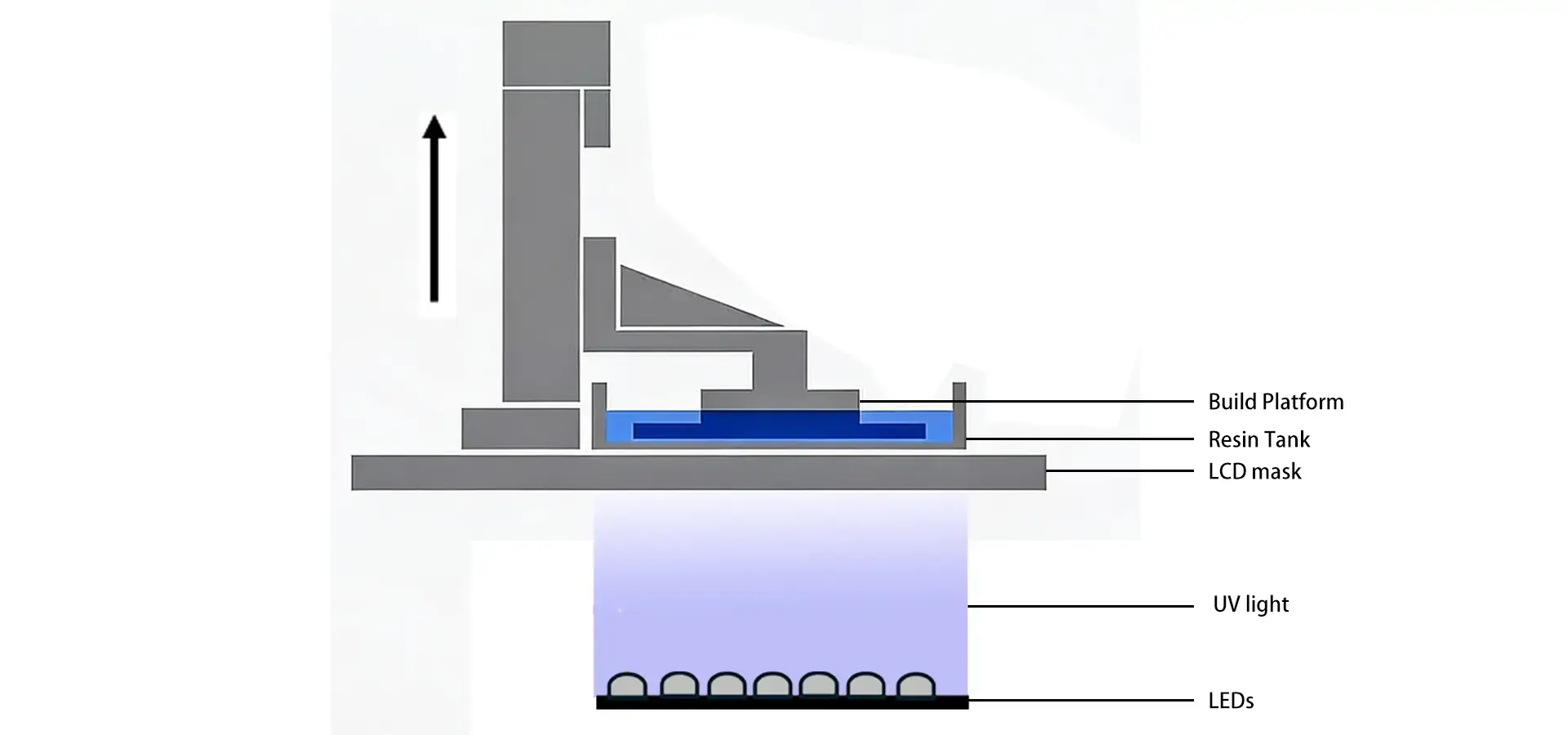
How Fast Resin 3D Printers Work: Technology and Key Components?
Understanding the basic functioning of machines allows you to comprehend why certain machines perform better than others in demanding industrial environments, where every minute is crucial for generating revenue.
Core Photopolymerization Technologies
There are three main types of light-curing architectures used by modern fast resin 3D printers: SLA (laser scanning), DLP (digital light projection), and mSLA (LCD-based masking systems). MSLA systems use high-transmittance monochrome LCD panels to selectively mask UV light, curing entire layers simultaneously. These systems are cost-effective and provide sufficient resolution for applications such as dental models and consumer electronics prototyping. DLP printers use digital micromirror device (DMD) chips to project entire layer images with high optical precision, enabling rapid curing and consistent pixel accuracy. MSLA systems use UV LED backlight arrays combined with LCD masking layers to ensure uniform exposure across the build platform. This technology represents a balance between high speed and cost efficiency.
Each architecture handles different output events in a unique manner. DLP works best when accuracy in measurements and a smooth surface are essential. This is why it is widely used for high-precision aerospace components, prototyping, and medical surgical guides. MSLA systems give service centers the flexibility to handle a wide range of applications, from custom shoe prototypes to models of car interiors. MSLA finds a beneficial mix between meeting the high output needs of orthodontic aligners and keeping quality standards high enough to pass government inspection.
Resin Material Selection and Compatibility
The chemicals in photopolymer resins affect their curing speed and the final product. Standard photopolymer resins cure rapidly under UV exposure due to photoinitiators that trigger polymer cross-linking reactions. Specialized oligomers and photoinitiators are used in engineering-grade formulations to balance reactivity with post-cure strength. This lets printed parts survive stress tests on par with plastics that are injected. When flexibility is more important than stiffness, like in gasket samples or housings for wearable tech, flexible resins are the way to go.
When buying teams, look at how long equipment will last and how much it costs to run, material fit becomes crucial. When printers can only use private resins, they become manufacturer-locked in, which raises the cost of consumables over time. Manufacturers can find cheaper alternatives or make special mixtures for specific uses with open-material platforms. This is especially helpful for medical device companies that need biocompatible materials or car makers that need to test heat-resistant compounds. Low-viscosity resins improve recoating speed between layers, reducing cycle time and enabling higher overall print throughput.
Balancing Speed and Resolution
To get fast output while keeping the accuracy of the dimensions, you have to carefully calibrate many factors that depend on each other. The vertical resolution is based on the width of the layers. Thinner layers can catch finer details but take longer to print. When the surface quality allows, fast machines use thicker layers, but when important features need to be made, they switch to finer steps. Z-axis acceleration needs to hit high enough speeds to keep rest time between layers to a minimum, but going too fast causes mechanical vibrations that reduce positional accuracy.
Optical systems are just as important. UV light sources with intensities typically above 5–10 mW/cm² enable faster polymerization, especially for engineering-grade or low-reactivity resins. Collimated optics keep spot sizes the same across the whole build area. This stops the dimensional loss that happens at the edges of a lower-quality platform. Modern machines have real-time tracking that changes exposure times based on cross-sectional shape. This way, more energy is sent to dense areas while delicate ones are kept from over-curing.
Maintenance Protocols and Downtime Prevention
To keep working at their best, resin printers need regular maintenance. Manufacturers set replacement intervals based on square meters of printed surface area rather than calendar time because release films are repeatedly peeled, which weakens their clarity and flexibility. Vat cleaning keeps partly cured residue from getting into new amounts of resin, which would cause problems in the middle of the print if it happened that way. Optical parts need to be checked on a regular basis to get rid of resin spray that blocks UV light and makes the cure uneven.
Predictive repair plans cut down on interruptions that come up out of the blue. Monitoring systems keep an eye on things like peel force, motor power draw, and temperature changes to find parts that are getting close to breaking down. When old linear rails are replaced before they cause backlash, whole print runs don't have to be reprinted. Firmware bugs that could cause false error messages or wrong exposure time can be fixed with software changes. These proactive steps set professional-grade tools apart from machines made for home use that can't do diagnostics.
Troubleshooting Common Operational Challenges
Even systems that are well taken care of sometimes have problems that need to be systematically diagnosed. Platform binding problems are a common cause of failed prints. Improving first-layer bonding can be done by changing how the platforms are leveled or by using rough build plates. Parts that are warped show that there are differences in temperature in the resin pot; heating elements help maintain consistent resin viscosity, improving curing uniformity. Layer moving is a sign of technical issues, such as Z-axis lead screws experiencing insufficient lubrication or backlash.
Bugs in software show up in different ways. Slicing mistakes make G-code that isn't correct, which causes build platform collisions or failed layer positioning. Communication problems happen during the print process when control boards and slicer software versions are incompatible with firmware. These problems can be kept to a minimum by keeping software ecosystems up to date and checking slicing profiles against known-good parameters. Technical help must respond quickly; waiting for instructions from the manufacturer can cause production to stop and dates for time-sensitive projects to be missed.
Comparing Fast Resin 3D Printing with Other Methods: Why Efficiency Matters
To choose the best method for additive manufacturing, you need to know how the different technologies fit with your output goals and budget.
Benchmarking Against FDM Filament Printing
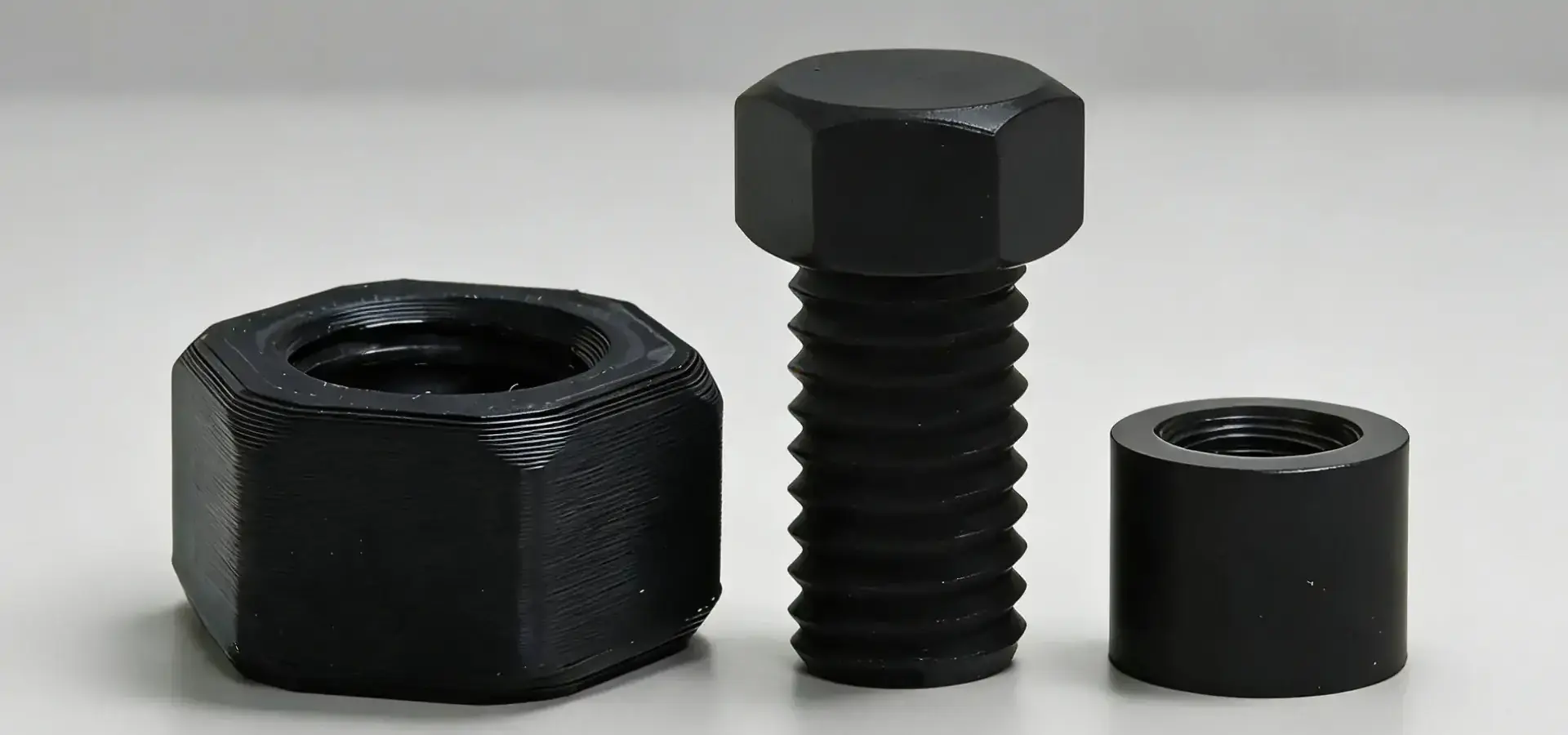
For big structural parts and quick idea prototypes, fused deposition modeling is still popular, but resin-based methods are much better for precise tasks. The quality of the surface finish varies a lot. For example, FDM layer lines can be seen even with fine nozzles, so a lot of cleaning and painting is needed after processing. Resin printers make smooth surfaces right on the build platform, which cuts down on work costs and speeds up the time it takes to get shop models to market. Comparing dimensional tolerances also works in favor of photopolymerization. It can be challenging for standard FDM systems to consistently maintain tolerances within ±0.05–0.1 mm due to thermal shrinkage and extrusion variability.
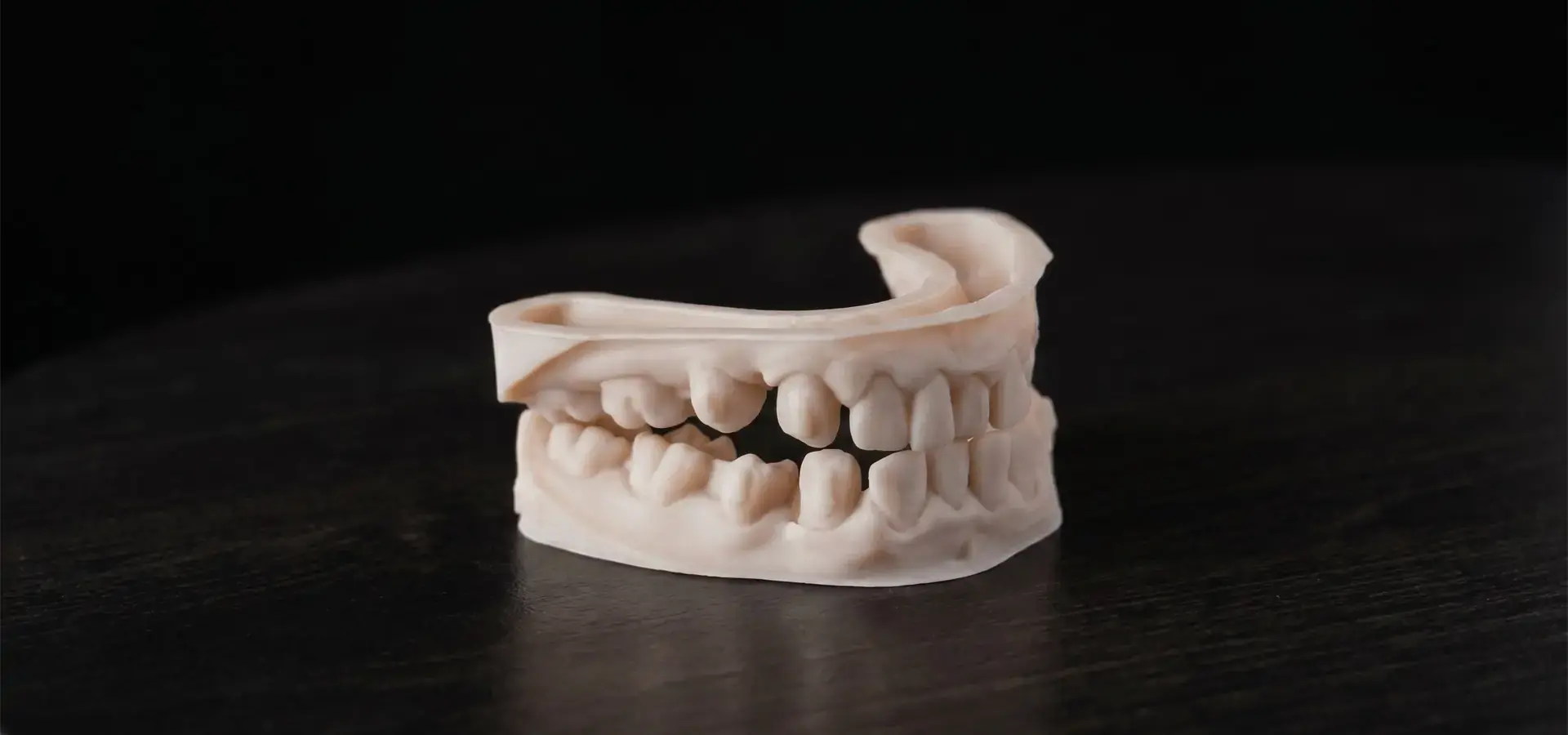
Speed dynamics change based on the shape of the part. FDM works best when printing structures with sparse filling, where the nozzle trip paths stay efficient. Dense shapes with solid cross-sections slow down FDM a lot, but resin systems cure entire layers simultaneously rather than tracing geometries point-by-point, making them less sensitive to part complexity. An FDM printer might take eight hours to create a dental arch with a lot of intricate physical detail, while a fast resin 3D printer can do it in less than two hours. These time savings add up over large amounts of work—a service center that handles twenty orders a day gets a lot of capacity without having to buy more equipment.
Performance Metrics Versus Traditional SLA Systems
Older stereolithography technology was the first to use resin printing, but it was slow because it used laser scanning devices. A traditional SLA machine scans each layer point-by-point using a laser, making print time dependent on cross-sectional complexity. These days, MSLA and DLP-based fast resin 3D printers cure entire layers at once, which cuts cycle times by three to five times. When making big batches, this design difference becomes clear: printing fifty orthodontic models at the same time is cost-effective with modern systems but impossible with older SLA technology.
Along with these speed gains come better reliability. In the past, SLA systems needed to be recalibrated often because the galvanometer mirrors would move out of place, causing mistakes in measurements that made it impossible to use accurate parts. Newer MSLA and DLP systems eliminate most moving optical components, unlike traditional SLA systems that rely on galvanometer-driven laser scanning. Instead, they use static LED grids and set masks that keep working the same way for thousands of hours of printing. When mechanical complexity goes down, upkeep costs go down, and catastrophic breakdowns happen less often during important production runs.
Real-World Case Studies Demonstrating ROI
A dental lab that works with orthodontic offices uses fast Resin 3D printer solutions to make models of aligners, which cuts the time it takes to make them from three days to the same day. This feature made chairside fits possible, which made patients happier and cut down on shipping costs and delays. The lab found payback times shorter than eighteen months based only on higher-order volumes made possible by fast delivery.
Instead of hiring someone else to do the machining, a car development department printed unique interior trim models in-house using resin. Iteration rounds were cut from two weeks to forty-eight hours, which allowed design teams to look at five different versions of an idea in the time they had for just one. Compared to CNC cutting, the cost per iteration dropped by 70%, and less material was wasted because bad designs only needed to be thrown away as resin instead of partly machined metal stock.
A jewelry maker used high-speed fast resin 3D printer tools to make casting masters, which allowed them to increase production from thirty pieces per week to over two hundred without hiring more people. The printers worked nonstop during weekend shifts, making the best use of the resources available and keeping the level of detail needed for setting gemstones and engraving designs. This rise in volume made it possible to start new product lines that would not have been possible before because of cost issues.
Selecting the Best Fast Resin 3D Printer for Business Needs
When making procurement choices, people have to weigh the current technical needs against long-term practical and financial needs.
Critical Evaluation Criteria
The build volume capacity tells you how many and what size parts can be made in a single print run. Many dental models can be made at once on 300 mm frames by large-format machines. These machines can also print large car parts all at once. Smaller sizes are good for service companies that don't have a lot of room or for businesses that want to make sure their equipment is redundant over each machine's capacity. It's important to carefully look over speed specs, since makers may say that peak speeds can only be reached with their own fast resins under ideal conditions, but in practice, throughput is much lower when standard materials are used.
Resolution accuracy includes both the size of the XY pixels and the number of layers added along the Z line. Fine details need an XY precision of less than 30 microns for things like detailed jewelry or microfluidic devices, but 50-micron pixels are fine for bigger mechanical parts. Material compatibility breadth affects operating freedom; machines that support third-party resins give you ways to control costs and access to custom formulations that equipment makers don't make. While open-source firmware platforms can be changed to fit specific production processes, private systems usually offer better user experiences and full expert support. Selecting the best fast resin 3D printer for business needs requires balancing these immediate criteria.
After-Sales Support and Service Infrastructure
Manufacturers' faith in the longevity of gear is shown by warranties. Full coverage for at least two years, which includes printheads, motors, and optical parts, shows strong engineering. When production plans depend on continuous uptime, service reaction times become very important. Same-day troubleshooting and fast shipping of parts keep revenue losses from equipment delays to a minimum. Technical training programs help operators become more skilled faster, which cuts down on waste caused by mistakes made by users during the initial stages of rollout.
The software environments that surround printers have a big effect on how efficiently work gets done. New users can easily set up their machines because the slicing tools are easy to use and have parametric profiles for popular materials. Connecting to the cloud lets you handle print queues and keep an eye on jobs from afar across multiple machines. This is useful for service bureaus that are in charge of arranging a wide range of client projects. Manufacturers' continued commitment goes beyond the original sale deals, as shown by regular firmware updates that fix bugs and improve performance.
Comparative Brand Assessment
Several manufacturers have built good reputations in a variety of market areas. Formlabs' equipment is designed to be easy for anyone to use and has a clean industrial look that makes it appealing to medical and dental offices that value dependability over customization. Anycubic and Elegoo are aimed at price-conscious buyers who want good performance at a reasonable price. However, their help resources may not be as complete as those for premium names. Users who are highly savvy and value open-material flexibility and the ability to make changes are drawn to Peopoly machines.
The Photon line from different makers offers competitive specs at moderate prices, making it ideal for small production environments and new service providers. Checking out approved wholesalers makes sure you can get genuine parts and valid warranties. Gray-market equipment may have low prices, but it doesn't come with maker support channels. Checking a supplier's technical knowledge, supply of consumables, and customer references from similar industry uses are all important parts of figuring out how trustworthy they are.
Financial Planning and Procurement Strategies
The cost of buying equipment is only one part of the total price of owning it. Consumable budgets need to include how much resin is used, new films, and cleaning solvents based on how much is expected to be used each month. Different models use a lot of different amounts of energy. Running poor units for a long time raises your electricity costs over time. Leasing tools or negotiating credit terms with vendors are both better ways to handle cash flow because they let businesses use their money for a wider range of operational needs instead of just buying one asset.
When buying more than one unit, you can get better prices, but companies need to decide if having redundant equipment or a mix of different printer types is better for production robustness. Enterprise-level deals may include things like cheaper consumables, longer warranties, and faster technical help that make up for higher starting costs by lowering the long-term costs of doing business. To get a correct ROI, you need to model increased production capacity, lower post-processing labor costs, and income possibilities made possible by shorter wait times.
Optimizing Operational Efficiency with Fast Resin 3D Printers
To get the most out of your equipment purchase, you need to improve your process in a planned way and keep an eye on its performance all the time. Improving the operational efficiency with the fast resin 3D printer involves systematic refinement.
Identifying Performance Bottlenecks
Print mistakes lose both paper and machine time, so it's important to find out why they happen. Some common problems are not enough platform binding, which causes parts to come loose, not enough curing, which makes parts flimsy and easy to break when handled, and too much curing, which causes dimensions to grow beyond what is allowed. By carefully changing exposure times, lift speeds, and off-delay factors and keeping records of the outcomes, institutional knowledge is built, which cuts down on the need for trial-and-error testing.
Post-processing needs have a big effect on the total time it takes to make something. Taking off the support, cleaning, and UV post-curing can take twice as much time and effort per part as the active print length. By automating these steps with built-in washing stations and curing rooms, consistent results are maintained while workers are freed up to do more important tasks like inspecting quality and coordinating orders. Workflow problems can also happen when resin inventories are not managed well; when certain formulations run out in the middle of a project, production has to stop, and the deadline has to be extended.
Advanced Software Solutions
Advanced slicing software instantly finds the best print settings by analyzing the shape of the part. Algorithms figure out which features need thick supports, like overhanging features, and which ones, like vertical walls, need minimal scaffolds. This cuts down on material waste and post-processing work. Adaptive layer thickness changes the resolution on the fly, using fine layers only where surface quality is important and larger steps on internal structures to speed up the finishing process. These smart methods take very little help from the user but get results that could only be reached before by expertly tuning by hand.
Production management tools make sure that many printers work together as a single production cell. Operators put jobs on available machines based on the state of the present queue and the compatibility of the materials, which makes the best use of the machines. Remote tracking lets staff know when prints are finished or when there is a mistake that needs attention, so machines don't sit idle for long periods of time while they wait for an operator to fix them. Data analytics keep track of printer fleets' success rates, material consumption trends, and repair plans. This helps with making smart choices about whether to add more capacity or retire equipment.
Sustainable Operations Practices
Getting rid of resin trash has effects on both the environment and the law. In many places, uncured liquid resin has to be handled as dangerous garbage, which means it has to be collected and thrown away properly, which costs money and time. Using resin recycle systems that filter and recover extra material cuts down on trash and costs for consumables. By using UV light to cure used plastic before throwing it away, liquid waste can be turned into solid forms that can be handled by standard industrial waste streams.
Equipment that uses less energy lowers running costs and supports companies' efforts to be more environmentally friendly, which is something that procurement managers are increasingly appreciating. LED light sources use a lot less electricity than older lamp technologies and don't make as much heat, so they don't need active cooling systems. Changing print plans so that jobs are combined and warming times are cut down even more cuts down on energy waste. Adopting plant-based resins made from green feedstocks instead of fuel sources helps businesses meet their environmental responsibility goals without affecting the mechanical qualities of most uses.
Future Trends Shaping Fast Resin 3D Printing Efficiency
It is expected that new technologies will keep making additive manufacturing better, which will allow it to be used in more areas. Future trends will significantly affect how well a fast resin 3D printer works.
Next-Generation Hardware Innovations
Improvements to light engines focus on making irradiance more regular and intense so that engineering-grade plastics can cure faster. Micro-LED arrays with individually adjustable pixels can provide dynamic exposure patterns that improve energy delivery based on curing sensors' real-time input. Volumetric printing technologies aim to cure entire 3D geometries simultaneously using computed light fields, rather than layer-by-layer exposure. For the right shapes, this could cut print times from hours to minutes.
Through oxygen-permeable membranes (e.g., CLIP technology) create a controlled "dead zone" that minimizes adhesion forces and enables continuous printing. These "continuous printing" methods let the Z-axis move without stopping, which greatly increases output while lowering mechanical stress on sensitive structures. Material handling technology, such as self-refilling resin systems and automatic cleaning of the build platform, makes it possible for production runs that last for several days without any human help.
Revolutionary Resin Chemistry
Material scientists are working on photopolymers whose qualities can be changed by using different secondary hardening conditions. Parts could be printed with bendable properties that make them easy to remove supports, and then they could be heated up after printing to make them hard. Multi-material resins with useful particles suspended in them could be used to make parts with integrated conductivity, magnetic properties, or color gradients that don't need to be printed over and over again.
Biocompatible formulations keep adding new medical uses. For example, plastics are now better for permanent implants than just surgery planning models. Adding antimicrobials to tooth resin could lower the chance of getting infections from orthodontic devices. Ceramic-loaded plastics that can handle sintering processes make it possible to make advanced ceramics with additive manufacturing, which used to need expensive, specialized equipment.
AI-Assisted Production Optimization
Machine learning systems that have been taught on thousands of successful prints can figure out the best settings for shapes they haven't seen before, which cuts down on setup time and failed attempts. Computer vision systems that watch the progress of prints in real time can spot oddities like support failures or incomplete layer drying, which stop jobs before small problems become major failures. Predictive maintenance models look at sensor data to predict when parts will break days or weeks in advance. They then schedule replacements for those parts during planned downtime so that production doesn't stop without warning.
Generative design tools make part shapes that work best with additive manufacturing. They do this by making strong structures, using materials efficiently, and can be printed. These designs made by AI often have complex shapes that can't be machined in the usual way but are perfect for plastic printing. As these tools get better, people who don't know a lot about additive manufacturing will be able to use the technology well.
Implications for Manufacturing Paradigms
As print speeds get closer to injection casting cycle times for small production runs, just-in-time production becomes more practical. Instead of keeping thousands of SKUs in storage, manufacturers can keep very little inventory on hand by making new parts as needed. Mass customization can reach new markets when people use web platforms to choose different versions of a product, which then creates print-ready files instantly. For example, eyeglass frames can be made to fit each person's face, and ergonomic tool handles can be made to fit each user's hand size.
When distributed manufacturing networks replace centralized plants, the supply chain becomes more stable. When regional service centers have fast resin 3D printer systems, they can meet local needs in hours instead of the days it takes for foreign shipping. This regional spread cuts down on shipping costs and carbon emissions while letting companies quickly respond to sudden increases in demand or problems with supply that affect traditional manufacturing.
Conclusion
For fast resin 3D printer performance to work well, the tools, software, and material all need to be optimized together, not just one standard. Real productivity gains come from machines that have fast healing technologies, strong mechanical systems, smart control algorithms, and full support environments. When a business is looking at tools, it's important to look beyond what the company says on the box and find out what the real throughput is like in production settings that are right for their needs. The best systems find a good mix between speed and dependability, giving you a lot of options and long-lasting performance that protects the value of your investment over time. As technologies keep getting better, it will be important to keep working with makers who are committed to ongoing innovation and customer support if you want to stay ahead of the competition in markets that are changing quickly.
FAQ
What distinguishes fast resin 3D printers from standard models?
Fast resin 3D printers use special release films with less peel force, high-transmittance black-and-white LCD screens, and better lift systems to cut layer times by a large amount. With precise motor control and regular optical systems, these machines can move vertically at speeds of over 100 mm per hour, compared to 30 to 50 mm per hour for standard systems. They can do this while keeping the same level of sharpness.
How do material choices affect printing efficiency?
Low-viscosity materials that are sensitive to photoinitiators allow for fast drying and reflow between layers, which cuts fast resin 3D printer times directly. Formulations for engineering use the right amount of reactivity and mechanical qualities for useful parts. Open-material compatibility lets you find cheaper alternatives and special formulas that equipment makers don't make. This increases operational freedom and lowers the cost of replacement parts over the life of the equipment.
What maintenance requirements ensure consistent performance?
Regularly changing release films based on the printed surface area prevents them from wearing down and maintains the quality of fast resin 3D printer parts. Cleaning the vat gets rid of any partly finished residue that could get into new batches of resin and make them less safe. Optical component analysis gets rid of plastic dust that blocks UV light. Predictive monitoring of peel forces, motor currents, and temperatures finds parts that are about to fail, letting them be replaced before they break down, which avoids unplanned downtime during important production runs.
Partner with Magforms for Industrial-Grade Fast Resin 3D Printer Solutions
Magforms offers unified material-equipment solutions that get rid of the compatibility problems that come up when processes use parts from different sources that don't match. Our special fast resin 3D printer can achieve up to 30% faster print speeds compared to typical industry benchmarks under optimized conditions. They do this by using advanced optical control systems combined with optimized exposure strategies and AI-optimized exposure strategies to keep the accuracy needed for medical and aircraft uses at the micron level. Our platforms are stable enough for large-scale production because they have been validated through long-duration industrial testing and real-world production environments exceeding thousands of operational hours of use and are covered by 22 patents that support ongoing innovation. Technical help teams with years of experience in the field make sure that problems are fixed quickly and that downtime is kept to a minimum. Talk to info@magforms.com about how our fast resin 3D printer maker services can help you improve the way you make things.
References
1. Gibson, I., Rosen, D., Stucker, B., & Khorasani, M. (2021). Additive Manufacturing Technologies (3rd ed.). Springer International Publishing.
2. Jacobs, P. F. (2020). Stereolithography and Other RP&M Technologies: From Rapid Prototyping to Rapid Tooling. Society of Manufacturing Engineers.
3. Ligon, S. C., Liska, R., Stampfl, J., Gurr, M., & Mülhaupt, R. (2017). Polymers for 3D Printing and Customized Additive Manufacturing. Chemical Reviews, 117(15), 10212-10290.
4. Stansbury, J. W., & Idacavage, M. J. (2016). 3D Printing with Polymers: Challenges among Expanding Options and Opportunities. Dental Materials, 32(1), 54-64.
5. Wohlers, T., Campbell, I., Diegel, O., Huff, R., & Kowen, J. (2022). Wohlers Report 2022: 3D Printing and Additive Manufacturing Global State of the Industry. Wohlers Associates.
6. Zhang, J., Xiao, P., & Chen, Y. (2019). High-Speed Continuous 3D Printing Using Projection Stereolithography. Journal of Manufacturing Science and Engineering, 141(8), 081004.

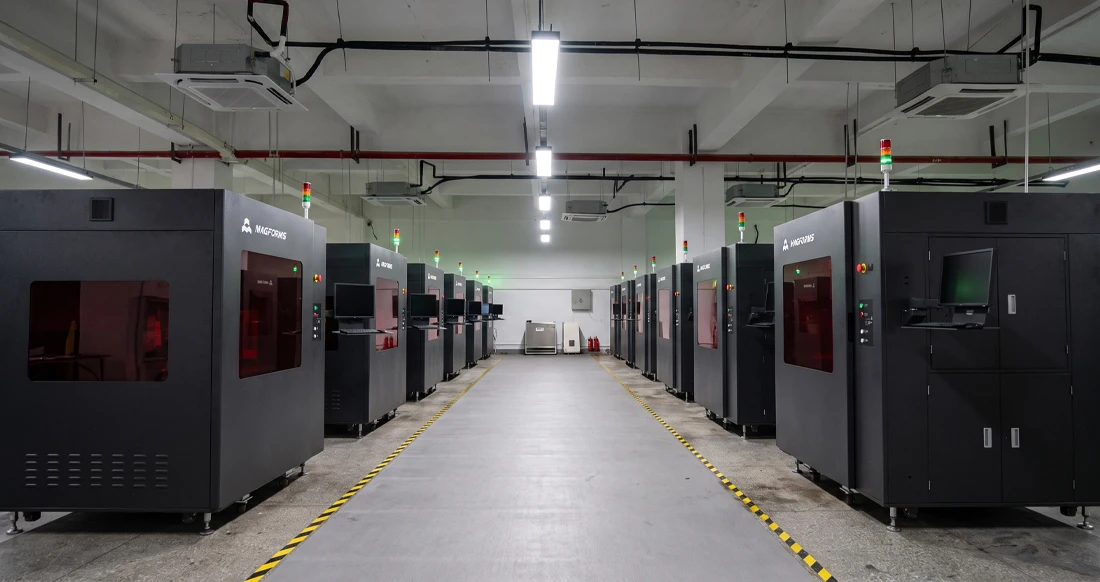
Magforms makes design and manufacture easier.
Popular Blogs
-
 Industry InsightsManufacturing Industry
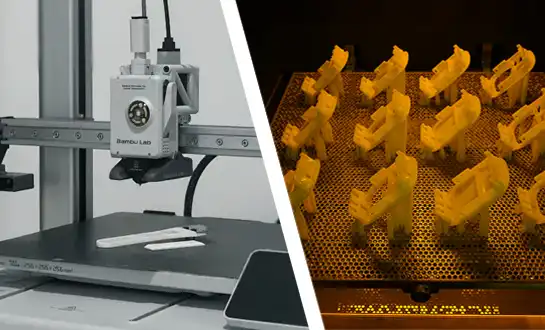
FDM vs. SLA Printer: Which Technology Is Right for Your Project?
-
 Industry InsightsManufacturing Industry
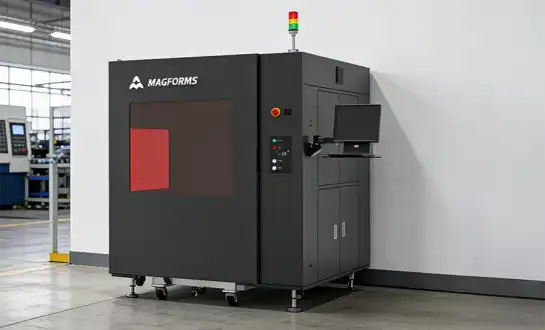
Top 5 Applications of Industrial 3D Printers in Manufacturing Today
-
 Industry InsightsManufacturing Industry
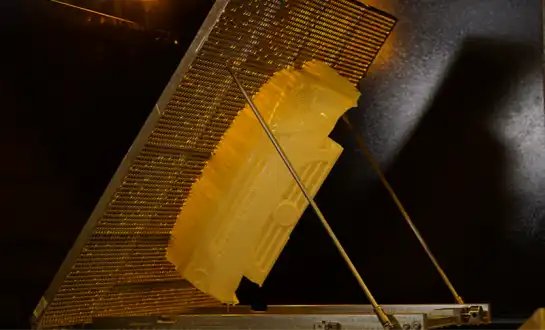
Why Stereolithography 3D Printers Are Unmatched for Microfluidic Device Prototyping?