What Makes a Large scale resin 3D Printer Stand Out in 2026?
A large-scale resin 3D printer stands out in 2026 because it can provide industrial-grade accuracy, excellent surface quality, and dependable batch output in a wide range of fields. These high-tech photopolymerization systems combine accuracy down to the micron level with larger build sizes. This lets makers make complicated, high-detail parts without having to divide them up or make sacrifices. Automated resin management, improved optical regularity, and strong mechanical frames work together to make sure of consistent output while solving important problems like wasted materials and production delays that happen with older equipment.
Understanding Large Scale Resin 3D Printing Technology
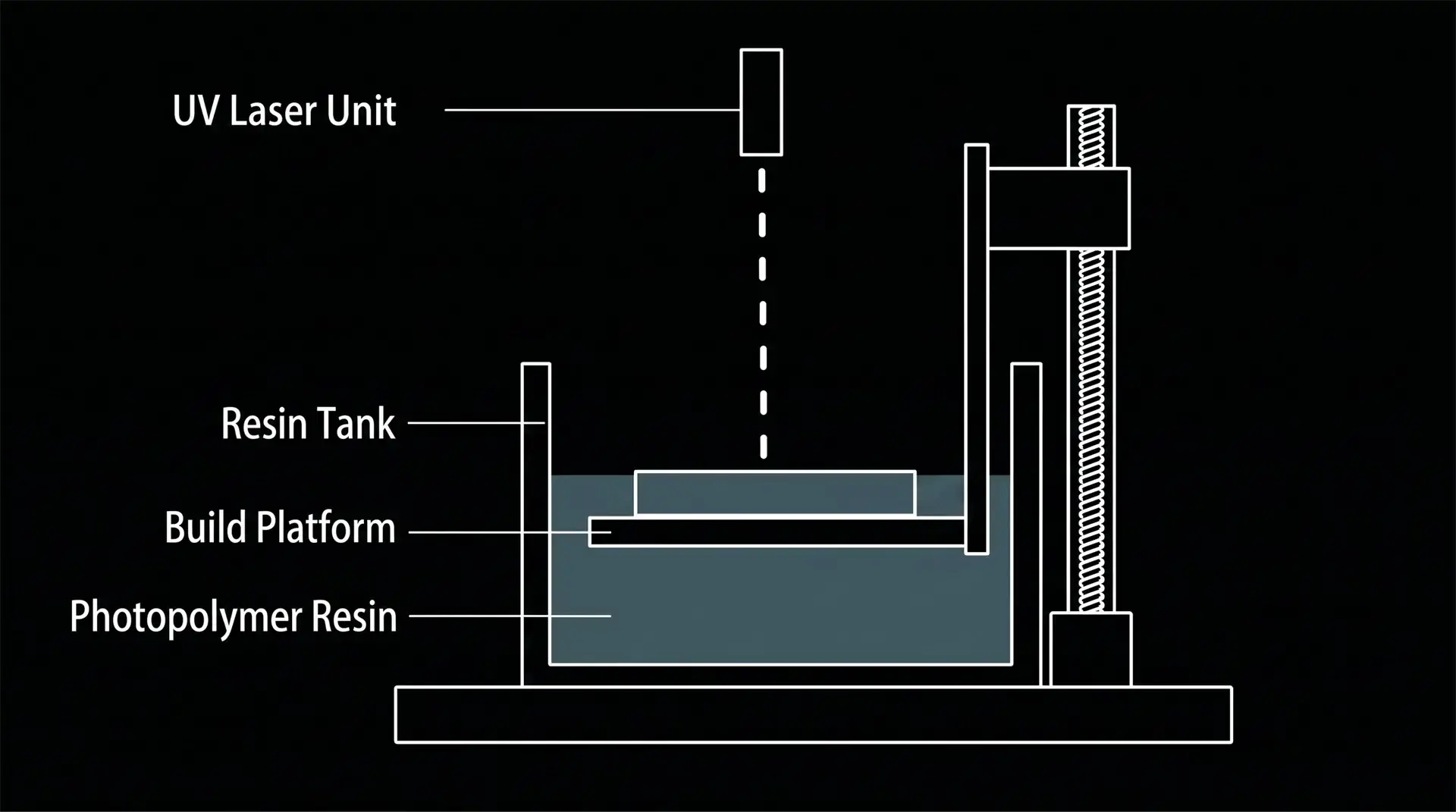
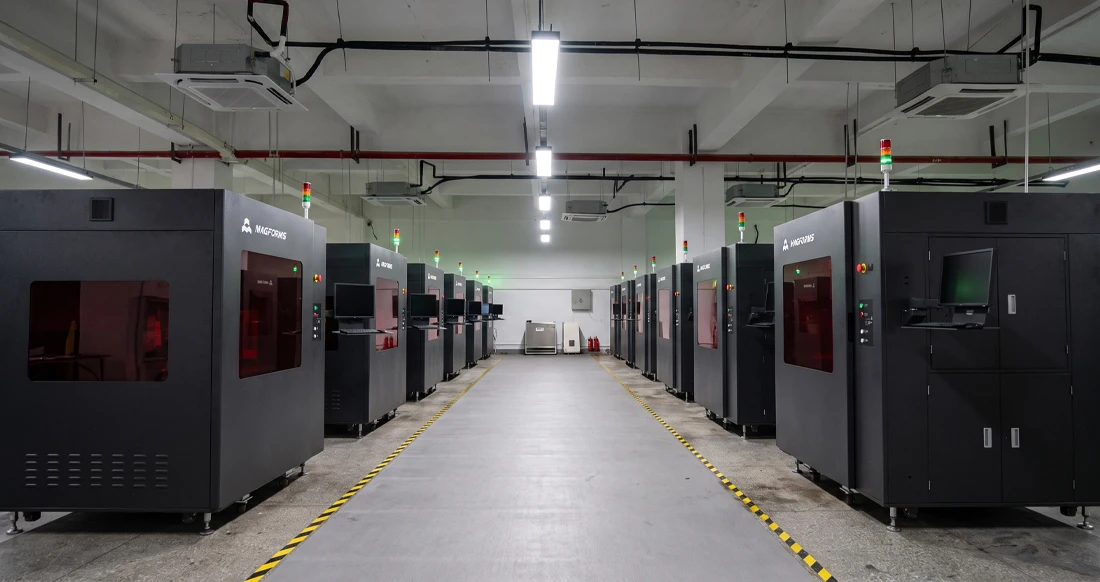
Photopolymerization technologies have significantly advanced over the past decade, enabling resin-based additive manufacturing to transition from prototyping tools to industrial production systems. At Magforms, we've witnessed how laser-based stereolithography (SLA) has matured from an intriguing lab tool into a production workhorse capable of handling demanding industrial environments. While other photopolymerization methods—such as digital light processing (DLP) and masked stereolithography (mSLA) using LCD panels—employ projected light sources, our large-scale systems are built around SLA's scanning laser architecture, which offers distinct advantages in optical uniformity and scalability for large-format builds. Large-scale SLA systems achieve this through precisely controlled laser scanning architectures tailored to specific application requirements.
Core Photopolymerization Mechanics
High-power UV light sources are used in industrial photopolymer systems to cure liquid resin one layer at a time. In contrast to desktop units that can only make small prototypes, these machines have build envelopes that are wider than 300mm on multiple directions, and some industrial systems can reach extremely large build volumes approaching one cubic meter in specialized configurations. In our large-scale SLA systems, a precisely controlled scanning laser provides the curing energy, enabling consistent beam quality and dimensional accuracy across the entire build envelope. The light delivery system must remain highly uniform across the entire build platform to prevent dimensional drift or incomplete curing at the edges.
To ensure uniform exposure across the build platform, modern SLA systems use precision laser scanning optics and advanced beam-shaping components to maintain a consistent spot size and power density. This method makes sure that the UV intensity remains consistent within a tightly controlled tolerance range. Typically achieving over 90% light intensity uniformity across the build platform under calibrated conditions. When making parts for the inside of cars or ports for spacecraft, where micron-level accuracy has a direct effect on how well they work, this kind of stability is required.
Material Versatility and Engineering Applications
There is a huge range of mechanical qualities in resin chemistry that are possible in 2026. Engineering-grade formulations include tough resins that are similar to ABS for making useful samples, high-temperature materials that can withstand post-curing above 200°C, flexible elastomers that behave like TPU, and resins that can be cast for use in jewelry and dentistry. This variety of materials means that a single platform can be used for more than one production task without having to switch out tools.
Temperature-controlled vat systems maintain optimal resin viscosity even during extended print cycles, which is very important when working with industrial formulations that have a high viscosity. Magforms has integrated heating vats that keep resin stable at 25–30°C. This makes sure that the right flow properties and layer adhesion are maintained even during long production runs. This environmental control gets rid of the viscosity-related problems that happen with parts made in environments that aren't controlled.
Mechanical Precision and Force Management
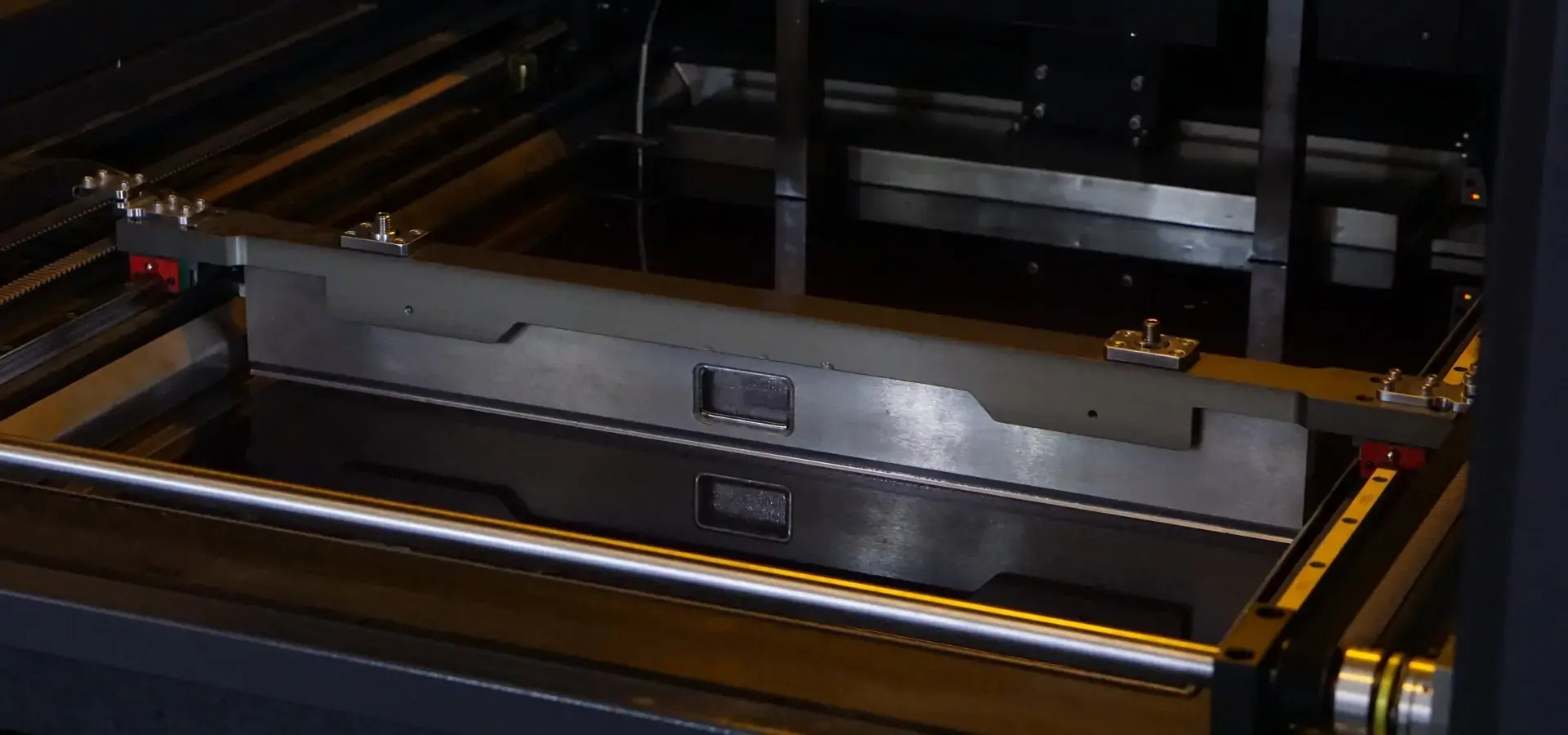
Large-format resin printing imposes significant mechanical demands that require robust engineering solutions. When newly cured layers are separated from the resin tank's optical window, peel forces intensify as the cross-sectional area increases. A full-plate dashboard panel in a car creates peel forces that would overwhelm poorly constructed Z-axis mechanisms. To manage this, industrial SLA machines employ dual linear rails and controlled-stage release mechanisms that gradually reduce peel forces during layer separation rather than causing abrupt part separation.
Advanced laser scanning strategies and high-precision optical coatings on the resin tank window further mitigate peel forces by ensuring uniform and controlled curing, enhancing process reliability for large-format parts. These new ideas reduce the risks of layer separation and make consumables last longer, which has a direct effect on practical costs. Because these systems are mechanically stable, they can keep positioning accuracy within microns across thousands of layers. This gives dental labs the consistent dimensions they need to make surgical guides or gives consumer electronics companies the consistent dimensions they need for housings for wearable tech.
Key Benefits of Large-Scale Resin 3D Printing for Industrial Use
Throughput gains are often the most compelling reason to adopt industrial resin 3D printing systems. We've seen how these platforms change development timelines and production costs through our work with car design teams and medical device makers.
Unmatched Surface Quality and Dimensional Accuracy
When you print with SLA technology, visible layer lines commonly seen in FDM (filament extrusion) or pixelation artifacts found in projected-light systems are significantly reduced or eliminated. Layer heights as low as 25 to 50 microns make surfaces that are good enough for injection molding right off the build plate, which cuts down on the work that needs to be done afterward. When making consumer-facing goods or precision tools, where looks and feel affect how people think about them, this surface finish quality is very important for large-scale resin 3D printers.
The accuracy of the dimensions is within ±0.05% of the length of the part, which meets the ISO/ASTM 52900 standards for additive manufacturing. When military makers make precision connectors or medical manufacturers make bases for orthodontic aligners, these tight tolerances make sure that the parts fit and work right without having to be adjusted by hand a lot. SLA-manufactured parts exhibit relatively isotropic mechanical properties compared to FDM parts, meaning they possess consistent mechanical properties along the X, Y, and Z axes. This performance consistency is superior to the anisotropic behavior of filament-extrusion parts and can exceed the interlayer adhesion found in some other vat photopolymerization processes.
Batch Production Efficiency and Throughput Optimization
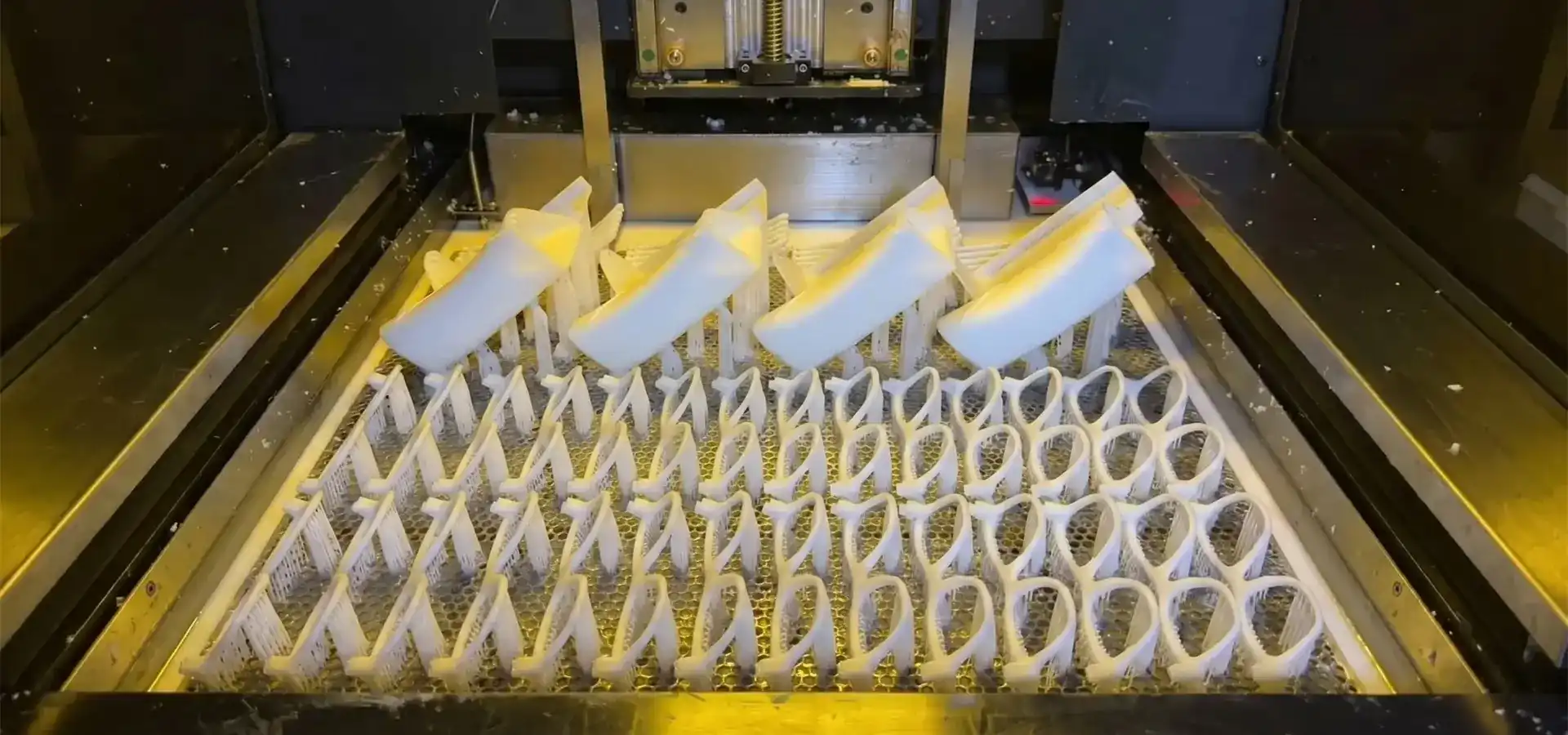
Large build platforms' ability to do multiple output changes the economics of manufacturing in a big way. A dental service center can set up dozens of custom aligner models across the build area, which means that they can print enough for a whole week's worth of orders in one overnight print run. Manufacturers of shoes use this same feature to make prototypes of multiple midsole lattice variations at the same time. This speeds up design changes without increasing the time it takes to print each layer.
Magforms has made this more efficient with changeable spot-size laser technology and AI-optimized scanning tracks that make printing speeds over 30% faster than the average in the industry. This speed edge cuts down on wait times for rapid prototyping and small-batch customization, which lets customers meet the needs of the market more quickly. The automatic resin feeding systems keep an eye on the vat levels all the time, so the machines can keep running during long print runs that would normally need human help.
Resource Optimization and Cost Reduction
Traditional subtractive production methods are less efficient at using materials than these methods. In resin printing, only the needed shapes and support structures are built. This means that no large amounts of material are removed, which is what CNC cutting does. This accuracy cuts down on the cost of raw materials and the volume of hazardous waste generated, which is good for both the economy and the environment.
Because less post-processing is needed, less work is needed, and products can be sold faster. Parts that need a lot of sanding, filling, and finishing when printed with filament only need support removal and a short IPA wash when printed in resin. This efficient process makes it possible for digital designs to be turned into real prototypes in hours instead of days, which is helpful for cultural and creative companies that make decorative models or shoe designers who make samples of shoe molds.
Best Practices for Maintaining and Operating Large-Scale Resin 3D Printers
The best way to get the most out of your equipment purchase is to use it carefully and keep up with its upkeep. In our technical training classes, we stress how important it is to take care of machines so that they work well and don't break down.
Optical System Maintenance and Calibration
Regular maintenance is essential for the precision optical components that govern print quality in a resin 3D printer. Contamination on laser mirrors, optical windows, or protective glass degrades light transmission and uniformity, potentially leading to incomplete curing or dimensional inaccuracies. Lint-free wipes and cleaning agents designed to remove resin residue without scratching delicate optical surfaces should always be used.
During busy production times, calibration checks should happen once a week. Printing test patterns at the sides and middle of the build plate shows any changes in the Z-axis position or the accuracy of the XY dimensions. If calibration problems are found early, whole build batches don't go over standard limits. This keeps materials from going to waste and delays from happening, which hurts production efficiency.
Resin Handling and Environmental Control
When storing photopolymer resins, always protect them from UV light, which would cure the material too quickly and make it useless. Keeping resin at steady temperatures and in sealed cases extends its shelf life and guarantees consistent performance. Before pouring resin into the machine's vat, gently stir it to re-suspend any pigments or functional additives that may have settled during storage.
Because uncured resin gives off volatile organic compounds (VOCs), it's important to have good air systems, especially in industrial buildings that are working on multiple builds at the same time. During printing, sealed build rooms keep most of the vapor inside, but IPA cleaning during post-processing creates more airborne contaminants. Active carbon filter devices and good air exchange rates protect workers' health and make sure that safety rules are followed at work.
Troubleshooting Print Failures and Quality Issues
When parts don't stick to the build plate properly, it's usually because the platform isn't leveled properly or the exposure settings for the first stages are wrong. Proper cleaning and light abrasion of the build plate before use provides strong adhesion capable of withstanding the separation forces experienced during the critical first layers. If parts consistently fail mid-build, the cause is often insufficient support structures or excessive peel forces during layer separation.
Surface flaws like layer lines or rough patterns are usually caused by problems with the optical system or resin contamination. When you filter resin through small mesh screens, you get rid of the cured bits that would otherwise make the surface look bad. Restoring optical performance involves verifying laser output stability, scanning accuracy, and maintaining optical component cleanliness, such as mirrors, lenses, and the resin tank's optical window, as part of routine service. Magforms gives operators detailed troubleshooting guides and direct technical support to help them figure out problems quickly and keep production running as smoothly as possible.
Procurement Guide: How to Choose and Buy the Best Large-Scale Resin 3D Printer in 2026
When buying strategic tools, it's important to carefully compare the technical skills with the needs of the business. We made a structured assessment system that helps buying teams make choices that are in line with business goals and are based on good information.
Defining Production Requirements and Success Metrics
The first step in the buying process should be to make sure everyone knows what "success" means. Are you mostly making samples for visual reasons, where the finish on the surface is more important than the way they work? Or does your application need parts that are made for engineers and will be tested to make sure they work? The answers to these questions have a direct effect on the materials that are needed, which in turn determine the printer platforms that can meet those needs. Selecting the right large-scale resin 3D printer therefore becomes a critical decision.
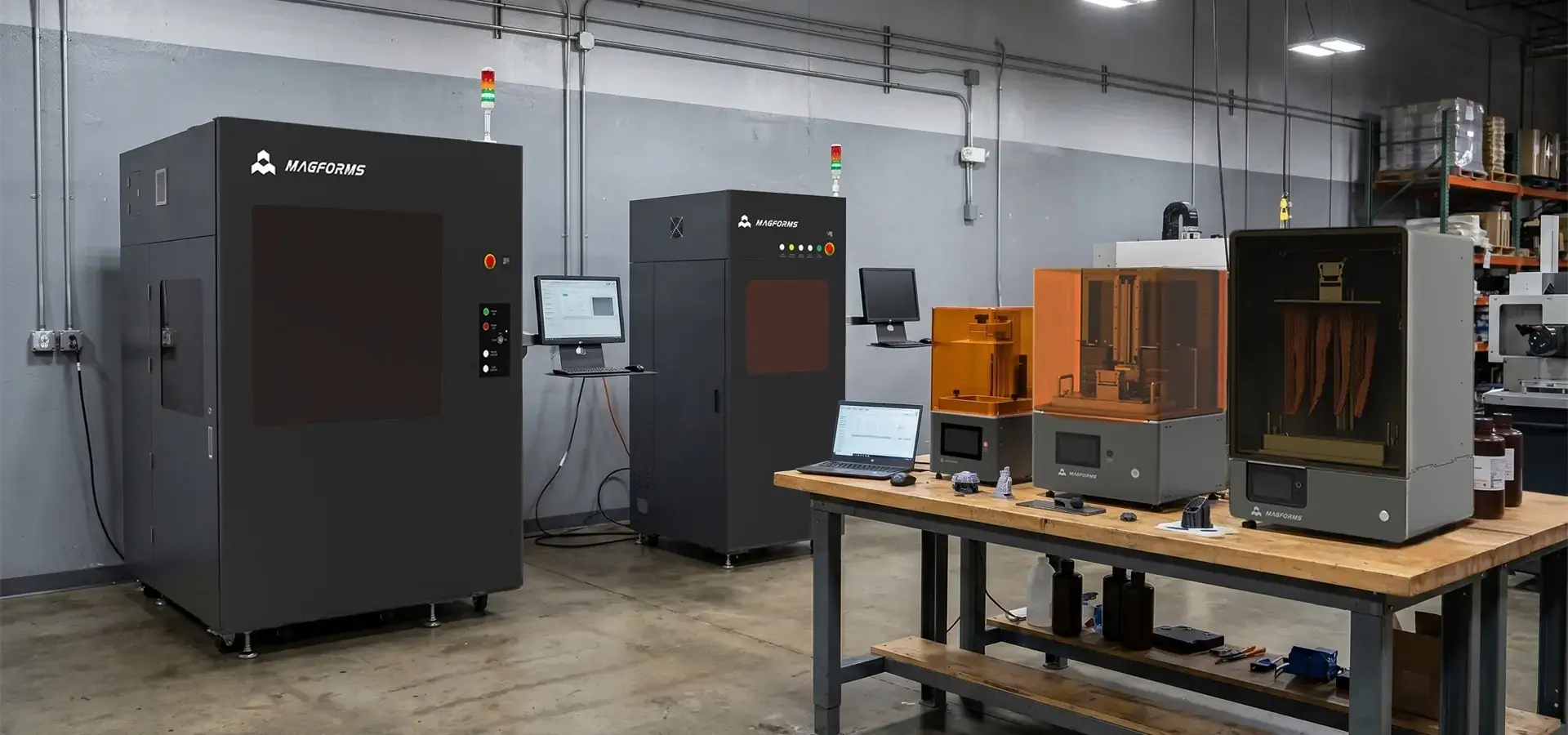
When assessing the build volume, you need to consider both the size of individual parts and the efficiency of batch nesting. A company that makes medical devices might not use the whole build volume for single parts very often, but they need a lot of platform space to put together dozens of devices that are special to each patient during each build. On the other hand, car studios that are developing full-size interior panels need the largest single-part envelope size possible. Figuring out this trend of use helps get the most out of the equipment purchase.
Technical Specification Evaluation Criteria
Specifications for resolution should be looked at more closely than just micron grades. The Z-axis layer height and the XY resolution, which is determined by the laser spot size, work together to describe the level of detail that can be achieved. But optical consistency across the build area is more important than high sharpness at the center point a lot of the time. Ask to see sample parts made at the sides of the build plate to make sure that the quality at the edges matches the quality in the middle.
Claims about print speeds need to be accompanied by information about the exact shape being made. Layer cure time is less of a bottleneck for densely arranged build plates than for sparsely arranged ones. When making tall parts with little cross-sectional area, Z-axis movement speed becomes the bottleneck. Another important feature is material compatibility, especially when it comes to whether the platform can use third-party resins or locks out unique materials through software or hardware limits.
Supplier Assessment and Support Infrastructure
Dependability of equipment doesn't mean much if there isn't quick expert help when problems happen. Ask specific questions about the supplier's response time promises, the availability of spare parts, and the presence of local expert staff who can provide on-site service to evaluate their service infrastructure. Downtime risks from international sellers who don't have regional support centers can ruin production plans at crucial times.
The warranty should extend beyond component replacement to cover consumable wear parts that degrade over time, such as laser light sources, optical mirror assemblies, and resin tank modules. Training helps workers learn the skills they need to get the most out of their tools and avoid problems caused by them. Magforms provides thorough technical training programs and keeps a large stock of extra parts on hand to make sure that our customers can quickly resume production if a component fails.
Total Cost of Ownership Analysis
The price of the tools at the start is only one part of the cost of ownership. Consumable costs, such as the price of resin and the service intervals for optical components and resin tank modules, accumulate significantly over the equipment's service life. While open-material systems may carry a higher initial equipment cost, proprietary ecosystems that lock users into premium-priced resins often lead to a substantially higher total cost over the machine's lifespan.
Conclusion
In 2026, the things that make excellent large-scale resin 3D printer systems stand out are their mechanical strength, optical accuracy, ability to work with a variety of materials, and dependable suppliers. The basis for successful additive manufacturing programs is equipment that offers uniform dimensional accuracy across the full build area while remaining operationally stable over long production cycles. Open material environments and responsive technology are also very important because they stop lock-in situations that hurt long-term economics. When purchasing these systems, teams should look at the total cost of ownership (TCO) rather than the original purchase price. They should also check the supplier's skills by calling references from customers who use similar applications in similar production settings.
FAQ
1. Can large format resin printers operate in standard office environments?
The high VOC emissions and need for post-processing chemicals usually stop office adoption. Even systems that are sealed need their own ventilation or work areas with active carbon filtration and temperature control. The connected washing stations that use IPA or other solvents need extra safety and environmental controls that regular working areas don't have.
2. How do you manage resin replenishment during extended print cycles?
Industrial platforms have automatic feeding systems with peristaltic pumps that keep an eye on vat levels all the time. These systems automatically reload from outside bins that hold 10 liters or more, so they don't run out of material in the middle of a print, which would ruin the whole thing. This automation is very helpful for production runs that need to be done overnight or on the weekend and would need steady human attention otherwise.
3. What industries benefit most from large-scale resin printing capabilities?
A lot of people use these tools, including people who design cars, make parts for spacecraft, work in dental labs, make medical devices, make consumer products, and design shoes. This technology is useful for applications that need high accuracy, a smooth surface, or complicated shapes in small to medium production quantities. Being able to make parts without cutting or putting them together is especially helpful in situations where structural stability is important.
Partner with Magforms for Your Industrial Resin Printing Needs
Magforms offers integrated resin printing solutions that combine precise tools with material formulas that have been improved over many years of experience with additive manufacturing. Our platforms solve the main problems that procurement teams have with competing systems: they don't let them use private materials, the measurements aren't always accurate, and there isn't enough technical support, which leaves operators dealing with problems that could have been avoided.
As an experienced large scale resin 3D printer manufacturer, we've helped over 300 businesses around the world with their needs. These businesses include dental labs, auto studios, aerospace suppliers, and companies that make consumer goods. Our self-designed machines can print 30% faster than the average in the industry. They do this by using variable spot-size laser technology and AI-optimized scanning lines to keep the accuracy at the micron level, which has been proven over thousands of hours of use.
Our technology is backed by 22 patents and 30 registered trademarks. These provide the innovation that keeps our systems competitive as additive manufacturing changes. If you email our team at info@magforms.com, you'll be put in touch with technology experts who understand the problems you're having with production and can suggest setups that will work best for your needs. We help you with the evaluation process by making model parts, doing thorough ROI analyses, and giving your team full training so they can use the equipment to its fullest from the start.
References
1. Gibson, I., Rosen, D., Stucker, B., & Khorasani, M. (2021). Additive Manufacturing Technologies, 3rd Edition. Springer International Publishing.
2. Ligon, S.C., Liska, R., Stampfl, J., Gurr, M., & Mülhaupt, R. (2017). Polymers for 3D Printing and Customized Additive Manufacturing. Chemical Reviews, 117(15), 10212-10290.
3. Stansbury, J.W. & Idacavage, M.J. (2016). 3D Printing with Polymers: Challenges among Expanding Options and Opportunities. Dental Materials, 32(1), 54-64.
4. Quan, H., Zhang, T., Xu, H., Luo, S., Nie, J., & Zhu, X. (2020). Photo-curing 3D Printing Technique and Its Challenges. Bioactive Materials, 5(1), 110-115.
5. Bagheri, A. & Jin, J. (2019). Photopolymerization in 3D Printing. ACS Applied Polymer Materials, 1(4), 593-611.
6. Piedra-Cascón, W., Krishnamurthy, V.R., Att, W., & Revilla-León, M. (2021). 3D Printing Parameters, Supporting Structures, and Post-Processing Procedures of Vat-Polymerization Additive Manufacturing Technologies: A Narrative Review. Journal of Dentistry, 109, 103630.

Magforms makes design and manufacture easier.
Popular Blogs
-
 Industry InsightsManufacturing Industry
FDM vs. SLA Printer: Which Technology Is Right for Your Project?
-
 Industry InsightsManufacturing Industry
Top 5 Applications of Industrial 3D Printers in Manufacturing Today
-
 Industry InsightsManufacturing Industry
Why Stereolithography 3D Printers Are Unmatched for Microfluidic Device Prototyping?