Can a High resolution 3D printer Reduce Material Waste?
In comparison to conventional manufacturing processes (such as injection molding in prototyping stages) and lower-resolution additive manufacturing systems (such as entry-level FDM and low-density resin printers), a high-resolution 3D printer can significantly reduce material waste. The higher accuracy—typically achieving XY pixel sizes of approximately 18 to 50 microns and Z-axis layer heights commonly ranging from 10 to 25 microns depending on resin and machine configuration—reduces print flaws, the need for extra support structures, and the number of failed prints by a huge amount. When put together, these factors lead to less material waste, better part quality, and lower costs over time. Many business-to-business clients have cut their resin waste by up to 40% after switching to precision SLA equipment. This means that these systems are smart investments for fields where profits and sustainability are important.
Understanding Material Waste in 3D Printing
Material waste is one of the most annoying problems that 3D printing businesses have to deal with every day. Every time a prototype breaks in the middle of printing, every extra support structure that needs to be removed, and every mistake in the dimensions that needs to be fixed through a second print all cost money, time, and resin. Traditional FDM desktop printers and low-resolution resin systems often struggle to achieve consistent dimensional accuracy, which leads to surface flaws, geometric distortions, and weak overhangs that fall off during production. Because of these flaws, companies have to make too many parts, throw away broken ones, and use a lot more raw materials than they need to.
Common Sources of Material Waste
Print mistakes are caused by a number of technology problems. In resin printing systems, optical diffusion occurs when XY resolution and light collimation are insufficient, causing unintended curing beyond target boundaries. When Z-axis moves aren't precise, weak links form between layers that break apart when stressed. Support structures, which are often over-engineered to make up for hardware flaws, use a lot of plastic that can't be used again once they're taken off.
These issues are widely observed across dental, jewelry, and industrial prototyping workflows, according to field feedback from production environments and application testing cases. For example, a dental lab might waste expensive biocompatible resin on orthodontic models with bad margin lines, or a car prototyping shop might throw away internal parts because of obvious layer striations that ruin the surface finish. These situations are not one-off events; they are widespread problems caused by insufficient printing precision.
How High-Resolution Technologies Address Waste
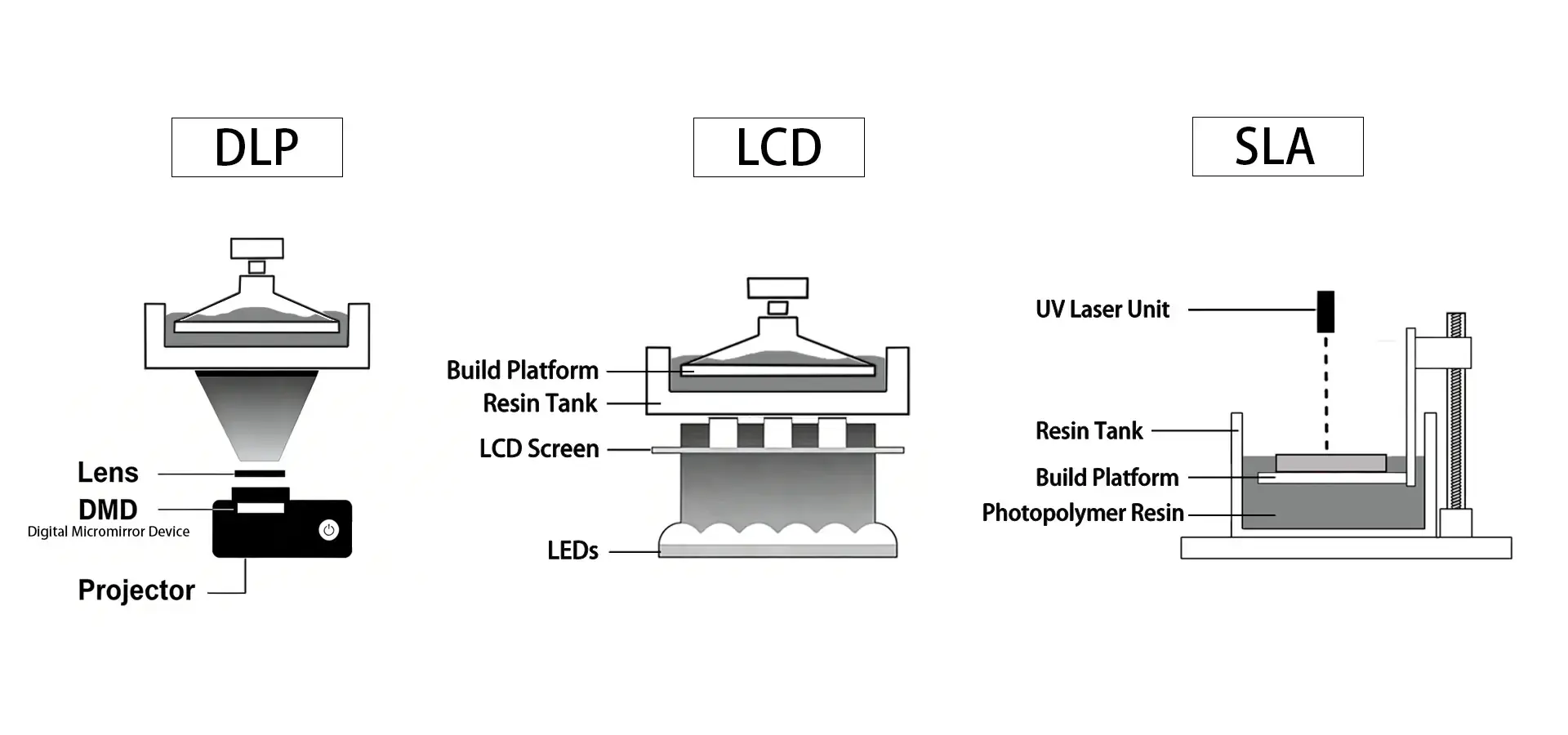
These issues are resolved at the source by advanced high-resolution 3D printers based on vat photopolymerization technologies, including Laser SLA, Digital Light Processing (DLP), and LCD-based Masked Stereolithography (mSLA). These machines use high-resolution LCD masking panels combined with collimated UV light systems. This enables fine image control that significantly reduces curing deviations and surface defects. Because of this, there are fewer bad builds, less support material is needed, and parts meet their dimensions right off the build plate. Aerospace components, surgical guides, and microfluidic devices are just a few examples of industries that need to work with very tight tolerances.
The Relationship Between Print Resolution and Material Efficiency
It's easier to understand why a high-resolution 3D printer wastes less material when you know what "resolution" really means. In additive manufacturing, "resolution" means the smallest feature size that a printer can safely make. The XY pixel pitches in a high-res resin system are usually between 18 and 35 microns, and the Z-axis layer height can be as thin as 10 microns. This level of detail is significantly higher than that achievable with typical extrusion-based FDM systems, which are limited by nozzle diameter and material flow dynamics, so it's possible to copy complex shapes without making mistakes.
Micron-Level Precision Reduces Defects
A printer that can precisely cure resin at the 20-micron scale can make complicated shapes like undercuts, thin walls, and lattice structures that don't collapse or fuse. This accuracy gets rid of the "stair-stepping" effect that you can see on curved surfaces in lower-resolution images, where each layer makes a bump that you can see. Parts that were printed with higher resolution need less post-processing, which means that less material needs to be removed when they are sanded or machined, and more of the original print volume is kept.

Smarter Support Structures Mean Less Waste
Engineers can design support structures that are lighter and more efficient with high-resolution printers because they can successfully print successfully print thinner support pillars and smaller contact points. Advanced slicing software uses the machine's features to put supports only where they're needed, most of the time using lattice or tree-like designs that use 30–50% less material than standard thick supports. These improved supports come off easily after printing, leaving little surface damage and using less resin per build.
Material Selection and Compatibility
A resin's performance is directly related to its material properties. For engineering-grade photopolymers that are tough, flexible, high-temperature, or biodegradable, the viscosity is usually higher, and they need to be heated in vats (30–60°C) in order to flow properly into thin-layer gaps. Precision printers usually have motorized wiping systems and temperature controls that make sure the resin is spread out evenly. This prevents voids and incomplete layers that would cause parts to fail and waste material.
We've seen that the best results come from combined material-equipment systems, in which resins and printers are co-optimized. This synergy eliminates compatibility issues that cause dimensional drift, uneven curing, and failed prints, making sure that every milliliter of resin helps the build go well.
Practical Benefits of High Resolution 3D Printers for B2B Procurement
When procurement professionals evaluate precision equipment, they want hard numbers and proof from real-life situations. Investing in high-resolution 3D printers pays off in a number of ways, including lower costs, more time saved, compliance with regulations, and a competitive edge.
Quantifiable Cost Savings Through Waste Reduction
In resin-based printing, material costs make up a big part of the cost per part. This is especially true for specialty formulations like dental resins or aerospace-grade polymers. Cutting waste by 30 to 40 percent directly leads to lower running costs. A medium-sized dental lab that makes 200 braces a month said it saved over $12,000 a year after switching to a system with 22-micron XY resolution. This was because it cut down on failed prints and support material use. These savings add up over time, cutting the time it takes to get a return on investment down to 18 to 24 months in many commercial settings.
Accelerated Prototyping and Reduced Iteration Cycles
By ensuring that designs are accurate the first time, precision printing speeds up the process of making new products. It takes engineers less time to do rework and more time to do validation testing when samples are accurate in terms of size and surface finish. A company that makes consumer goods that uses precision SLA for housings for smart devices cut the time it took to make prototypes from six weeks to ten days. This allowed them to get their products on the market faster and get an edge over their competitors in some areas.
Sustainability and Regulatory Compliance
Environmental responsibility is increasingly critical in procurement, especially in North America and Europe, where regulations penalize excessive waste generation. High-resolution systems are in line with ISO 14001 environmental management standards. They also help companies with their sustainability reports by showing measurable reductions in material consumption and the amount of waste they create. Precision printing technologies help companies that want to be B Corp certified or take part in circular economy projects demonstrate quantifiable environmental impact.
Compliance rules are especially strict for companies that make medical devices. Biocompatible parts that meet ISO 10993 standards can be produced with minimal material waste. This builds regulatory confidence and keeps costs down. For example, making surgical guides requires both accuracy (to make sure they fit right during procedures) and the ability to track materials (to meet FDA documentation requirements). When systems are designed especially for these uses, they reduce both clinical risk and operational waste.
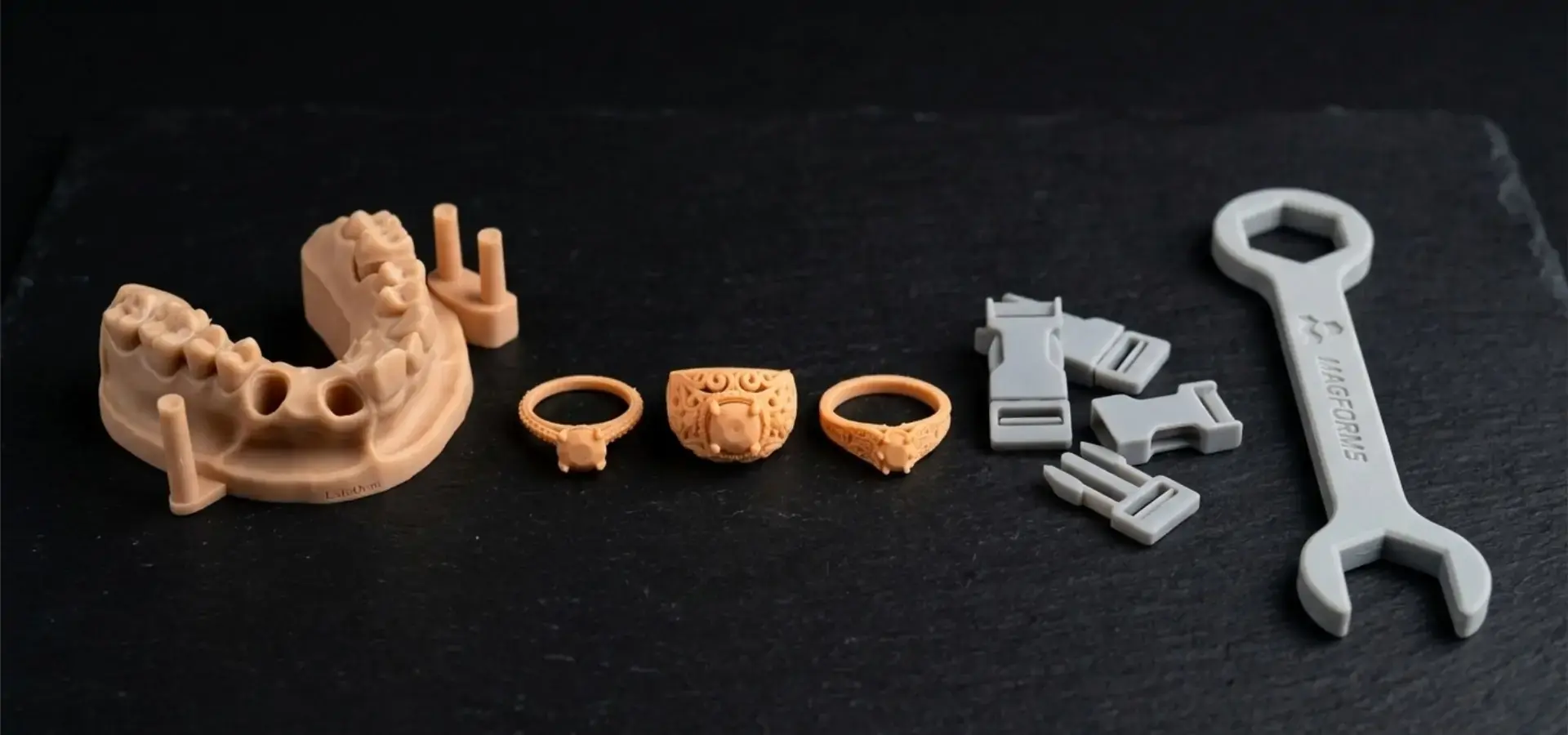
Choosing the Right High Resolution 3D Printer to Maximize Material Efficiency
To choose the right high-resolution 3D printer for your business, you need to carefully look at the technical specs, the total cost of ownership, and the supplier's capabilities. It's important to remember that not all "high-resolution" systems have the same performance, and when you buy one, you should think about how well the hardware works with the software and after-sales support.
Key Technical Parameters to Evaluate
Details about the resolution are important, but the background is even more so. A printer that says it has a 22-micron XY precision must also show that the light is evenly distributed across the whole build plate (usually above 90%), to ensure edge-to-edge uniformity without distortion or the curing process isn't interrupted. High-torque stepper motors systems that can make stable, repeatable moves at 10–25 micron steps are needed for the Z-axis to be accurate. The quality of the optics is also very important. Collimating lenses make sure that UV rays stay parallel to the resin surface. This keeps the edges of features sharp and stops light scattering that can cause adjacent pixels from curing unintentionally.
SLA, DLP, and LCD Technologies: Choosing the Right Approach
Each vat photopolymerization technique has its own benefits. Laser SLA systems use a focused laser spot to trace each layer point by point. This gives very fine details for small parts but takes longer for large builds. DLP uses projector chips to cure entire layers at once, which is a good balance for medium-sized parts in terms of speed and clarity. LCD-based MSLA systems use high-density masking panels, offering a strong cost-performance balance for entry-to-mid industrial resin manufacturing applications. However, maintenance schedules must account for the limited lifespan of LCD screens (typically 2000–3000 hours).
Material Compatibility and Supplier Ecosystem
While open-platform printers that use third-party resins give you more options, they also come with compatibility risks, such as dimensional shifts, incomplete curing, and failed bonding due to material-hardware ratios that don't match. When proprietary resins are used in co-engineered, closed-ecosystem solutions, these risks are eliminated. This ensures consistent results and makes debugging easier. But when buying things, the dependability of the material source and the cost become factors.
To take a balanced approach, choose suppliers that offer both their own formulations and validated third-party material profiles. This gives you options without lowering the quality of the products. When it comes to material qualification, established makers usually keep large libraries of materials with clearly marked print settings. This cuts down on the need for trial-and-error.
Warranty, Service, and Technical Support
Precision equipment requires responsive technical support. Hardware adjustments, software changes, and replacing consumables like FEP films and LCD screens have a direct effect on the quality of the print and how much material is used. Full service packages from suppliers that include on-site installation, operator training, and remote troubleshooting cut down on downtime and waste caused by user mistakes or putting off maintenance. Review the warranty to confirm it covers critical components such as optical systems, which are hard to repair and necessary to keep resolution standards.
Troubleshooting and Best Practices to Minimize Material Waste with High Resolution 3D Printing
For even the most advanced high-resolution 3D printer to keep working at its best, careful management is needed. By understanding common failure modes and implementing preventive measures, operators can ensure that hardware capabilities consistently translate into less material waste.
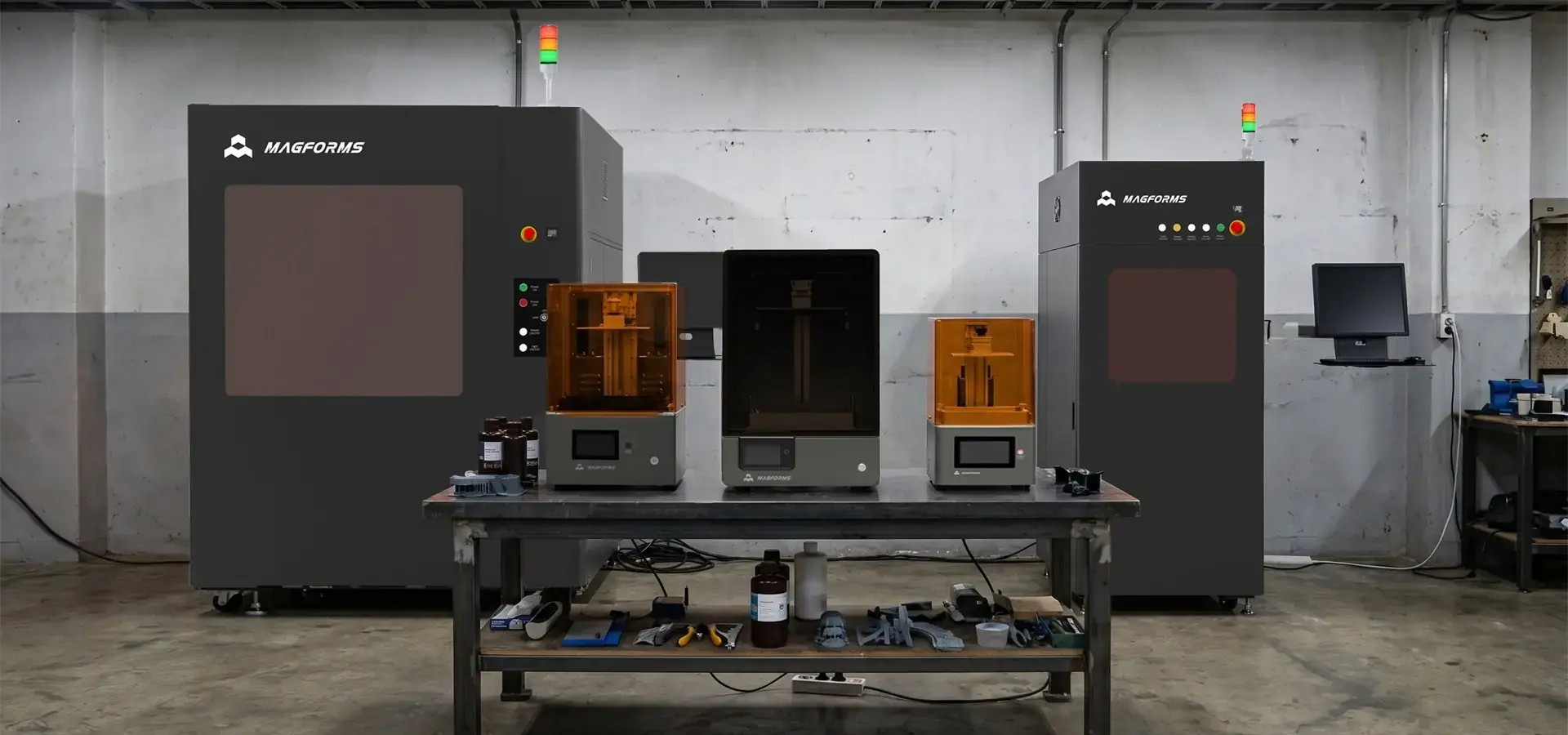
Addressing Common Print Failures
Layer separation happens when the binding between layers breaks down. This can be because of too short exposure times, contaminated resin, or worn release films. Light scattering, which blurs features and weakens interlayer bonding, can be stopped by checking FEP or nFEP vat films for micro-scratches on a regular basis. It is recommended to replace these products every 50 to 100 builds to maintain optical clarity and dimensional accuracy.
When the slicing settings are wrong, misprints can ruin entire builds. Layer exposure settings, part shape, and support placement must all be taken into account in the software settings. More advanced slicing tools have simulation features that can predict stress concentrations and suggest the best angles, which makes it less likely that the print will fail in the middle. Spending time fine-tuning parameters during the initial setting of the equipment will pay off over its lifetime.
Calibration and Maintenance Protocols
To keep the claimed accuracy, high-resolution systems need to be calibrated on a regular basis. Every month, gauge blocks or calibration plates should be used to verify Z-axis positioning accuracy and make sure that the layer heights stay within the specifications. Light consistency testing with exposure test patterns identifies degrading optical components before they affect whole builds. Maintenance should be done on a regular basis, usually every 500 to 1000 hours. It should include cleaning the optics, filtering the resin, and updating software to optimize curing profiles.
When companies write down their repair plans, unplanned downtime drops by 60% and consumables last a lot longer. Both of these factors lead to less material waste and more predictable running costs.
Material Handling Best Practices
When photopolymers are exposed to light, heat, or water, they break down. Storing resins in opaque, light-blocking containers at controlled temperatures (15–25°C) keeps them chemically stable and stops them from polymerizing too quickly, which can clog filters and contaminate builds. After printing, any resin that wasn't used should be filtered back into its storage bottles to get rid of any particles. Vats should also be cleaned between material changes to keep them from getting contaminated with other materials.
When buyers and sellers agree to buy in bulk, the deal usually includes technical help for handling rules, teaching workers how to store, mix, and get rid of waste in a way that doesn't hurt the environment or people.
Optimizing Total Cost of Ownership
Strategies for buying things should take into account costs that go beyond the initial purchase price. Leasing or borrowing choices spread out the cost of capital while keeping cash flow high enough to cover operating costs. Making a promise to buy a lot of a material can help you get better prices and a steady supply, which is very important in production settings where material shortages that halt production and impact revenue.
Conclusion
Precision printing is not just a theory for reducing material waste; it is a tried-and-true way to make more money, speed up product development, and meet sustainable goals. High-resolution 3D printer systems cut down on flaws, make support structures work better, and ensure accuracy the first time, which saves money. Years of practical data from companies in the dental, automobile, aircraft, and consumer electronics industries have shown that these benefits are consistently validated across industrial dental, automotive, aerospace, and consumer electronics applications. As time goes on, new materials, faster curing systems, and smarter tools keep making the technology better. If you choose the right equipment partner—one that offers integrated material-hardware solutions, strong expert support, and documented performance—your investment will continue to be valuable even as production needs change.
FAQ
1. Does resolution alone guarantee reduced material waste?
Resolution is important, but it's not the only thing that matters. Process control is just as important. This includes making sure the machine is calibrated correctly, using the right slicing settings, and choosing the right materials. Even a high-spec printer can still generate material waste if it is poorly maintained or operated with incompatible resin systems. To be as efficient as possible, the high-resolution 3D printer, the operators, and the supplies all need to work together.
2. What materials work best for minimizing waste in precision printing?
The most waste can be cut down with low-viscosity industrial resins that cure quickly with low shrinkage. These mixtures flow easily into thin-layer gaps between layers, need less strong support structures, and behave predictably in terms of their dimensions. Manufacturers of specialty materials like safe mixtures for medical uses or castable wax resins for jewelry often send these materials with optimized print profiles, which cuts down on the time and money wasted on trial and error during qualification.
3. How can buyers ensure supplier reliability when purchasing precision equipment?
Check a supplier's qualifications in a number of ways, such as by looking at their patent portfolios to see if they have really invested in research and development, making sure they are a member of international trade shows and industry groups, and asking current clients in the same field for references. Carefully read the warranty terms to make sure that they cover critical optical and mechanical components. Authorized resellers should provide documented after-sales support, such as expert training, access to spare parts, and software updates. Third-party reviews and industry sites that confirm a company's reputation give buyers even more trust in their choices.
Partner with Magforms for Superior High Resolution 3D Printer Solutions
Upgrading to more advanced printing systems has huge advantages, such as lower material costs, faster prototyping, and compliance with regulations that improves market position. Magforms is ready to help you make the change with combined material-equipment solutions that are designed to be as efficient as possible. Our systems use special resins and a precision high-resolution 3D printer that were co-developed over many years of research and development. This reduces interface-related risks that can lead to material waste and production downtime. We bring a lot of experience to every project we work on because we have 22 patents, 30 protected trademarks, and have worked with over 300 businesses around the world.
Our technical team helps you with everything, from choosing the right tools to teaching operators, so your investment keeps its value. Magforms can help you find the right high-resolution SLA printers for dental use, large-format systems for testing in the auto industry, or specialized solutions for aerospace parts. They can do this because they have a lot of experience with all of these types of uses. Contact our experts at info@magforms.com right away to talk about your particular needs, get full product specs, or set up a demonstration at your location. We also offer flexible purchasing choices for approved providers. This means that people with all kinds of budgets can use cutting-edge manufacturing technology. Find out how precision printing can change the way you do business and help you achieve your sustainability goals.
References
1. Gibson, I., Rosen, D., & Stucker, B. (2021). Additive Manufacturing Technologies: 3D Printing, Rapid Prototyping, and Direct Digital Manufacturing (3rd ed.). Springer.
2. Quan, H., Zhang, T., Xu, H., Luo, S., Nie, J., & Zhu, X. (2020). Photo-curing 3D printing technique and its challenges. Bioactive Materials, 5(1), 110-115.
3. Stansbury, J. W., & Idacavage, M. J. (2016). 3D printing with polymers: Challenges among expanding options and opportunities. Dental Materials, 32(1), 54-64.
4. Pagac, M., Hajnys, J., Ma, Q. P., Jancar, L., Jansa, J., Stefek, P., & Mesicek, J. (2021). A review of vat photopolymerization technology: Materials, applications, challenges, and future trends of 3D printing. Polymers, 13(4), 598.
5. Bagheri, A., & Jin, J. (2019). Photopolymerization in 3D printing. ACS Applied Polymer Materials, 1(4), 593-611.
6. Dizon, J. R. C., Espera, A. H., Chen, Q., & Advincula, R. C. (2018). Mechanical characterization of 3D-printed polymers. Additive Manufacturing, 20, 44-67.

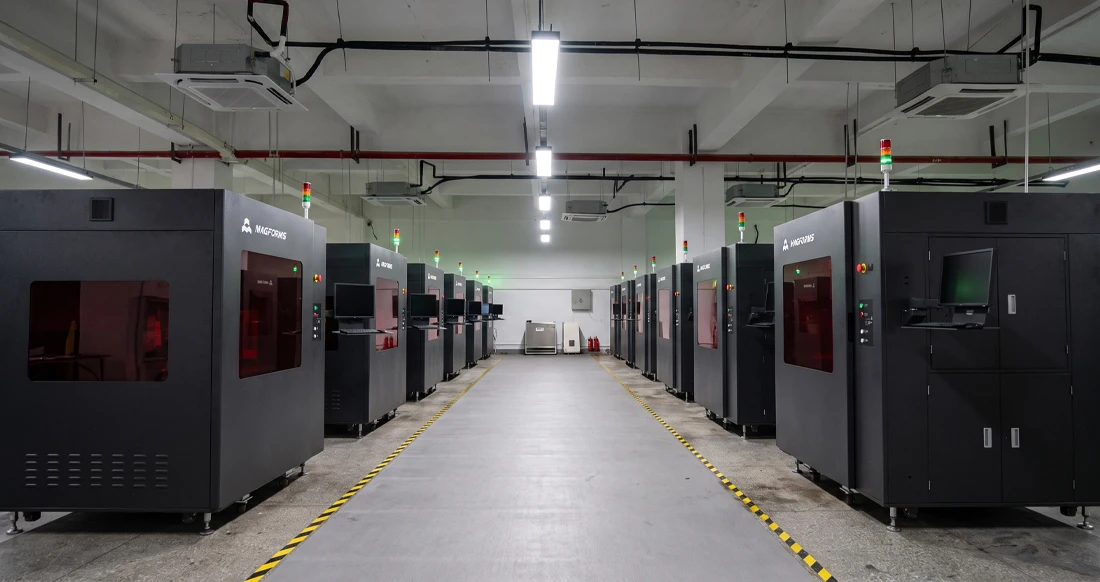
Magforms makes design and manufacture easier.
Popular Blogs
-
 Industry InsightsManufacturing Industry
FDM vs. SLA Printer: Which Technology Is Right for Your Project?
-
 Industry InsightsManufacturing Industry
Top 5 Applications of Industrial 3D Printers in Manufacturing Today
-
 Industry InsightsManufacturing Industry
Why Stereolithography 3D Printers Are Unmatched for Microfluidic Device Prototyping?