What Makes Industrial SLA 3D Printers Essential for Precision Manufacturing?
Industrial SLA 3D Printer technology is the most accurate form of additive manufacturing. It provides unmatched accuracy and surface quality for harsh industrial settings. Laser-curing photopolymerization is used by these high-tech machines to make parts with tolerances as small as ±0.1mm. This makes them essential for businesses that need parts with complex shapes, smooth surfaces, and uniform mechanical properties. Unlike traditional ways of making things, industrial SLA systems allow for quick testing and small-batch production without the need for expensive tools. This makes it easier to go from an idea to a real product while still meeting the quality standards of injection moulding.
Understanding Industrial SLA 3D Printers: Technology and Advantages
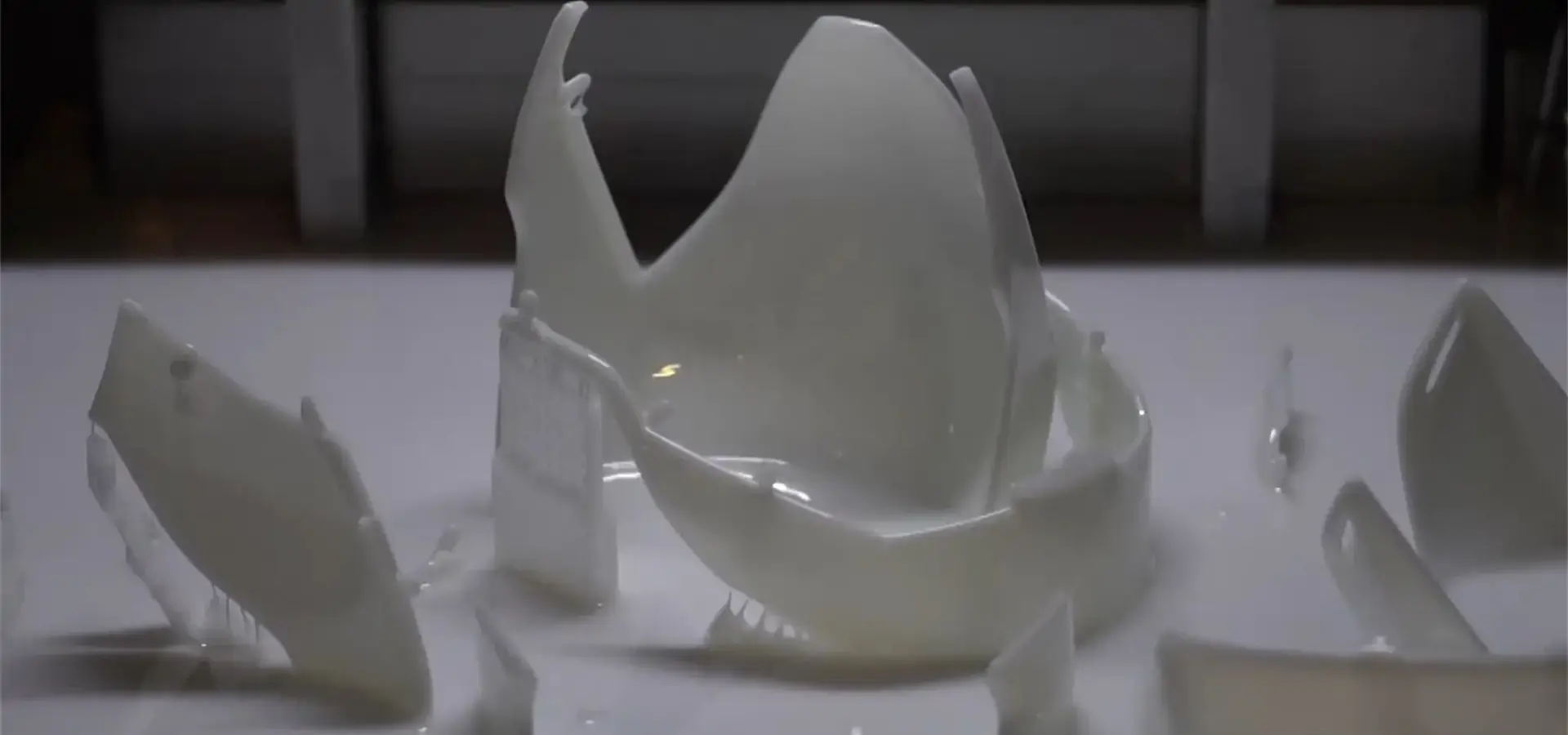
Industrial stereolithography represents a quantum leap from desktop alternatives, incorporating advanced laser systems and precision galvanometers that deliver consistent, high-quality results across extended production runs. These systems utilise computer-controlled UV lasers to selectively cure liquid photopolymer resins layer by layer, creating parts with exceptional dimensional accuracy and surface finishes that often eliminate the need for post-machining.
Advanced Laser-Curing Technology and Precision Components
Modern commercial SLA 3D printers use cutting-edge components from well-known companies, such as German Scanlab galvanometers and AOC lasers paired with Panasonic AC servo motors. It is guaranteed that these high-quality parts will work perfectly and stay in the right place even after many production runs. Adding variable spot-size laser technology is a big step forward. Large laser spots (0.5–0.6 mm) are used for quick filling inside the body, and fine spots (0.18–0.2 mm) are used for contours and other complex features. By finding the best scanning paths and cutting print times by up to 20% compared to old ways of doing things, deep learning techniques make printing even more efficient. This smart approach solves the industry's long-standing problem of balancing speed and accuracy, providing both simultaneously without lowering quality standards.
Large-Format Capabilities and Scalable Production
Industrial SLA systems don't have to be limited by size restrictions like traditional methods do. This means that they can make useful parts that are too big for a single build or efficiently make a lot of parts at once. Models like the Helios-P800 have stable marble bases that allow printing accuracy of ±0.1mm for sizes up to 100mm. This is very close to industrial-grade stability that meets strict quality standards. Being able to make large-format parts gets rid of the need for assembly and lowers the number of possible failure points. Batch production makes output as high as possible. Because it can be scaled up or down, industrial SLA technology can be used for everything from small studios making fast prototypes to big businesses making a lot of them.

Comparing Industrial SLA 3D Printers to Other 3D Printing Technologies
Understanding the competitive landscape helps procurement managers make informed decisions when evaluating additive manufacturing technologies for precision applications. Industrial SLA technology consistently outperforms alternatives in critical areas, including surface quality, dimensional accuracy, and material SLA 3D Printer versatility.
Surface Quality and Dimensional Precision Advantages
FDM printing is a cheap way to make prototypes, but it has problems with layer lines that can be seen and rough textures that need a lot of work afterwards. These surface quality problems can be fixed by industrial SLA 3D printer technology, which gives results that look like injection moulds with Ra values often below 1 micrometre. This means that extra smoothing steps are not needed. The technology also fixes the Z-axis weakness that happens a lot in filament-based systems. It makes fully dense parts with isotropic mechanical qualities that keep water out and make them strong everywhere. This isotropic behaviour is very important for uses that need consistent performance even when stressed from different directions.
Material Versatility and Engineering Applications
Industrial SLA systems can work with a wide variety of specialised resins, such as high-temperature mixtures that can withstand heat deflection temperatures above 238°C, tough resins that are like ABS, and flexible materials that are like rubber. This variety of materials lets prototypes correctly copy the properties of the final production materials, which ensures accurate testing and validation results. Castable wax resins made for investment casting burn off completely, leaving no ash or residue behind. This lets jewellers and makers make complicated designs that would be impossible to machine or mould with normal tools. Biocompatible Class IIa resins are used in dentistry and medicine to make surgery guides, aligner models, and temporary prosthetics.

Selecting the Right Industrial SLA 3D Printer for Your Manufacturing Needs
Choosing the optimal industrial SLA system requires careful consideration of technical specifications, operational requirements, and long-term business objectives. Understanding these factors helps ensure the selected equipment delivers maximum value and performance for specific applications.
Technical Specifications and Performance Parameters
Key performance metrics include XY resolution determined by laser spot size, typically ranging from 25 to 140 microns, and adjustable Z-axis layer heights between 10 and 300 microns. These parameters directly impact feature detail reproduction and surface smoothness, making them critical considerations for precision applications. Build volume capabilities must align with part size requirements and production throughput goals. Large-format systems enable oversized components or batch production of multiple parts, while compact systems may suffice for detailed prototyping applications with smaller dimensional requirements.
Open-Source Design and Material Compatibility
Equipment featuring open-source designs provides significant advantages by allowing customers to freely choose photopolymer resins from different suppliers. This flexibility breaks limitations imposed by proprietary material systems and enables better cost control through competitive sourcing options. Magforms industrial SLA systems exemplify this approach through integrated supply solutions that combine optimised materials and hardware. This deep integration eliminates compatibility issues that cause dimensional deviations, print defects, and unplanned downtime while maintaining the flexibility to use third-party materials when appropriate.
Supplier Reliability and Technical Support Infrastructure
Selecting equipment from suppliers with SLA 3D Printer proven track records and comprehensive support networks minimises operational risks and ensures long-term investment security. Companies with extensive industry experience, patent portfolios, and global market presence demonstrate stability and innovation capabilities that translate into reliable products and services. Technical support capabilities, including rapid response times, on-site service availability, and comprehensive training programs, directly impact operational efficiency. Systems requiring minimal downtime and offering 24/7 remote consultation ensure continuous production capabilities even when issues arise.
Practical Tips for Optimising Industrial SLA 3D Printer Performance
Maximising equipment performance and return on investment requires systematic approaches to maintenance, process optimisation, and operational best practices. These strategies ensure consistent quality output while minimising downtime and material waste.
Proactive Maintenance and Quality Control Protocols
Regular calibration processes keep the laser power stable and the galvanometer's positioning accurate, which makes sure that the print quality stays the same over long production runs. Resin management rules, like how to store it properly, when to rotate it, and how to keep it from getting dirty, protect the material's qualities and keep prints from failing. As part of quality control, coordinate measuring machines or 3D scanners should be used to check the geometric accuracy. For precision fits, critical limits are usually set at 0.1mm. Testing the mechanical properties of finished resins according to ASTM D638 and D790 standards makes sure they meet the performance requirements. Optimising after curing makes sure that the photopolymerization process is complete while avoiding over-curing, which can make the material rigid. Differential Scanning Calorimetry can give you a thorough look at the cure, and visual inspections can find problems like blooming, support pitting, and layer separation before they affect the quality of the production.
Software Integration and Workflow Optimisation
Cutting-edge slicing software that works well with current CAD/CAM systems speeds up the process from design to production and lowers the need for user training. Automated support generation and print parameter optimisation cut down on the work that needs to be done by hand while still delivering accurate results. When used together, variable spot-size technology and AI-optimised scanning lines can make printing 30–50% faster than usual. This improvement in efficiency cuts lead times for rapid prototyping and small-batch production by a large amount. This lets companies respond faster to market needs while still keeping quality standards.
Procurement Guide: Buying Industrial SLA 3D Printers with Confidence
Understanding cost structures, sourcing options, and evaluation criteria enables procurement teams to make informed decisions that balance performance requirements with budget constraints. Strategic purchasing approaches can maximise value while ensuring reliable supplier relationships.

Cost Structures and Investment Considerations
The price of an industrial SLA 3D printer depends a lot on how big a model it can make, how precise it can be, and what features it comes with. High-end models offer the most throughput and accuracy for demanding tasks, while entry-level models offer professional performance for smaller activities. When you figure out the total cost of ownership, you should include the costs of materials, repairs, and running the business. When compared to proprietary systems that force users to buy only from one provider, open-source systems that can use materials from other companies usually have lower ongoing costs.
Supplier Evaluation and Partnership Benefits
There are a lot of benefits to working with well-known SLA 3D Printer suppliers who have a wide range of products, professional know-how, and a track record of customer satisfaction. Companies with a lot of patents and brand registrations show that they can come up with new ideas and protect intellectual property in ways that ensure continued growth and support. Being present on the global market and taking part in foreign trade shows and technical training programs shows that the supplier is stable and dedicated to the success of its customers. Magforms is a good example of this method because it has offices in dozens of countries and works with over 300 businesses. It also has strong technical support, including the ability to offer 24/7 remote consultation and quick on-site service when needed.
Conclusion
Industrial SLA 3D Printer technology is now needed for precise manufacturing in many fields that need very high accuracy, smooth surfaces, and the ability to work with complex shapes. Advanced laser systems, changeable spot-size technology, and engineering-grade materials make it possible to make parts that are as good as injection-moulded ones without having to buy expensive tools. For implementation to go smoothly, technical requirements, supplier skills, and operational needs must all be carefully thought through to ensure the best return on investment and long-term success.
FAQ
1. What factors most significantly affect print accuracy in industrial SLA systems?
Print accuracy depends primarily on laser calibration, galvanometer positioning precision, and resin properties. Environmental factors like temperature stability and vibration control also impact results. Regular calibration maintenance and quality resin storage ensure consistent dimensional accuracy within specified tolerances.
2. How do I select appropriate resins for different industrial applications?
Resin selection should match mechanical property requirements, thermal resistance needs, and post-processing capabilities. Engineering resins offer enhanced strength and temperature resistance, while specialised formulations provide biocompatibility, flexibility, or casting properties. Material datasheets provide detailed specifications for informed selection.
3. What maintenance routines are essential for sustaining production efficiency?
Essential maintenance includes regular laser power verification, galvanometer calibration, and resin tank cleaning. Proper resin storage prevents contamination and property degradation. Scheduled component replacement and software updates maintain optimal performance while preventing unexpected downtime.
Partner with Magforms for Advanced Industrial SLA Solutions
Magforms delivers cutting-edge industrial SLA systems backed by 22 patents and proven performance across 300+ enterprises worldwide. Our integrated approach, combining optimised materials and precision hardware, eliminates compatibility issues while delivering 30-50% faster printing speeds through variable spot-size technology. Contact our technical experts at info@magforms.com to explore how our SLA 3D Printer manufacturer solutions can transform your precision manufacturing capabilities and accelerate your time-to-market objectives.
References
1. Gibson, Ian, et al. "Additive Manufacturing Technologies: 3D Printing, Rapid Prototyping, and Direct Digital Manufacturing." Springer Science & Business Media, 2021.
2. Jacobs, Paul F. "Fundamentals of Stereolithography." Society of Manufacturing Engineers, 2019.
3. Melchels, Ferry P.W., et al. "A Review on Stereolithography and its Applications in Biomedical Engineering." Biomaterials Research Journal, 2020.
4. Stansbury, Jeffrey W., and Mike J. Idacavage. "3D Printing with Polymers: Challenges among Expanding Options and Opportunities." Dental Materials Science Quarterly, 2021.
5. Ligon, S. Christian, et al. "Polymers for 3D Printing and Customised Additive Manufacturing." Chemical Reviews in Manufacturing Technology, 2022.
6. Quan, Huan, et al. "Photo-curing 3D Printing Technique and Its Challenges." Bioactive Materials Engineering Journal, 2020.

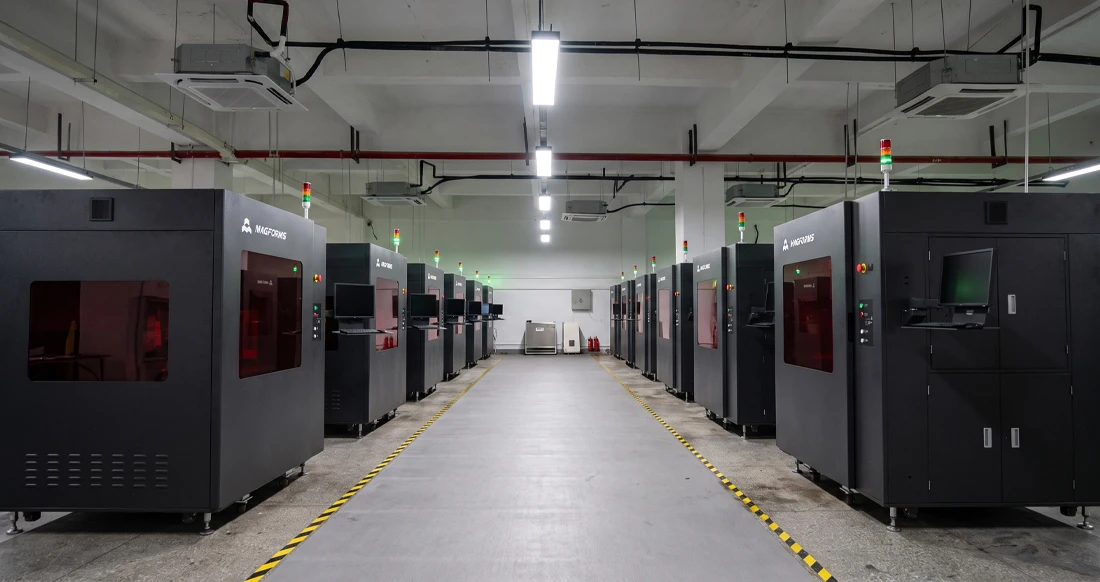
Magforms makes design and manufacture easier.
Popular Blogs
-
 Industry InsightsManufacturing Industry
FDM vs. SLA Printer: Which Technology Is Right for Your Project?
-
 Industry InsightsManufacturing Industry
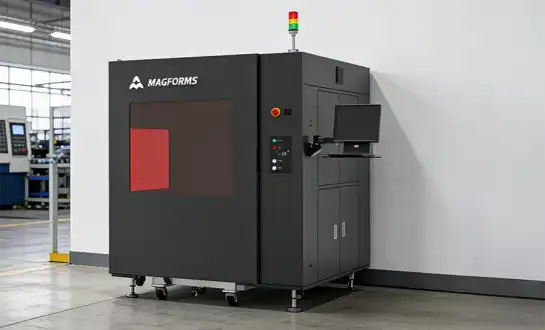
Top 5 Applications of Industrial 3D Printers in Manufacturing Today
-
 Industry InsightsManufacturing Industry
Why Stereolithography 3D Printers Are Unmatched for Microfluidic Device Prototyping?