Which Industrial SLA 3D Printer Suits 24/7 Lights-Out Production?
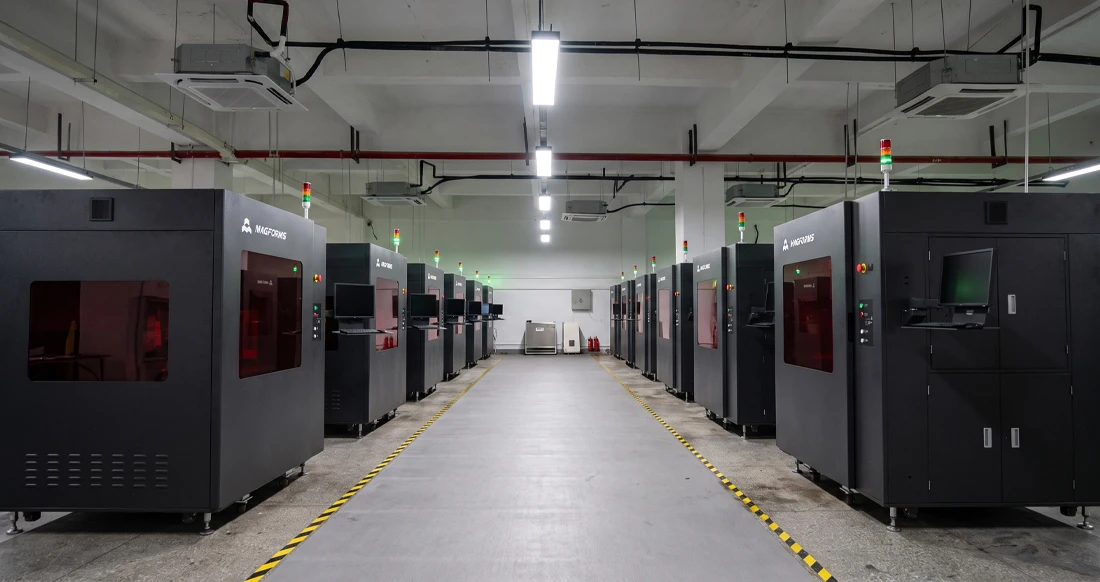
When production demands never sleep, your stereolithography system shouldn't either. An Industrial SLA 3D Printer designed for unattended 24/7 lights-out operation must deliver unwavering reliability, precision, and automation capabilities. Magforms' industrial-grade SLA systems integrate precision components, including AOC lasers, German Scanlab galvanometers, and Panasonic servo motors, with intelligent scanning and process-control technologies to support stable dimensional accuracy throughout continuous multi-day print cycles. Equipped with temperature-control capabilities, remote monitoring compatibility, and professional after-sales support with technical inquiries typically answered within 24 hours, these systems are designed to reduce common production bottlenecks associated with long-duration unattended printing.

Challenges and Requirements of 24/7 Lights-Out SLA Production
Operational Hurdles in Unattended Manufacturing
Running vat photopolymerization equipment without a person watching can cause problems. When resin runs out during a long print, the build may be interrupted or fail, resulting in lost machine time and wasted material. When dust or cured resin contaminates optical components, it can affect laser transmission or beam quality and contribute to inconsistent exposure across the build area, particularly during long production runs. A power interruption can also compromise a build if the printer does not provide an appropriate recovery procedure. Depending on the interruption duration and system design, the build may require inspection, recovery, or restarting, increasing downtime and material waste. Stability in the environment is no longer an option. Changes in temperature can affect resin viscosity and photopolymerization behavior, which may in turn influence dimensional consistency. Humidity can also influence resin storage stability and, for some formulations, the final properties of cured parts, making controlled material handling important for repeatable production.
Essential Features for Lights-Out Reliability
Effective process monitoring is important for systems used in continuous production. Remote monitoring and diagnostic functions can provide operators with information such as build progress, equipment status, and, where supported, laser output or resin-level information. Automated alerts can notify operators of abnormal process conditions, such as temperature deviations, unexpected equipment states, or potential optical-path issues, allowing intervention before a minor problem develops into a build failure. Industrial SLA 3D Printer systems also require reliable resin management for extended production. During multi-day builds, sufficient resin capacity and reliable resin-level management are important for maintaining continuous material supply throughout the job. A stable recoating mechanism, combined with routine inspection and cleaning, helps maintain consistent resin distribution during long production runs. Protective enclosures and laser-safety interlocks help prevent operators from being exposed to hazardous laser radiation during operation.

Real-World Implementation Insights
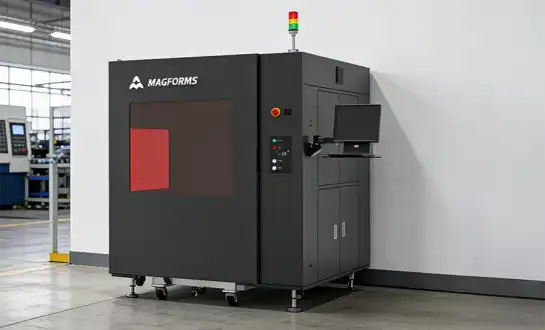
Automotive development teams can improve machine utilization by batching dashboard components, interior trim prototypes, and other validation parts into overnight or extended production runs. Dental laboratories can queue model batches for overnight or off-shift production, helping increase equipment utilization for orthodontic and dental-model applications. Aerospace suppliers can use industrial SLA systems to produce complex jigs, fixtures, prototypes, and tooling components with shorter development lead times. For the Magforms SL800, the specified dimensional accuracy is ±0.15 mm for dimensions of 100 mm or less and ±0.15% × L for dimensions greater than 100 mm, with actual results depending on geometry, resin, process parameters, and post-processing. Across these production scenarios, several practices can improve the reliability of unattended operation: proactive maintenance schedules, standardized material-handling procedures, and technical support processes that enable remote troubleshooting where available. These production scenarios are also reflected in real-world Industrial SLA application cases, where SLA systems are used for prototyping, tooling, and low-volume production.
Comparing Top Industrial SLA 3D Printers for Continuous Production
Market Landscape and Technology Differentiation
There are many different systems within the Industrial SLA 3D Printer category, with differences in build volume, optical architecture, material compatibility, and production capabilities. Established players use decades of improvement, while new suppliers offer alternatives that are cheaper. Different systems may use different laser sources, scanning configurations such as single- or dual-galvanometer architectures, and different resin-management approaches, including open-material or more tightly controlled material ecosystems. Magforms stands out by combining materials and tools in a way that works well together. Magforms combines hardware engineering with resin development, while its open-material architecture allows users to evaluate qualified 355 nm photopolymer resins from different sources rather than being limited to a proprietary material ecosystem. Panasonic servo motors support precise Z-axis platform positioning, with positioning accuracy specified at approximately ±8 μm on applicable systems. This mechanical precision contributes to stable layer positioning but should not be interpreted as the dimensional accuracy of the finished part. These components contribute to stable platform movement and optical control, which are important factors in maintaining consistent part quality during repeated production cycles.
Critical Selection Criteria for Round-the-Clock Use
When testing systems for lights-out operation, you have to balance a lot of different performance factors. One important production tradeoff is the balance among feature resolution, scanning efficiency, layer thickness, material behavior, and overall build time. This problem can be solved with variable laser spot technology, which changes the beam diameter on the fly. For fast infill scanning, 0.5–0.6mm spots are used, and for fine features and support structures, 0.15–0.2mm micro-spots are used. This variable-spot approach can improve scanning efficiency by up to 30–50% compared with conventional fixed-spot scanning strategies, depending on part geometry, material, and process parameters. Long-term reliability depends in part on the quality and integration of critical components. When properly aligned and calibrated, the Scanlab galvanometer and AOC laser system can support consistent laser positioning and spot characteristics across the build area. Proper optical alignment and calibration help maintain consistent scanning performance across the build area. Tall-build printing benefits from stable linear guides and precision motion components. Stable linear guides and precision motion components help minimize unwanted platform movement, which is particularly important when printing tall or slender geometries. For industrial production, supplier support is an important part of equipment selection, particularly when extended or unattended operation is required. The costs of production downtime rise quickly. Extended unplanned downtime can delay production schedules, customer deliveries, and downstream manufacturing operations. Magforms promises to answer questions within 24 hours, and our engineers have experience with a wide range of equipment platforms, not just our own.

Technology Comparison: SLA versus Alternative Processes
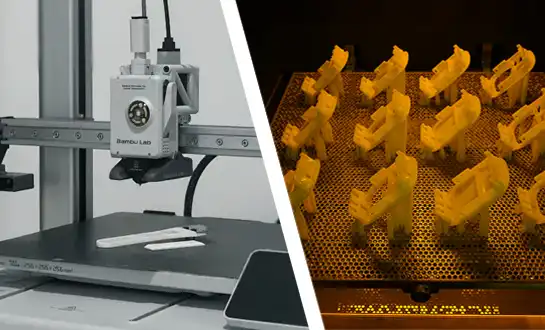
FDM can offer lower equipment and material costs for some applications, but its layer-based extrusion process typically produces more visible layer lines than industrial SLA and may require additional finishing when a smooth surface is required. SLS can process production-oriented materials such as nylon and is well suited to functional polymer parts and complex geometries. However, compared with SLA, SLS typically produces a different surface texture and may require different process controls when very smooth surfaces or specific dimensional tolerances are required. DLP systems can achieve fast layer exposure because an entire layer can be projected simultaneously, and they can also deliver high resolution depending on the projector, pixel size, optics, and build area. Their process characteristics differ from laser-scanned SLA, particularly in how resolution and exposure are distributed across the build area. Continuous photopolymerization processes can achieve high production throughput, but they may rely on specialized materials and process ecosystems. Their operating model therefore differs from open-material industrial SLA systems. Laser-based vat photopolymerization remains well suited to applications that require smooth surfaces, complex geometries, fine features, and high dimensional accuracy across a wide range of industrial applications. When appropriate monitoring, material management, and process-control capabilities are added, Industrial SLA 3D Printer systems can support extended and partially unattended production workflows in addition to prototyping.

How to Choose the Best Industrial SLA 3D Printer for Your Production Needs
Aligning Equipment Capabilities with Business Objectives
To choose the right stereolithography system, procurement teams should first define how the parts will be produced, inspected, and used. Service bureaus that handle a wide range of customer orders benefit from access to materials with different mechanical, thermal, and visual properties, as well as efficient material-change procedures. Open-material designs can allow users to evaluate different resin formulations and select materials based on application requirements and total material cost. High-speed scanning and large build sizes that combine many parts in one run are helpful for automotive R&D teams that focus on short iteration cycles. Documentation of regulatory compliance and material biocompatibility certifications is needed for medical and dental applications. Aerospace suppliers may also require process traceability, including records of material batches, key process parameters, equipment status, and relevant environmental conditions. Shorter development cycles are particularly valuable in consumer electronics, where product iterations are frequent and time-to-market is critical.
Technical Screening Checklist
Before purchasing an Industrial SLA 3D Printer, decision-makers should evaluate the machine against application-specific technical and operational requirements. The requirements for dimensional accuracy must match the tolerances of the application. For the Magforms SL800, the specified dimensional accuracy is ±0.15 mm for dimensions of 100 mm or less and ±0.15% × L for dimensions greater than 100 mm. However, actual dimensional results depend on part geometry, resin formulation, build orientation, process parameters, calibration, and post-processing. When suppliers publish printing-speed claims, buyers should distinguish between theoretical scanning speed and actual build time, which also depends on layer thickness, recoating time, part geometry, support structures, and other process factors. Material suitability needs a lot of research. Open-material systems can support a broader range of compatible 355 nm photopolymer resins, but each material still needs to be evaluated and validated for viscosity, curing behavior, exposure parameters, recoating performance, dimensional stability, and final mechanical properties. Temperature-control capabilities can help reduce process variation caused by changes in ambient conditions, particularly because resin viscosity and photopolymerization behavior can change with temperature. Self-learning scanning algorithms can refine toolpath strategies based on accumulated build data, with Magforms reporting potential efficiency improvements of up to 20% depending on geometry and scanning strategy.
Tailored Recommendations by Organization Size
Startup service providers and small design studios often prioritize lower initial investment while still requiring professional-grade reliability and material flexibility. Mid-format systems with approximately 300 mm build dimensions can provide a practical balance between equipment investment and the size of parts that can be produced. These businesses really value remote monitoring interfaces that let them keep an eye on things when they're not in the building. Industrial SLA 3D Printer systems can also provide the capabilities needed for these professional applications. Medium-sized production companies that work more than one shift need to show that they have good uptime data and extra safety features. For larger additive manufacturing operations, integration with ERP or production-management systems, multi-user access controls, and fleet-level job scheduling can become important procurement considerations, either as native functions or through software integration.
Soft Buying Guide and Procurement Tips for Industrial SLA 3D Printers
Strategic Procurement Approaches
Structured evaluation processes help when buying equipment for businesses. Asking for sample parts made on possible systems shows the real quality that can be achieved compared to what the marketing says. On-site demonstrations make sure that the software is easy to use and that it works with other production management systems. Reference customer talks give you a clear picture of what it's like to own something for a long time. Whether to buy or lease depends on how much you expect to use the space and how much money you have available. Direct purchase may be appropriate for operations with predictable utilization and sufficient capital budget, while leasing or other financing models may be worth evaluating when cash-flow flexibility or project-based capacity is more important. Payment terms for large orders or deployments of multiple units often include big discounts and longer warranties that can be negotiated when the goods are bought.
Implementation and Support Considerations
Professional installation should verify power requirements, equipment leveling, environmental conditions, ventilation where required, and vibration control before production begins. Full training for operators speeds up their ability to use software tools, follow material handling practices, and fix basic problems. Regularly checking the calibration, cleaning the optical path, and replacing consumables are all part of proactive maintenance scheduling, which keeps failures from happening out of the blue. The level of after-sales help has a direct effect on the continuity of production. Procurement teams should review warranty terms for major components such as the laser source, galvanometer system, motion-control components, and other critical assemblies, including coverage periods, exclusions, and replacement procedures. Repair times depend on how quickly spare parts are available. Keeping a critical inventory of recoater blades, platform coatings, and optical windows minimizes the amount of downtime that can happen.
Supplier Evaluation Framework
Patent portfolios and trademark registrations can provide evidence of a supplier's investment in product development, but supplier reliability should also be evaluated through installed base, service capability, technical documentation, component quality, and long-term customer support. Magforms has 22 patents and 30 trademarks, which shows that the company is committed to investing in new ideas. Magforms reports serving more than 300 business customers globally, providing one indicator of its international market presence. Supplier maturity should nevertheless be evaluated together with technical support, installation capability, documentation, service infrastructure, and customer references. Transparency in where components come from shows technical trustworthiness. The use of established components from suppliers such as Schneider Electric and Panasonic can support procurement confidence when the component specifications, integration quality, and long-term serviceability are also clearly documented. It's not just the knowledge of the material that counts; suppliers with roots in resin development know how photopolymer chemistry interacts with hardware factors, which helps them find the best curing profiles that reduce stress-induced warping.
Conclusion
To find the stereolithography system that really supports continuous unattended manufacturing, you need to look beyond the technical specs and at how the system actually works. To do lights-out production, you need very stable machines, smart process tracking, and a technical help system that can respond quickly. Magforms combines world-class component integration (with AOC lasers, Scanlab galvanometers, and Panasonic servos) with knowledge of materials and a track record of commitment to customer satisfaction after the sale. Our variable-spot technology, self-learning path optimization, and built-in temperature-control capabilities are designed to support stable production performance during extended print cycles. If your production schedule requires extended unattended operation, choose an Industrial SLA 3D Printer that is engineered for long-duration operation and supported by appropriate monitoring, maintenance, material management, and recovery procedures.
FAQ
How does laser lifespan affect lights-out operation feasibility?
Laser service life varies significantly with laser type, operating conditions, power level, cooling, and manufacturer specifications. For lights-out production, procurement teams should review the laser manufacturer's rated lifetime, expected power stability, maintenance requirements, and replacement procedure rather than relying on a generic operating-hour figure. Planned maintenance based on operating hours can help reduce the risk of unexpected laser-related downtime. A stable laser source can help maintain consistent exposure conditions over long production cycles, while periodic laser-power monitoring and calibration are still important for maintaining process consistency over the equipment's service life. Regular checks of laser output and exposure performance help maintain consistent cure depth and dimensional accuracy over the equipment's service life.
Can unattended printing match supervised quality standards?
When properly validated, lights-out production can maintain dimensional and process consistency comparable to attended production, provided that the material, machine, environment, and process parameters remain within their validated operating ranges. Automated process controls can reduce operator-dependent variation by applying validated process parameters consistently. Temperature-control capabilities can help reduce process variation associated with changes in ambient conditions and HVAC cycling. Remote monitoring can help operators identify certain abnormal conditions earlier and reduce the need for continuous physical supervision, but it should complement rather than completely replace scheduled inspections and maintenance. The important thing is to make sure the process works well during guided test runs before moving on to unsupervised operation.
What material considerations affect continuous printing success?
Resin shelf life, viscosity stability, curing behavior, and dimensional performance all influence the reliability of extended builds. Formulations with a long working life don't polymerize too quickly in the vat during long builds. Temperature-stable chemicals keep consistency constant even when the temperature changes. With an open-material architecture, users can evaluate a broader range of compatible 355 nm photopolymer resins for specific applications instead of being limited to a single proprietary material ecosystem. Magforms' integration of resin development and printer engineering can help optimize material profiles and process parameters for compatible applications, reducing the amount of trial-and-error required when qualifying materials. For validated Magforms material profiles, this integration can reduce compatibility-related trial and error. Third-party or newly developed resins should still undergo application-specific material and process validation before being used in unattended production.
Partner with a Trusted Industrial SLA 3D Printer Manufacturer
Magforms solves problems in lights-out production with 20 years of experience in additive manufacturing. Our integrated approach to materials and equipment helps reduce compatibility-related trial and error while supporting stable optical, motion, and process control for industrial SLA production. With 22 patents, more than 300 business customers worldwide, and technical support with inquiries typically answered within 24 hours, Magforms provides an established foundation for customers evaluating Industrial SLA 3D Printer solutions for extended production. Our tools are designed to handle the needs of unsupervised production, whether you're a service company trying to get the most out of your resources or an OEM trying to speed up product development. Get in touch with us at info@magforms.com to talk about your specific application needs and find out how the right Industrial SLA 3D Printer supplier can change the way you make things.
References
1. Gibson, I., Rosen, D., Stucker, B., & Khorasani, M. (2021). Additive Manufacturing Technologies (3rd ed.). Springer International Publishing.
2. Jacobs, P. F. (2019). Stereolithography and Other RP&M Technologies: From Rapid Prototyping to Rapid Tooling. Society of Manufacturing Engineers.
3. Ligon, S. C., Liska, R., Stampfl, J., Gurr, M., & Mülhaupt, R. (2017). Polymers for 3D Printing and Customized Additive Manufacturing. Chemical Reviews, 117(15), 10212-10290.
4. Quan, Z., Wu, A., Keefe, M., Qin, X., Yu, J., Suhr, J., Byun, J. H., Kim, B. S., & Chou, T. W. (2015). Additive Manufacturing of Multi-Directional Preforms for Composites. Materials Today, 18(9), 503-512.
5. Stansbury, J. W., & Idacavage, M. J. (2016). 3D Printing with Polymers: Challenges Among Expanding Options and Opportunities. Dental Materials, 32(1), 54-64.
6. Wohlers, T., Campbell, I., Diegel, O., Kowen, J., & Mostow, N. (2022). Wohlers Report 2022: 3D Printing and Additive Manufacturing Global State of the Industry. Wohlers Associates.

Magforms makes design and manufacture easier.
Popular Blogs
-
 Industry InsightsManufacturing Industry
FDM vs. SLA Printer: Which Technology Is Right for Your Project?
-
 Industry InsightsManufacturing Industry
Top 5 Applications of Industrial 3D Printers in Manufacturing Today
-
 Industry InsightsManufacturing Industry
Why Stereolithography 3D Printers Are Unmatched for Microfluidic Device Prototyping?