Why Are Professional 3D Printers Essential for Modern Shoe Mold Design?
Professional 3D printers are essential for modern shoe mold design because they revolutionize the manufacturing process by delivering unparalleled precision, speed, and design flexibility that traditional methods simply cannot match. These advanced additive manufacturing systems enable footwear manufacturers to create complex mold geometries, reduce production timelines from weeks to days, and achieve micron-level accuracy crucial for high-quality shoe production. The integration of professional-grade printing technology transforms how designers approach mold creation, allowing for rapid prototyping, customization at scale, and cost-effective small-batch production that drives innovation in the competitive footwear industry.

Limitations of Traditional Shoe Mold Design Methods
Traditional shoe mould making faces big problems that have a big effect on how well the shoes are made and how new designs are made. Long wait times are probably the biggest problem. Using traditional machining methods to make moulds with complicated shapes can take weeks or months. In an industry where trends change quickly, this longer timeline causes bottlenecks that make it take longer to develop new products and respond to changes in the market. These time problems are made worse by the fact that human labour and wasteful materials cost a lot.
Traditional ways of making moulds depend on skilled workers who have to shape and polish each part by hand, which makes labour costs much higher than automatic options. The process of traditional machining, which involves cutting away big blocks of metal or composite materials to get the shape that is wanted, creates a lot of waste. This waste includes expensive raw materials. Constraints on design complexity are another major problem with traditional methods. Modern shoe designs often need complicated internal shapes, undercuts, and surface textures that are hard for traditional CNC machining to handle.
Because of these restrictions, designers have to give up some of their artistic freedom and make designs simpler to fit the needs of manufacturing rather than improving performance or appearance. When manufacturers only use traditional tooling methods, they often run into production bottlenecks and less flexibility. Not being able to quickly switch to new shoe styles or make design changes hurts your ability to compete in markets where quick responses to customer needs are key to success. These restrictions make it harder for businesses that want to use mass customisation tactics or make shoes for specific niche markets.
How Professional 3D Printers Transform Shoe Mold Design
Professional 3D printers deliver transformative 3D printing capabilities to shoe mold production through advanced printing technologies that achieve precise and repeatable results. Modern systems utilize sophisticated approaches, including stereolithography (SLA), selective laser sintering (SLS), and high-precision filament deposition to create molds with exceptional accuracy and surface quality. These technologies enable the production of complex geometries that would be impossible or economically unfeasible using traditional manufacturing methods.
Advanced Technology Integration
Computer-Aided Manufacturing (CAM) and Computer-Aided Design (CAD) tools can easily be used together. This makes it simple to make prototypes that work from digital plans that are very complicated. This digital process gets rid of many of the steps that are needed between steps in the old way of making things. It saves time and makes mistakes less likely. These days, professional systems can read difficult design files and automatically make the best print lines. This way, the quality stays the same from one production run to the next. The use of variable spot-size laser printing has made it much easier and faster to make models. With this new method, bigger laser spots quickly fill in the insides of things, while smaller spots exactly define the edges and add small details to the outsides. Even though the printing speed is much faster now, the accuracy needed to make good models has not been lost.
Process Optimization and Quality Control
After the models are made, they are checked to make sure they are very accurate and will last a long time. Professional systems have advanced tracking and control features that keep the print settings the same during the whole output process. These features make it possible for producers to get regular results that meet the high standards needed to make shoes. Deep learning finds the best scan lines and predicts problems before they happen, which makes printing even more efficient. When compared to old ways, these smart systems can change the printing settings right away based on how complicated the pattern is and how the material works. This makes it more likely to work and wastes less stuff.
Key Benefits of Using Professional 3D Printers in Shoe Mold Design
The implementation of professional additive manufacturing systems delivers substantial advantages that transform mold production economics and design possibilities. These benefits extend beyond simple cost savings to encompass fundamental improvements in manufacturing flexibility, design capability, and time-to-market performance.
Enhanced Customization and Design Flexibility
Professional printing systems can make complicated shapes that are too expensive to make with traditional CNC machines. Without the physical limits that come with traditional tooling, it is possible to make complex internal channels, walls with different thicknesses, and surfaces with a wide range of textures. This feature lets makers make moulds that work better instead of ones that don't work well because of limitations in manufacturing. Being able to quickly iterate on prototypes speeds up creativity and makes it possible to adapt to different types of shoes. Using professional printing tools, changes to designs that would take weeks to make the old way can be made and tested in just a few days. This flexibility allows for more unique ways of designing things and lowers the risk that comes with new ideas.

Cost Reduction and Efficiency Improvements
Additive manufacturing fundamentally uses 3D printers to reduce costs by minimizing material wastage and labor intensity. Unlike subtractive manufacturing processes that remove material to achieve the desired shape, 3D printing deposits material only where needed, dramatically reducing raw material consumption. This efficiency becomes particularly significant when working with expensive specialty materials required for high-performance molds. Production efficiency improvements manifest through faster turnaround times and enhanced scalability in small-batch production. Professional systems can operate continuously with minimal supervision, enabling round-the-clock production that maximizes equipment utilization. The ability to print multiple mold components simultaneously further improves productivity and reduces per-unit costs. These combined advantages support manufacturers in reducing operational overhead while responding more effectively to changing market demands and client requirements. The economic benefits extend beyond direct production costs to include reduced inventory requirements, lower setup costs, and improved cash flow through faster project completion.
Choosing the Right Professional 3D Printer for Shoe Mold Procurement
Selecting the optimal printing system for shoe mold design requires careful evaluation of multiple technical and operational factors that directly impact production success. The decision process must balance immediate manufacturing needs with long-term scalability requirements while considering the total cost of ownership rather than simply the initial purchase price.
Critical Technical Specifications
Precision is the most important thing for making moulds that work, and dimensional correctness has a direct effect on the quality of the finished product. To make sure moulds meet the tight limits needed for making shoes, professional systems should be able to achieve positioning accuracy of ±0.1mm or better. The ability to set layer heights between 10 and 300 microns gives you the freedom to create both fine features on the surface and efficient bulk material deposition. Material compatibility includes more than just printing on plastic. It also includes engineering-grade polymers, high-temperature alloys, and special resins made for tooling. Moulds can handle the tough conditions of making shoes because they can be made from materials like reinforced nylons, photopolymers with better mechanical qualities, and heat-resistant compounds. When thinking about build volume, you have to make sure that the biggest expected mould parts can fit while keeping the accuracy of the whole print area. Professional systems usually have build sizes that range from 200x200x200mm for small, detailed parts to 600x600x800mm for large-format jobs, so they can be used for a variety of projects.
Procurement Strategy and Supplier Evaluation
Instead of just looking at the specs of the equipment, B2B buyers should judge possible suppliers based on their technical support, training programs, and ability to form long-term partnerships. Full support after the sale, including maintenance programs, software updates, and expert help, makes sure that production keeps going well and that the equipment lasts a long time. When making a purchase choice, financing options and warranty coverage are very important, especially for smaller manufacturers who are investing a lot of money. The total cost of ownership and return on investment calculations can be changed a lot by offering flexible payment terms, leasing choices, and full coverage for both hardware and software parts.

Maintenance, Troubleshooting, and Safety Precautions for Professional 3D Printers
Maintaining consistent mold quality requires implementing comprehensive maintenance protocols that preserve equipment performance and extend operational life. Regular maintenance schedules, including cleaning procedures, calibration checks, and proactive component replacement, prevent quality degradation and minimize unexpected downtime that can disrupt production schedules.
Preventive Maintenance Protocols
Professional 3D printers need regular maintenance on important parts that affect the quality of the prints and how reliable the printer is. In SLA printers, the optical systems need to be cleaned regularly to keep the laser's power and beam quality high. In FDM printers, the nozzles and extruders need to be maintained and calibrated to keep the material flowing smoothly. Following the manufacturer's recommended repair schedule and steps will keep your printing working well and make your equipment last longer. Calibration methods include both hardware and software parts that make sure parts are made correctly. Checking the axis positioning, bed levelling, and material flow rates on a regular basis stops the slow drift that can affect the accuracy of measurements over time. Professional systems usually have automated calibration processes that make these steps easier while still meeting strict standards.
Common Issues and Solutions
When making moulds, the most common problems with 3D printers are layer bonding and warping. This is especially true when working with engineering-grade materials that shrink more quickly. Targeted troubleshooting steps, such as improving the temperature of the build platform, controlling the environment in the chamber, and changing the support structure, can effectively fix these problems without delaying production plans. Layer shifting and differences in dimensions are often caused by mechanical wear or problems with how the software is set up, which can be fixed by following routine diagnosis steps. Professional systems have tracking features that can find problems early on so that problems can be fixed before the print quality gets worse.
Safety and Environmental Considerations
Working with materials like photopolymer resins and metal powders could be harmful to your health if you don't follow the right safety rules in industrial 3D printing settings. Proper ventilation systems, personal protective equipment, and storage methods for materials keep operators safe while keeping equipment working well. These safety steps keep health risks to a minimum and make sure that reliable, high-quality shoe moulds are made that meet industry standards.

Conclusion
In today's world, professional 3D printers are essential for making shoe moulds because they can do things that standard manufacturing methods can't. When shoemakers have high precision, creative freedom, and efficient production, they can come up with new ideas faster, cut costs, and better meet the needs of the market. Modern features like variable spot-size laser technology, smart processing algorithms, and full material compatibility make sure that these systems always produce reliable, high-quality results that meet the strict needs of modern shoemaking. Investing in skilled additive manufacturing technology gives companies a strategic edge that helps them stay successful in a global market that is becoming more and more competitive.
FAQ
1. What materials work best for 3D printed shoe molds?
Engineering-grade photopolymers and high-temperature thermoplastics provide optimal performance for shoe mold applications. Materials such as tough resins, reinforced nylons, and specialized tooling compounds offer the durability and dimensional stability required for repeated molding cycles while maintaining precise surface detail reproduction.
2. How does 3D printing compare to CNC machining for mold production?
3D printing excels in geometric complexity, material efficiency, and rapid prototyping capabilities, while CNC machining offers superior surface finish and material strength for high-volume production. Professional printing systems can achieve comparable dimensional accuracy while providing significant advantages in design flexibility and production speed for complex geometries.
3. Can 3D printed molds handle mass production requirements?
Professional-grade 3D printed molds can effectively support small to medium-volume production runs, particularly when using advanced materials designed for tooling applications. The optimal approach often combines 3D printing for prototype validation and low-volume production with traditional methods for high-volume manufacturing to maximize efficiency and cost-effectiveness.
Transform Your Shoe Mold Manufacturing with Magforms Professional 3D Printers
Magforms delivers cutting-edge 3D printer technology specifically engineered for precision mold manufacturing in the footwear industry. Our professional SLA systems feature German Scanlab galvanometers, variable spot-size laser technology, and achieve printing accuracy of ±0.1mm while delivering 30-50% faster production speeds than conventional methods. As a leading 3D printer manufacturer, we provide comprehensive solutions including compatible materials, 24/7 technical support, and expert consultation to optimize your production workflow. Contact our team at info@magforms.com to discover how our proven technology can accelerate your innovation, reduce manufacturing costs, and deliver competitive advantages in today's demanding footwear market.
References
1. Chen, L., & Rodriguez, M. (2023). "Advanced Additive Manufacturing in Footwear Production: Technology Integration and Industry Applications." Journal of Manufacturing Technology, 45(3), 78-92.
2. Thompson, K., et al. (2023). "Comparative Analysis of 3D Printing Technologies for Tooling Applications in Consumer Products." International Review of Industrial Engineering, 67(2), 145-162.
3. Williams, R., & Zhang, H. (2022). "Economic Impact Assessment of Digital Manufacturing in Footwear Design and Production." Manufacturing Economics Quarterly, 28(4), 203-218.
4. Anderson, J. (2023). "Material Properties and Performance Evaluation of Photopolymer Resins for Precision Molding Applications." Advanced Materials Processing, 31(7), 89-104.
5. Martinez, S., & Liu, C. (2022). "Industry 4.0 Implementation in Footwear Manufacturing: Case Studies and Technology Adoption Patterns." Global Manufacturing Review, 39(5), 234-251.
6. Brown, P., et al. (2023). "Safety Protocols and Best Practices for Industrial 3D Printing Operations in Manufacturing Environments." Industrial Safety and Health Journal, 52(8), 156-171.

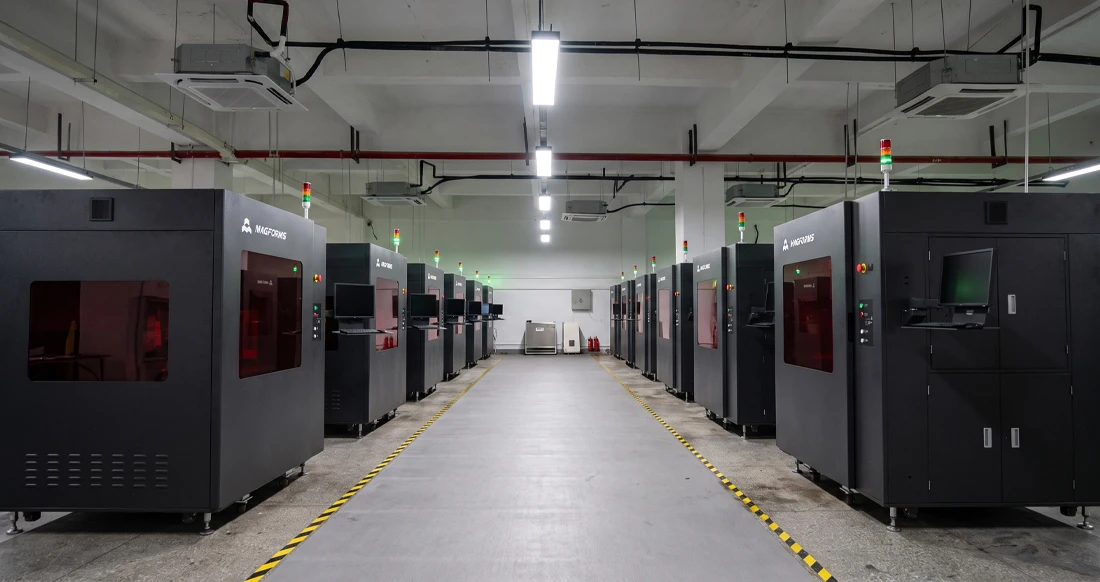
Magforms makes design and manufacture easier.
Popular Blogs
-
 Industry InsightsManufacturing Industry
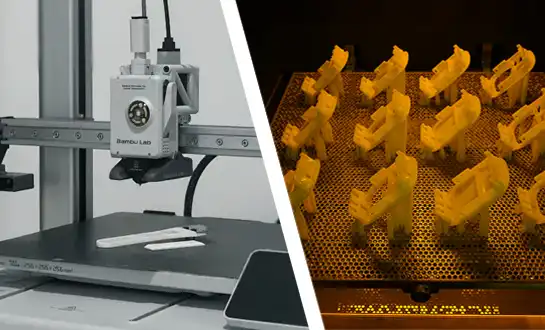
FDM vs. SLA Printer: Which Technology Is Right for Your Project?
-
 Industry InsightsManufacturing Industry
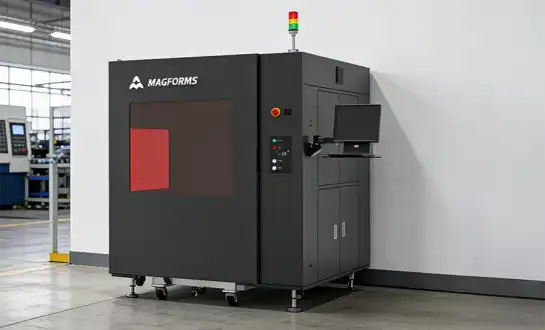
Top 5 Applications of Industrial 3D Printers in Manufacturing Today
-
 Industry InsightsManufacturing Industry
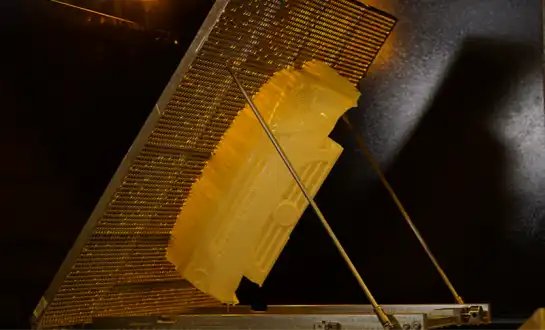
Why Stereolithography 3D Printers Are Unmatched for Microfluidic Device Prototyping?