Why Is the Stereolithography 3D printer P7 Pro a Smart Choice?
Choosing the right manufacturing equipment can transform your production workflow from chaotic to streamlined. The stereolithography 3D printer P7 Pro delivers exactly that transformation through its advanced grayscale adjustment technology, achieving a remarkable 9 µm XY resolution that rivals DLP systems while maintaining the smooth surface finish SLA technology is known for. When you're producing jewelry casting models, dental prototypes, or precision electronics components, this level of detail isn't just impressive—it's essential for meeting professional production standards without compromise.
Understanding Stereolithography 3D Printing Technology
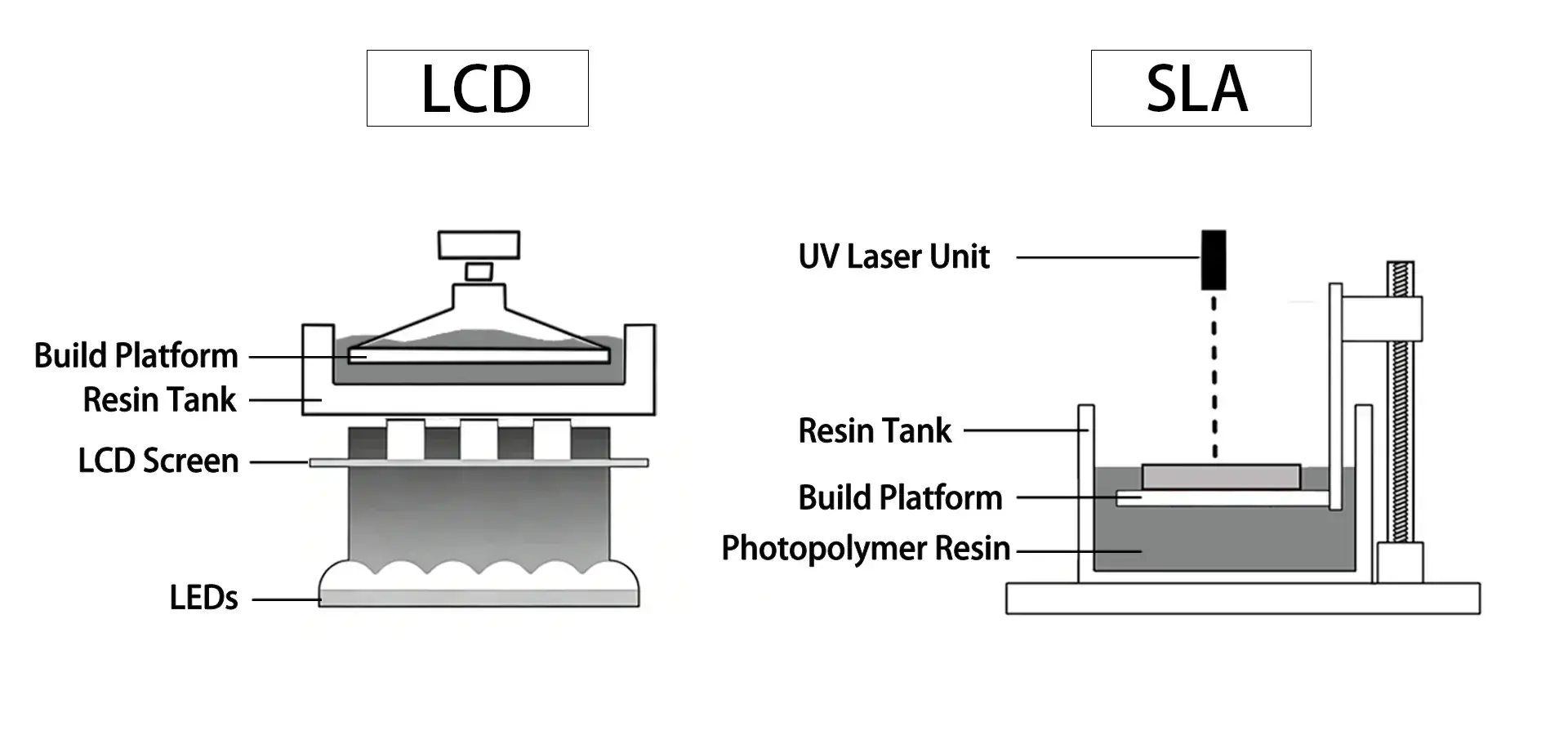
Stereolithography 3D printers selectively cure liquid photopolymer resin layer by layer using a UV light source. In modern desktop systems such as LCD-based mSLA stereolithography 3D printers (including the P7 Pro), this curing is achieved through a masked LCD screen, while industrial SLA systems use a laser scanning path. The build platform gradually descends as each layer is cured, forming a solid part through a controlled vat photopolymerization process driven by precise UV light exposure. SLA and mSLA technologies generally produce parts with more uniform (near-isotropic) mechanical properties compared to FDM, which builds parts through extruded filament deposition and often results in visible layer lines.
How SLA Differs from Other Technologies
Understanding manufacturing technique differences is important. Fast prototyping with durable thermoplastics is possible with FDM printers, but layer lines and fine details are difficult. With a digital projector, DLP systems expose entire layers simultaneously, which improves speed in small-batch manufacturing but may introduce slight pixel-level artifacts at cured boundaries depending on resolution and optical calibration. Laser-based SLA systems follow precise scanning paths, while LCD-based mSLA stereolithography 3D printers (such as the P7 Pro) use controlled masked exposure to ensure uniform curing across each layer, minimising pixelation and retaining smooth curvature on complicated geometries.
Industrial Applications Across Sectors
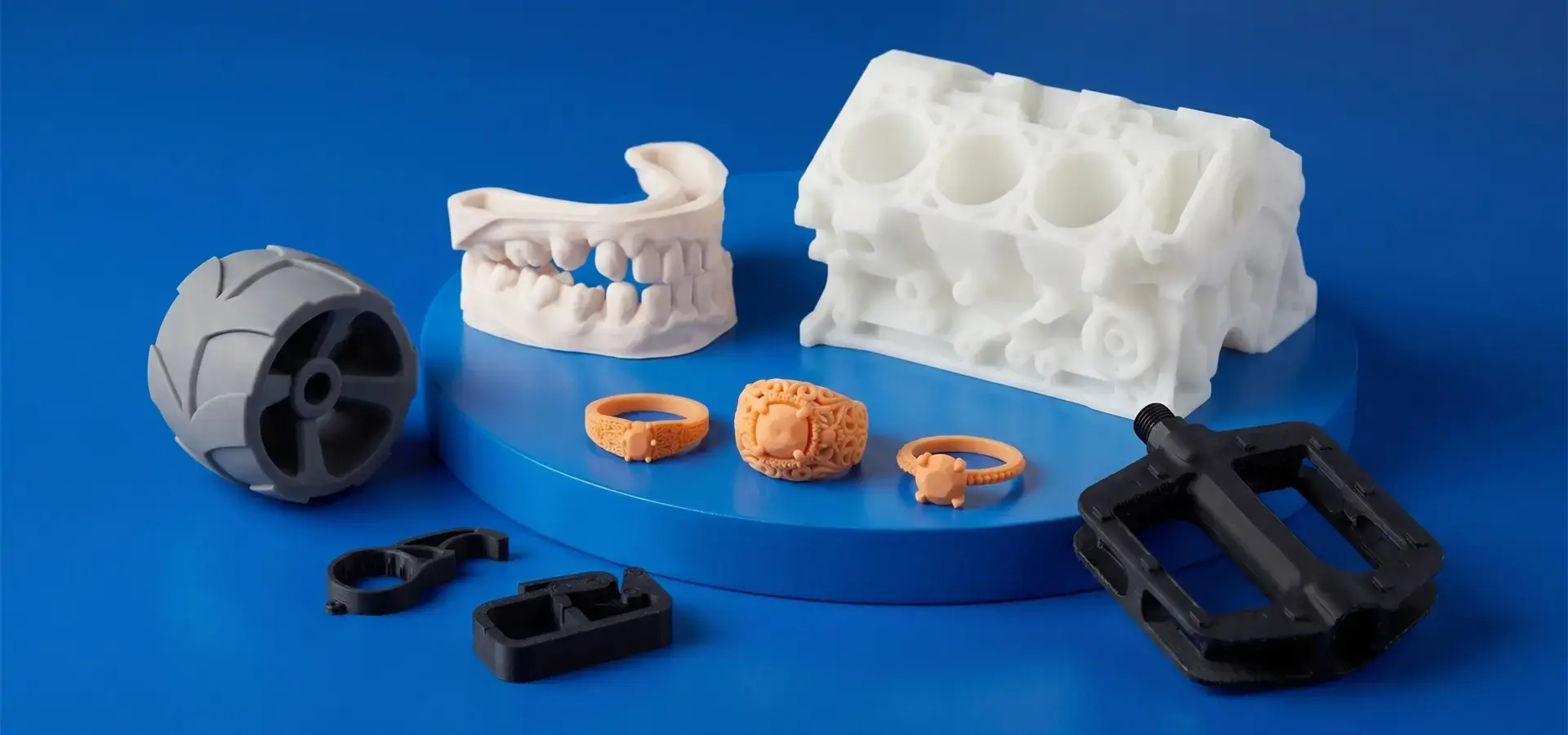
Resin-based printing is versatile across several professions. SLA machines let dental labs make patient-specific orthodontic models and surgical guides. Automotive engineers quickly prototype interior components and snap-fit assemblies to speed up design iteration. Aerospace component suppliers verify difficult tiny connection geometries before investing in pricey machinery. Wearable device housings in consumer electronics require micron-level tolerances to ensure precise fit and assembly. Cultural artisans recreate delicate handicrafts, and shoe designers create shoe mould prototypes. This versatility shows why precise resin printing is essential across sectors.
Why Choose the P7 Pro? Core Features and Benefits
The P7 Pro distinguishes itself through LCD-based mSLA technology, using a high-resolution monochrome LCD screen to project each layer of UV light with pixel-level control. Many businesses struggle with equipment that fails during critical production runs or produces inconsistent results between prints. This model solves those challenges through intelligent engineering choices.
Revolutionary Grayscale Adjustment for Unmatched Detail
The P7 Pro uses Magforms' Imadjust technology to optimise pixel-level light exposure. This breakthrough enables the P7 Pro stereolithography 3D printer to compete with DLP systems in detail reproduction, achieving an effective 9 μm XY-level precision. Jewellery casting models need this accuracy to capture filigree and jewel sets. The 6.8-inch 9K monochrome LCD panel, with 18 × 18 μm ultra-fine pixels and 8520 × 4320 resolution, clearly displays skin textures and pores. This is essential if your firm relies on client-ready prototypes.
Temperature Control That Eliminates Seasonal Failures
Winter doesn't stop production. The clever heating technology of the P7 Pro keeps the printing chamber at 30℃ independent of environmental circumstances. Thermal control helps reduce risks such as layer separation and curing instability, which are often caused by resin viscosity changes in low-temperature environments. Engineering resins ranging from flexible to high-temperature formulations can be processed without manual adjustment under stable thermal conditions. This temperature stabilisation helped manufacturing facilities achieve high printing success rates during continuous operation testing.
Precision That Meets Production Standards
High-precision LCD-based mSLA stereolithography 3D printers capable of ±0.02mm accuracy are relatively rare in desktop manufacturing systems. The homogeneous light source ensures uniform curing across each layer, improving surface detail accuracy and dimensional consistency. Adjustable layer thickness (25-150μm) balances speed and resolution for precise project needs. The full-metal chassis supports multi-hour print operations without flexing or drifting, while the P-grade industrial precision linear rails ensure smooth vertical movement.
User-Centric Design for Efficient Workflows
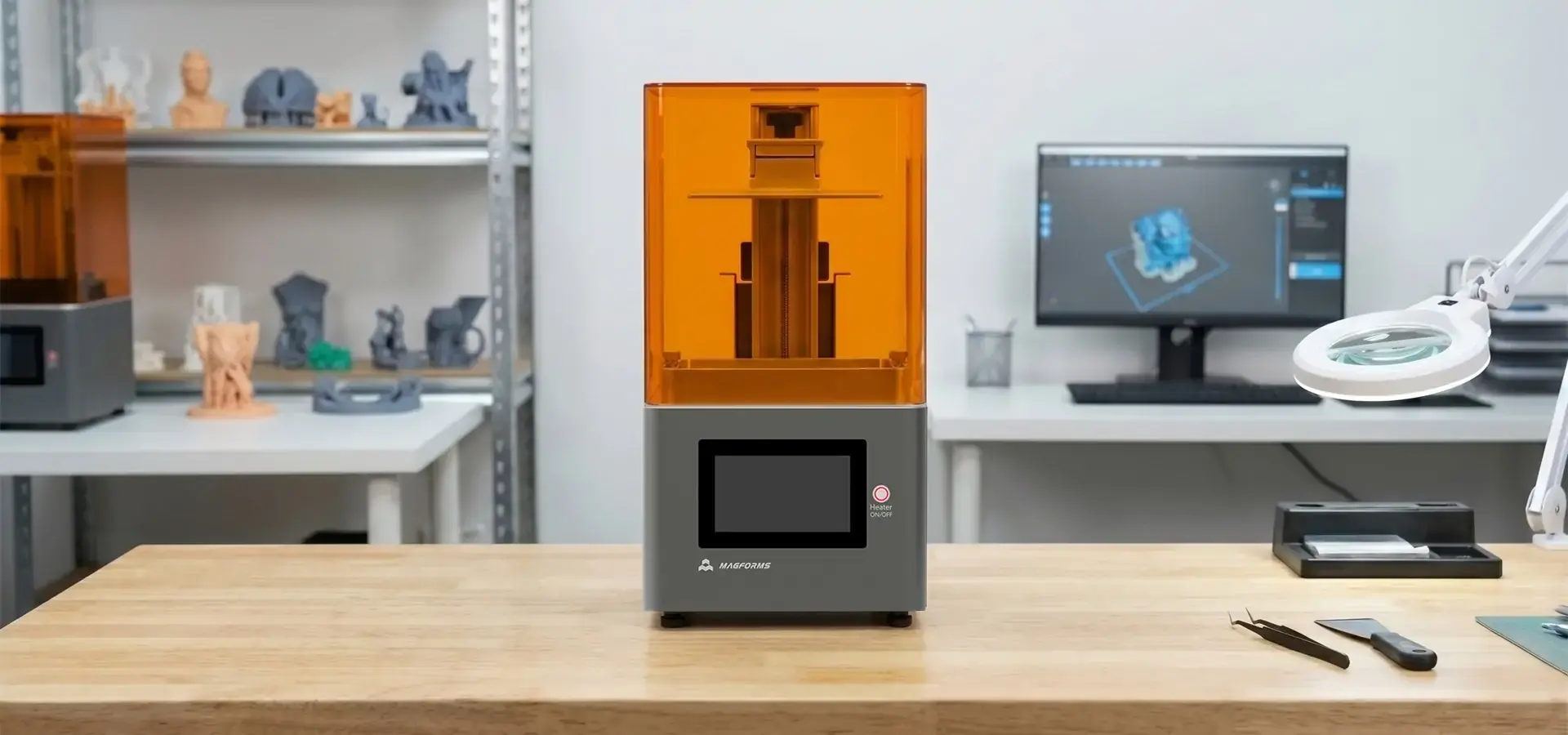
Equipment downtime expenses. The P7 Pro has an intelligent design to facilitate operation and maintenance. A 5-inch touchscreen with customised UI enables operators to alter printing settings in real time without restarting unsuccessful operations or waiting for the next batch. The UV-resistant acrylic flip-up cover protects against UV light but allows progress to be seen. These capabilities lower additive manufacturing supervision labour expenses and the learning curve for new operators.
Real-world implementation shows these benefits. After converting to the P7 Pro, small jewellery workshops claim 40% faster prototype iteration, allowing them to react to bespoke customer demands in days rather than weeks. Schools enjoy the cost-effectiveness and professional outcomes, training pupils for industry demands without enterprise-level expenses.
Comparing P7 Pro with Other SLA and Resin 3D Printers
Making informed procurement decisions requires understanding where equipment stands relative to alternatives. The landscape includes established brands like Formlabs, Peopoly, and Elegoo, each positioning their stereolithography 3D printer offerings differently.
Resolution and Speed Analysis
Desktop resin printers from consumer-focused brands typically achieve 50-100 μm XY resolution—adequate for hobbyist applications but insufficient for jewelry casting or medical device prototyping. The P7 Pro's 9 μm resolution (with grayscale adjustment) competes directly with industrial DLP systems costing significantly more. Print speed depends on layer height and part geometry, but the monochrome LCD screen's faster curing times—compared to older RGB screens—reduce the exposure time per layer substantially. When printing a batch of dental models overnight, these seconds per layer accumulate into hours saved across the full build.
Build Volume Considerations
The P7 Pro's 153.36 × 77.76 × 160 mm build volume positions it as a compact yet capable machine. Larger format systems offer more XY area but often sacrifice resolution and increase material waste when printing small, detailed parts. This build envelope suits jewelry pieces, dental arches, small mechanical assemblies, and electronics housings—the sweet spot for businesses focused on precision over size.
Cost-Effectiveness for Different Business Scales
Budget allocation differs dramatically between a startup design studio and an established automotive R&D department. Entry-level resin printers appeal to individual makers but lack the reliability and material compatibility professional production demands. Enterprise systems from international brands deliver performance but carry price tags that strain small business capital. The P7 Pro occupies the crucial middle ground: industrial-grade components and performance at a cost structure that allows small to medium enterprises to achieve positive ROI within months rather than years.
Material Compatibility and Ecosystem
Some manufacturers lock their stereolithography 3D printer systems to proprietary resins, creating ongoing cost dependencies and limiting material choices. The P7 Pro supports third-party engineering resins while being optimized for Magforms' own material lineup. This flexibility matters when you need specialized properties—transparent resins for fluid visualization, high-temperature formulations for functional testing, or flexible materials for gasket prototypes. The ability to source materials competitively protects your operating margins as production scales.
Making a Smart Procurement Decision for Your Business
Beyond technical specifications, successful equipment purchases require evaluating total cost of ownership and alignment with operational needs. Procurement managers balance upfront investment against ongoing expenses, reliability factors, and support infrastructure.
Evaluating Total Cost of Ownership
The purchase price represents just one component of ownership costs. Resin consumption, replacement FEP films or LCD screens, isopropyl alcohol for washing, and UV curing equipment all accumulate over time. The P7 Pro's high printing success rate directly reduces material waste—failed prints don't just waste resin; they consume labor hours for cleanup and job resubmission. The monochrome screen technology extends service life compared to older RGB panels, reducing replacement frequency. When calculating ROI, factor in how quickly the stereolithography 3D printer can produce billable prototypes or reduce outsourcing costs compared to sending models to external service bureaus.
Warranty and After-Sales Support
Equipment failures during critical production windows create cascading delays. Magforms backs the P7 Pro with comprehensive warranty coverage and technical support that extends beyond standard email ticketing for typical support systems. Their team possesses years of additive manufacturing experience, enabling faster troubleshooting compared to vendors who simply resell equipment without deep product knowledge. For businesses operating in the United States, responsive support matters—timezone alignment and English-fluent technical staff eliminate the communication friction that plagues some international suppliers.
Matching Capabilities to Industry Requirements
Different sectors prioritize different attributes. Jewelry manufacturers need that exceptional 9 μm resolution to capture intricate details in casting patterns. Dental labs value the combination of precision and batch production capability for producing multiple models simultaneously. Consumer electronics prototyping teams appreciate the fast iteration speed and parameter flexibility. Automotive engineers require material compatibility with tough, durable resins that withstand functional testing. Before committing, clearly define your primary application and verify the stereolithography 3D printer specifications align with those demands.
Procurement Channels and Supplier Reliability
Acquiring equipment through established channels protects against counterfeit components and ensures access to genuine replacement parts. Magforms maintains direct distribution relationships and partners with vetted resellers who understand industrial customer needs. Online ordering processes streamline procurement, but complex installations benefit from hands-on consultation. Requesting sample prints before purchase—common practice in B2B transactions—allows your team to validate that the P7 Pro's output meets your quality standards before investing.
Conclusion
Selecting manufacturing equipment demands careful evaluation of technical capabilities, operational reliability, and business fit. The stereolithography 3D printer P7 Pro delivers professional-grade results through its 9 μm grayscale-adjusted resolution, intelligent thermal management, and robust construction—all at a price point accessible to growing businesses. Whether you're producing jewelry casting models, dental prototypes, or precision mechanical components, this machine addresses the core pain points of inconsistent quality, temperature-related failures, and limited material flexibility that plague lesser systems. When equipment reliability directly impacts your ability to meet client deadlines and maintain profit margins, choosing a proven solution backed by experienced support makes the difference between operational excellence and costly disruption.
FAQ
1. What post-processing does the P7 Pro require?
Parts printed on SLA or LCD-based mSLA systems require two-stage post-processing. The first involves washing uncured resin off the surface using isopropyl alcohol or TPM solvent—typically 5-10 minutes in an ultrasonic cleaner or wash station. The second stage uses UV light exposure to fully cure the part, stabilizing mechanical properties and preventing tackiness. The P7 Pro's consistent layer adhesion reduces the risk of delamination during washing compared to systems with poor temperature control.
2. Can I use third-party resins with this system?
The P7 Pro supports open resin compatibility, though optimal results come from Magforms' material ecosystem due to coordinated development between hardware and resin formulations. When using alternative materials, adjusting exposure times through the touchscreen interface allows fine-tuning for each resin's photopolymer characteristics. This flexibility prevents vendor lock-in while maintaining performance.
3. How does the 9 μm resolution benefit jewelry applications?
Jewelry casting requires capturing details as fine as prong tips, engraving, and micro-pavé settings. Traditional 50 μm resolution systems round off these features, requiring manual rework. The P7 Pro's grayscale adjustment and 9 μm capability reproduce these elements directly in the printed pattern, reducing finishing labor and improving casting success rates. This precision meets production standards professional jewelers demand.
Partner with Magforms for Your Stereolithography 3D Printer Needs
Implementing advanced manufacturing technology works best with experienced guidance. Magforms combines two decades of additive manufacturing expertise with direct manufacturer pricing—no middleman markup inflates your investment. Our technical team understands the specific requirements of jewelry production, dental laboratories, and precision prototyping because we've supported hundreds of installations across these sectors. The P7 Pro represents our commitment to delivering industrial performance at an accessible price point, backed by patents and global certifications.
Reach out to our team at info@magforms.com to discuss how this stereolithography 3D printer for sale fits your production workflow. We'll arrange sample prints using your actual design files, provide detailed ROI calculations based on your usage patterns, and outline the full support package included with purchase. Whether you're replacing unreliable equipment or establishing your first in-house additive manufacturing capability, partnering with a trusted supplier ensures smooth implementation and ongoing operational success.
References
1. Gibson, I., Rosen, D., & Stucker, B. (2021). Additive Manufacturing Technologies: 3D Printing, Rapid Prototyping, and Direct Digital Manufacturing (3rd ed.). New York: Springer.
2. Jacobs, P. F. (1992). Rapid Prototyping & Manufacturing: Fundamentals of Stereolithography. Dearborn: Society of Manufacturing Engineers.
3. Melchels, F. P., Feijen, J., & Grijpma, D. W. (2010). A review on stereolithography and its applications in biomedical engineering. Biomaterials, 31(24), 6121-6130.
4. Stansbury, J. W., & Idacavage, M. J. (2016). 3D printing with polymers: Challenges among expanding options and opportunities. Dental Materials, 32(1), 54-64.
5. Quan, H., Zhang, T., Xu, H., Luo, S., Nie, J., & Zhu, X. (2020). Photo-curing 3D printing technique and its challenges. Bioactive Materials, 5(1), 110-115.
6. Ligon, S. C., Liska, R., Stampfl, J., Gurr, M., & Mülhaupt, R. (2017). Polymers for 3D printing and customized additive manufacturing. Chemical Reviews, 117(15), 10212-10290.

Magforms makes design and manufacture easier.
Popular Blogs
-
 Industry InsightsManufacturing Industry
FDM vs. SLA Printer: Which Technology Is Right for Your Project?
-
 Industry InsightsManufacturing Industry
Top 5 Applications of Industrial 3D Printers in Manufacturing Today
-
 Industry InsightsManufacturing Industry
Why Stereolithography 3D Printers Are Unmatched for Microfluidic Device Prototyping?