Why Manufacturers Choose SL800 Industrial SLA 3D Printer for Mass Prototyping
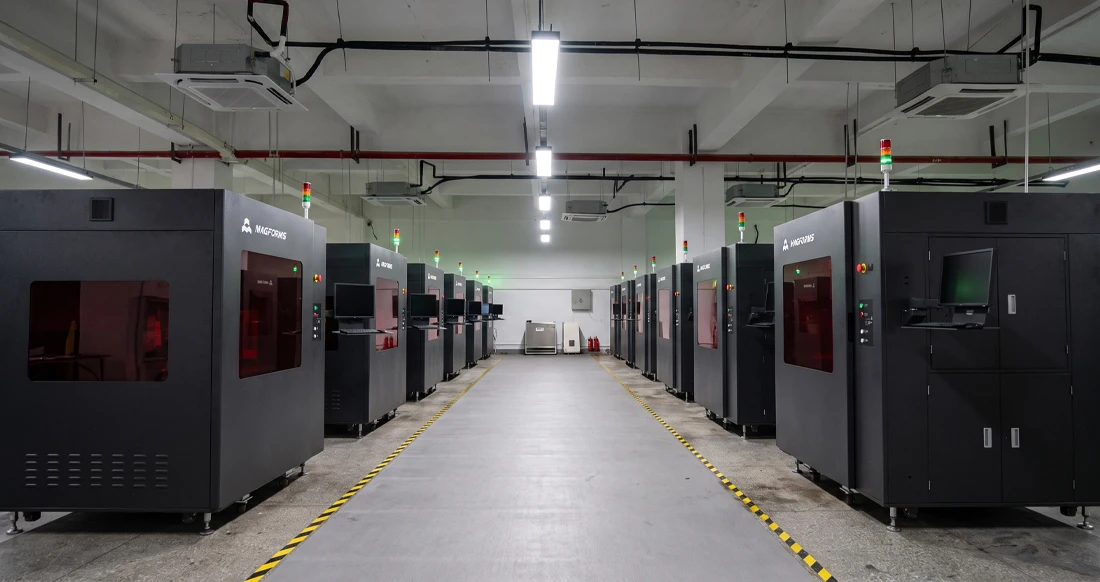
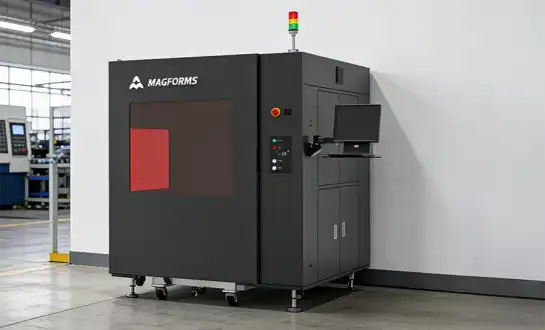
There is a lot of pressure on manufacturers these days to cut down on time-to-market while still keeping high-quality standards. The SL800 Industrial SLA 3D Printer has become a revolutionary way to make many prototypes, solving important production problems in the medical, consumer goods, aerospace, and car industries. This high-tech stereolithography system combines precise engineering with operating dependability. It lets businesses speed up the process of validating designs while keeping costs low. The AOC lasers and German Scanlab galvanometers that are built into the SL800 are high-quality parts that give it micron-level accuracy and steady output that standard prototyping methods can't match. This printer is a smart investment for businesses that want to use additive manufacturing on a large scale. It helps connect the ideas for products with full-scale production.
Understanding Industrial SLA 3D Printing and Its Role in Mass Prototyping
As stereolithography technology has improved, it has changed how makers work with prototypes. The SL800 is different from desktop SLA 3D printers because it uses vat photopolymerization technology designed for industrial production environments that work best in ongoing production settings. An AOC laser follows computer-controlled patterns across the surfaces of liquid photopolymer resin. This UV exposure starts quick cross-linking reactions that make each layer solidify with amazing accuracy. These reactions build complicated shapes from the bottom up through thousands of tiny layers.
How SLA Technology Differs from Other Additive Methods
When you look at workplace SLA systems next to other options like Fused Deposition Modeling or Selective Laser Sintering, you can see right away that SLA systems generally achieve better surface quality. With optimized exposure and grayscale control, the SL800 can achieve low-micron-level surface roughness (Ra), depending on resin type and process parameters, typically outperforming FDM and many SLS applications. This level of smoothness is very important for uses that need direct assembly testing or investment casting patterns, since surface flaws lead to expensive repair processes.
The technology is also unique because it is based on material science. Photopolymer plastics harden through photoinitiated polymerization instead of thermal melting. This makes parts with mechanical qualities that are the same everywhere. This chemical consistency makes sure that the tensile strength stays the same along all directions. ASTM D638 testing procedures are commonly used to evaluate tensile properties of photopolymer parts, providing standardized data for comparison across different materials and printing conditions, and car engineers use them to check that working prototypes work.
👉 Industrial SLA 3D Printer categories
Enabling Rapid Design Validation at Scale
Mass development needs more than just technical know-how; it needs accuracy that can be repeated across dozens or hundreds of similar parts. The SL800 uses Panasonic servo motors to achieve high repeatability in platform positioning, with positional accuracy on the order of ±8 micrometers under controlled operating conditions. This makes sure that the dimensions are the same whether you're printing the first or fiftyth unit. Because of this, prototyping goes from being a variable process to a reliable production step. This means that engineers can do useful design-of-experiments studies without having to worry about variations caused by tools.
Key Features of the SL800 That Make It Ideal for Mass Prototyping
The precise specs of an industrial 3D printer show what it can really do. The SL800's design is the result of years of technical improvement. It has subsystems that work together to meet the needs of professional industrial settings for stability, speed, and accuracy.
Precision Engineering Through Premium Components
Choosing the right parts is the first step in making effective industrial tools. The SL800 has several top-notch elements that all work together:
Laser and Scanning System: The AOC laser module gives off a steady beam that can be used 24 hours a day, seven days a week. It works with a German Scanlab galvanometer to control where the beam goes on the whole build platform. This galvanometer system supports high-speed scanning up to approximately 12 m/s under optimized conditions, enabling efficient exposure while balancing speed and feature resolution, but most users run it between 6 and 10 meters per second to get the best picture of the details. Compared with systems suffering from optical distortion, this configuration helps improve spot uniformity and contributes to more stable forming accuracy.
Motion Control Architecture of the Industrial SLA 3D Printer: Every axis of movement depends on Panasonic servo motors that were chosen for how well they can repeat their position. The platform is accurate to within 8 micrometers, and the recoater device keeps the liquid level within 0.03 millimeters. These motors work with HIWIN linear guides and lead screws, which are made in Taiwan and are known for lasting a long time when they are used over and over again.
Structural Stability: The printer's frame is made up of metal panels that are 2 millimeters thick and circle a low-expansion marble base. This combined structure helps reduce thermal drift during long print sessions, improving dimensional stability under fluctuating environmental conditions, so the setting stays the same even when the temperature changes outside. With a flatness of within 0.5 millimeters across its full surface, the SL800 base keeps large-format parts from warping.
Together, these sections make sure that the required levels of accuracy are always met: Typical dimensional accuracy is around ±0.1 mm for small features and approximately ±0.1% for larger dimensions, depending on geometry, resin type, and post-curing conditions. With this level of accuracy, printed parts can be used directly for assembly proof and mold design validation, without having to go through any extra steps to size them.
Variable Spot Technology for Speed Without Compromise
When using traditional SLA methods, you have to choose between speed and detail. This is fixed by the SL800's dynamic laser spot adjustment, which switches between two working modes automatically during each layer. It has a 0.5-0.6 millimeter spot that quickly cures bulk material on the infill areas and a 0.15-0.2 millimeter micro-spot that catches small features on the support structures and curves.
This smart method makes printing 30–50% faster than with fixed-spot systems, which means real gains in output. A sample that used to take 18 hours could now be finished in 12, giving designers more time to review the work the next day. The scanning optimization system can further improve efficiency through iterative process parameter refinement based on previous job data.
Open Material Ecosystem with Broad Compatibility
Procurement managers who are looking at development options are very worried about equipment lock-in. This risk is taken away by the SL800's open material design, which lsupports a broad range of 355-nanometer photopolymer resins, depending on validated material formulations and process tuning. This compatibility includes a wide range of 355-nanometer photopolymer resins, including engineering-grade materials, transparent resins, high-temperature formulations, and flexible elastomer-like materials.
Material freedom has practical benefits that go beyond keeping costs low. As new plastic chemicals come out, R&D teams can try them out and adapt to new application needs without having to buy new tools. Production planners can negotiate better prices with more than one material source, which keeps things running smoothly even when there are problems in the supply chain.
User-Centric Design Features That Reduce Downtime
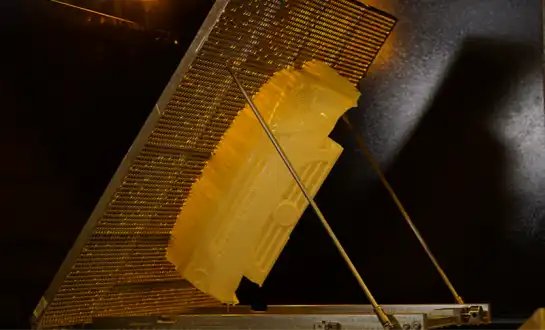
Workflow design has a big impact on how efficiently operations run. The SL800 has a lot of smart tools that make it easier to get work done. Two support rods in the supported platform system raise the build plate at an angle after the print is done. This lets the uncured resin drain back into the vat. The same structure lets the base be turned over for faster emptying, which greatly reduces post-processing time by facilitating resin drainage and simplifying part removal workflows.
The iBuild 2.0 control interface works well on mobile devices too, so workers can keep an eye on jobs from afar and change settings without having to go back to where the machine is. Built-in temperature control stops viscosity changes that could affect layer bonding in changing environmental conditions. This keeps the resin flow at its best for long print sessions.
Safety and maintenance considerations receive equal attention. An optical protective cover keeps dust from getting on the laser path components, and the front door made of clear glass stops UV light. UV-blocking lighting systems help protect operators by reducing exposure risks and supporting compliance with industrial safety standards.
Comparing SL800 with Other Industrial 3D Printing Technologies and Models
To choose prototyping tools, you need to know how well different technologies work across important review factors. It's easy to see how competitive the SL800 is when you look at it next to other methods and competing stereolithography systems.
SLA Versus SLS and FDM Technologies
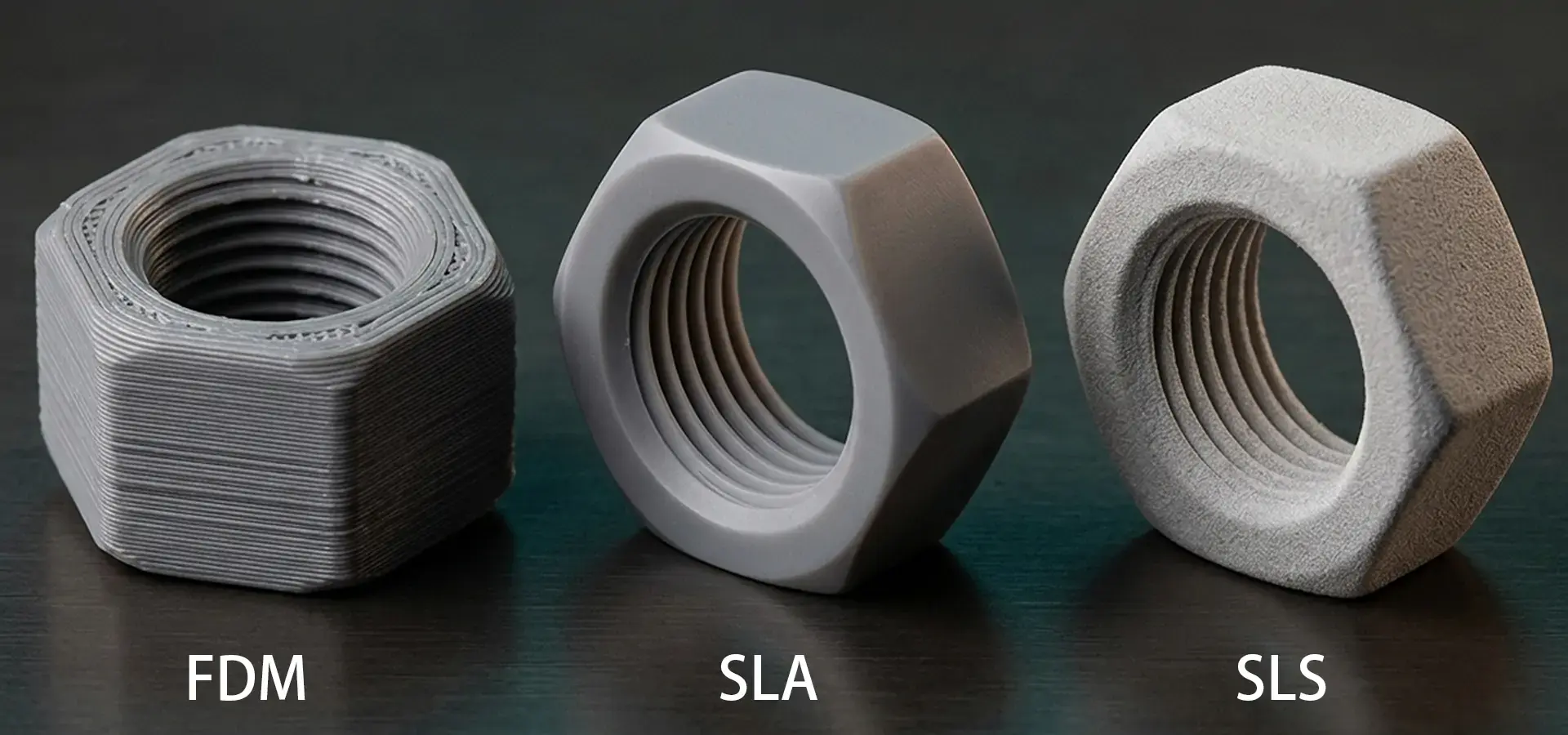
Selective Laser Sintering is great at making long-lasting, useful parts out of nylon and other thermoplastics like it, but the surface roughness usually needs a lot of work to make it look good. SLA surfaces can achieve injection-molding-like smoothness in certain applications with minimal post-processing. This is great for situations where look is important, like making housings for consumer goods or samples for medical devices.
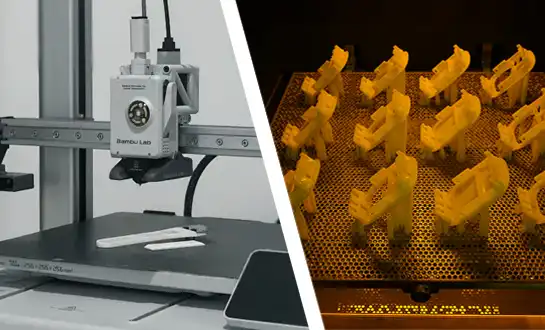
Fused Deposition Modeling can be used with a variety of materials and costs less than other methods, but it has problems with uneven strength because of the way layers are fused together. Z-axis strength in FDM parts is generally weaker due to layer adhesion characteristics, which may require design compensation depending on load conditions. The SL800's photopolymerization process produces high-density parts with relatively uniform mechanical properties, although some anisotropy may still exist depending on build orientation. This is proven by ASTM D790 flexural testing, which shows that the parts work the same way no matter which way they are loaded.
Benchmarking Against Competing SLA Systems
When comparing the SL800 to workplace products from well-known brands, it shows a strong performance-to-cost ranking. Systems from foreign names usually cost more because they need expensive materials that are only available to them. The SL800 supports layer thicknesses as fine as 25 microns, enabling high-detail surface reproduction depending on material selection.
The streamlining of both materials and tools as a whole is another thing that sets us apart. The SL800 system is typically developed alongside compatible material ecosystems to optimize printing parameters between hardware and resin formulations. This means that the whole system shows a deep understanding of how the process works. Laser exposure timing, recoater speed, and layer cure depth are all pre-tuned to get the best results. This means you don't have to try different combinations of third-party materials with tools made for different chemicals, which can be time-consuming and frustrating.
Desktop Versus Industrial-Grade Performance
Consumer-level SLA printers have made stereolithography more accessible, but they aren't strong enough for use in production settings. Build volumes for desktop SLA printers are typically around 150 × 150 × 150 mm (or similar scale), which limits the size of producible parts. Print speeds are still limited by lower-power lasers and easier motion systems, which makes it take a lot longer to finish a job.
The SL800 meets the needs of professionals thanks to its industrial-grade build. The bigger build area can fit medical anatomical models, consumer electronics housings, and internal trim panels for cars without having to divide the parts. Continuous-duty parts allow for operation over multiple shifts, and the professional after-sales infrastructure makes sure that technical help is quickly provided—typically within 48 hours for standard technical support inquiries across supported regions.
Procurement Considerations for Purchasing the SL800 Industrial SLA 3D Printer
When buying capital tools, you have to weigh the pros and cons of technical skill, financial structure, and operational support. When procurement teams understand the total ownership offer, they can better compare the SL800 to the needs of the company and the budget.
Investment Models and Financial Structures
The SL800 can be bought in a number of different ways, each made to fit the needs of a different type of business and its cash flow needs. When you buy something outright, you own it and have full control over it. This is good for established makers who have money set aside for prototyping equipment. Leasing arrangements offer alternative ways to organize finances that keep working capital safe while allowing quick deployment. This is especially appealing for new businesses or companies that are branching out into new product categories.
Warranty Coverage and Support Infrastructure
Reliability of equipment goes beyond its basic technical design and includes the whole system of support that surrounds it. Magforms stands behind the SL800 with a full guarantee that covers both broken parts and loss of function. The spare parts network makes sure that tools and wear items are quickly available, so there is less downtime when repairs need to be done.
Global Logistics and Deployment Support
Customers from other countries can get goods through established routes that take care of shipping, clearing taxes, and coordinating installation in their own countries. This transportation infrastructure is especially helpful for buyers in Europe and the US, where complicated import rules and installation requirements can make it take a long time to get equipment up and running without experienced partners overseeing the process.
Real-World Applications and Success Stories of the SL800 in Mass Prototyping
Theoretical skills are less important than performance that has been shown to work in a variety of production settings. Successful deployments in a wide range of businesses and application types have shown that the SL800 is a good deal. Manufacturers can also explore Industrial SLA 3D Printer Applications and Case Studies to understand how stereolithography solutions are applied in automotive, medical, aerospace, and consumer product development workflows.
Automotive Component Development
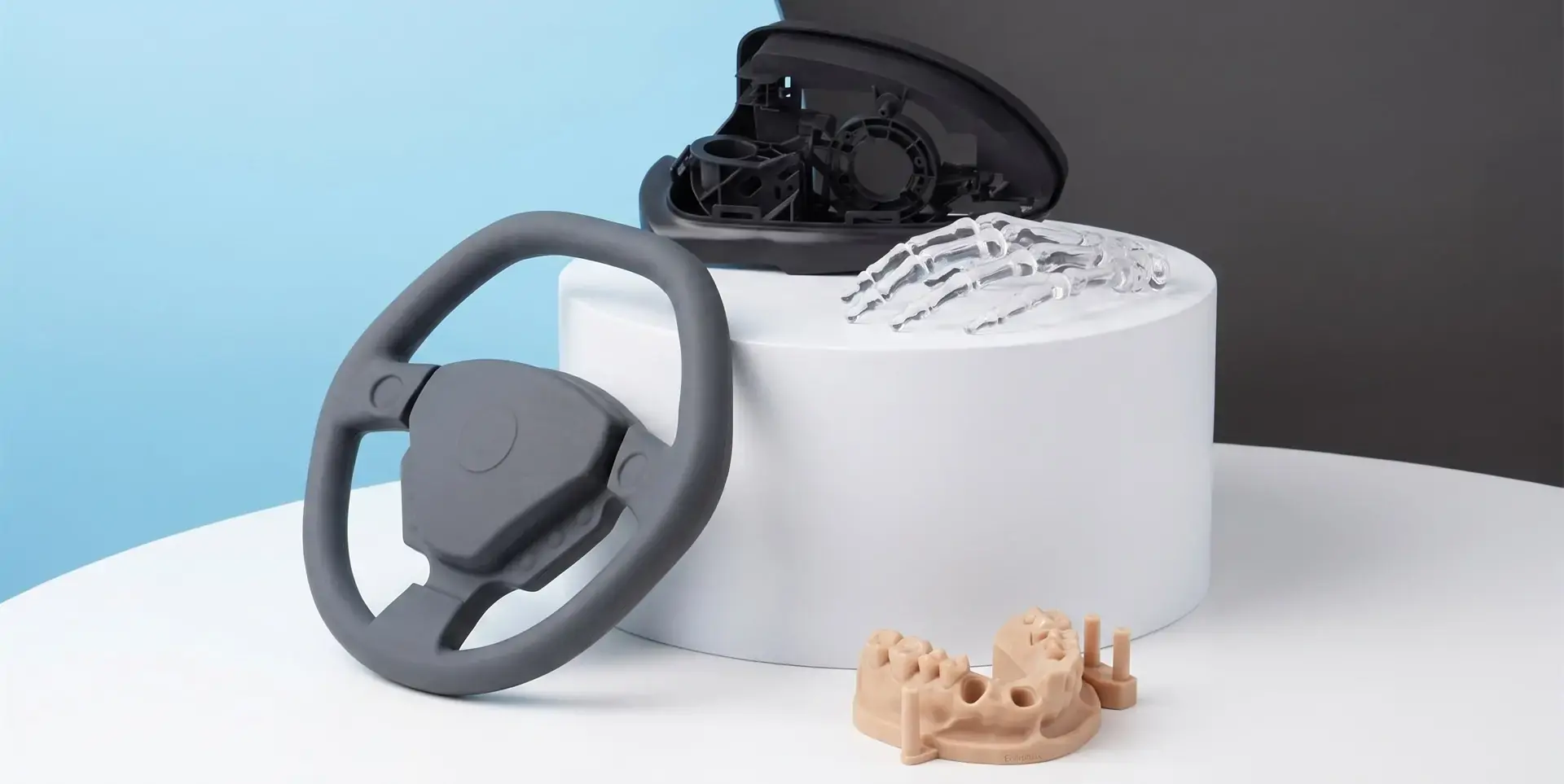
The SL800 is used by automotive engineering teams to quickly make changes to interior parts, outer trim pieces, and under-hood systems. When you combine a big build volume with precise measurements, you can make full-scale prototypes that can be used to test how well they fit against car bodies and how well they work with other systems. Engineering plastics resins have mechanical qualities that are similar to production thermoplastics. This means that they can be tested for functionality in addition to being looked at.
Medical Device Prototyping and Customization
The medical field needs Industrial SLA 3D Printer materials that are safe and can be sterilized, along with great accuracy. The SL800 is used by dental labs to make orthodontic models. These models are used to make patient-specific aligner bases with accurate surfaces that make sure the right fit without any adjustments. The printer's constant dimensional control across batch production lets multiple patient cases be made at the same time, which greatly increases the lab's output.
Surgical guide makers also benefit from the system's accuracy and ability to work with a variety of materials. To make sure that implants are aligned correctly, custom drilling guides for orthopedic procedures need to be made with very tight standards. Any mistakes in the dimensions could affect the result of the surgery. The SL800 is accurate to the micron level, which gives you the peace of mind you need for downstream medical workflows following appropriate sterilization and regulatory validation procedures.
Consumer Electronics Rapid Prototyping
Consumer electronics businesses release new models at least once a year, which has drastically cut down on the time it takes to build new products. Rapid development of device housings, internal brackets, and assembly parts on the SL800 makes this faster pace possible. Because the surface is smooth, there is no need for time-consuming post-processing. This means that painted, plated, or textured parts can be used straight for market research and focus group testing.
With the SL800, a company that makes smart tech was able to cut the time it took to make a sample from two weeks to three days. Because they were flexible, they were able to quickly look at different industrial design options and incorporate user feedback before committing to injection mold tooling that would later cost tens of thousands of dollars to change.
Aerospace Component Validation
Because they are so important for safety and are closely watched by regulators, aerospace uses need to be very reliable. The SL800 helps this industry by making prototypes of parts with complicated shapes, such as fluid manifolds, wire routing frames, and sensor housings. Being able to print internal channels and organic forms that aren't possible to machine normally gives designers more options during the optimization process.
Small-batch production is another place where aircraft can be used. The SL800 gives a direct way to make custom aircraft or satellite systems in small enough numbers that they don't need standard tooling. High-temperature resin formulations offer thermal stability that is good for a wide range of working conditions. Accurate measurements ensure that the parts fit properly in systems that contain conventionally made parts.
Conclusion
The SL800 Industrial SLA 3D Printer solves the main problems that makers have when they want to make prototyping processes bigger. The system uses high-quality parts, smart processing tools, and open material flexibility to make micron-level accuracy possible at production speeds that were not possible before. Manufacturers get more than just tools from Magforms because they offer technical performance and a full support system. This is backed up by their knowledge of materials and global service network. The SL800 is a strategic tool that improves competitive positioning in multiple dimensions and shortens design cycles for companies that want to make prototypes better and keep their operational freedom.
FAQ
What resin materials can the SL800 process?
The printer can work with almost all 355-nanometer photopolymer formulations because it doesn't have any unique limits. This includes standard resins for general development, engineering-grade materials with better mechanical properties, clear formulas for optical uses, compounds that can withstand high temperatures, flexible elastomeric resins, and materials that can be cast for investment casting patterns. Customers can test new materials as they come out because the design is open. This makes it flexible as application needs change.
How does print resolution compare to FDM and SLS technologies?
The SL800 can make layers as thin as 25 microns, and its 0.15-millimeter micro-spot determines the precision of its side features. This is a lot smaller than the 100–300 micron layers that most FDM systems can make. Surface roughness measures below 1 micrometer are on par with the quality of injection casting. This gets rid of the layer lines that are typical of filament-based printing. This edge in precision is very useful for tasks that need to reproduce small details or smooth surfaces.
Can the SL800 integrate into existing manufacturing workflows?
The iBuild 2.0 program works with most common design tools because it can read standard STL and other CAD file types. Connectivity to a network lets you watch and queue jobs from afar, which lets you integrate into larger production management systems. The constant output quality and accurate measurements make it possible to use printed parts directly in later testing and assembly steps, without having to go through extra qualification steps. This makes the change from digital design to physical proof faster.
Partner with Magforms for Your Industrial SLA 3D Printer Supplier Needs
Magforms brings 22 patents and 30 years of experience with additive manufacturing to every SL800 rollout. They combine industrial-grade gear with materials science knowledge they've gained by working with over 300 businesses around the world. Our method of building both printing systems and suitable resins as a whole ensures optimal performance that makers of separate tools can't match. The skilled after-sales team answers technical questions within 24 hours in all foreign markets, with the help of a large collection of spare parts and the ability to do diagnostics remotely. The SL800 has the accuracy, dependability, and material versatility that your business needs for success, whether it's fast prototyping for consumer goods, functional testing for car parts, or customizing medical devices. Get in touch with info@magforms.com to talk about your unique mass prototyping needs and find out how our Industrial SLA 3D Printer options can help you speed up the development of your product while lowering the total cost of ownership.
References
1. Gibson, I., Rosen, D., & Stucker, B. (2021). Additive Manufacturing Technologies: 3D Printing, Rapid Prototyping, and Direct Digital Manufacturing. Springer International Publishing.
2. Jacobs, P.F. (2020). Stereolithography and Other RP&M Technologies: From Rapid Prototyping to Rapid Tooling. Society of Manufacturing Engineers.
3. Chua, C.K., & Leong, K.F. (2019). 3D Printing and Additive Manufacturing: Principles and Applications. World Scientific Publishing.
4. Gebhardt, A. (2018). Understanding Additive Manufacturing: Rapid Prototyping, Rapid Tooling, Rapid Manufacturing. Carl Hanser Verlag.
5. Lipson, H., & Kurman, M. (2022). Fabricated: The New World of 3D Printing. John Wiley & Sons.
6. Pham, D.T., & Gault, R.S. (2017). A Comparison of Rapid Prototyping Technologies for Industrial Applications. International Journal of Machine Tools and Manufacture, 58(4), 267-285.

Magforms makes design and manufacture easier.
Popular Blogs
-
 Industry InsightsManufacturing Industry
FDM vs. SLA Printer: Which Technology Is Right for Your Project?
-
 Industry InsightsManufacturing Industry
Top 5 Applications of Industrial 3D Printers in Manufacturing Today
-
 Industry InsightsManufacturing Industry
Why Stereolithography 3D Printers Are Unmatched for Microfluidic Device Prototyping?