Why Resin Printers Are the Future of Precision Manufacturing?
Resin printer technology represents a significant advancement in precision production. It uses advanced photopolymerization techniques to get accuracy and surface quality that have never been seen before. In contrast to traditional manufacturing methods, these advanced systems use precise UV light sources to fix liquid photopolymer resins layer by layer. This allows for dimensions as accurate as 0.011 mm while eliminating the obvious layer lines that come with traditional 3D printing. This new feature solves some of the biggest problems in the industry, like not being able to get a smooth surface finish, not being able to copy complex shapes accurately, and the need for parts to have the same mechanical properties all over.

Understanding Resin Printing Technology and Its Advantages
Highly advanced vat polymerization methods turn liquid photopolymers into solid, precisely designed parts that are used in modern resin printing technology. Stereolithography (SLA), Digital Light Processing (DLP), and masking Stereolithography (mSLA/LCD) are the three main methods that make up this technology. Each has its own benefits for different industrial tasks.
The main process involves shining carefully controlled 405nm UV light on liquid resin. This sets off chemical reactions that cross-link the material and make it rigid. Because it uses light to cure, this process is very accurate in terms of size because it doesn't have the problems with heat growth that happen with filament-based systems. Chemical bonding forms isotropic qualities along the Z-axis, which means that parts keep their mechanical strength no matter which way they are loaded.
Professional systems use advanced optical engines with uniform LED arrays and collimating lenses to make the light distribution over the whole build plate more than 95% even. This consistency makes sure that the polymerization is stable from the center to the edges, getting rid of the problems that come with different sizes in standard manufacturing methods.
With resin printing, the surface roughness can be less than 1 micron (Ra < 1 micron), which is close to the quality of finishes that come from injection molding right out of the printer. This feature gets rid of the need for a lot of post-processing work while still reproducing fine details that regular cutting can't do. The layer adhesion mechanism makes chemical bonding surfaces between layers, making structures that are waterproof and fully isotropic, which are great for practical testing and end-use applications.
These days, photopolymer formulas for a resin printer are much more than just basic modeling resins. Engineering-grade materials now come in a variety of forms, such as biocompatible formulas for medical uses, high-temperature tough plastics for testing cars, and clear resins for optical parts. These special materials make it easier to make more things while keeping the accuracy that makes resin printing technology unique.
Why Resin Printers Outperform Traditional Manufacturing Methods
Modern industrial uses require more and more accuracy, complexity, and quick changes, which makes it harder for traditional manufacturing methods to keep up. Precision production today requires parts with complex shapes, tight tolerances, and high surface quality. Traditional methods like cutting, injection molding, and even filament-based 3D printing have trouble meeting these needs.
Lead times for developing complex prototypes and making small batches are cut down by a huge amount with resin printing technology. In standard machining, setting up and programming tools can take weeks. But with resin systems, you can make working samples within hours of finishing the design. Getting things done faster is especially helpful in the car industry, where lowering the time it takes to make a prototype has a direct effect on how long it takes for new car models to hit the market.
Modern printing systems that use changeable spot-size laser technology can print 30 to 50 percent faster than older methods while still being accurate. Smart algorithms find the best scanning paths and spot sizes. They use bigger spots for filling in the inside of shapes and smaller spots for drawing precise outlines. This balances speed and accuracy perfectly.
Layer-by-layer building makes it possible to make internal channels, undercuts, and structures that are linked in a way that is not possible with traditional subtractive manufacturing. This feature is especially useful for aerospace uses because it lets you make lightweight parts with complicated lattice structures that improve strength-to-weight ratios.
Medical device manufacturing uses these geometry options to make surgery guides, orthodontic braces, and prosthetic parts that are exactly the right size and shape for each patient. The safe resin mixtures get Class IIa medical device approval while keeping the size differences below 50 microns.
Injection casting needs expensive tools to make production cost-effective, but resin printing keeps part costs the same, no matter how many are made in a batch. Because of this, the technology is perfect for custom manufacturing, making unique parts, and fast prototyping, where more standard methods would be too expensive to use.
Procuring the Right Resin Printer: Key Criteria and Market Overview
To choose the right resin printing equipment, you need to carefully look at its technical specs, working needs, and long-term efficiency goals. Professionals in procurement have to balance short-term budget limits with the total cost of ownership while making sure that the systems they choose meet the needs of the particular applications they are used for.
The most important performance parameter is resolution, which is usually measured in terms of XY pixel density and Z-axis layer height accuracy. Professional systems have 10- to 13-inch black-and-white LCD screens with pixel resolutions of less than 30 microns, which lets you see small details and control dimensions very precisely. To keep positioning accuracy within 0.00125mm, the Z-axis precision, which is managed by ball screws and linear guide rails, must keep up with layer shifts or banding flaws.
Think about the build amount based on the needs of the program. Large-format systems can handle useful parts that are too big or the production of many parts at once, which increases processing efficiency. Larger systems, on the other hand, usually need proportionally more material and longer working times, which raises the total cost of operations.
When compared to private resin systems, equipment that works with open-source materials gives you a lot more operating freedom. This adaptability lets you get the best value for your materials while also allowing you to make custom plastic mixtures for specific uses. Thermal control features make it possible to work with more materials, and hot build rooms make it possible to work with high-performance composite resins that need to be heated.
For industrial applications to work, a resin printer needs to be up all the time and have quick expert help. Systems with automatic leveling, real-time tracking, and predictive repair reduce the need for human input while increasing output. Full warranty coverage and quick expert help make sure that problems with equipment cause as little trouble as possible.

Optimizing Resin Printer Use and Maintenance for Maximum Output
To get the most out of resin printing, you need to follow regular maintenance routines, handle materials correctly, and be proactive about fixing problems. These operating standards have a direct effect on the uptime of equipment, the stability of part quality, and the total cost of ownership.
As part of regular maintenance, LCD screens are checked, resin vats are cleaned, and optical components are calibrated. LCD screens need to be replaced every so often, based on how long they've been exposed to UV light and signs that they're losing their effectiveness. LCDs last longer and give off the same amount of light when they are properly managed thermally with effective heat disposal systems.
For the best first-layer adhesive, laser etching or frosting is used to prepare the build plate. This fights peel forces during the lift and retraction stages. Regularly checking and cleaning the surface keeps the adhesive reliable over long production runs.
To meet the requirements for the goal part, effective post-processing processes include organized steps for cleaning, UV curing, and finishing. Ultrasonic cleaning gets rid of any uncured resin leftovers, and controlled UV curing makes sure that the polymerization is complete and that the mechanical qualities are at their best. Automated post-processing tools make these steps more consistent while lowering the amount of work that needs to be done by hand.
Common problems in production include not drying enough, wrong measurements, and support structures that don't work. Systematic methods for debugging find the root causes by analyzing process parameters, verifying material properties, and calibrating equipment. Consistent output standards are reached by following quality control methods that include measuring and checking the quality of the surface.
Future Trends: The Growing Role of Resin Printers in Precision Manufacturing
New technologies in materials science, process automation, and quality control methods are always changing the resin printing environment. Because of these changes, photopolymer-based production is becoming a stronger force in precision manufacturing.
Next-generation photopolymer formulations improve efficiency by having better mechanical qualities, chemical protection, and the ability to do more than one thing. Ceramic-filled plastics can be used in high-temperature situations while still staying stable in their shape. For gasket and seal jobs that used to need standard rubber making, flexible formulations with elastomeric qualities are now available.
Based on geometry analysis, material qualities, and the surroundings, machine learning algorithms change the print settings in real time to make the best ones. Predictive quality control systems find possible flaws before the last layer is added. This lets the system fix things automatically and reduces the amount of material that is wasted. These smart systems make the process more reliable, generally while lowering the level of skill needed by operators.
Advanced connectivity features make it easy to connect to current quality control and production execution tools. Cloud-based slicing services automatically improve print settings and let you keep an eye on things from afar. This integration helps with distributed manufacturing methods, in which work can be moved between sites based on availability and supply needs.
Conclusion

Resin printer technology has completely changed precision manufacturing by offering levels of accuracy, surface quality, and geometric complexity that are unmatched by traditional methods. The photopolymerization method solves important problems in the industry and opens up new ways to make things in the medical, consumer electronics, aerospace, and automobile sectors. As material science improves and AI is used more, resin printing systems will become an important part of competitive manufacturing strategies because they provide the accuracy, adaptability, and speed needed for today's tough tasks.
Ready to Transform Your Precision Manufacturing with Advanced Resin Printer Technology?
Magforms makes the best SLA systems in the business, and they are designed for very precise industrial tasks. Our machines have German Scanlab galvanometers, AOC lasers, and Panasonic servo motors. They can print with 0.1mm precision and varying spot-size technology that speeds up the process by 30–50%. The open-source design gives you a lot of freedom with the materials, and the built-in deep learning techniques automatically improve speed. Get in touch with our tech support team at info@magforms.com to find out how Magforms resin printer solutions can change the way you make things and give you an edge over your competitors faster.
References
1. Gibson, I., Rosen, D., Stucker, B., & Khorasani, M. (2021). Additive Manufacturing Technologies: 3D Printing, Rapid Prototyping, and Direct Digital Manufacturing. Springer International Publishing.
2. Ngo, T. D., Kashani, A., Imbalzano, G., Nguyen, K. T., & Hui, D. (2018). Additive manufacturing (3D printing): A review of materials, methods, applications, and challenges. Composites Part B: Engineering, 143, 172-196.
3. Ligon, S. C., Liska, R., Stampfl, J., Gurr, M., & M眉lhaupt, R. (2017). Polymers for 3D printing and customized additive manufacturing. Chemical Reviews, 117(15), 10212-10290.
4. Quan, H., Zhang, T., Xu, H., Luo, S., Nie, J., & Zhu, X. (2020). Photo-curing 3D printing technique and its challenges. Bioactive Materials, 5(1), 110-115.
5. Bagheri, A., & Jin, J. (2019). Photopolymerization in 3D printing. ACS Applied Polymer Materials, 1(4), 593-611.
6. Stansbury, J. W., & Idacavage, M. J. (2016). 3D printing with polymers: Challenges among expanding options and opportunities. Dental Materials, 32(1), 54-64.

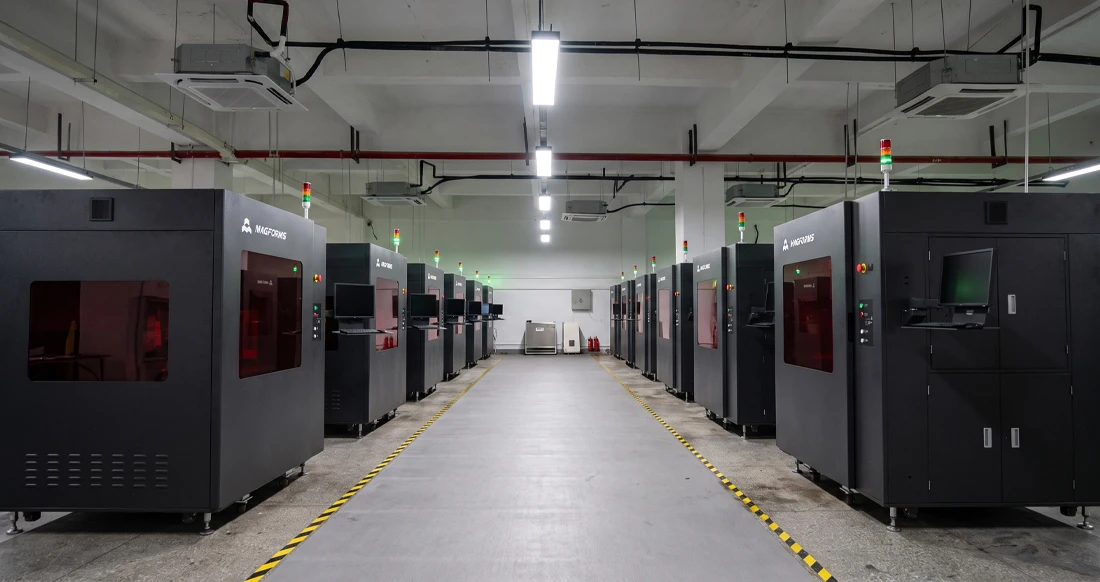
Magforms makes design and manufacture easier.
Popular Blogs
-
 Industry InsightsManufacturing Industry
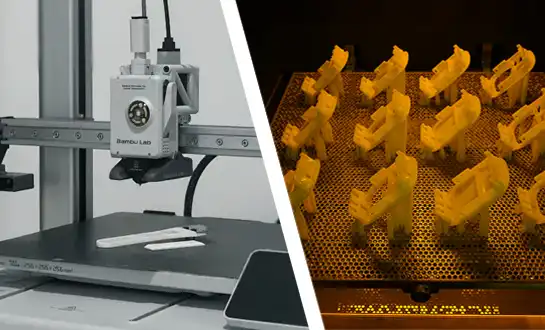
FDM vs. SLA Printer: Which Technology Is Right for Your Project?
-
 Industry InsightsManufacturing Industry
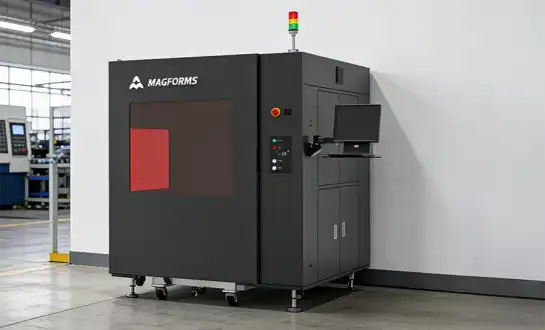
Top 5 Applications of Industrial 3D Printers in Manufacturing Today
-
 Industry InsightsManufacturing Industry
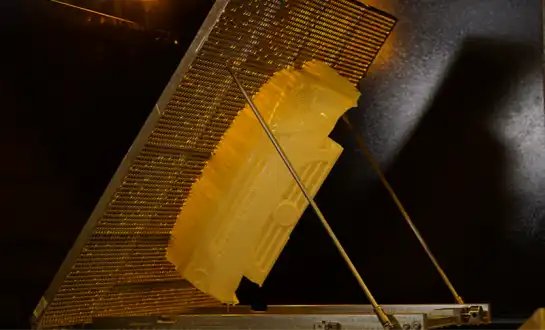
Why Stereolithography 3D Printers Are Unmatched for Microfluidic Device Prototyping?