P7 Pro Stereolithography 3D Printer for Detailed Surface Finishes
The P7 Pro is a big step forward in home resin 3D printing. It combines cutting-edge stereolithography 3D printer technology with precise engineering to make prints that are accurate to the micron level. With its own greyscale adjustment algorithm and industrial-grade parts, this small system gets 9 μm XY resolution, which was previously only possible with high-end DLP systems. It also delivers stable performance across a wide range of production environments. Because of this, it's perfect for jewellery makers, dental labs, and precision testing shops that want to finish surfaces like those used in injection moulding but don't want to pay the high prices of standard industrial equipment.
Understanding Stereolithography 3D Printing Technology
In stereolithography 3D printing, ultraviolet light selectively hardens liquid photopolymer resin into solid layers. This process is called photopolymerization, where UV light triggers a chemical reaction that solidifies liquid resin layer by layer. Fused Deposition Modelling (FDM) extrudes heated thermoplastic filament through a nozzle, while resin-based additive manufacturing significantly reduces visible layer lines and produces more uniform surface characteristics and finer detail compared to FDM. To build parts from the bottom up, the LCD screen selectively projects UV light through the resin vat to cure each layer.
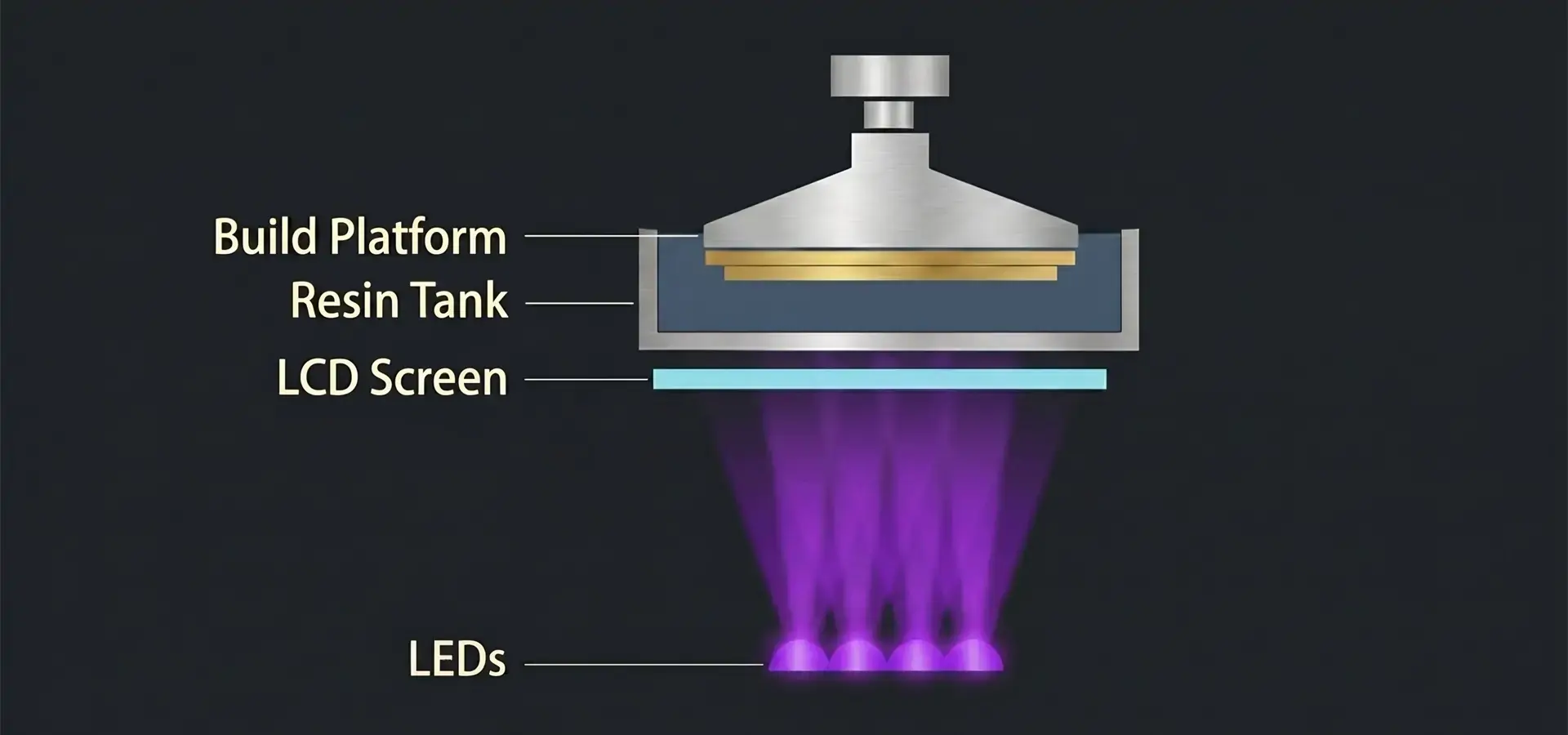
How SLA Differs from FDM and DLP Technologies
Because they spread material line-by-line, material extrusion systems have trouble with curvy areas and small details. Digital Light Processing (DLP) systems use a UV projector to expose an entire layer at once. This speeds up batch production but makes voxelization artefacts show up on surfaces that are at an angle. MSLA combines the advantages of full-layer exposure with pixel-defined masking, delivering high-resolution detail at lower cost compared to laser-scanning SLA systems. The 18 × 18 μm effective pixel size on the P7 Pro enables highly detailed edge definition for fine textures such as skin surfaces, jewelry features, and dental margins compared to the stair-stepped edges typically seen in filament-based printing.
Material Compatibility and Industrial Applications
Engineering-grade resin formulations expand the capabilities of standard photopolymers. The P7 Pro's smart heating system keeps the chamber temperature at 30℃, so it can work with high-temperature resins, waxes that can be cast, and flexible materials that need to stay stable at high temperatures during polymerisation. This temperature control stops layer delamination in cold workshops, which is a frequent failure mode that disrupts production schedules and results in the loss of costly specialty resins.
Biocompatible resins that can handle being autoclaved are good for testing medical devices, and tough resins are used by car design teams to try snap-fit parts and live hinges. Museums use clear materials that look like glass to make copies of museum objects, and shoe companies make mould masters for injection casting. The P7 Pro's open resin system makes it flexible. This avoids vendor lock-in and reduces operating costs compared to proprietary cartridge-based systems.
Why Choose the P7 Pro for Detailed Surface Finishes?
Surface quality directly impacts post-processing labor and finished-part aesthetics. The P7 Pro addresses this through three interconnected systems: precision motion control, advanced imaging algorithms, and environmental stabilization. These work together to significantly reduce dimensional drift and surface defects that plague entry-level desktop units during extended print jobs.
Advanced Components Driving High-Resolution Outputs
Industrial P‑grade linear rails guide the build platform with repeatability of less than a micron. This keeps the Z-axis accurate to within 0.02 mm throughout the 160 mm build height. This mechanical accuracy goes well with the optical system's 9 μm XY resolution, which is made possible by Magforms' own Imadjust greyscale correction. Standard black-and-white screens show pixels that are either on or off. The P7 Pro, on the other hand, changes the amount of light at the edges of pixels to make vertical lines and curves look smooth. This grayscale exposure approach functions similarly to anti-aliasing techniques, improving smoothness in organic geometries commonly associated with DLP systems.
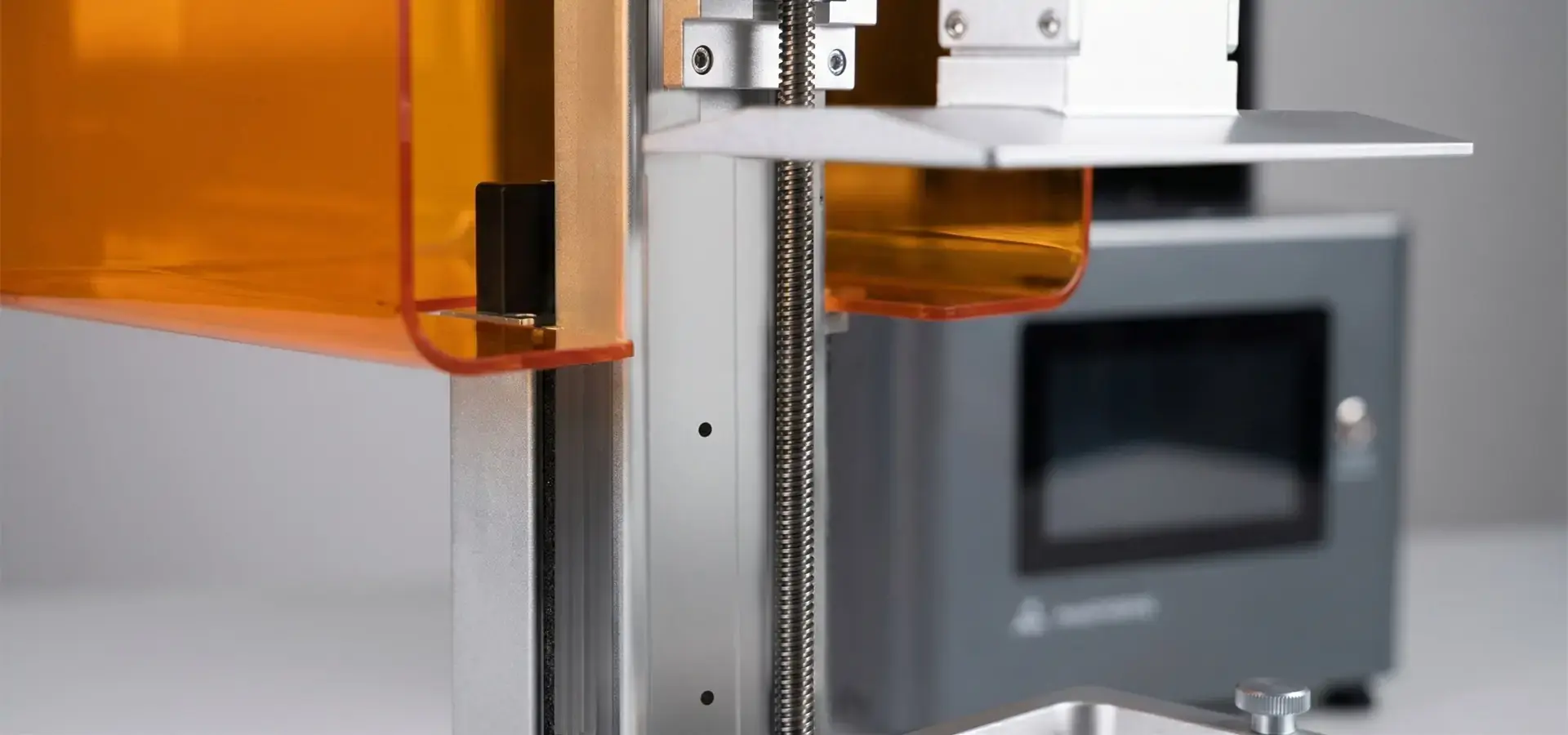
The full-metal frame reduces shocks from outside sources, which prevents Z-wobble, a phenomenon that appears as regular banding on printed walls. The enclosure creates a controlled environment, aided by the UV‑resistant glass flip‑up cover that blocks external light while maintaining full visibility for monitoring. This keeps the exposure times constant, no matter what the lighting is like outside. This prevents the resin from curing prematurely.
Verified Performance Metrics and Workflow Integration
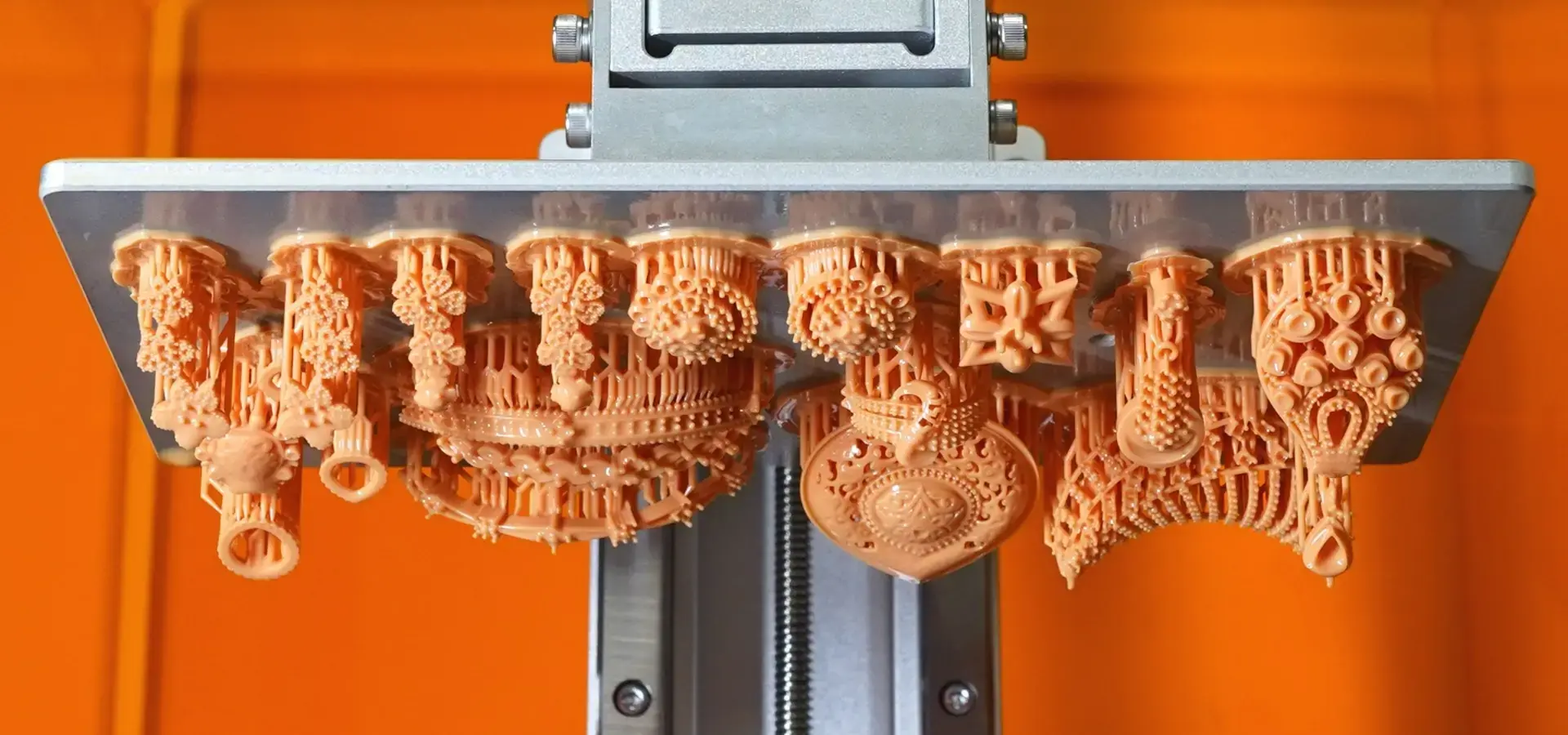
For jewellery casting with a stereolithography 3D printer, the wax has to be burnt off completely, leaving no ash behind. Layer thicknesses between 25 and 50 μm are required for a smooth surface finish. With the P7 Pro's 25–150 μm layer height range, users can find the right mix between speed and detail. For samples, thicker layers work better, while master patterns need finer resolution. The 153.36 × 77.76 mm XY build area is good for making tooth aligner models because it can hold multiple units per batch. The 5-inch tablet lets you change parameters in real time without stopping work.
Standard STL and OBJ file types are supported by the software, and the customised user interface has settings already set up for popular materials. This cuts down on the testing and trying that takes time and resin when making new formulas work. The heating system's ability to keep the room at 30℃ no matter what the outside temperature is does away with a major problem for workshops that are in areas that change often, where temperature fluctuations lead to uneven curing and variations in mechanical properties.
Long-Term Investment Value and Scalability
Total cost of ownership includes equipment lifespan, consumables, maintenance, and operational efficiency. The 9K monochrome LCD screen can handle long-term UV exposure better than RGB displays, so it doesn't need to be replaced as often and costs less. Vat photopolymerization systems with PDMS-coated tanks become cloudy after 50 to 100 print hours. The P7 Pro, on the other hand, uses FEP film that stays clear for 200 hours or more before it needs to be replaced. This means that the repair window doesn't get in the way of production plans.
As an upgrade path, you can connect automated washing and drying stations, which make post-processing easier for service offices that handle a lot of orders. The machine's small size (desktop form factor) lets more than one unit be installed as demand grows, without the need for a lot of floor room and power infrastructure that comes with big industrial systems.
Comparing the P7 Pro with Other Stereolithography 3D Printers
Procurement decisions hinge on quantifiable performance differences and lifecycle costs. The P7 Pro occupies a strategic position between hobbyist-grade machines and enterprise systems, delivering industrial precision without the associated capital expenditure or facility modifications.
Performance Benchmarks Against Market Leaders
Formlabs Form 3 series uses Low Force Stereolithography (LFS), a laser-based SLA technology with a flexible resin tank and line-scanning exposure system, achieving 25 μm XY resolution and excellent surface finish. The P7 Pro matches this detail level through its 9 μm capability with grayscale adjustment, while offering a lower entry price and avoiding proprietary resin cartridges. Elegoo Mars series targets the maker market with 35 μm pixels and manual parameter tuning, suitable for miniatures but lacking the thermal management and build volume for production environments. Anycubic Photon Mono X provides large build areas (192 × 120 mm) with 50 μm resolution, trading detail for size in applications where surface finish is secondary to part dimensions.
The P7 Pro differentiates through its convergence of precision (9 μm with Imadjust), stability (heated chamber), and usability (touchscreen interface with real-time adjustments). This combination addresses the jewelry and dental sectors where both dimensional accuracy and surface smoothness are non-negotiable, and where downtime from temperature-related failures directly impacts revenue.
Total Cost Analysis: Acquisition and Operation
Initial investment for the stereolithography 3D printer spans equipment purchase, training, and facility preparation. The P7 Pro's desktop format eliminates the need for dedicated cleanrooms or three-phase electrical service, reducing installation costs compared to large-vat systems. Material flexibility avoids the 40-60% markup typical of closed ecosystems—third-party castable resins cost $80-120 per liter versus $149-199 for branded cartridges, generating savings that compound across hundreds of liters annually for active shops.
Maintenance expenses center on consumables: FEP film ($15-25 per sheet, replaced every 200 hours), IPA for washing ($20 per gallon, ~100 prints per gallon), and occasional screen replacement ($200-300, every 2000+ hours). These predictable costs contrast with the unpredictable downtime losses when cheaper machines fail mid-batch, scrapping partially cured parts and wasting specialty resins that cost $150+ per liter.
Reliability data from Magforms' customer base shows the P7 Pro maintains above 95% print success rates across diverse materials when proper exposure settings are applied—a figure that reflects the engineering investment in thermal stability and mechanical precision. This translates to fewer wasted builds, less troubleshooting time, and higher throughput for service providers billing by completed parts rather than machine hours.
Procurement Considerations: How to Buy and Maintain the P7 Pro
Acquisition strategy extends beyond price comparison to encompass vendor support, warranty terms, and regional service infrastructure. B2B buyers evaluate these factors against internal capabilities and production criticality.
Pricing Tiers and Flexible Financing Options
The P7 Pro is available through direct sales channels and authorized distributors, with pricing structured to accommodate small workshops and established manufacturers. Volume discounts apply for multi-unit orders, relevant for training institutions equipping labs or service bureaus expanding capacity. Leasing arrangements through third-party financing partners spread capital outlay over 24- 36-month terms, aligning payments with revenue generation for startups validating market demand before committing to outright purchases.
International procurement involves freight logistics, import duties, and voltage compatibility. Magforms coordinates shipments with specialized carriers experienced in handling precision equipment, using custom foam inserts and shock indicators to document handling conditions. Units ship with region-specific power supplies (110V or 220V) and documentation in English, simplifying customs clearance and local regulatory compliance.
Essential Maintenance and Troubleshooting Protocols
Routine maintenance preserves performance and prevents avoidable failures. The FEP film should be inspected every 50 hours for cloudiness or punctures, with tension checked using the provided tool to ensure proper release forces. The LCD screen requires cleaning with isopropyl alcohol and a microfiber cloth monthly to remove resin residue that blocks light and causes under-curing. Build platform leveling—verified before each job—ensures proper first-layer adhesion and prevents part detachment mid-print.
Software updates delivered through USB or network connectivity add material profiles and enhance slicing algorithms. Magforms' technical support team provides remote diagnostics and video consultation, walking users through calibration procedures or parameter adjustments when switching resin brands. This responsive support infrastructure minimizes downtime, particularly valuable for operations lacking in-house additive manufacturing expertise.
Resin Selection for Optimal Results
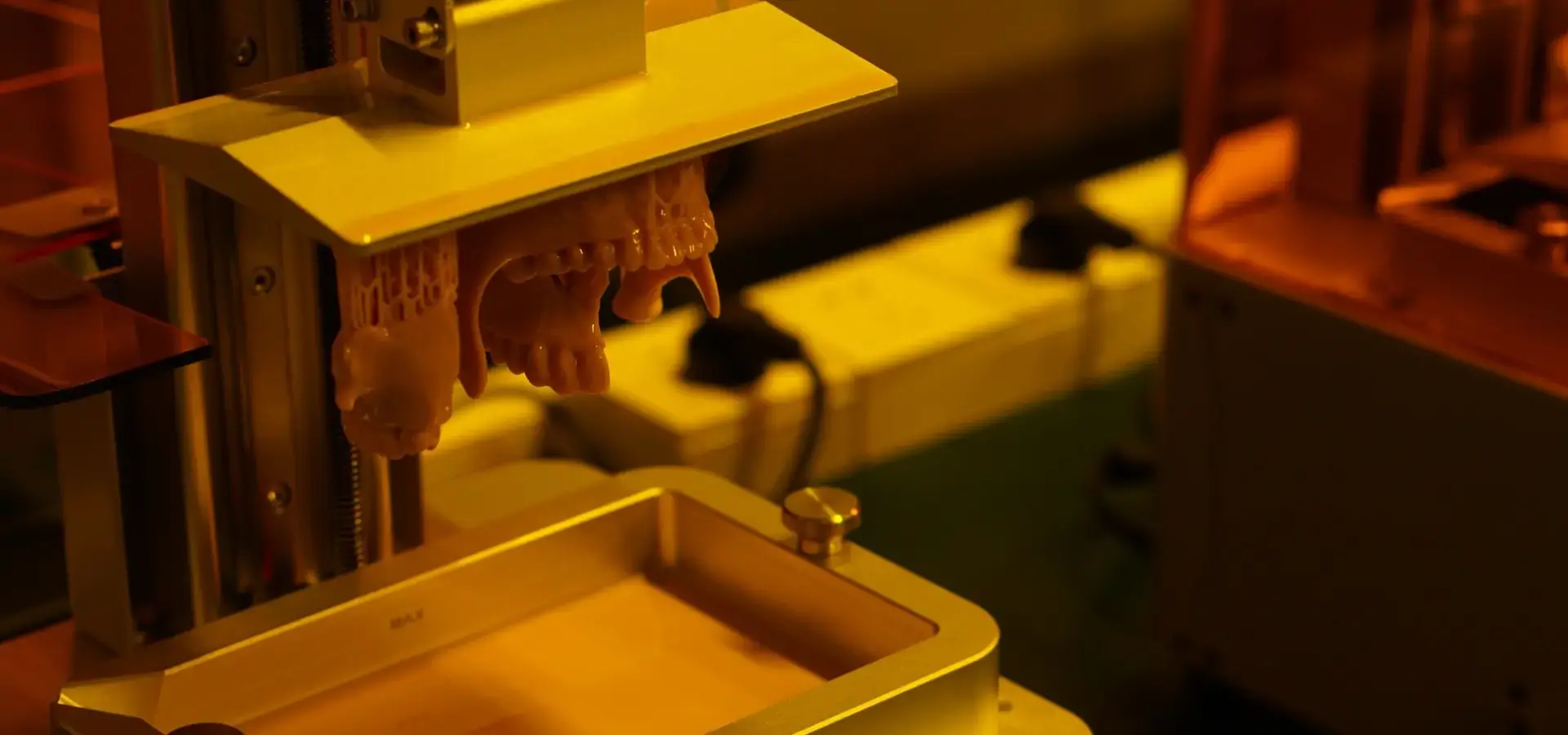
Material choice governs mechanical properties, surface finish, and post-processing requirements. Castable resins for jewelry burn out cleanly at 400-700℃, leaving no ash to compromise mold surfaces—critical for precious metal casting where surface defects cost hundreds per piece. Dental model resins offer dimensional stability under hot water during thermoforming, while maintaining color contrast for clear visualization of preparation margins.
Tough resins simulate ABS or polypropylene for functional prototyping, though true engineering-grade performance requires post-curing in dedicated UV chambers to fully crosslink polymer chains. Magforms provides a compatibility matrix detailing exposure times and support strategies for validated third-party resins, reducing experimentation waste when testing new formulations.
Maximizing ROI: How the P7 Pro Can Transform Your Manufacturing Workflow
Return on investment manifests through cycle time reduction, quality improvement, and market responsiveness. The P7 Pro's capabilities enable workflow transformations across multiple operational dimensions.
Resolving Common Production Bottlenecks
Traditional jewelry prototyping involves hand-carving wax or CNC machining metal, processes that consume days for complex designs and require skilled artisans. A stereolithography 3D printer compresses this to hours, allowing designers to iterate multiple versions before committing to casting. Dental labs previously outsourced model fabrication with 3-5 day lead times and $30-50 per unit costs; in-house production on the P7 Pro delivers same-day turnaround at sub-$5 material cost per model, improving margins and patient satisfaction simultaneously.
Automotive design teams use the system for snap-fit verification and tactile evaluation of interior components, catching ergonomic issues that CAD visualization misses. The ability to produce five design variations overnight—compared to weeks for outsourced prototypes—accelerates development cycles and reduces the risk of costly tooling changes discovered late in programs.
Best Practices for Quality and Efficiency Optimization
Layer orientation determines surface finish and mechanical strength. Angling parts 15-30° from vertical minimizes suction forces during layer separation, reducing print failures and extending FEP film life. Strategic support placement preserves critical surfaces—jewelry models orient stone settings upward to avoid support marks, while dental arches position occlusal surfaces away from build plate contact points.
Batch printing maximizes throughput by filling the build volume with multiple parts, though care must be taken to balance resin consumption against success probability. Nesting small items like earring components achieves 20+ units per 4-hour print, whereas large single parts may require 8-12 hours. The intelligent heating system ensures uniform curing across the entire platform, preventing edge-versus-center quality variations that plague machines without thermal management.
Material waste reduction comes from proper storage and handling. Resin should remain sealed when not in use, stored at 15-25℃ away from sunlight to prevent premature polymerization. Filtering vat contents through paint strainers removes cured particles that cause print defects, extending usable resin life by 20-30%. These operational disciplines compound savings across hundreds of prints annually.
Real-World Business Impact Documentation
A California-based jewelry manufacturer reported a 70% reduction in prototype costs after implementing the P7 Pro, producing 15 designs weekly versus the previous 4-5 outsourced samples. This faster iteration enabled them to test seasonal collections with customer focus groups before committing to inventory, reducing unsold stock by 40%. A Michigan dental lab processing 200+ aligner cases monthly calculated ROI within 7 months based solely on eliminated outsourcing costs, with secondary benefits including same-day rush service capabilities that command premium pricing.
Consumer electronics prototyping for a wearable device startup compressed product development from 14 months to 9 months, allowing them to reach market ahead of competitors. The ability to test 30+ earpiece geometries for comfort—each print costing under $3 in resin—prevented the $50,000 tooling investment error that would have resulted from an ergonomically flawed design discovered too late.
Conclusion
The P7 Pro stereolithography 3D printer delivers industrial-grade precision and reliable performance in a desktop-format system, addressing the surface finish and dimensional accuracy demands of jewelry, dental, and precision prototyping applications. Its 9 μm resolution with grayscale adjustment, combined with intelligent thermal management and open material compatibility, positions it as a strategic solution for businesses seeking to internalize high-detail production without enterprise-level capital expenditure. The system's proven reliability, backed by Magforms' extensive support infrastructure, makes it a practical choice for procurement managers balancing technical requirements against budget constraints and operational flexibility needs.
FAQ
What makes the P7 Pro's surface finish comparable to DLP systems?
The P7 Pro employs Imadjust grayscale modulation technology that adjusts pixel intensity at boundaries, smoothing the stair-stepping typical of binary LCD systems. This achieves 9 μm effective resolution—comparable to or finer than many entry-level DLP systems depending on optical configuration. Combined with 25 μm minimum layer height, it produces surfaces approaching injection-mold quality.
Can the P7 Pro maintain print quality in unheated workshops?
The integrated heating system maintains 30℃ chamber temperature regardless of ambient conditions, solving the cold-weather failures common with unheated resin systems. This ensures consistent viscosity and cure rates across seasons, critical for production environments without climate control. Most competing desktop units lack active heating, limiting their operational temperature range to 20-25℃.
How does open resin compatibility reduce operational costs?
Proprietary cartridge systems mark up materials 40-60% above bulk pricing while restricting access to specialty formulations. The P7 Pro accepts any 405nm photopolymer resin, enabling procurement teams to source cost-effective alternatives or specialized materials unavailable in closed ecosystems. This flexibility becomes significant at scale—a shop consuming 50 liters annually saves $2,000-4,000 through third-party sourcing.
Partner with a Trusted Stereolithography 3D Printer Manufacturer
Magforms combines deep additive manufacturing expertise with responsive technical support to ensure your P7 Pro investment delivers measurable results. Our engineering team provides application-specific guidance on material selection, print orientation strategies, and workflow optimization based on thousands of successful customer deployments across jewelry, dental, and precision manufacturing sectors. With 22 patents protecting our proprietary technologies and service networks spanning dozens of countries, we offer the stability and innovation your procurement decision demands. Contact our specialists at info@magforms.com to discuss your specific requirements, request sample prints demonstrating jewelry-grade surface finishes, or explore volume pricing for multi-unit installations. Experience why over 300 enterprises worldwide trust Magforms as their stereolithography 3D printer supplier for applications where surface detail and dimensional accuracy determine product success.
References
1. Gibson, I., Rosen, D., & Stucker, B. (2021). Additive Manufacturing Technologies: 3D Printing, Rapid Prototyping, and Direct Digital Manufacturing (3rd ed.). Springer International Publishing.
2. Jacobs, P. F. (2020). Stereolithography and Other RP&M Technologies: From Rapid Prototyping to Rapid Tooling. Society of Manufacturing Engineers.
3. Quan, H., Zhang, T., Xu, H., Luo, S., Nie, J., & Zhu, X. (2020). Photo-curing 3D printing technique and its challenges. Bioactive Materials, 5(1), 110-115.
4. Stansbury, J. W., & Idacavage, M. J. (2016). 3D printing with polymers: Challenges among expanding options and opportunities. Dental Materials, 32(1), 54-64.
5. Ligon, S. C., Liska, R., Stampfl, J., Gurr, M., & Mülhaupt, R. (2017). Polymers for 3D Printing and Customized Additive Manufacturing. Chemical Reviews, 117(15), 10212-10290.
6. Revilla-León, M., & Özcan, M. (2019). Additive Manufacturing Technologies Used for Processing Polymers: Current Status and Potential Application in Prosthetic Dentistry. Journal of Prosthodontics, 28(2), 146-158.

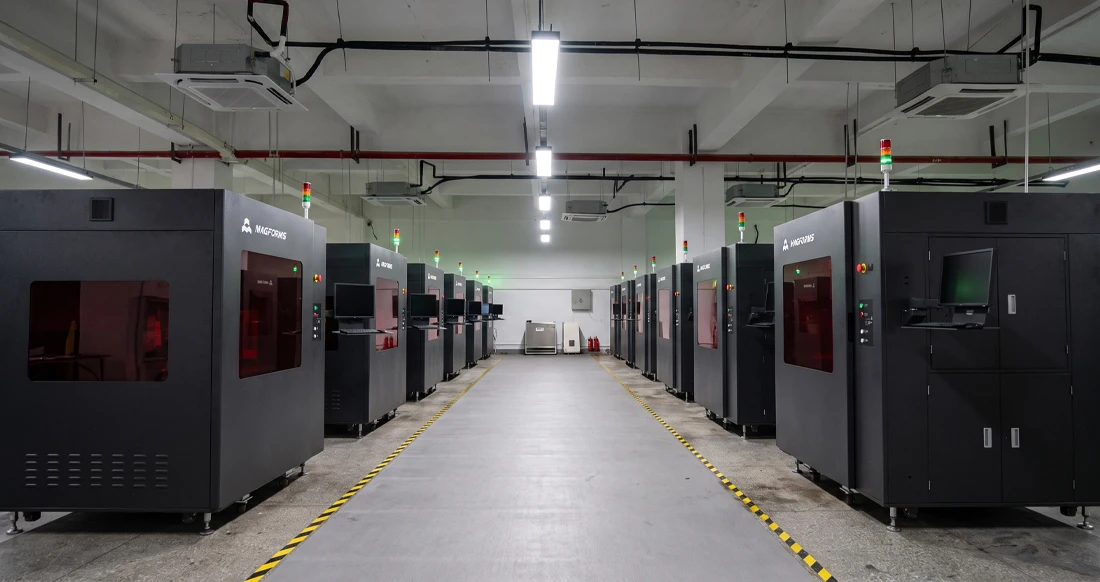
Magforms makes design and manufacture easier.
Popular Blogs
-
 Industry InsightsManufacturing Industry
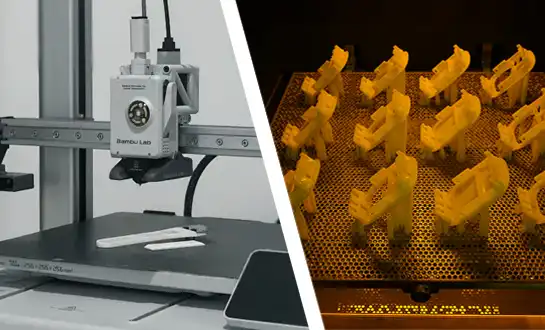
FDM vs. SLA Printer: Which Technology Is Right for Your Project?
-
 Industry InsightsManufacturing Industry
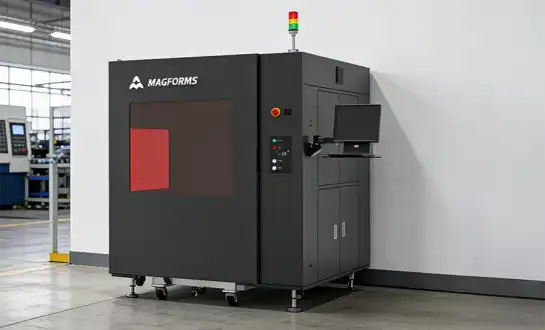
Top 5 Applications of Industrial 3D Printers in Manufacturing Today
-
 Industry InsightsManufacturing Industry
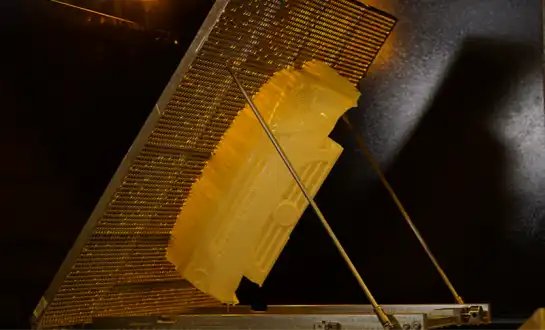
Why Stereolithography 3D Printers Are Unmatched for Microfluidic Device Prototyping?