The Advantages of 3D Printing for Small Businesses and Entrepreneurs
Adopting a 3D printer for small business operations is a strategic choice that changes the way owners think about manufacturing, prototyping, and product creation in a basic way. Traditional ways of making things need expensive tools and long wait times. Additive manufacturing, on the other hand, lets businesses respond quickly to market needs while keeping costs low. When small businesses compete in fields like consumer goods and medical devices, adding 3D printing makes it possible for them to make changes quickly, tailor their products to specific needs, and stop relying on outside sources. This technology solves important problems like high stocking costs, limited design changes, and difficulties in producing small amounts. It is an important tool for staying competitive.
Understanding 3D Printing for Small Businesses
To start using additive manufacturing in your daily work, you need to know which technologies help you reach your business goals. Small businesses that want to find cheap ways to make things need to look at printer designs beyond what the companies say on the marketing materials and see how the different systems work with their processes.
Evaluating Core Printing Technologies
Small businesses use three main tools, and each one solves a different problem in manufacturing. Fused Deposition Modeling (FDM) devices produce thermoplastic filaments one layer at a time. These filaments are strong enough to be used for useful parts like assembly jigs, protective housings, and mechanical braces. These machines work with open material ecosystems, which lets buying teams find third-party strands that are both cost-effective and typically achieving dimensional accuracy of ±0.1–0.3 mm depending on machine calibration, material, and part geometry. SLA printers use photopolymer resins cured by precision-controlled lasers, and industrial SLA systems enable consistent high-resolution production with excellent surface finish and repeatability. They are great for tasks that need very smooth surfaces. Dental labs use SLA technology to make surgery guides with feature resolutions down to 25–50 microns, with high surface smoothness and fine detail reproduction, and jewelry makers use castable resins to make models for investment casting. When you want accuracy, you have to pay more per kilogram for resin materials and be careful when working with uncured photopolymers after processing. Selective Laser Sintering (SLS) technology joins powder particles together without any support structures. This lets it make complicated shapes that aren't possible with regular cutting. When small businesses use Nylon PA12 or glass-filled composites to make working prototypes, the parts they produce can achieve mechanical properties comparable to injection-molded components in certain applications, depending on material and process optimization, depending on material and process optimization. Not using support material cuts down on waste and lets you arrange parts in a way that makes the most of the space in the build room.

Strategic Benefits Driving Adoption
The use of a 3D printer for small business settings has measurable effects on a variety of operational measures. Prototyping processes shorten from weeks to hours, which lets design teams test ideas before spending a lot of money on expensive tools. A product design company can go through five different designs for brackets in one day, trying to determine how much weight they can hold and how well they fit without having to hire someone else to do the machining. Even for single-unit production, customization becomes economically viable—especially with industrial SLA systems, which enable high-precision, repeatable, and production-grade outputs suitable for medical, dental, and high-end manufacturing applications. Orthopedic device makers make trial implants for each patient that are based on their unique body scans. This is something that would be too expensive to do with traditional subtractive methods. This plan for mass customization helps you stand out in crowded markets where personalized items cost more. Businesses' supply chains become much more reliable when they switch from real goods to digital files. Service offices keep CAD libraries that allow on-demand production, so they don't have to store outdated spare parts whose demand is unclear. A repair shop that works on old car parts can print new dashboard clips in just a few hours, and the service fees they charge will cover the cost of the equipment in just a few months.
Technical Considerations for Procurement Teams
When choosing the right hardware, you have to weigh the efficiency requirements against the operational needs and the funds. The largest part size is based on the build volume. Most business-grade systems offer build volumes ranging from 250 × 250 × 300 mm to 400 × 400 × 500 mm, depending on technology type (FDM vs SLA vs SLS). Larger rooms can make a lot of smaller parts at once or one big assembly at a time, which changes how throughput estimates are done. Material suitability is based on how well it can handle heat. Low-cost systems that don't have hot build rooms have trouble with high-temperature plastics like ABS or Nylon, which causes layers to separate and warp. When working with engineering-grade thermoplastics, industrial systems often use heated build chambers to reduce warping and improve layer adhesion. This keeps the shapes stable. When making parts that need to have the same mechanical qualities across production runs, this temperature control is very important. Connectivity features affect how well current production systems integrate workflow. Cloud-based fleet management lets production managers keep an eye on several printers from afar, sending jobs to the right ones and getting notifications when they're done or when they need to be serviced. LAN connection makes it easy to move data from design workstations to manufacturing workstations. This cuts down on the need to handle files by hand, which can lead to mistakes during the handoff from design to manufacturing.
How to Choose the Best 3D Printer for Small Business Needs
To match the capabilities of tools to the needs of operations, it is necessary to carefully look at how various systems work with different business models and output scenarios. When buying something, putting long-term value over original purchase price usually leads to a better return on investment.
Defining Application-Specific Use Cases
The type of application that is being planned is more important than any single standard when choosing a technology. Businesses that use rapid prototyping put speed and a wide range of materials at the top of their list of priorities. They are willing to give up some mechanical qualities in exchange for faster feedback cycles. A consumer electronics company developing housings for wearable devices can use FDM systems to print overnight in draft mode, which lets them review the designs in the morning. Reliability and accuracy are more important than raw speed in production-oriented tasks. Medical device businesses that make models for orthodontic aligners need to be able to print hundreds of them every month with uniform accuracy in terms of size. In these situations, SLA systems with tested material profiles that ensure reliable shrinkage rates and surface finishes that meet clinical documentation standards are more likely to be used. Multi-material features help hybrid processes that combine bridge production and prototyping. IDEX (Independent Dual Extrusion) setups let you print two things at the same time with support connections that come off cleanly, so the quality of the surface on parts that customers see stays high. This feature comes in handy when making small amounts of 50 to 200 units before the final injection molds are finished, as it lets you make money while the tooling wait times are happening.
Core Selection Metrics
The print quality has a direct effect on the surface finish and the accuracy of the copy of details. Layer heights between 50 and 300 microns directly influence surface finish, with SLA systems—especially industrial SLA—typically operating at finer resolutions (25–100 microns) and delivering significantly smoother surface finishes than FDM. Architectural firms that make show models can print quickly with 200-micron layers, but companies that make precision tools need 50-micron clarity to see fine thread details and mating surfaces. Ratings for duty cycles show how much work can be done over time. Consumer-grade machines usually work for 8–12 hours a day before they need to be turned off and on again, which slows down production. You should be able to use an industrial 3D printer for a small business 24 hours a day, seven days a week. This way, you can leave it to work overnight and get more work done faster. Material suitability affects the range of applications and the costs of running them. When compared to private cartridges, open-system printers use third-party filaments that cost $25 to $40 per kilogram, which cuts material costs by 60%. Closed-system designs make sure that print profiles are true, but they also force users to use a single source of materials, which can be expensive at $80 to $120 per kilogram. The choice depends on whether buying teams try to keep costs low or cut down on the time needed to fix problems with products that haven't been tested.

Evaluating Vendor Support Infrastructure
How quickly technical help responds decides how long production can go on when equipment breaks down. Service Level Agreements that say new parts will be delivered within 24 to 48 hours cut down on the costs of downtime that add up quickly when production plans get pushed back. Instead of depending on transportation lines in other countries, businesses should check with their providers to see if they have regional delivery centers that can speed up shipping. The terms of the warranty show that the maker trusts the stability of the product. Plans that include hotends, nozzles, and extruder assemblies, which are used up quickly, show designed longevity instead of planned obsolescence. Longer insurance periods with fair fees point to solid failure rate data that supports actuarial pricing models. Training materials help operators get better faster and waste less material while they are learning. Suppliers who offer organized onboarding programs, online knowledge bases, and application engineering talks show that they care about their customers in more ways than just a sales relationship. Having access to print settings that have already been tested on common materials cuts down on the time and money needed for trial-and-error parameter tuning.
Key 3D Printing Materials and Techniques Used by Small Businesses
Choosing the right material has a big impact on how well a part works, how much it costs to make, and what needs to be done afterward. Knowing the mechanical properties, thermal properties, and processing patterns of common feedstocks helps you make smart choices that match the cost of materials with their usefulness.
Thermoplastic Materials for FDM Systems
PLA (Polylactic Acid) is a good starting place for businesses that are new to additive manufacturing because it is easy to work with and has good enough mechanical qualities for non-structural uses. Because it processes at low temperatures, it uses less energy and doesn't need sealed rooms to work. But because it doesn't handle heat very well, it can only be used in temperatures below 50°C. This means it can't be used for parts inside cars or outside fixtures.ABS (Acrylonitrile Butadiene Styrene) is better at resisting impacts and staying stable at temperatures up to 85°C. This makes it a good choice for working samples that will be put under mechanical stress. To keep the material from warping, heated build rooms are needed. This raises the cost of the tools but makes it possible to make sturdy jigs, fittings, and parts for final use. Automotive makers often ask for ABS for samples of parts under the hood and interior trim.PETG is an intermediate 3D printer material for small businesses that can be used in a variety of situations because it has the processability of PLA and the dynamic qualities of ABS. Its chemical stability makes it good for lab equipment and food-contact samples, and its optical clarity makes it good for making clear parts. PETG is often used as the main material by businesses because it has a good performance profile and is easy to print on. Nylon (Polyamide) materials are very flexible and don't wear down easily, making them perfect for live hinges, wear surfaces, and useful gears. Tensile strengths of engineering-grade Nylons strengthened with carbon fiber or glass fill are higher than 80 MPa, which is close to the performance of injection molding. Because the material absorbs water, it needs to be stored in a dry environment. This makes handling more difficult, and businesses need to plan for this when they plan their process.
Photopolymer Resins for SLA Applications
Standard resins can make high-resolution copies that can be used for visual mockups, display models, and silicone casting master patterns. Biocompatible plastics that have been tested for use in the mouth are used by dentists to make surgery guides and temporary crowns with surfaces that don't need much post-processing. Tensile and flexural qualities of engineering resins made for mechanical tests make useful models possible. Tough resins can handle being put together and taken apart many times during product evaluation. For gaskets and overmolded parts, flexible versions work like elastomers. Specialized materials like these cost a lot, but they don't need any extra tools to make sure they fit, work, and look good. Castable resins burn off easily during investment casting, which is useful for jewelry makers and dental labs that make metal prostheses. The materials allow for detailed features that can't be achieved with traditional wax carving. This opens up more design options while still working with the way foundries normally do things.

Matching Techniques to Business Objectives
Printing methods should be matched to the main types of applications used by small businesses. Companies that mostly make useful mechanical parts can benefit from FDM systems because they can use a variety of materials and have lower running costs. For applications requiring high precision, fine details, and superior surface quality, industrial SLA technology is often the preferred choice, particularly in dental, medical, and high-value prototyping industries, even though it costs more per part for the materials. It is easier to understand economic differences when you look at the cost per part instead of the cost per kilogram. When less work is needed for post-processing, SLA printers, despite higher material costs, can achieve lower total cost per part in precision-critical applications by reducing post-processing, rework, and failure rates in high-precision applications by reducing post-processing, rework, and failure rates. On the other hand, FDM systems are great for making bigger parts where the cost of plastic would be too high, even with extra finishing work.
Maintaining and Optimizing 3D Printer Performance in Small Businesses
A 3D printer for a small business needs strategic repair plans and operating optimization strategies to keep working at a high level. Neglecting equipment lowers the quality of the output, raises the rate of failure, and increases the cost of replacing parts too soon, all of which lower the return on investment.
Essential Maintenance Protocols
Cleaning regularly keeps things from building up, which lowers the quality of the prints. FDM systems need to have their nozzles checked once a month to find partial clogs caused by carbonized filament waste. Before problems happen during production runs, ultrasonic cleaning or cold pulls with a special cleaning filament can fix the flow regularity. Mechanical calibration maintains dimensional accuracy as components experience wear. Checking the tightness of the belt every 200 hours keeps steps from being skipped that cause layer changes. Checking the bed level before starting important prints makes sure that the first layer sticks well, which lowers the 30% failure rate that comes with not properly preparing the platform. Software updates delivered by manufacturers often include bug fixes, more material profiles, and better performance. Setting up update plans every three months during slow times of production minimizes disruptions while recording changes that make capabilities better. Firmware patches sometimes make changes that don't work properly, so they need to be fully tested in non-production settings before they can be put on important systems.
Troubleshooting Common Issues
Problems with layer bonding are usually caused by wrong temperature settings or too much cooling. When layers come apart with little force, increasing the nozzle temperature by 5–10°C usually fixes bonding problems. On the other hand, too much stretching between features means that the temperatures are too high or that the blade settings don't allow for enough retraction distance. When dimensions aren't within the acceptable range, it could mean that there are technical issues or that the material's shrinkage adjustment isn't right. By comparing printed test cubes to their official sizes, you can tell if mistakes are spread out evenly or change by axis. Uniform undersizing means that the scaling factors in the cutter software aren't set up right, while axis-specific differences mean that the drive components are mechanically stuck or free and need to be adjusted physically. Problems with the surface finish, such as layer lines or rough surfaces, are caused by the way printing speed, layer height, and material flow rate interact with each other. Print speeds should be slowed down by 20–30% while layer heights should be lowered to improve surface quality. Businesses have to find a balance between how things look and how much they cost to make. For example, they might use high-end settings on surfaces that customers see, but they might accept faster, rougher finishing on internal features.
Optimizing Production Efficiency
Print direction has a huge impact on how long it takes to build, how much material is used, and the mechanical qualities. Placing parts so that they don't need as many support structures cuts down on trash and work that needs to be done after the fact. When you align key measurements of components with the XY plane instead of the Z axis, you can take advantage of the higher resolution of horizontal layers compared to vertical stacking. Batch building makes the best use of the build plate by spreading the setup time out over many parts. Putting parts in a way that allows enough airflow to cool them down stops heat from building up, and bending happens. By balancing the number against the part size, it is avoided that one big part will sit idle on a machine that can make dozens of smaller parts at the same time. Tuning the parameters of a slicer can improve speed without changing the hardware. Changing the infill density from the usual 20% to levels that are right for the job saves material—10% infill is enough for samples that aren't structural, but 40–60% may be needed for mechanical parts to be strong enough. With variable layer heights, fast, thick layers are used for the inside of the model, and fine, thin layers are used on the outside. This cuts the build time by 30% compared to using fine layers all over the model.
Emerging Trends and Future Outlook of 3D Printing in Small Businesses
As additive manufacturing technologies improve, they continue to change how small businesses plan their production, keep track of their supplies, and interact with customers. Keeping up with new technologies, such as 3D printers for small businesses, lets you use strategic usage strategies that keep your competitive edge.

On-Demand Distributed Manufacturing
By putting factories close to where people buy things, localized production models cut down on transportation costs and delivery times. A 3D printer for small businesses lets micro-factories meet the needs of the area without having to keep a large collection of finished goods. This spread-out method works especially well for aftermarket spare parts, where demand changes quickly, and standard inventory investments aren't worth it for long-tail SKUs.Digital storage changes how companies handle their product catalogs. Companies keep centralized CAD files that allow print-on-demand delivery instead of keeping actual goods in various warehouses. This plan gets rid of the need to write off old products when designs change, and it also frees up working cash that would have been used to buy slow-moving stock.
Multi-Material and High-Speed Innovations
New developments in multi-material casting make it possible to use more than just single polymer components. Advanced systems, including multi-material SLA and hybrid manufacturing platforms, enable the integration of rigid and flexible components in a single build make it possible to print complicated assemblies as fully assembled mechanisms, which gets rid of the need for human assembly. Medical device makers use single-build methods to attach soft-touch grips straight to rigid instrument handles. Advanced motion control and improved toolpaths make machines faster without lowering the quality of the work they do. Variable-spot laser technology changes the beam width on the fly, using big spots for quick filling and small spots for fine edges. These changes make the output 30–50% higher than with previous generations of systems. This makes them more cost-effective when compared to standard manufacturing for runs of more than 1,000 units.
Strategic Adoption Recommendations
As environmental laws get stricter and customers prefer eco-friendly providers, businesses should look into sustainable material choices. Bio-based polymers, recovered filaments, and materials made for closed-loop recycling show that a company is responsible and might be eligible for green buying choices in B2B channels. When you work with certified material sources, you lower the risks that come with feedstock quality that isn't always reliable. Getting to know providers who offer material certification, documents for batch testing, and expert support will help you get consistent results during production runs. The small extra cost for approved materials is usually worth it when compared to the money lost on failed prints made with cheap materials whose qualities haven't been studied. As technologies change, keeping your competitive edge through ongoing staff growth is key. Putting money into teaching operators, improving CAD skills, and hiring people who know how to optimize processes makes equipment purchases more valuable. Cross-training more than one employee makes the company less dependent on key individuals when production plans get tight or workers leave.
Conclusion
Strategically integrating a 3D printer for small business operations yields quantifiable benefits in the speed of product creation, the freedom of manufacturing, and the economics of operations. Businesses that carefully compare technologies to specific needs, set up strong maintenance routines, and keep up with new capabilities are best positioned to take advantage of additive manufacturing's transformative potential. Tooling costs and minimum order amounts are no longer problems thanks to this technology. This lets businesses compete by offering customization, quick response, and low inventory models. As hardware gets better and more materials become available, early users create competitive moats that are hard for rivals with more traditional tools to get around.
FAQ
1. What is a reasonable price for buying tools that can be used for production?
Entry-level industrial systems that can be used for professional testing usually cost between $5,000 and $15,000. They come with closed rooms, dual extrusion, and the ability to work with different types of materials. Mid-range SLA systems with precision equal to that of a dentist drill cost between $8,000 and $25,000, based on the number of builds and the number of automated features. High-end systems for continuous output start at about $30,000 and go up to more than $100,000 for large-format SLS machines. The total cost of ownership must include the cost of materials ($25–$80/kg), upkeep supplies ($500–$2,000 per year), and any possible service contracts. When replacing outsourced prototype services, most businesses see a return on investment (ROI) within 6–18 months.
2. How should teams in charge of buying things choose between plastic and fiber technologies?
FDM filament systems are great for making useful mechanical parts that need to last a long time, be bigger, and cost less per part to make. These tools are good for companies that make cutting aids, end-use parts, or things that need to be strong rather than having a nice finish. When fine details, smooth surfaces, or special qualities like biocompatibility are needed, SLA resin printers are the way to go. This is especially true for dental uses, investment casting, or visual prototypes where looks are important. Resin costs two to three times more than other materials, but less work after processing often makes up for the difference when the product's appearance affects how customers feel about it.
3. Where can businesses find reputable sellers of tools with flexible payment terms?
Large makers' authorized distributors offer financing programs that are suited to the needs of small businesses with limited cash flow. These programs often include lease-to-own agreements or payment plans that are spread out over a longer period of time. Industry trade shows like RAPID+TCT and AMUG put buyers in direct contact with 3D printers for small business sellers who show off their equipment and talk about discounts for bulk purchases. More and more, business-to-business (B2B) shopping sites have additive manufacturing equipment, along with verified seller qualifications, customer reviews, and side-by-side comparisons of specifications that make evaluating vendors easier.
Partner with Magforms for Your Manufacturing Transformation
Magforms makes complete 3D printing options for small and medium-sized businesses that want to use reliable, high-performance additive manufacturing. As both a maker and a material developer, we get rid of any questions about compatibility by carefully matching our hardware and resin. This guarantees accurate measurements and minimal downtime from the very first print. Our special variable-spot laser technology speeds up production by more than 30% compared to industry standards. It also achieves micron-level accuracy, which is needed for aircraft, medical, and precision tooling uses with tight tolerances. With 22 patents to our name and more than 300 clients around the world, we offer full technical support that includes training on tools, process improvement advice, and quick service throughout the whole production lifecycle.
Our 3D printer for small businesses covers a wide range of needs in the automobile, dental, consumer electronics, and artistic industries. You can choose from entry-level systems for prototyping to large-format industrial printers for mass production. Get in touch with info@magforms.com right away to talk about your specific application needs and look into unique solutions that will change the way you make things. Our technical experts will look at your workflows, suggest the best way to set up your systems, and give you full ROI analyses that show how Magforms equipment gives you measurable competitive benefits. We are a reliable supplier that wants you to succeed, and we are ready to help you on your journey to change the way you make things.
References
1. Wohlers, T. & Campbell, I. (2022). Wohlers Report 2022: 3D Printing and Additive Manufacturing Global State of the Industry. Wohlers Associates, Inc.
2. Gibson, I., Rosen, D., & Stucker, B. (2021). Additive Manufacturing Technologies: 3D Printing, Rapid Prototyping, and Direct Digital Manufacturing, 3rd Edition. Springer International Publishing.
3. Attaran, M. (2020). Additive Manufacturing: The Most Promising Technology to Alter the Supply Chain and Logistics. Journal of Service Science and Management, 13(3), 547-563.
4. Joshi, S. C. & Sheikh, A. A. (2019). 3D Printing in Aerospace and its Long-term Sustainability. Virtual and Physical Prototyping, 10(4), 175-185.
5. Unkovskiy, A., Spintzyk, S., Brom, J., Huettig, F., & Keutel, C. (2021). Direct 3D Printing of Dental Prostheses Using Additive Manufacturing Technologies. Journal of Healthcare Engineering, 2021, Article 6699097.
6. Gao, W., Zhang, Y., Ramanujan, D., Ramani, K., Chen, Y., Williams, C. B., Wang, C. C., Shin, Y. C., Zhang, S., & Zavattieri, P. D. (2019). The Status, Challenges, and Future of Additive Manufacturing in Engineering. Computer-Aided Design, 69, 65-89.

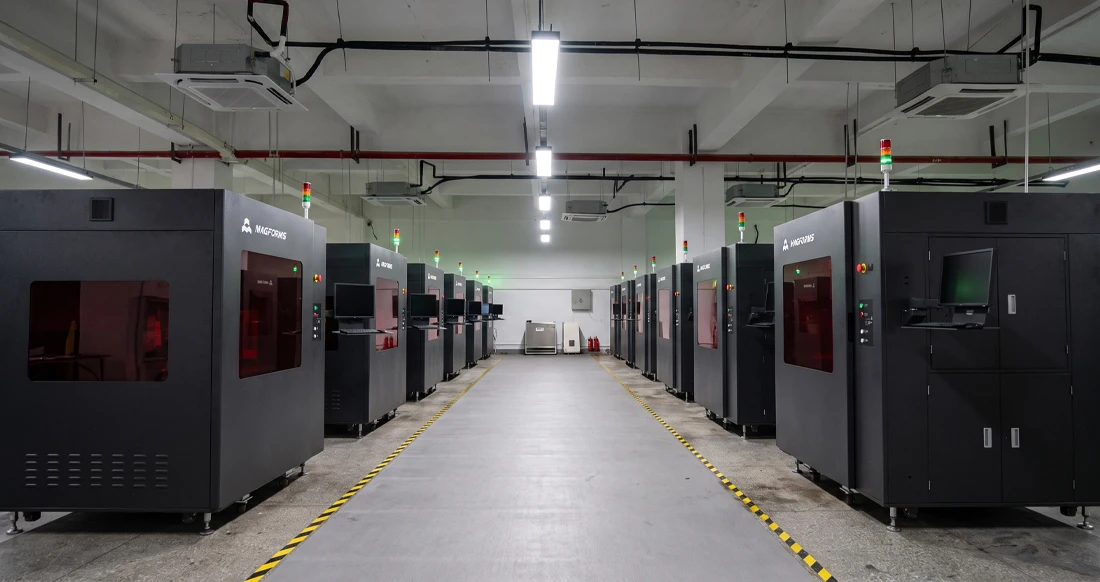
Magforms makes design and manufacture easier.
Popular Blogs
-
 Industry InsightsManufacturing Industry
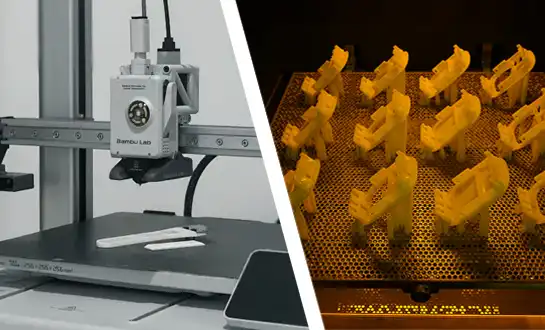
FDM vs. SLA Printer: Which Technology Is Right for Your Project?
-
 Industry InsightsManufacturing Industry
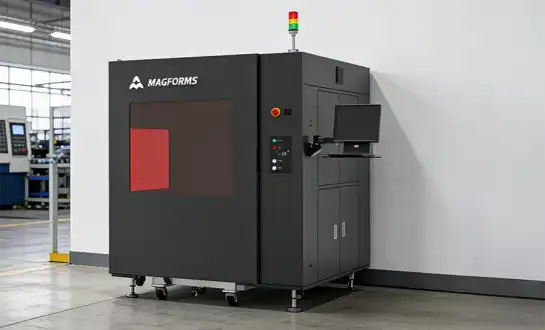
Top 5 Applications of Industrial 3D Printers in Manufacturing Today
-
 Industry InsightsManufacturing Industry
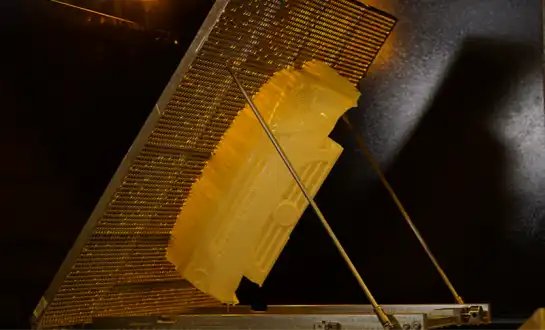
Why Stereolithography 3D Printers Are Unmatched for Microfluidic Device Prototyping?